
Commercial solar · Beaufort, SC
Commercial solar in Beaufort, SC
Why the numbers favour business · as of July 2026
Dominion Energy South Carolina credits exported power at roughly 2.8–4.1¢ per kWh against about 14.4¢ per kWh rate, so the value sits in consuming your own production. A Beaufort business that runs through daylight hours self-consumes most of what it generates, which is exactly what the current Solar Choice structure rewards. That is a structural advantage over a typical home.


Local commercial reality
The commercial picture in Beaufort
Beaufort's commercial stock is dominated by hospitality, medical and retail, with a downtown historic core that constrains what is possible on some buildings. Those constraints are real: design controls on visibility apply to commercial frontages as much as to houses, and on a historic structure the roof assessment comes before any conversation about array size.
Hospitality load is the pattern worth understanding here, because it is not a nine-to-five profile. Hotels and restaurants draw heavily into the evening and through the night, which means a larger share of midday production gets exported at a few cents rather than consumed at retail. That does not rule out a project, but it changes the sizing and it is an argument for looking seriously at storage.
Confirm whether Palmetto Electric Cooperative or Dominion Energy South Carolina serves the building, since their terms differ and cooperative interconnection processes for commercial-scale systems are set by the cooperative. Salt exposure also dictates hardware specification on coastal commercial roofs here, and that belongs in the specification rather than being discovered as a maintenance problem later.
Written for Beaufort specifically. Your own roof, bill and meter still decide the answer, which is what the free assessment settles.
Why now
Low export credits hurt homeowners and helped businesses
One-for-one net metering closed to new applicants on 1 June 2021, and new Dominion Energy South Carolina systems are credited under Solar Choice instead, at roughly 2.8–4.1¢ per kWh for exports. For a home that generates at midday and uses power at night, a low export credit is a real setback.
A commercial building has the opposite load shape. Offices, warehouses, retail floors and refrigeration draw hardest during exactly the hours a rooftop array produces hardest. Most of what you generate never touches the grid, so it offsets electricity at about 14.4¢ per kWh rather than earning roughly 2.8–4.1¢ per kWh.
Put plainly: the low export credit that made residential solar harder to justify in Beaufort left commercial economics broadly intact, and in relative terms improved them. That is worth knowing if you looked at solar for your building a few years ago and set it aside.
Summer cooling load reinforces this. Your peak demand and peak solar production land in the same months and largely the same hours. Sea-island addresses can be among the last restored after a hurricane, and evacuation routes complicate return, so backup here is a practical resilience decision.
The same rate detail from the homeowner's side is on Beaufort solar incentives.
How we scope a building
Engineering first, sales second
- 01
Load profile and bill analysis
We read your actual interval data and tariff, not a square-footage estimate. For commercial accounts the shape of your demand matters as much as the total, and it determines whether solar is a strong or a marginal fit.
- 02
Roof, structure and electrical review
Low-slope membrane, standing-seam metal or ballasted, plus service capacity and switchgear. Beaufort County is a high-wind coastal zone with salt-air exposure across the sea islands, so structural review, hardware specification and roof-penetration detail all carry extra weight.
- 03
Permits and interconnection
Building and electrical permits with plan review, structural sign-off, and Dominion Energy South Carolina interconnection. We manage the sequence and tell you what is genuinely outside our control.
- 04
Install, commission, monitor
Sequenced around your operations. We commission the system, hand over monitoring, document everything your accountant will need, and stay reachable afterwards.
Commercial systems carry our lifetime full-system and roof-penetration warranty alongside manufacturer coverage, so one contractor stands behind the roof and the array.
Building types
What we install on in Beaufort
Offices and retail
Daytime-dominant load, strong self-consumption. Often the cleanest business case in the area.
Warehouse and light industrial
Large low-slope roofs with real capacity. Structural review and ballast strategy drive the design.
Multifamily and hospitality
Common-area load and metering structure decide what is worth doing. We work through the metering first.
Beaufort specifics
What commercial work involves here
The constraints that actually shape a Beaufort commercial design.
- 01
Coastal wind loading
Beaufort County is a high-wind coastal zone with salt-air exposure across the sea islands, so structural review, hardware specification and roof-penetration detail all carry extra weight. On a commercial roof, attachment and ballast engineering is a substantive design step.
- 02
Plan review is certain
Systems around 10 kW and up get standard plan review, which covers effectively all commercial work. Budget time for it.
- 03
Interconnection timing
Dominion Energy South Carolina approval precedes energising, and the queue rather than the install usually sets your date.
- 04
Architectural review
Beaufort's historic district has genuine design controls on visibility, and many sea-island and mainland communities have active HOAs on top of that.
- 05
Metering and tenancy
Who is billed for what determines whether the project works at all. We resolve this before design, not after.
- 06
Roof age and warranty
A commercial membrane near end of life changes the sequence. One contractor behind both the roof and the array avoids the finger-pointing later.
Tax
Where we stop and your CPA starts
Commercial solar tax treatment is genuinely different from residential. Federal commercial provisions and depreciation may apply where the expired residential credit does not, and the structuring can materially change your return.
We are not going to model that for you. Installers who present themselves as tax advisers do their clients harm, and the numbers depend on your entity, your liability and your depreciation position, none of which we can see.
What we do instead: scope and build the system properly, document it to the standard your accountant needs, and route structuring questions to your CPA. If a competitor is quoting you a confident after-tax figure without having spoken to your accountant, treat that as a warning sign.
Permits and approvals
What approval takes in Beaufort
This is the part most quotes leave vague, and it is the part that decides how long a job takes. Below is what a system at a Beaufort address actually has to clear. We handle all of it, and you file none of it yourself, but you should know what you are agreeing to a timeline for.
- 01A building permit and a separate electrical permit for a rooftop system
- 02Standard plan review for systems of roughly 10 kW and above
- 03A zoning review as well for any ground-mounted array
- 04An additional electrical permit where battery storage is included
- 05Structural review, roof-access pathways and setbacks under high-wind coastal requirements
- 06Historic-district or architectural review where it applies, which we prepare
- 07Interconnection approval from whichever utility serves your meter
Standing monthly charge:about $14 a month. A fixed monthly cost changes payback more than most equipment decisions, so we model it rather than leave it out.
Requirements are read from the authority that reviews your address, not assumed from the county. In SC that distinction is routinely the difference between a permit issued and a permit returned.
Our work
Real systems our crews have installed
Genuine job photos, not stock images and not renders. Every system here was designed, permitted and installed by our own crews, and the same crews cover Beaufort.Beaufort County is a high-wind coastal zone with salt-air exposure across the sea islands, so structural review, hardware specification and roof-penetration detail all carry extra weight.
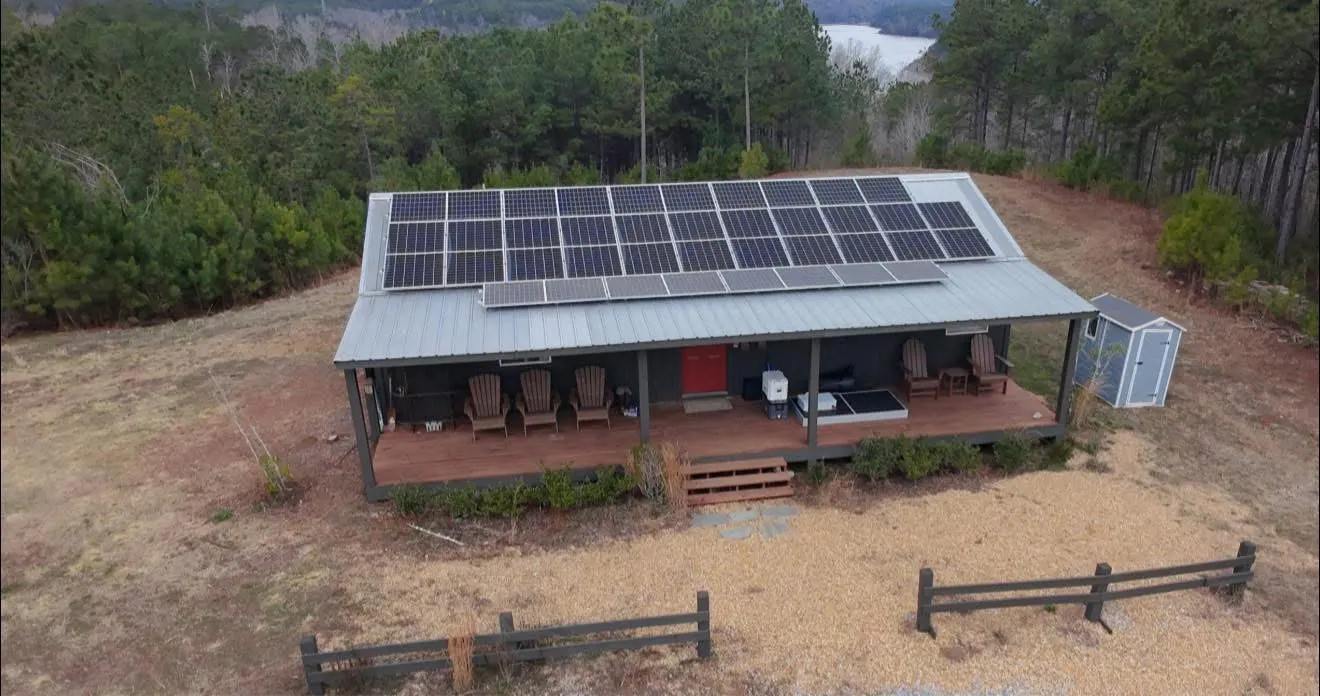 Off-GridCabin porch viewFull-slope roof array
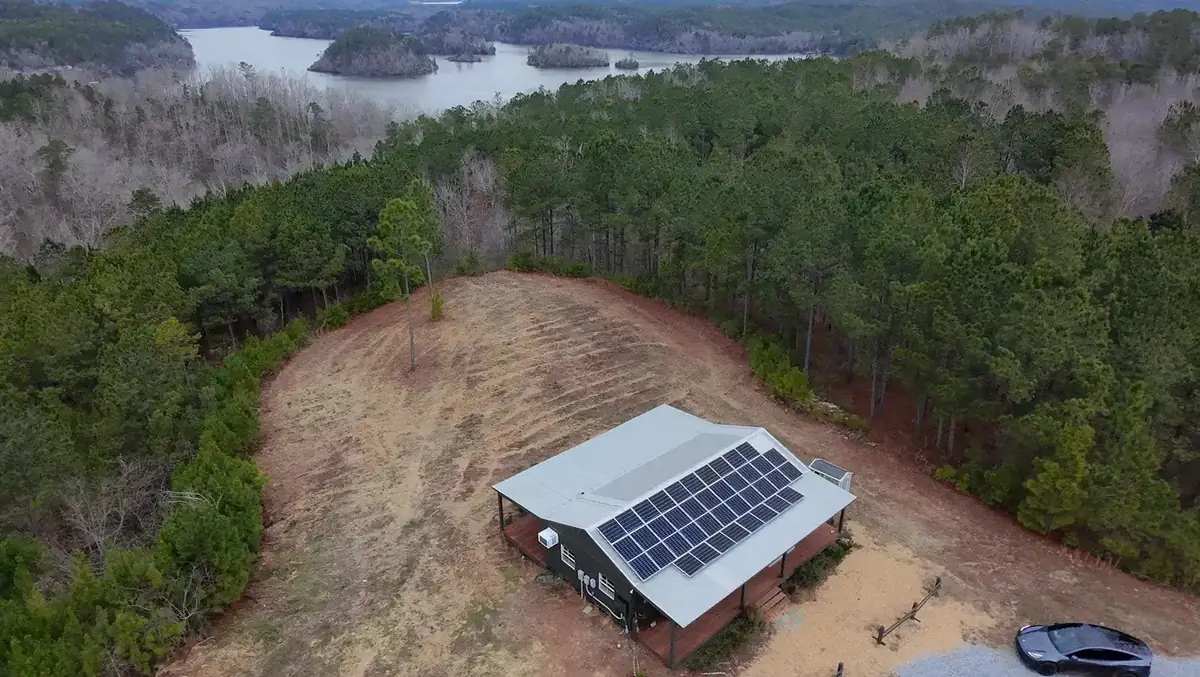 Off-GridOff-grid lake cabinGround-tilt metal roof array
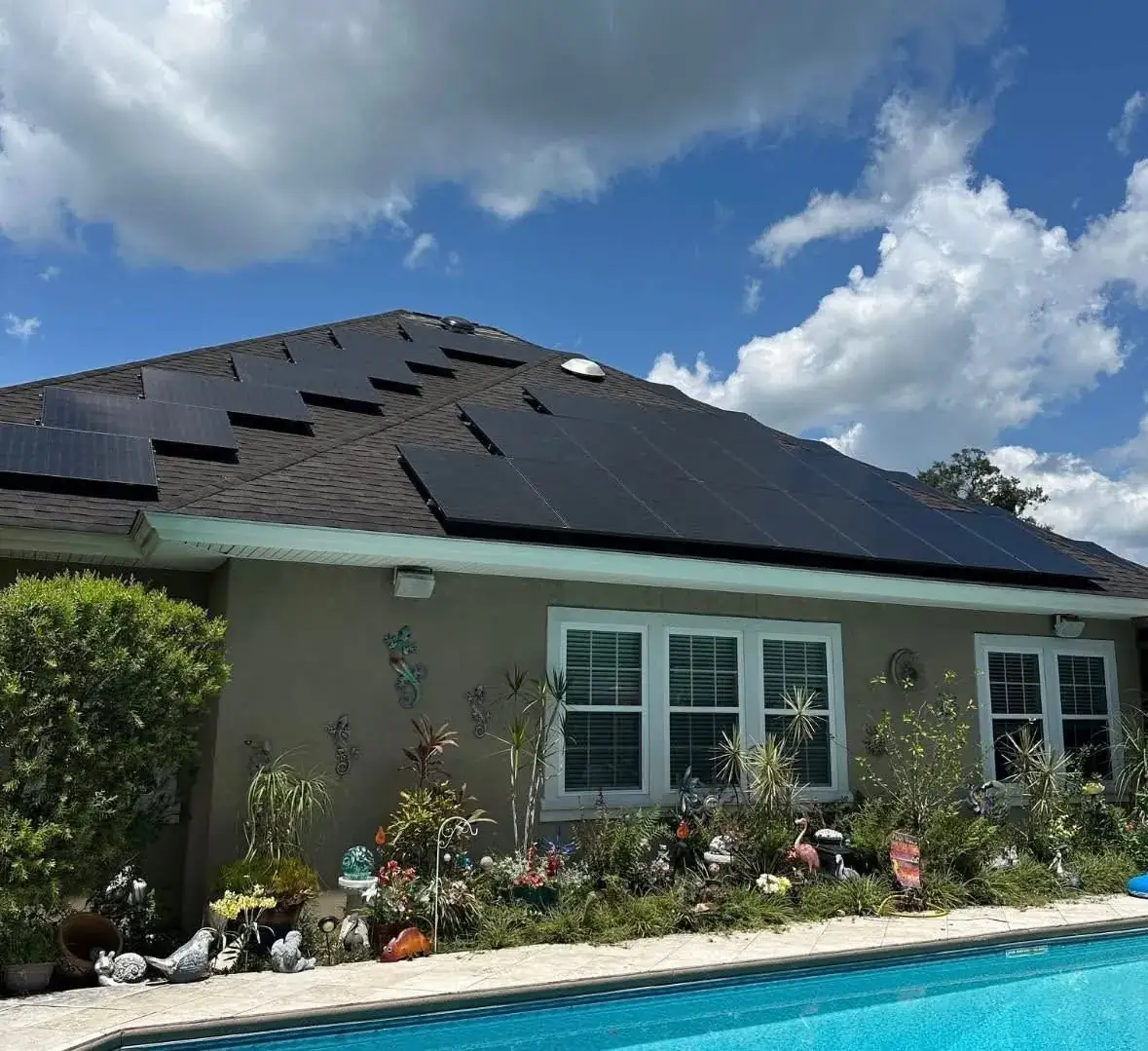 ResidentialFull black-on-blackPoolside single-story home
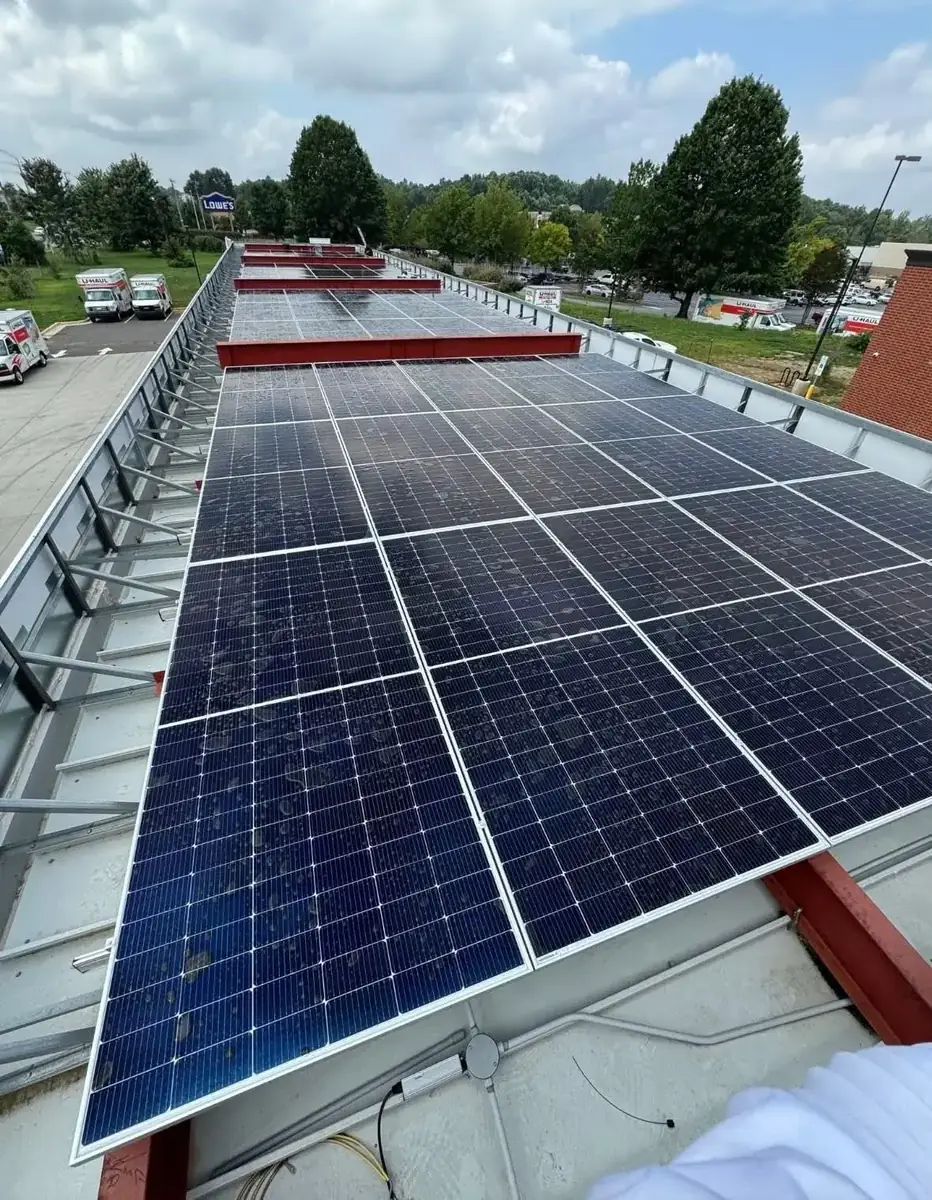 CommercialCommercial rooftopTilt-mounted rooftop system
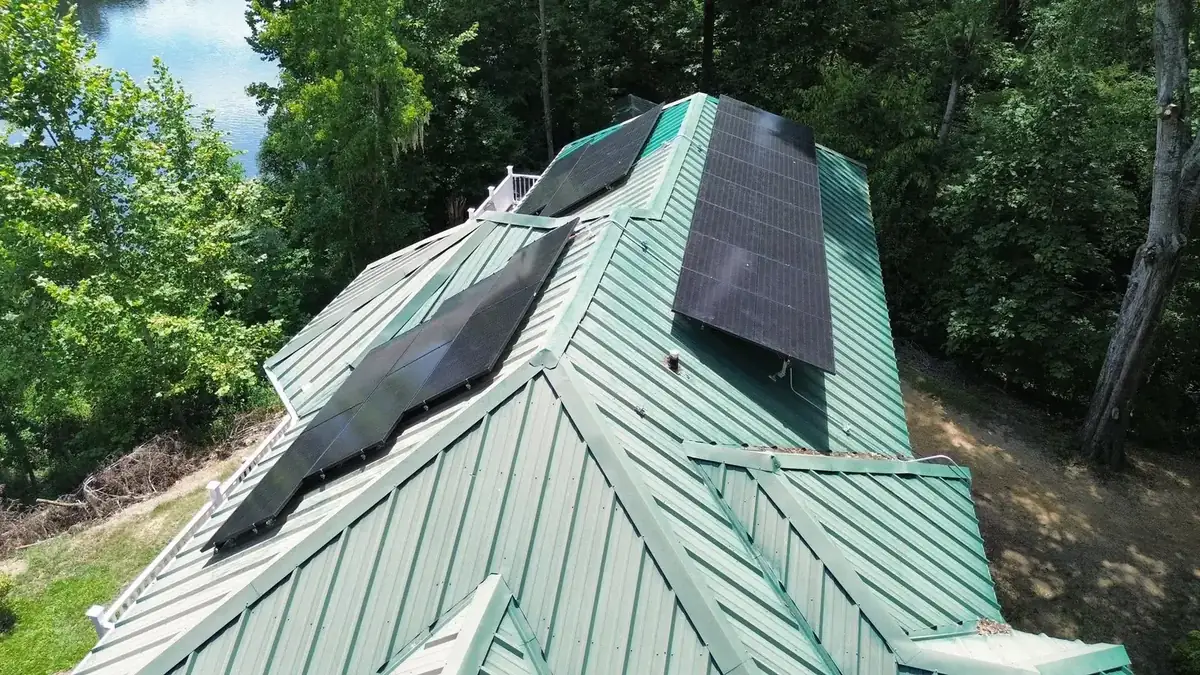 ResidentialStanding-seam metal roofLakeside multi-facet install
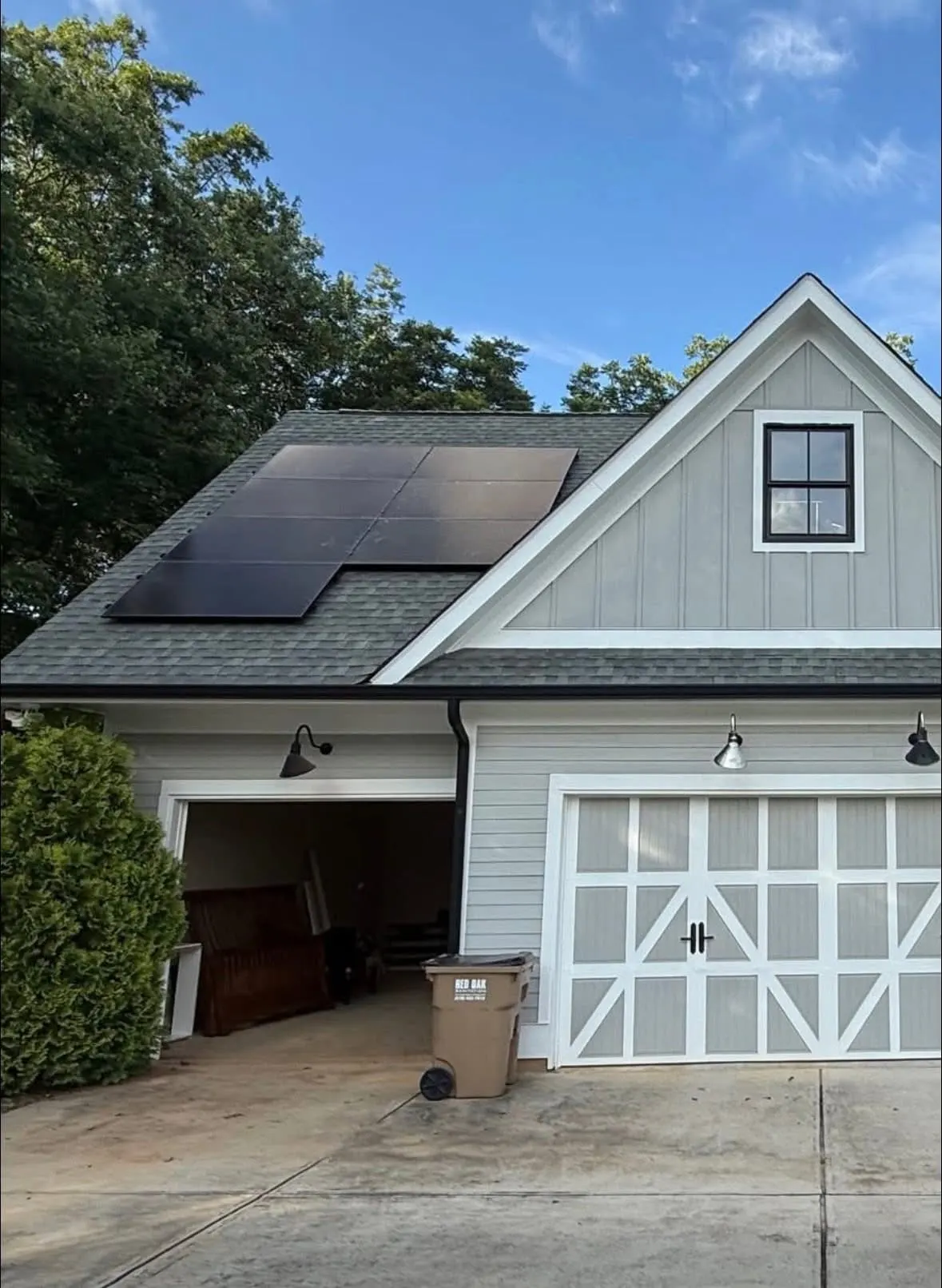 ResidentialDetached garage arrayFarmhouse-style home
Photo locations are not published at customer level. Where a customer has agreed to it, we name the job and the market on the completed-job records above.
Free assessment · Beaufort, SC
Get a straight answer for your Beaufort roof
We read your bill, confirm your Dominion Energy South Carolina export terms, and tell you what your roof in Beaufort County will actually carry. If solar does not make sense at your address, we will say so, and that answer is free too.
- We confirm whether Dominion Energy South Carolina or Palmetto Electric Cooperative serves many addresses here serves your meter before we quote anything
- Permitting runs through A building permit and a separate electrical permit for a rooftop system, and we handle it
- Beaufort's historic district has genuine design controls on visibility, and many sea-island and mainland communities have active HOAs on top of that.
Prefer to talk? (843) 310-1128
Beaufort commercial solar FAQ
Questions from Beaufort business owners
Does commercial solar make more sense than residential in Beaufort?
Often yes, for a structural reason. Dominion Energy South Carolina credits exported power at roughly 2.8–4.1¢ per kWh against about 14.4¢ per kWh, so the value is in consuming your own production. A business that operates through daylight hours self-consumes most of what it generates, which is precisely what the current Solar Choice structure rewards.
What kinds of Beaufort businesses do you install for?
Offices, warehouses and light industrial, retail, and multifamily properties. Low-slope membrane roofs and standing-seam metal are both common in the Beaufort area and both work well. We scope each building on its own roof structure, electrical service and load profile.
Will installation disrupt our operations?
We sequence work around how you run, and most of the installation happens on the roof rather than inside occupied space. The tie-in and commissioning need a planned window, which we schedule with you rather than around you.
What commercial solar incentives are available in South Carolina?
Commercial projects are treated differently from residential, and federal commercial provisions such as 48E and depreciation treatment may apply where the expired residential credit does not. We are installers rather than tax advisers, so we document the project properly and route the structuring questions to your CPA instead of guessing.
What permits does a commercial system need in Beaufort County?
A building permit and an electrical permit, with standard plan review for systems of roughly 10 kW and above, which covers essentially all commercial work. Beaufort County is a high-wind coastal zone with salt-air exposure across the sea islands, so structural review, hardware specification and roof-penetration detail all carry extra weight. Dominion Energy South Carolina interconnection approval is required before energising.
How long does a commercial project take in Beaufort?
It depends on system size, structural review and the interconnection queue rather than on installation time. We will give you a realistic sequence at the assessment rather than a best-case number, and we will tell you which steps are outside our control.
Keep reading
Commercial solar guides
- Commercial Solar
Commercial Solar Cost: Georgia and South Carolina Quote Checks
Compare commercial solar cost in Georgia and South Carolina using complete installed scope, utility assumptions and tax timing. Request a site assessment.
24 min read - Commercial Solar
What Utility Data a Commercial Solar Assessment Needs
Build a traceable commercial solar utility-data package with bills, meter maps, interval files, operating changes, exceptions, and a model handoff.
20 min read - Commercial Solar
Commercial Solar Feasibility Study: What to Verify Before Bidding
Build a commercial solar feasibility study that verifies site, load, utility, design, and approval evidence before your South Carolina project goes to bid.
23 min read - Commercial Solar
Commercial Solar Financing: Georgia and South Carolina Options
Compare commercial solar financing in Georgia and South Carolina by ownership, PPA terms, debt, roof rights and exit obligations. Request an assessment.
36 min read - Commercial Solar
Commercial Solar Layout: Rooftop, Ground Mount or Carport
Compare rooftop, ground-mounted and carport solar with structure, parking, utility, civil-work and operating evidence for a Georgia or South Carolina site.
25 min read - Commercial Solar
Commercial Solar Proposal Checklist for South Carolina
Compare commercial solar proposals on one scope: parties, design, production, price, utility work, contract risk, warranties, and acceptance evidence.
21 min read
Free, no-pressure assessment
Find out what your Beaufort building can carry
We will read your interval data and tariff, review your roof structure and service capacity, and give you an honest scope, with no guaranteed-savings math.
Mon–Sat, 10am–6:30pm ET · We typically follow up within the hour.