


Most addresses
Georgia Power
- Average home rate (2024)
- 15.49¢/kWh
- Paid for exported solar
- about 7.22¢ per kWh (a 3.2188¢ avoided-cost rate plus a 4¢ adder)
- Net-metered home solar, utility-wide
- 11,208
Solar in Savannah & West Chatham · GA
Comparing solar companies in Savannah? We handle solar panel installation in Savannah from your first Georgia Power bill review to switch-on. Savannah gives you two constraints most solar quotes never mention: a historic review board that genuinely petitions rooftop panels, and a utility that will not let a home go past 10 kW AC.
Free roof and bill assessment
Takes under a minute. No pressure, and no guaranteed-savings math.
Solar in Savannah · as of October 2026
Bill-to-size
Enter up to three recent bills. We average them, convert to kilowatt-hours at your own rate, and show the size band that covers your usage. Nothing is sent anywhere until you choose to send it.
Your size band will appear here.
Add one bill and your rate to start.
Your figures travel with the form, so you do not retype them.
An estimate for planning, not a quote. Real sizing depends on the roof planes, shade and the panel we can actually get, and we confirm it on site. The price band uses $2.59 per watt, a statewide figure. Tax treatment depends on your own liability. We are not tax advisers.
Solar in Savannah
Savannah is served by Georgia Power, which merged Savannah Electric into itself in 2006. Under its current renewable programme, exported power is credited at roughly 7.22 cents per kilowatt-hour for 2026, made up of a 3.2188 cent avoided-cost rate and a 4 cent adder, against a retail rate near 13 cents. One-for-one monthly netting is not available: that programme was a 5,000-customer pilot and it filled in 2021. Residential systems are capped at 10 kW AC. Taken together those two facts mean a Savannah system is sized to the power you can use during daylight rather than to the roof you happen to have.
Historic review here is split between two bodies. The Historic District Board of Review covers the Downtown Historic Overlay District, and the Historic Preservation Commission covers the Victorian, Streetcar and Cuyler-Brownville districts. Any exterior change visible from the public right of way, lanes included, needs a Certificate of Appropriateness, and rooftop solar downtown is genuinely petitioned: the board’s August 2026 agenda carried two solar applications. A Certificate is not a building permit, so a project inside the districts needs both. The live oak canopy around the squares is the other real constraint, and it is protected.
Homes in Savannah
Source: US Census Bureau, American Community Survey 2023 5-year estimates for Savannah city. Estimates, rounded.
Honest numbers
$2.59 per watt Georgia benchmark, August 2026. Worked examples, not a quote.
| System size | Before incentives |
|---|---|
| 6 kW | $15,540 |
| 9.5 kWClosest to our ~9.5 kW average system | $24,605 |
| 12 kW | $31,080 |
| You own it (cash or loan) | Lease or PPA | |
|---|---|---|
| Who owns the panels | You do | The provider does |
| Upfront cost | Cash, or a loan from $0 down | Usually none |
| When you sell the house | The system is part of the home | The buyer must take over the agreement |
| Price over time | Fixed once paid off | Check for a yearly escalator |
One-for-one netting is not available to new Georgia Power systems: its monthly netting pilot was capped at 5,000 customers and filled in 2021, so exports are credited at about 7.22¢ per kWh (a 3.2188¢ avoided-cost rate plus a 4¢ adder). Solar panel cost in Savannah: the full breakdown · Savannah solar incentives · Financing options
Your utility decides payback
Georgia Power and Canoochee EMC split Savannah street by street. We read yours off your bill first.
Most addresses
Some addresses
For comparison: Georgia average 14.08¢ · U.S. average 16.48¢. Georgia had 18,612 net-metered home solar systems at the end of 2024.
Rates: US EIA Form EIA-861, 2024 averages incl. fixed charges, not tariffs. Export terms as of August 2026.
Savannah sun, month by month
About 14,010 kWh a year from a south-facing roof with no shade. May is the strongest month at about 1,337 kWh and December the weakest at about 903 kWh.
Your roof will differ. The squares and the streets around them carry some of the heaviest mature live oak canopy of any city we work in, and it is protected.
Estimate: NASA POWER sun data for Savannah, PVWatts model, south-facing, no shade.
Savannah specifics
Six things shape a Savannah design. Getting them right is most of the job.
Most of Savannah is on Georgia Power, but Canoochee EMC serves parts of Chatham County outside the city. Your utility sets what you are paid for exported power.
The squares and the streets around them carry some of the heaviest mature live oak canopy of any city we work in, and it is protected. Out in West Chatham the newer subdivisions are substantially more open, which is a real difference in production between two addresses fifteen minutes apart.
Coastal. Salt air and hurricane wind loading both apply, so attachment spacing, fastener specification and roof-penetration detailing are more demanding here than inland, and the correct hardware costs more than the catalogue default. This is the same engineering we do in Charleston, and every penetration is backed by our lifetime roof-penetration warranty.
Savannah has two different historic review bodies and which one you face depends on your address. The Historic District Board of Review handles the Downtown Historic Overlay District; the Historic Preservation Commission handles the Victorian, Streetcar and Cuyler-Brownville districts. Any exterior change visible from the public right of way, lanes included, needs a Certificate of Appropriateness, and rooftop solar downtown is genuinely petitioned rather than waved through. A Certificate of Appropriateness is not a building permit, and a project inside the districts needs both.
Long hot summers with cooling load peaking in the same hours the roof produces hardest, and a genuine hurricane exposure. Storm outages here are a real planning input rather than a sales line.
A building permit and a separate electrical permit. We pull all of it and manage the inspection sequence.
Before you sign
Look the business up with the Georgia Construction Industry Licensing Board before you sign, and ask which licence covers the electrical work in Chatham County.
Ask who installs and who services the system in Savannah. Our own crews do both, travelling from South Carolina.
That is the unshaded ceiling for a 9.5 kW system in Savannah. A quote far above it, or one with no kWh figure, is guessing.
The quote should use about 7.22¢ per kWh (a 3.2188¢ avoided-cost rate plus a 4¢ adder) for exports, or the terms of whichever utility your bill names, not a national average.
A quote should say who files each one, starting with: a building permit and a separate electrical permit.
How it works
We read 12 months of your Georgia Power bills (or whichever utility your bill names) and check roof age, shade and orientation, plus the coastal attachment detail.
One Savannah design sized to your usage at the $2.59 per watt benchmark, with annual kWh.
6 approvals in Chatham County, plus historic-district review where it applies. We file all of them.
Coastal wind-load attachment and salt-rated hardware, then the Chatham County inspections, which we book and attend.
Georgia Power approves the interconnection. We tell you the day you are live.
Want this mapped onto your roof? The assessment is free and takes one visit.
Book my free assessment or call (843) 310-1128Our work
Our own job photos, not stock or renders. Coastal.
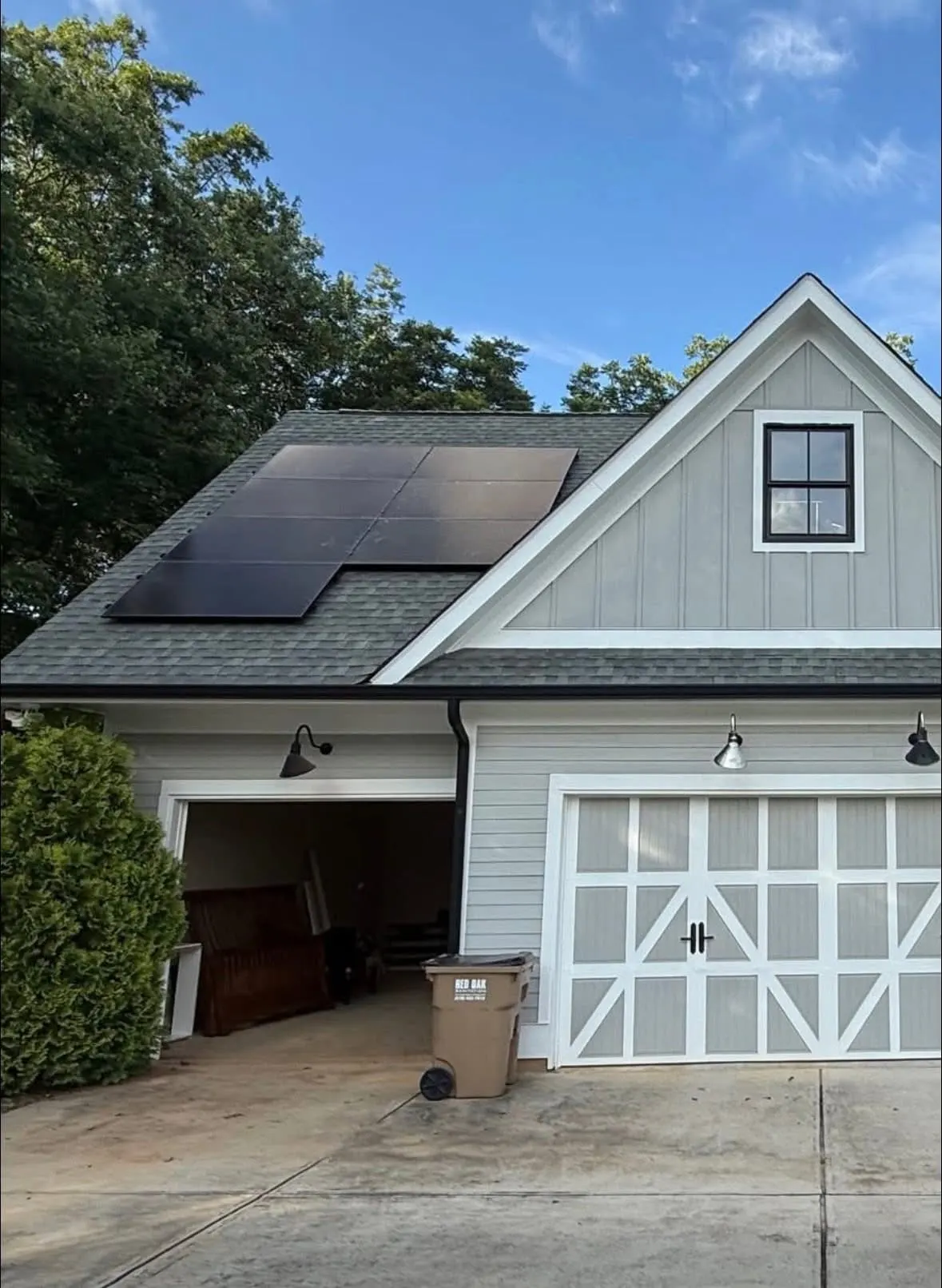
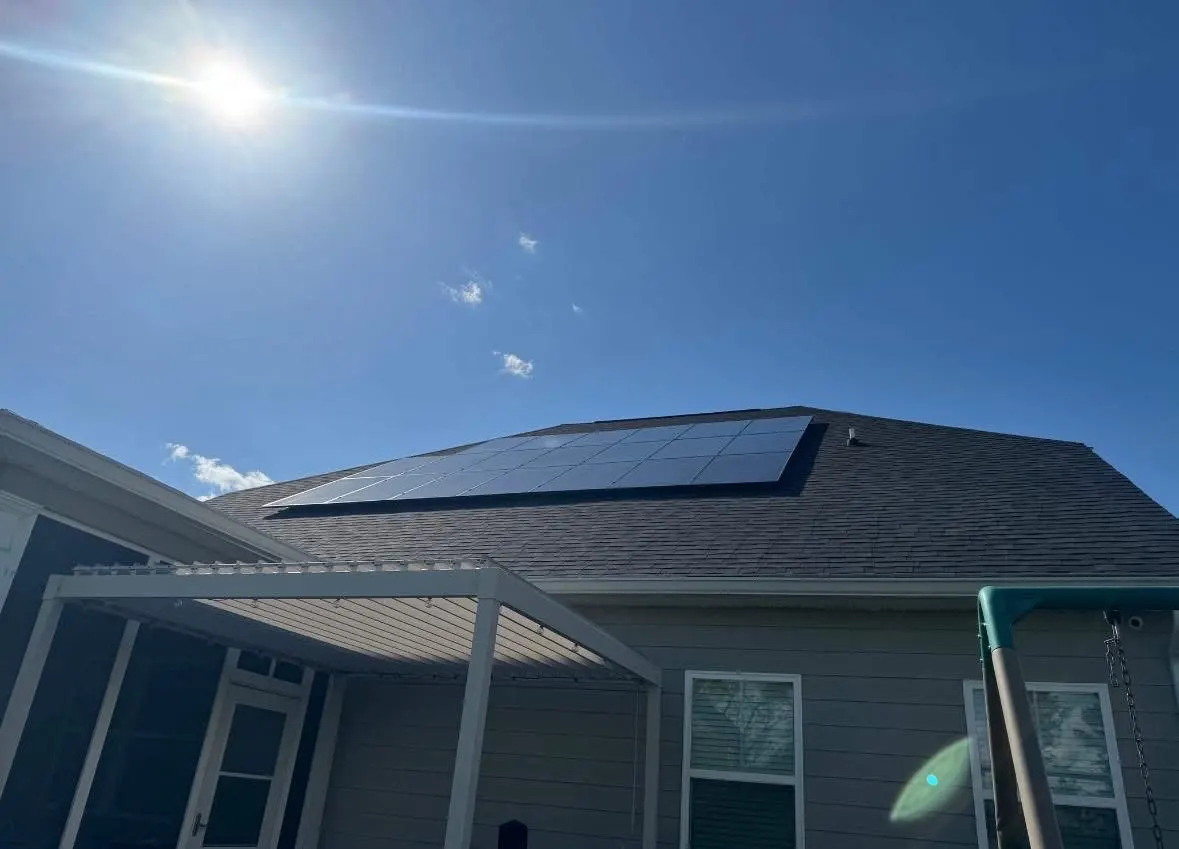
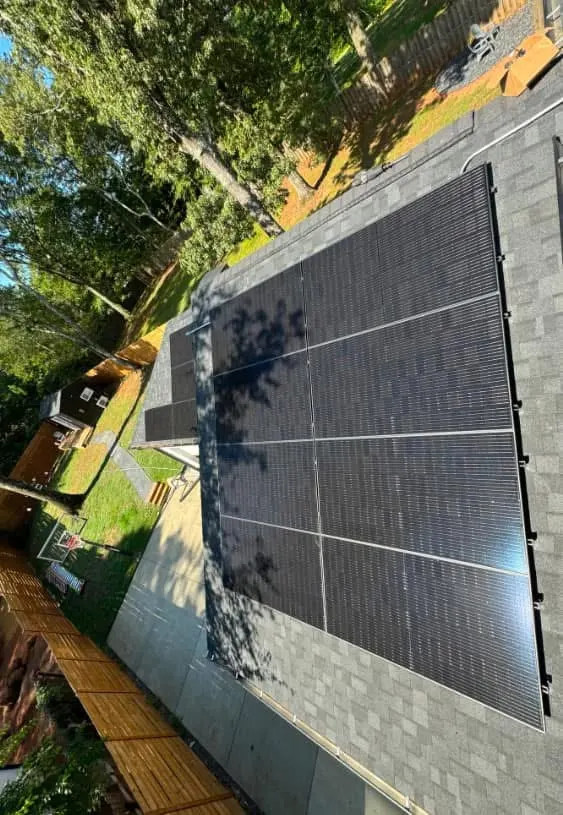
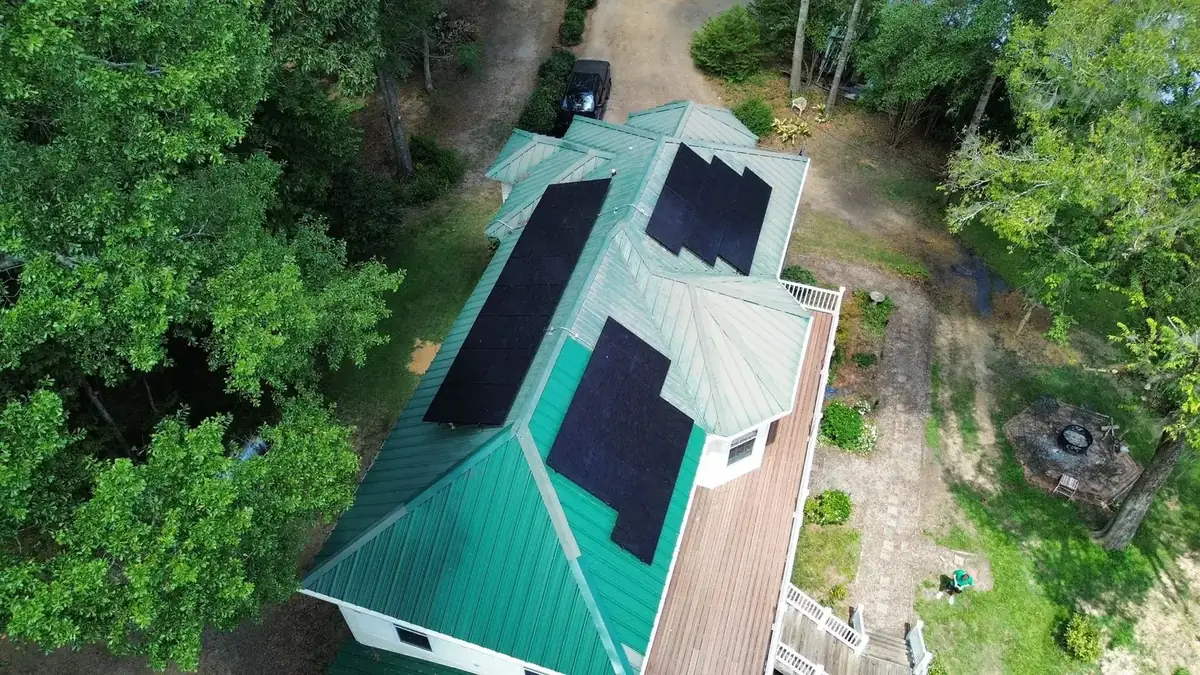
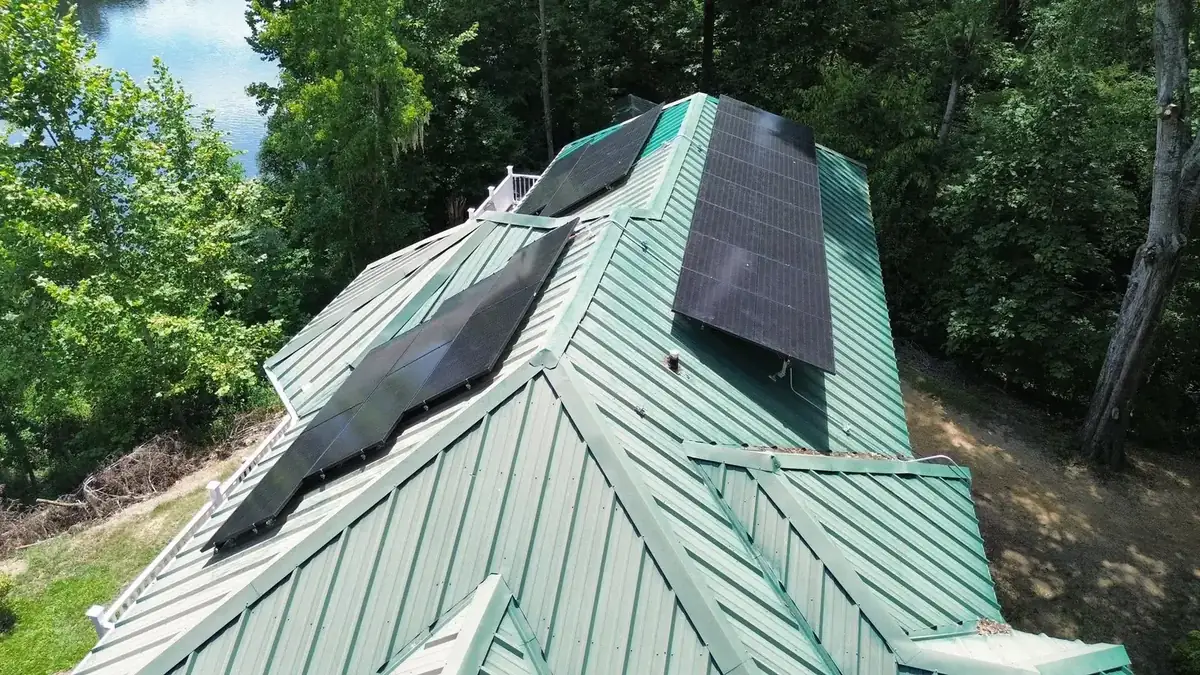
Photo locations are not published.
Savannah solar FAQ
Savannah is served by Georgia Power. Under the Territorial Service Act your supplier follows your street address rather than your choice, and Canoochee EMC serves parts of Chatham County outside the city, so we confirm from your bill before designing. Georgia Power credits exported power at about 7.22 cents per kilowatt-hour for 2026 against a retail rate near 13 cents.
The one whose licence checks out with the Georgia Construction Industry Licensing Board, whose quote names Georgia Power and states about 14,010 kWh a year for 9.5 kW, and who services what it installs. Ours does all three, with a lifetime full-system warranty.
At the $2.59 per watt benchmark, a 6 kW system is about $15,540 installed and a 9.5 kW system about $24,605. Georgia has no state solar tax credit, so there is nothing to subtract. In Savannah that 9.5 kW system makes about 14,010 kWh a year unshaded; your quote depends on roof, shade and usage.
One-for-one netting is not available to new Georgia Power systems: its monthly netting pilot was capped at 5,000 customers and filled in 2021, so exports are credited at about 7.22¢ per kWh (a 3.2188¢ avoided-cost rate plus a 4¢ adder). Georgia Power households paid about 15.5¢ per kWh on average in 2024, so every kWh you use at home is worth more than one you export, and we size to your usage rather than to fill the roof.
Georgia property-tax treatment of solar is genuinely unsettled: reputable sources describe a $25,000 exemption, a full exemption and no statewide exemption. Confirm with the Georgia Department of Revenue and your county assessor rather than relying on any figure printed online. Check with the Chatham County assessor.
44% of Savannah homes are owner-occupied, and for owners the choice is real. Buying, with cash or a loan, means you own the system and add an asset to the house. With a lease or power purchase agreement the provider owns the panels and a buyer of your home has to take over the agreement.
Georgia’s HB 389 stops an association prohibiting rooftop solar or charging permit fees for it, but only for association rules created, renewed or modified on or after 1 January 2026, so an older covenant may not be covered. In Savannah the stronger constraint is usually historic review rather than the HOA, and we prepare the Certificate of Appropriateness packet as part of the job.
A building permit and a separate electrical permit; A Certificate of Appropriateness before the work, where any exterior change is visible from the public right of way inside a historic district. This is separate from, and additional to, the building permit; A pre-application conference with Metropolitan Planning Commission staff where the petition goes to a board rather than to staff review; Permits from the City of Savannah for addresses inside city limits, or from the Chatham County Office of Building Safety and Regulatory Services for unincorporated addresses, which does not accept applications by fax or email. We pull every one through Chatham County and book the inspections.
Protected live oak canopy shades your best roof planes for much of the day, which is common on and around the squares. Your roof needs replacing within about five years. Your household is out during daylight and you do not want storage. Under a 7.22¢ export credit against a 13¢ retail rate, exporting most of your production is the weakest case in Georgia.
Free assessment · Savannah, GA
We read your bill, confirm your Georgia Power export terms, and tell you what your roof in Chatham County will actually carry, and say so if it will not pay.
Prefer to talk? (843) 310-1128
Coverage
Yes. We install in Savannah and across Chatham County, from our office on Daniel Island in the Charleston metro. Georgia Power territory is the one we quote against here, and the permit route is Savannah’s own.
What "near me" usually means for a solar job
Distance matters less than three things: whether we are licensed in your state, which utility meters your house, and whether a crew can get back to you for service. All three are settled before we quote, not after.
How to check in one step
Call (843) 310-1128 and give us your address, or send it with the form on this page. We will tell you the same day whether you are inside a market we serve, and we will say so plainly if you are not.
Nearby: Pooler, GA , Port Wentworth, GA , Richmond Hill, GA
We also install near Savannah