
Repair & service · Savannah, GA
Solar panel repair in Savannah, GA
Solar panel repair in Savannah starts with expected output: a healthy 9.5 kW system here should make about 14,010 kWh a year, roughly 1,337 in its best month.
If your system stopped working
We repair systems across Chatham County including ones we did not install. Compare your monitoring with about 14,010 kWh a year for a 9.5 kW system here; long hot summers with cooling load peaking in the same hours the roof produces hardest, and a genuine hurricane exposure.
Looking for a solar company in Savannah? See solar companies in Savannah: our local team, costs and a free assessment.


Free solar diagnostic
Tell us what the system is doing. No obligation.
Local failure patterns
What actually fails in Savannah
What fails on a Savannah system is mostly what the coast does to it. Salt air corrodes underspecified fasteners, racking and connectors, and the failures show up as intermittent production losses long before anything looks visibly wrong. When we are called to a system somebody else installed, the attachment and flashing detail is the first thing we inspect, because it is the item most often value-engineered out of a cheap quote.
The other pattern is storm-related. High-wind events find loose clamps and marginal attachment spacing, and a roof penetration that was sealed adequately for an inland site is not necessarily sealed adequately here. We would rather diagnose an underproducing array properly than replace parts speculatively, and where the original installer has gone we will tell you plainly what is worth repairing and what is not.
Written for Savannah specifically.
Orphaned systems
Your installer closed. Your system is still yours.
We diagnose and repair systems we did not install across Chatham County, tell you which manufacturer coverage still applies, and help with the claim.
What usually fails
What usually goes wrong in Savannah
Inverters first, then tripped disconnects, vegetation, soiling and monitoring faults, with salt-air corrosion on coastal hardware. A healthy 9.5 kW system here should make about 1,337 kWh in its best month.
Roof replacement
Panel removal and reinstall in Savannah
See removal and reinstallation for roof work.
Coastal. Salt air and hurricane wind loading both apply, so attachment spacing, fastener specification and roof-penetration detailing are more demanding here than inland, and the correct hardware costs more than the catalogue default. This is the same engineering we do in Charleston, and every penetration is backed by our lifetime roof-penetration warranty.
If the system is re-interconnected, Georgia Power's current RNR Instantaneous Netting terms may replace the ones it was signed up under.
Solar roofing and roof-first projects · current Savannah interconnection terms
Maintenance
What actually needs doing here
The Savannah list, for Chatham County weather and Georgia Power terms.
- 01
Watch your monitoring monthly
A healthy 9.5 kW system here makes about 1,337 kWh in May and 903 in December. Well below that is worth a call.
- 02
Vegetation, annually
The squares and the streets around them carry some of the heaviest mature live oak canopy of any city we work in, and it is protected. Out in West Chatham the newer subdivisions are substantially more open, which is a real difference in production between two addresses fifteen minutes apart.
- 03
Inspect after severe weather
Wind-lifted modules and loosened attachments are not always visible from the ground, and this coast gets tested.
- 04
What the weather does here
Long hot summers with cooling load peaking in the same hours the roof produces hardest, and a genuine hurricane exposure. Storm outages here are a real planning input rather than a sales line.
- 05
Re-approval with Georgia Power
An inverter swap or a capacity change usually means notifying Georgia Power, and Canoochee EMC serves parts of Chatham County outside the city, so we confirm the account first. Exports credit at about 7.22¢ per kWh (a 3.2188¢ avoided-cost rate plus a 4¢ adder) against about 13¢ per kWh (August 2026), which is also why a system running at reduced output costs more than it looks like it does.
- 06
Permit position in Chatham County
A building permit and a separate electrical permit. We confirm what a swap needs in Chatham County before quoting.
Savannah sun, month by month
Before solar panel repair in Savannah: what a healthy system makes
About 14,010 kWh a year from a south-facing roof with no shade. May is the strongest month at about 1,337 kWh and December the weakest at about 903 kWh.
Your roof will differ. The squares and the streets around them carry some of the heaviest mature live oak canopy of any city we work in, and it is protected.
Estimate: NASA POWER sun data for Savannah, PVWatts model, south-facing, no shade.
Homes in Savannah
Savannah roofs and solar panel repair
- 26,019owner-occupied homes (44% of 58,632)
- 1971median year homes were built
- 55%of homes are single-family detached
- $225kmedian owner-occupied home value
- Half of Savannah homes are more than 55 years old, so the roof check matters here: a roof with under ten years left should be replaced before solar goes on, or at the same time.
- Only 55% of homes are single-family detached; in the other 45% the association or shared roof decides first.
- 26,019 Savannah households own their home, the ones who can install and claim the system as an asset.
- A 9.5 kW system at about $24,605 is roughly 11% of the median $225k Savannah home value.
Source: US Census Bureau, American Community Survey 2023 5-year estimates for Savannah city. Estimates, rounded.
Our work
Real systems our crews have installed
Our own job photos, not stock or renders. Coastal.
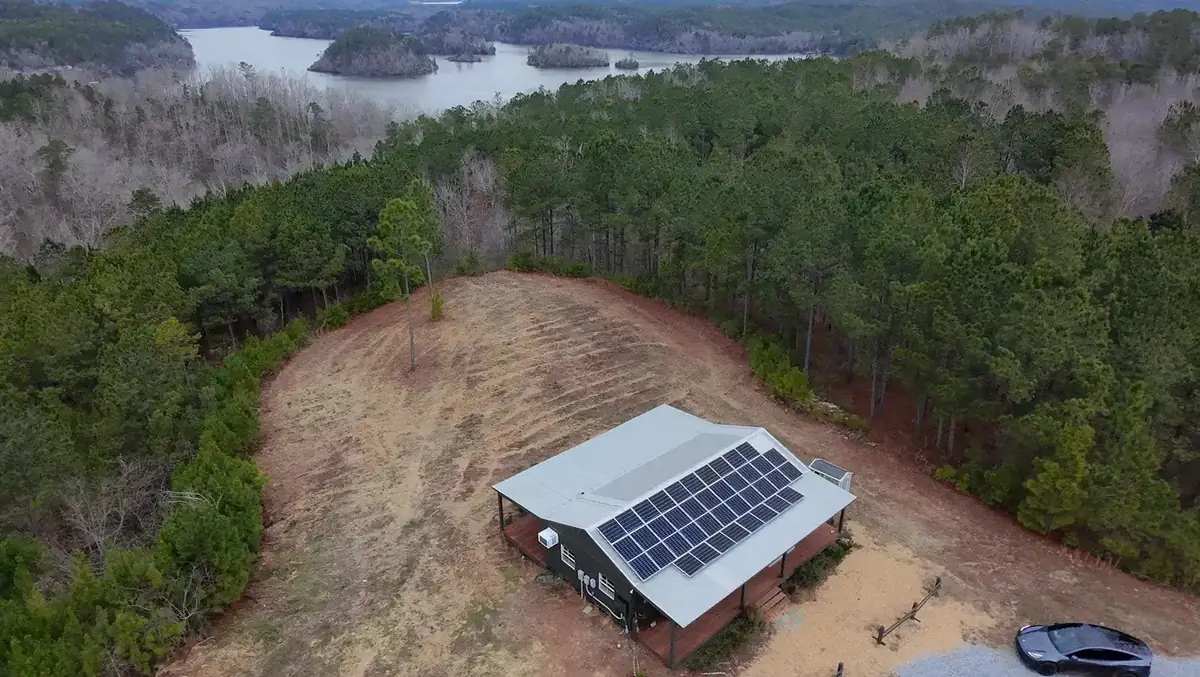 Off-GridOff-grid lake cabinGround-tilt metal roof array
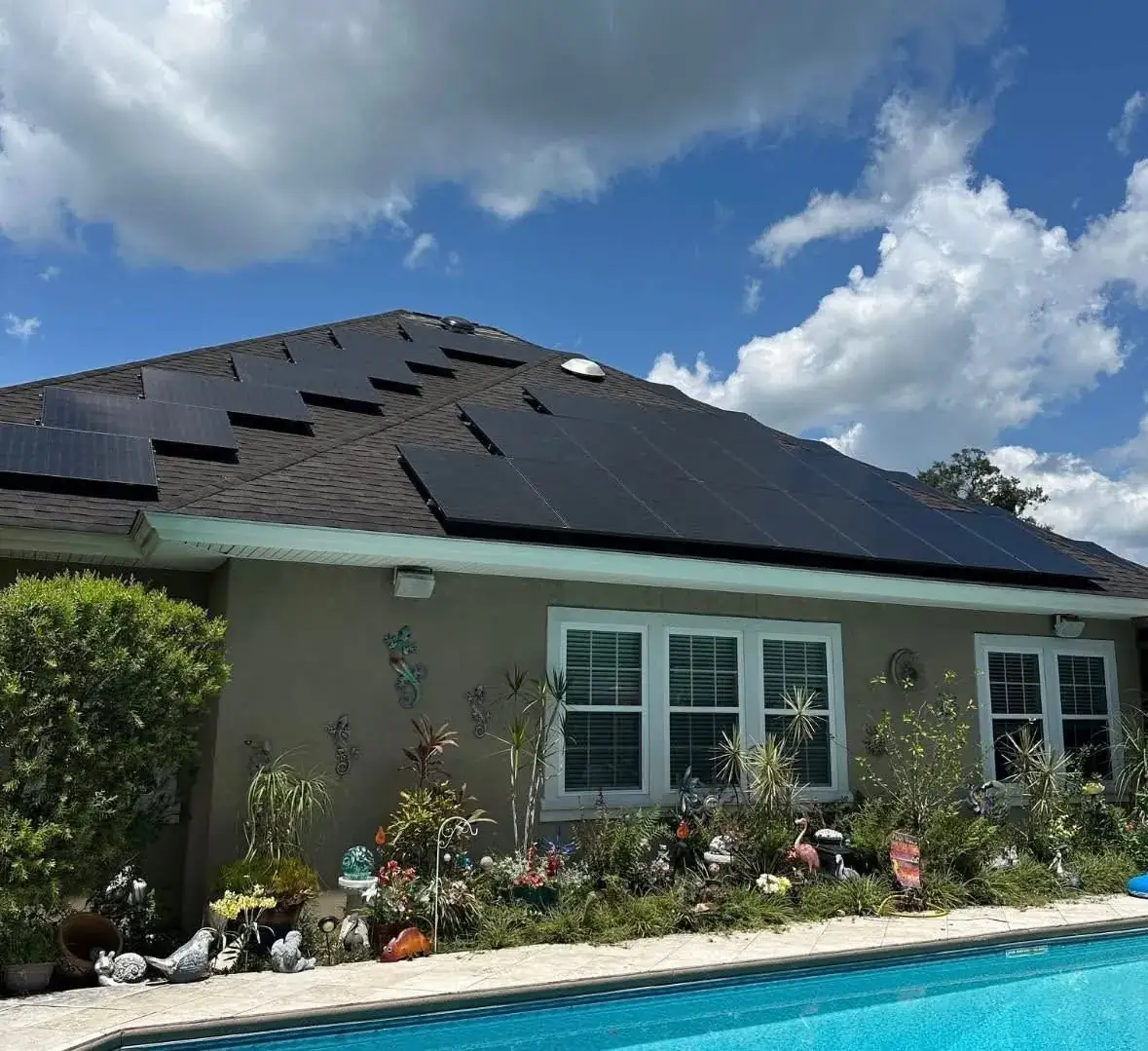 ResidentialFull black-on-blackPoolside single-story home
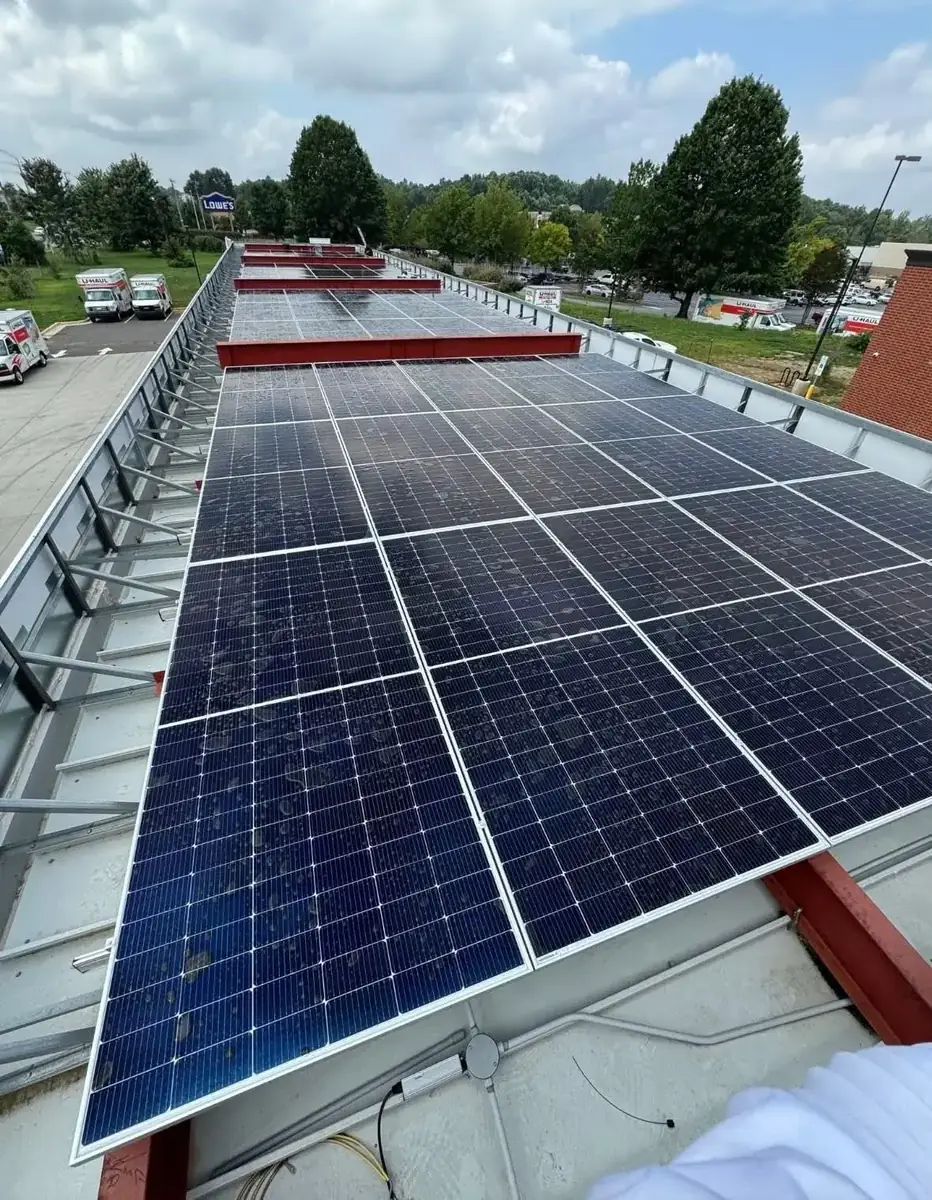 CommercialCommercial rooftopTilt-mounted rooftop system
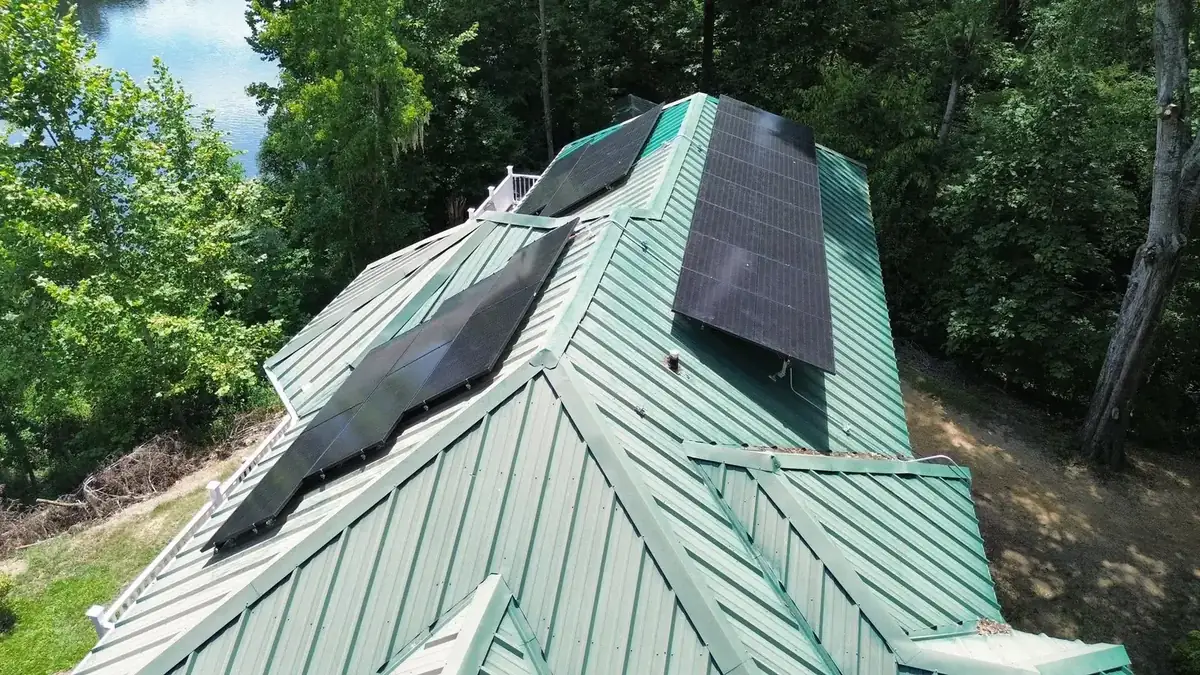 ResidentialStanding-seam metal roofLakeside multi-facet install
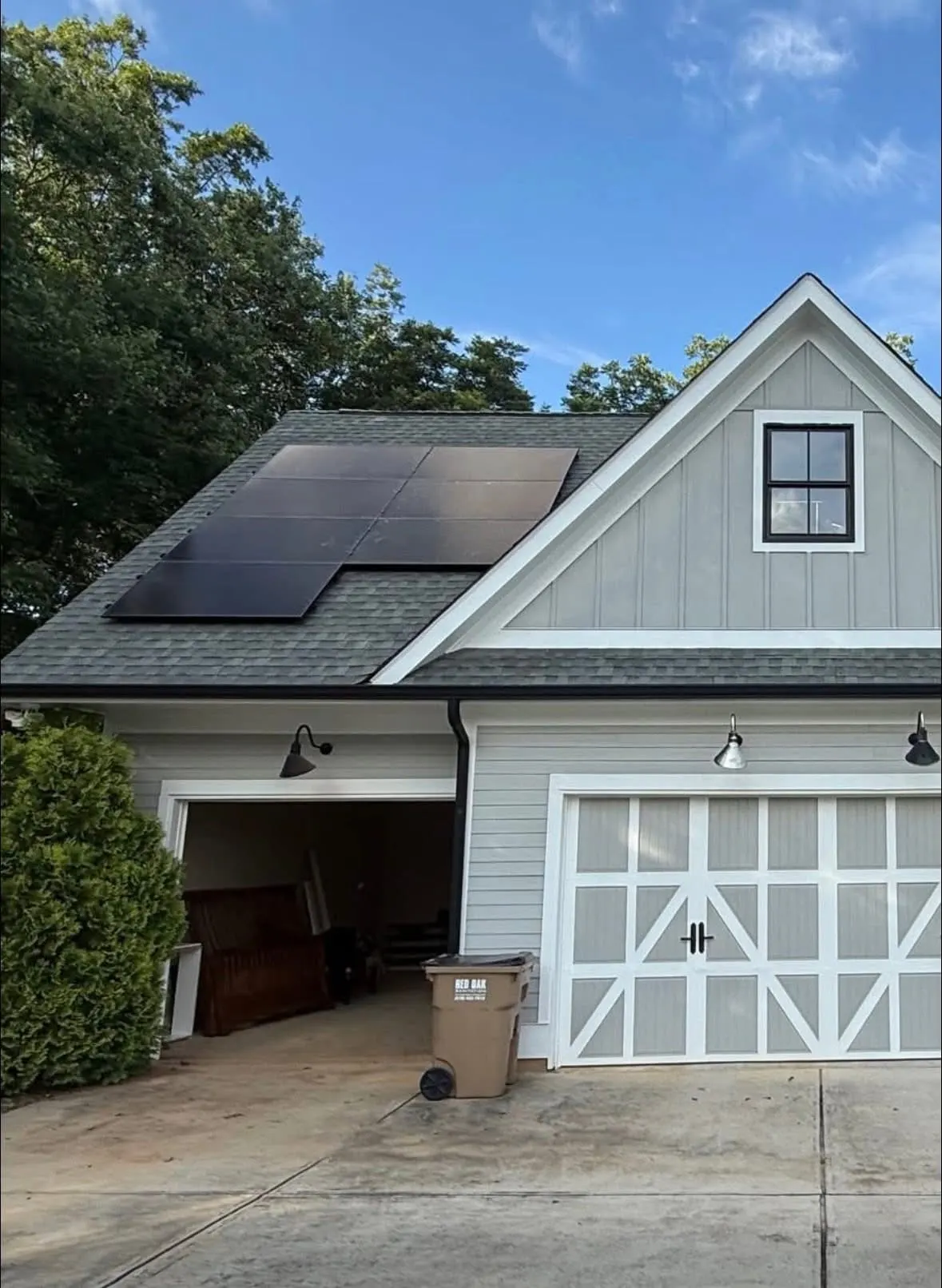 ResidentialDetached garage arrayFarmhouse-style home
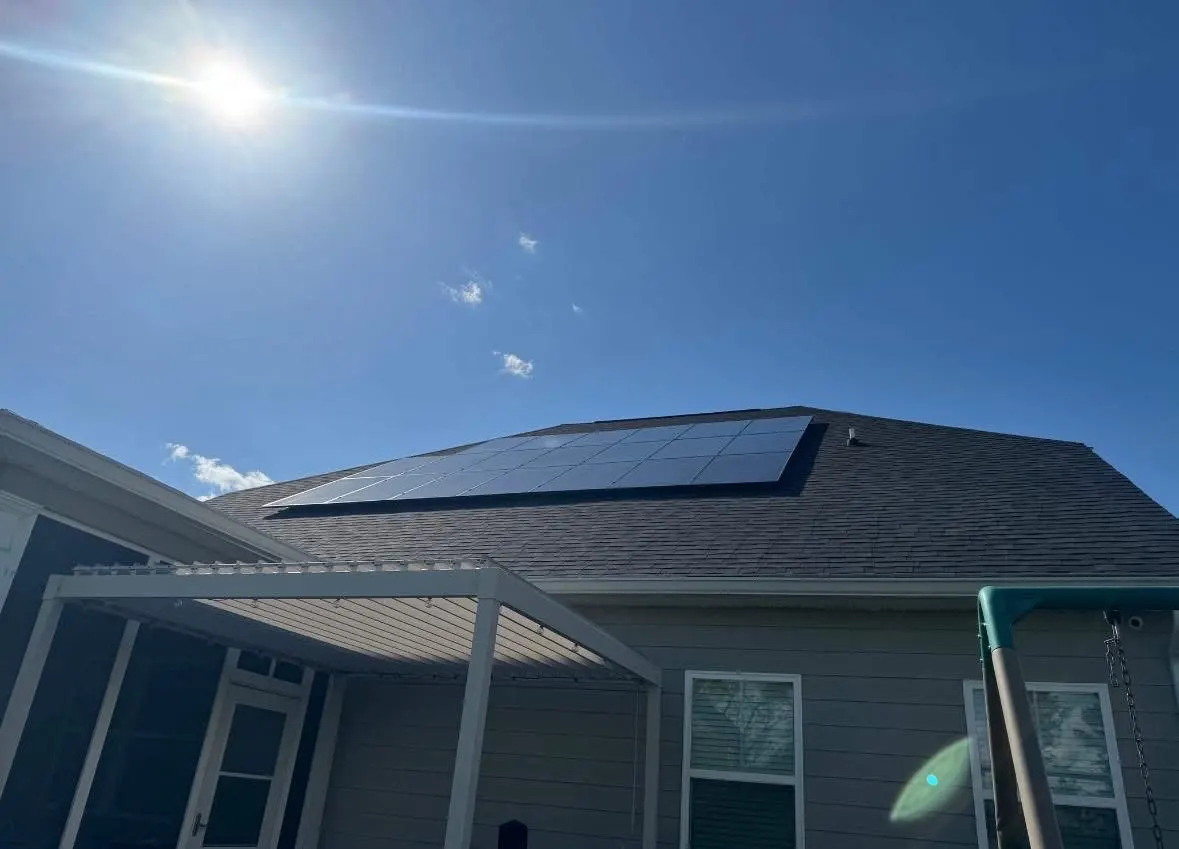 ResidentialShingle rooftop arrayBackyard-facing slope
Photo locations are not published.
Not sure it is actually broken?
In Savannah a 9.5 kW system's December output (about 903 kWh) is 68% of its May peak, so a lower winter bill is usually the season.
Free assessment · Savannah, GA
Get a straight answer for your Savannah roof
We read your bill, confirm your Georgia Power export terms, and tell you what your roof in Chatham County will actually carry, and say so if it will not pay.
- Most addresses here are on Georgia Power, but Canoochee EMC serves parts of Chatham County outside the city. We confirm yours from your bill before we quote anything
- A building permit and a separate electrical permit: we pull it and manage the inspections
- Savannah has two different historic review bodies and which one you face depends on your address.
Prefer to talk? (843) 310-1128
Savannah solar repair FAQ
Repair questions from Savannah homeowners
Is it worth repairing an older system or replacing it?
It depends on the fault and the age. Georgia Power's current RNR Instantaneous Netting terms apply to any re-interconnected system.
How do I know if I need solar panel repair in Savannah?
Compare your monitoring with the expected output: about 14,010 kWh a year for a 9.5 kW system here, with 1,337 in the best month and 903 in the weakest. Well below that is worth a diagnostic.
Does solar panel repair in Savannah include roof work?
Half of Savannah homes are more than 55 years old, so the roof check matters here: a roof with under ten years left should be replaced before solar goes on, or at the same time. We remove, store and reinstall the array around the reroof.
What does solar panel repair in Savannah look like after a storm?
Long hot summers with cooling load peaking in the same hours the roof produces hardest, and a genuine hurricane exposure. Storm outages here are a real planning input rather than a sales line. After a storm we check the inverter, the strings, the racking and every roof penetration, then compare output against the 1,337 kWh a 9.5 kW system should make in its best month here.
Free, no-pressure diagnostic
Find out what is actually wrong with your Savannah system
Tell us what you are seeing and we will diagnose it, including systems we did not install. If the fix is cheap we will say so, and if repair is not economic we will tell you that instead.
Mon–Sat, 10am–6:30pm ET · We typically follow up within the hour.