
How to buy well · Savannah, GA
Buying solar panels in Savannah, GA
Buying solar panels in Savannah? Expect about $2.59 per watt installed and about 14,010 kWh a year from a 9.5 kW system; any quote far outside that needs explaining.
The short version
In Savannah, start with 12 months of Georgia Power bills and the roof, then get three quotes priced near the $2.59 per watt benchmark, each naming Georgia Power's export rate (about 7.22¢ per kWh (a 3.2188¢ avoided-cost rate plus a 4¢ adder)) and the 6 Chatham County approvals.
Looking for a solar company in Savannah? See solar companies in Savannah: our local team, costs and a free assessment.


Free roof and bill assessment
Takes under a minute. No pressure, and no guaranteed-savings math.
Local buying reality
What buying here involves in Savannah
Three questions will tell you more about a Savannah quote than any equipment brand. First: which utility serves this address, and what is it currently paying for exported power? Georgia territory is assigned by law under the Territorial Service Act rather than chosen, and Canoochee EMC serves parts of Chatham outside the city on different terms. A salesperson who cannot name your supplier from your bill is quoting decoration.
Second: is this address inside a historic district, and if so which body reviews it? The Historic District Board of Review covers the Downtown Historic Overlay District and the Historic Preservation Commission covers the Victorian, Streetcar and Cuyler-Brownville districts. A design that assumed no review can come back materially smaller after one meeting, and a Certificate of Appropriateness is not a building permit, so both are needed.
Third, ask for the attachment schedule and the flashing specification in writing rather than a brand name. This is a coastal city in a hurricane track, and salt air finds every shortcut in fastener and racking selection. Once the modules are up, the penetration detail underneath them is invisible from the ground for the next twenty-five years, which is exactly why it is the first thing trimmed from a cheap quote.
Written for Savannah specifically.
Local to Savannah
Five things to settle before you take a quote seriously
- 01
Your meter: Georgia Power, probably
Canoochee EMC serves parts of Chatham County outside the city, so this is worth confirming from the bill rather than the postcode. Exports currently credit at about 7.22¢ per kWh (a 3.2188¢ avoided-cost rate plus a 4¢ adder) against about 13¢ per kWh retail (August 2026).
- 02
Local benchmark: $2.59 per watt
A statewide figure, installed, before incentives, as of August 2026.
- 03
What the roof imposes here
Coastal. Salt air and hurricane wind loading both apply, so attachment spacing, fastener specification and roof-penetration detailing are more demanding here than inland, and the correct hardware costs more than the catalogue default. This is the same engineering we do in Charleston, and every penetration is backed by our lifetime roof-penetration warranty.
- 04
What shades the design here
The squares and the streets around them carry some of the heaviest mature live oak canopy of any city we work in, and it is protected. Out in West Chatham the newer subdivisions are substantially more open, which is a real difference in production between two addresses fifteen minutes apart.
- 05
Who has to approve it
Savannah has two different historic review bodies and which one you face depends on your address. The Historic District Board of Review handles the Downtown Historic Overlay District; the Historic Preservation Commission handles the Victorian, Streetcar and Cuyler-Brownville districts. Any exterior change visible from the public right of way, lanes included, needs a Certificate of Appropriateness, and rooftop solar downtown is genuinely petitioned rather than waved through. A Certificate of Appropriateness is not a building permit, and a project inside the districts needs both.
- 06
Permits in Chatham County
A building permit and a separate electrical permit. A Certificate of Appropriateness before the work, where any exterior change is visible from the public right of way inside a historic district. This is separate from, and additional to, the building permit.
In order
The steps to buying solar in Savannah
Pull 12 months of Georgia Power bills, check roof life (the median Savannah home was built in 1971), confirm your utility, get three like-for-like quotes, then the Chatham County permits and Georgia Power approval.
Compare
The numbers that make quotes comparable
Price per watt (about $2.59 per watt here), size in kW DC, equipment models, annual kWh, cash price beside the financed price, and every warranty.
Red flags
Red flags in the Savannah market
Same-day pressure, a 2026 price that subtracts the federal homeowner credit, savings modelled on a utility other than Georgia Power, and no annual kWh figure (about 14,010 kWh is the unshaded ceiling for 9.5 kW here).
Own or lease
Why we point people toward owning
Owning keeps the system as part of the house; a lease or PPA keeps it with the provider and passes to your buyer.
Buying from us
What is included, plainly
A design from your Georgia Power bills, all 6 Chatham County approvals, the Georgia Power interconnection, coastal wind-load attachment, installation by our own crews, and the lifetime full-system and roof-penetration warranty.
Savannah sun, month by month
Buying solar in Savannah: what a system should make
About 14,010 kWh a year from a south-facing roof with no shade. May is the strongest month at about 1,337 kWh and December the weakest at about 903 kWh.
Your roof will differ. The squares and the streets around them carry some of the heaviest mature live oak canopy of any city we work in, and it is protected.
Estimate: NASA POWER sun data for Savannah, PVWatts model, south-facing, no shade.
Homes in Savannah
Buying solar in Savannah: what the homes here mean
- 26,019owner-occupied homes (44% of 58,632)
- 1971median year homes were built
- 55%of homes are single-family detached
- $225kmedian owner-occupied home value
- Half of Savannah homes are more than 55 years old, so the roof check matters here: a roof with under ten years left should be replaced before solar goes on, or at the same time.
- Only 55% of homes are single-family detached; in the other 45% the association or shared roof decides first.
- 26,019 Savannah households own their home, the ones who can install and claim the system as an asset.
- A 9.5 kW system at about $24,605 is roughly 11% of the median $225k Savannah home value.
Source: US Census Bureau, American Community Survey 2023 5-year estimates for Savannah city. Estimates, rounded.
Our work
Real systems our crews have installed
Our own job photos, not stock or renders. Coastal.
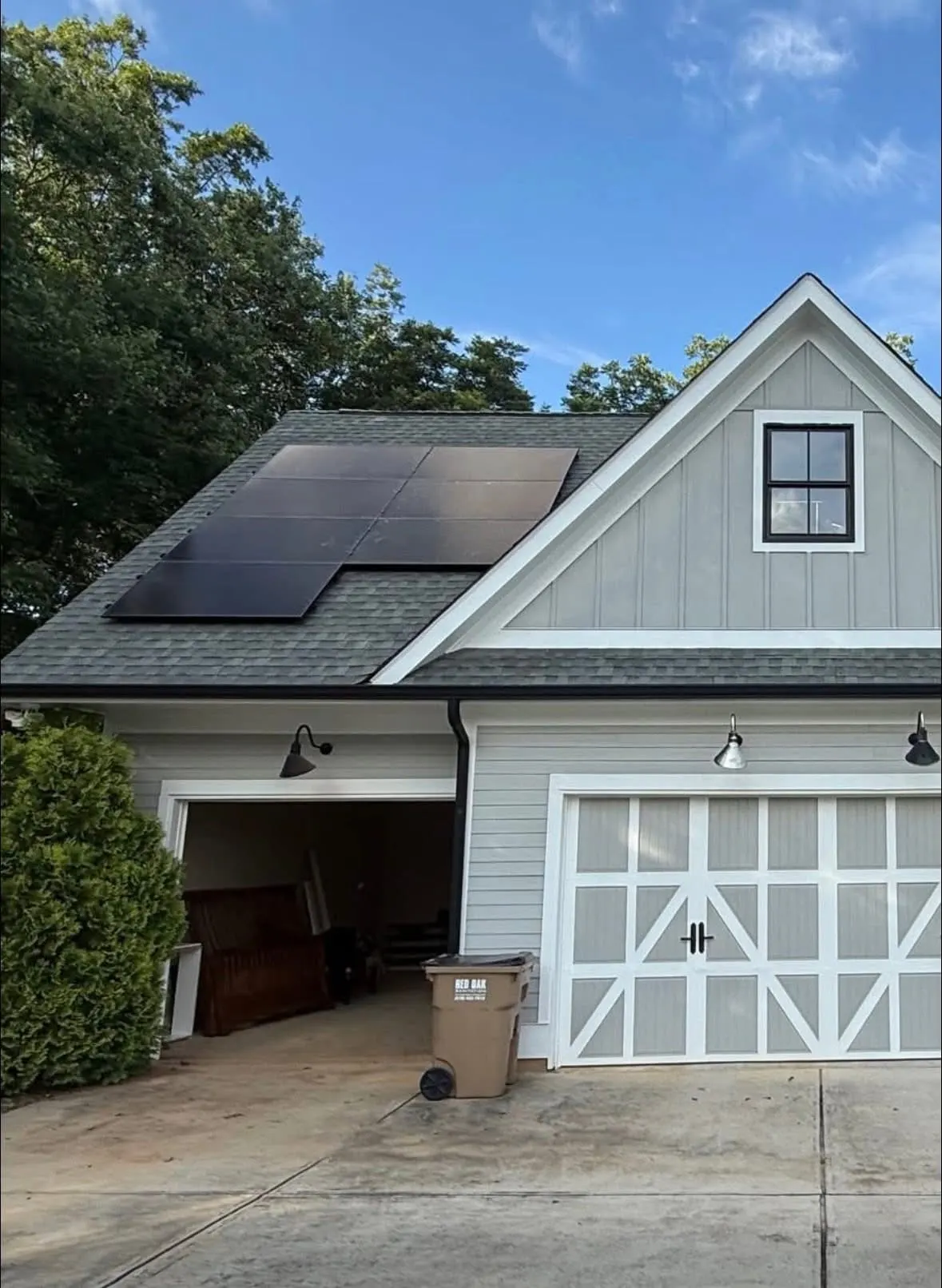 ResidentialDetached garage arrayFarmhouse-style home
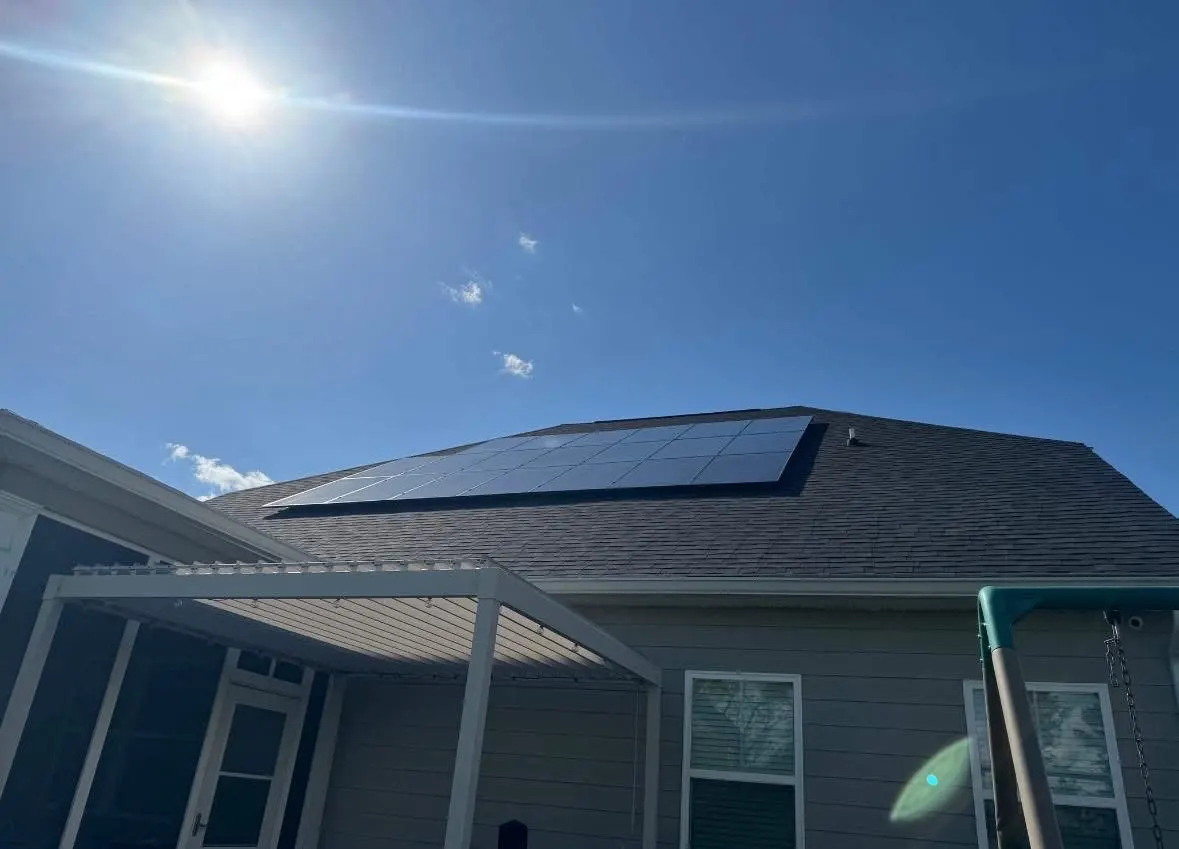 ResidentialShingle rooftop arrayBackyard-facing slope
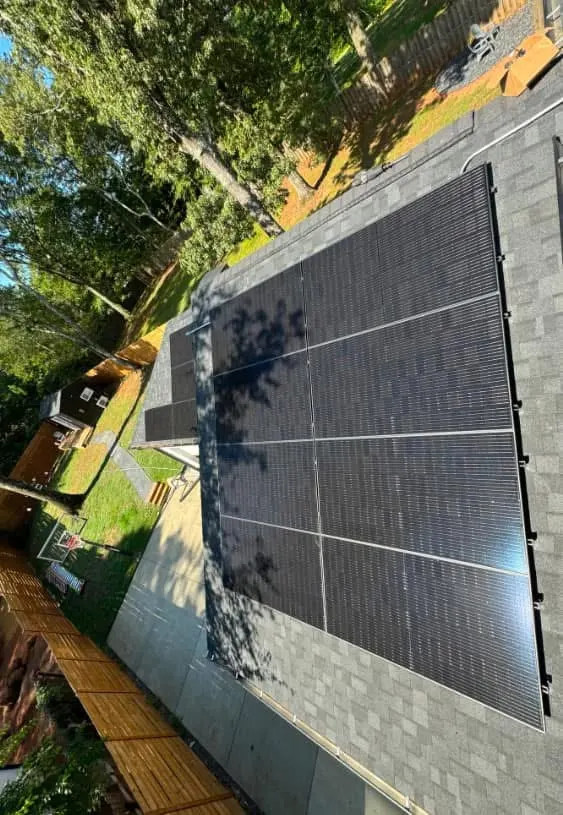 ResidentialClean rooftop layoutBlack-framed panels
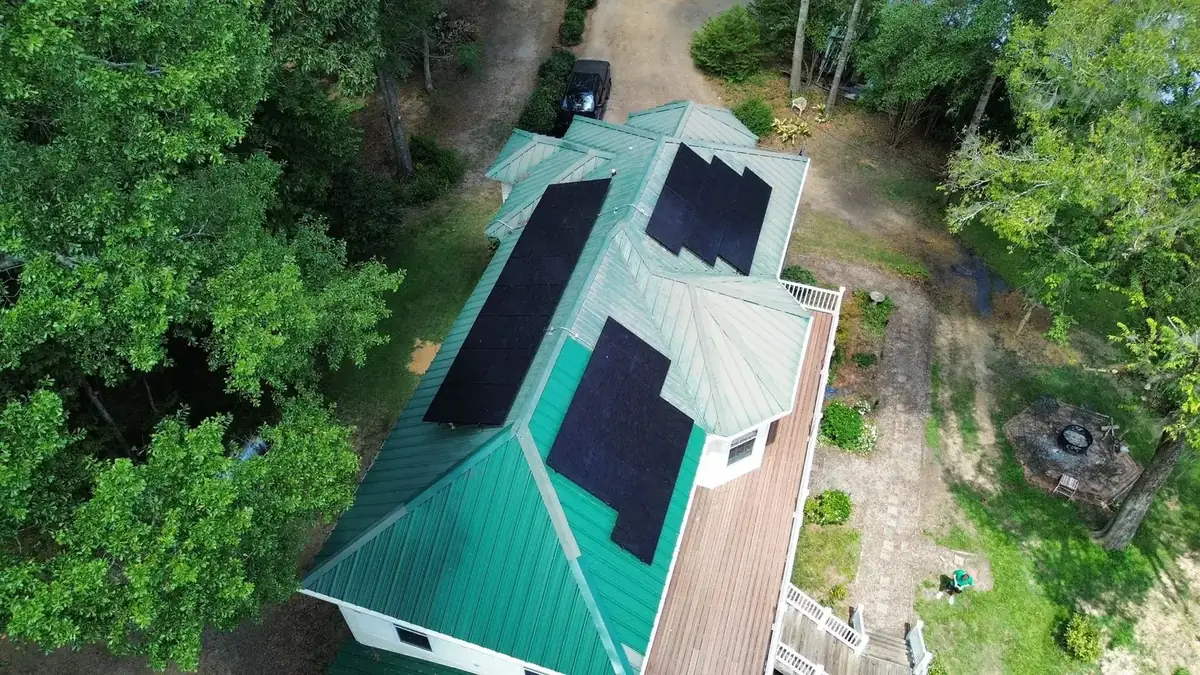 ResidentialMulti-facet metal roofWooded aerial view
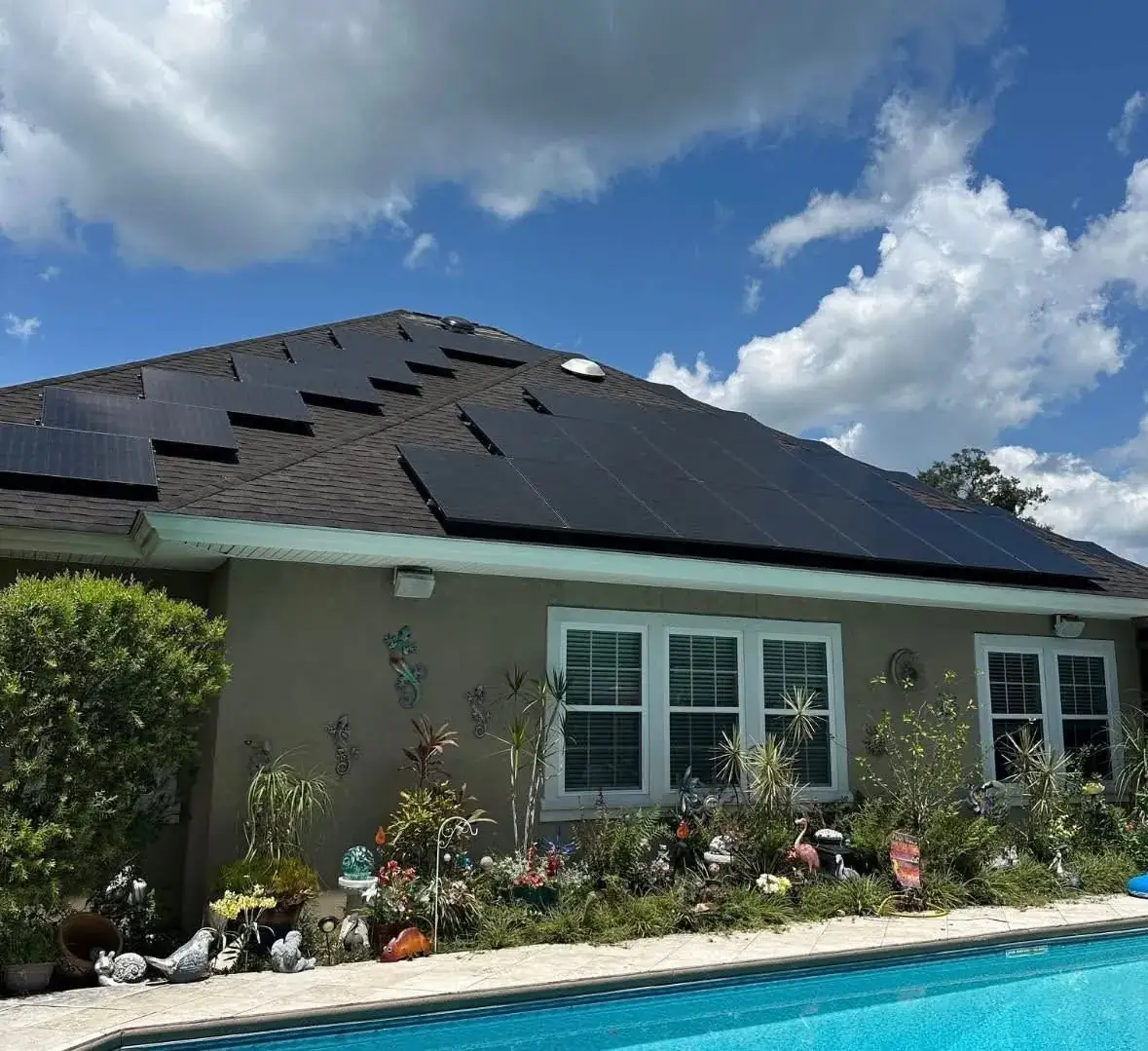 ResidentialFull black-on-blackPoolside single-story home
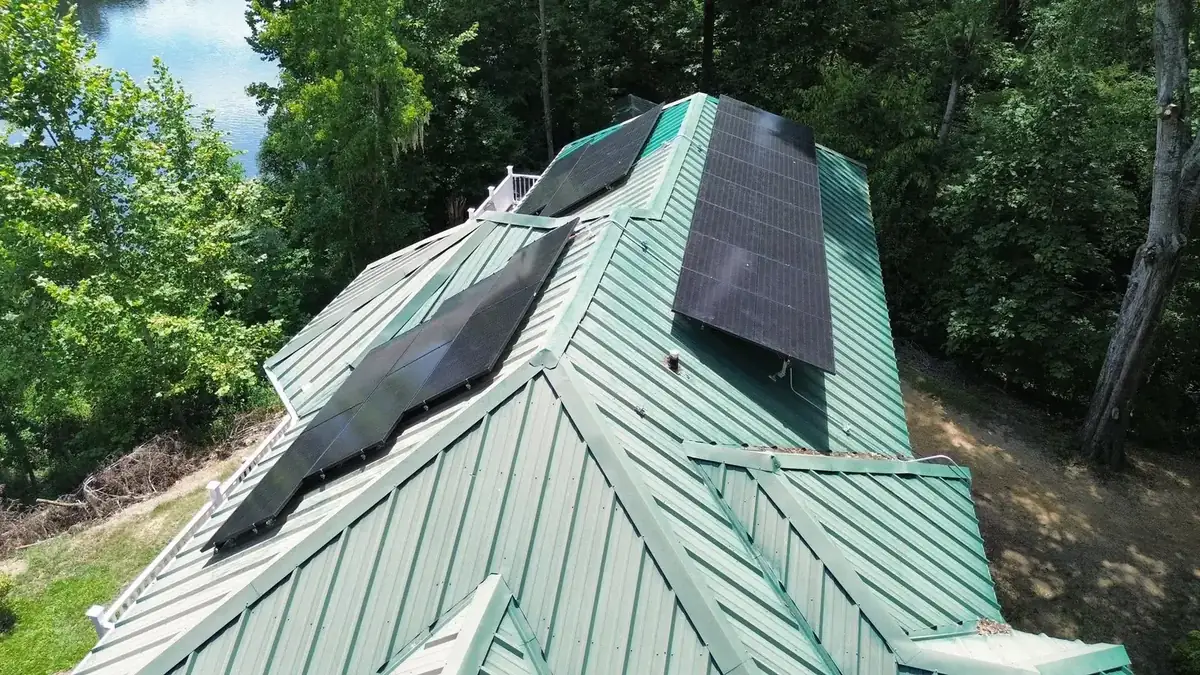 ResidentialStanding-seam metal roofLakeside multi-facet install
Photo locations are not published.
Free assessment · Savannah, GA
Get a straight answer for your Savannah roof
We read your bill, confirm your Georgia Power export terms, and tell you what your roof in Chatham County will actually carry, and say so if it will not pay.
- Most addresses here are on Georgia Power, but Canoochee EMC serves parts of Chatham County outside the city. We confirm yours from your bill before we quote anything
- A building permit and a separate electrical permit: we pull it and manage the inspections
- Savannah has two different historic review bodies and which one you face depends on your address.
Prefer to talk? (843) 310-1128
Buying solar in Savannah
Questions worth asking before you sign
Should I buy, finance or lease solar in Savannah?
Buying outright gives the shortest payback; with a loan, check the dealer fee. With exports at about 7.22¢ per kWh (a 3.2188¢ avoided-cost rate plus a 4¢ adder), a lease only pays if you use most of the output at home.
How long does buying and installing solar take in Savannah?
Installation itself is usually days. The overall timeline is set by permitting with Chatham County and the Georgia Power interconnection queue, neither of which any installer fully controls.
Do I have to buy the biggest system I can fit?
No, and you usually should not. Because Georgia Power credits exports at about 7.22¢ per kWh (a 3.2188¢ avoided-cost rate plus a 4¢ adder) against about 13¢ per kWh, production beyond your own consumption is worth a fraction of what the panels cost. We size to your bill rather than your roof area.
What should buying solar panels in Savannah cost per watt?
About $2.59 per watt installed as of August 2026, so a 9.5 kW system is about $24,605. A quote well above that should explain why.
How much power should I expect after buying solar panels in Savannah?
About 14,010 kWh a year from a 9.5 kW south-facing system with no shade, peaking around 1,337 kWh in the best month. Any quote should state its own annual kWh figure.
Where do I start buying solar panels in Savannah?
With 12 months of Georgia Power bills and a roof check (the median Savannah home was built in 1971), then three quotes that each state annual kWh, price per watt and the 6 Chatham County approvals.
Free, no-pressure assessment
Ask us the hard questions about your Savannah project
Bring the list from this page. We will give you price per watt, exact equipment, our production methodology, and the cash price separately from the financed price, in writing.
Mon–Sat, 10am–6:30pm ET · We typically follow up within the hour.