
A pushy salesperson who won’t leave your kitchen table until you sign is the clearest sign you’re talking to the wrong solar company. The best way to protect yourself when learning how to choose a solar installer is to watch for red flags like same-day pressure tactics, vague warranty language, unclear crews, and murky pricing before you ever pick up a pen. This guide walks through the seven warning signs South Carolina homeowners run into most often, and what a trustworthy installer does instead.
Key Takeaways
- Pressure is a warning sign, not a deal: Any installer pushing a same-day signature or “today-only” pricing is using a script, not giving you an honest quote.
- Ask who actually installs your system: In-house certified crews tend to deliver more consistent workmanship and accountability than rotating subcontractor teams.
- A 10-year workmanship warranty is a reasonable baseline: Anything shorter, vaguer, or not backed by third-party insurance deserves more questions.
- Permitting and HOA support should be included: If an installer can’t explain how long South Carolina permitting takes or won’t help with HOA paperwork, that’s a gap you’ll inherit.
- The lowest quote isn’t automatically the best value: Compare equipment tier, labor scope, and long-term support, not just the number at the bottom of the page.
At a Glance: Red Flags vs. What a Trustworthy Installer Offers
| Red Flag Behavior | What a Trustworthy Installer Does Instead |
|---|---|
| Demands a signature same-day, uses “deadline” urgency | Gives you time to compare quotes and review the contract at your own pace |
| Can’t explain permitting or interconnection steps | Walks you through local permitting timelines and utility interconnection upfront |
| Won’t say who installs the system | Confirms whether crews are in-house, certified, and background-checked |
| Short or vague warranty terms | Offers a written 10-year (or longer) workmanship warranty plus manufacturer coverage |
| Leaves HOA approval paperwork to you | Handles or actively assists with HOA documentation and design compliance |
| Quote has no equipment or labor breakdown | Provides an itemized proposal showing panel tier, inverter brand, and labor costs |
| Goes quiet after the contract is signed | Provides ongoing monitoring, a service contact, and a defined maintenance plan |

Why Picking the Right Solar Installer Matters More Than the Price Tag
South Carolina’s solar market has grown crowded fast. Homeowners from Charleston to Columbia to Hilton Head Island now get calls, mailers, and door knocks from installers ranging from small local crews to large national franchises. That competition is good for consumers in theory, but it also means more sales pressure and more shortcuts from companies trying to win business on price alone.
The cheapest bid rarely stays the cheapest once you count change orders, slow permitting, or a warranty that turns out to be full of exclusions. A system installed poorly on a coastal roof that faces salt air and hurricane-force wind gusts is a much bigger problem than a slightly higher upfront quote. Choosing well means looking past the sticker price toward crew quality, permitting expertise, and what happens five or ten years after installation day.
This is also a decision shaped by where you live. Permitting rules, utility interconnection requirements, and HOA review processes differ across South Carolina’s counties and utility territories. An installer with strong local experience will already know these quirks. One unfamiliar with your area may guess, and you’ll pay for that guesswork in delays.
1. Red Flag: High-Pressure, Same-Day Sign-Now Sales Tactics
Watch for a sales rep who insists you sign a contract during the first visit, or who claims a discount “expires tonight.” Solar equipment doesn’t get marked down like a car on a dealer lot. Legitimate pricing based on your roof, equipment tier, and financing terms doesn’t need to disappear by morning.
Some reps also lean on artificial urgency around tax credits, implying you’ll lose eligibility if you don’t sign immediately. In reality, the federal solar tax credit applies based on the year your system is placed in service, not the day you sign a proposal. A rep manufacturing panic around this timeline is using pressure, not facts.
A trustworthy consultation looks different. The installer walks you through your roof’s condition, your electricity usage, and financing options, then leaves you the proposal to review. You should be able to sleep on it, compare it against another bid, and ask follow-up questions before committing.
2. Red Flag: Vague or Missing Answers About Permitting and Interconnection
Every solar installation in South Carolina needs a building permit and, in most cases, utility interconnection approval before your system can be switched on. Timelines vary by county and by utility, and they can stretch from a few weeks to a couple months depending on backlog and paperwork accuracy.
If a sales rep shrugs off questions about permitting, or tells you “it’s quick, don’t worry about it,” push further. Ask specifically who submits the permit, how they track approval status, and what happens if the utility requests corrections. Our breakdown of what to expect during solar installation in Charleston, SC covers how a well-run installer coordinates these steps from start to finish.
An installer who treats permitting as an afterthought is telling you something important: they may not have strong relationships with local building departments, and you could be the one stuck making follow-up calls when paperwork stalls.
3. Red Flag: No Clarity on In-House Crews vs. Subcontractors
Ask directly: “Who installs my system, and are they your employees?” Some solar companies, especially large national brands, sell the job themselves and then hand it off to a rotating pool of subcontracted crews. That’s not automatically bad, but it does add a layer of separation between the company that sold you the system and the people physically on your roof.
Subcontractor turnover can create accountability gaps. If something goes wrong during installation, a company using shifting third-party crews may have a harder time tracing back what happened or holding a specific team responsible. In-house, certified technicians tend to bring more consistency because they’re trained to one standard and answer directly to the company whose name is on your contract.
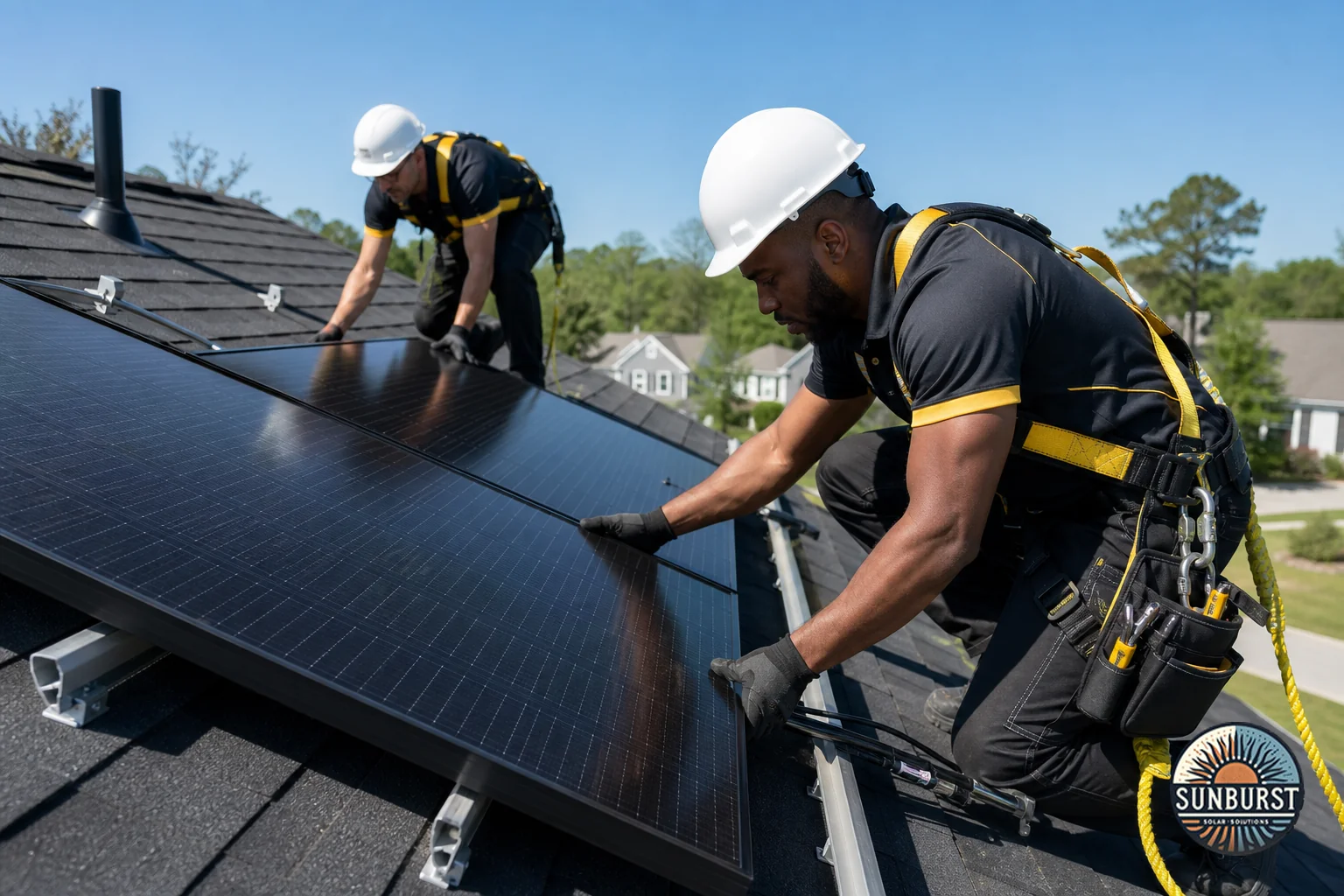
This distinction matters even more on coastal properties near Hilton Head Island or Myrtle Beach, where wind-rated mounting and flashing details need to be done correctly the first time. Ask how long the crew has worked together and whether they carry manufacturer-specific installation certifications, not just a general electrical license.
4. Red Flag: Weak, Vague, or Short Warranty Terms
Solar warranties come in layers, and it’s easy for a sales pitch to blur them together. There’s the manufacturer’s product warranty on the panels themselves, an inverter warranty (often shorter than the panel warranty), and a workmanship warranty covering the installer’s labor. If a rep can’t clearly separate these three, that’s a red flag on its own.
A 10-year workmanship warranty is a reasonable baseline to compare against. Anything noticeably shorter, or language so vague you can’t tell what’s actually covered, deserves more scrutiny. Also ask what happens to your warranty if the installer goes out of business. Third-party insurance-backed warranty protection can matter more than the paper promise of a single company, since it doesn’t disappear if that company closes its doors.
For a deeper walkthrough of how to line up warranty terms side by side, see our guide on how HOA solar approval works in Columbia, SC, which touches on documentation you’ll want on file alongside your warranty paperwork, and ask any installer you’re considering for their warranty document in writing, not just a verbal summary.
5. Red Flag: No HOA or Permitting Support Included
Many South Carolina neighborhoods, particularly newer developments around Charleston, Columbia, and the coast, have a homeowners association with design review requirements for solar panels. South Carolina law limits how much an HOA can restrict solar installations, but associations can still weigh in on placement, panel color, and visible equipment.
An installer who leaves you to figure out HOA submissions alone is handing you extra work and extra risk of delay. Ask upfront whether HOA documentation, layout diagrams, and any required applications are part of their process or an added cost. Our detailed look at HOA solar approval in Columbia, SC explains what documentation associations typically request and how a proactive installer speeds that process along.
Skipping this step isn’t just an inconvenience. A rejected or delayed HOA application can push your installation back weeks, and in a worst case, force a redesign after equipment has already been ordered.
6. Red Flag: Pricing That’s Too Good (or Too Vague) to Verify
A quote that’s dramatically lower than every other bid you’ve received is worth a second look, not automatic excitement. Lowball pricing sometimes reflects cheaper, lower-tier panels, a thinner workmanship warranty, or a plan to tack on “change orders” once the crew is on your roof and finds an issue they didn’t disclose upfront.
Ask for an itemized proposal, not just a total. You want to see the panel brand and tier, inverter type, estimated production, labor scope, permitting fees, and any monitoring equipment included. If a rep won’t break this down, or gets defensive when you ask, treat that as a signal to keep shopping.
New 2026 homeowner solar or battery installations do not qualify for the expired federal Residential Clean Energy Credit. South Carolina incentives are a separate calculation with their own eligibility, annual limits and tax-liability requirements. Confirm the actual project with a qualified tax professional; do not assume combined federal/state credits cut a new purchase price in half. See current IRS Section 25D guidance.
7. Red Flag: Poor Communication and No Post-Installation Support Plan
Some installers are excellent during the sales process and nearly silent once the check clears. Ask specifically what happens after your system is switched on. Do you get access to a monitoring app that tracks daily production? Is there a maintenance plan, and what’s the expected response time if a panel or inverter has an issue five years down the road?
A company with no clear answer here is telling you that your relationship with them likely ends at installation, not that it continues for the 20-plus year life of your system.
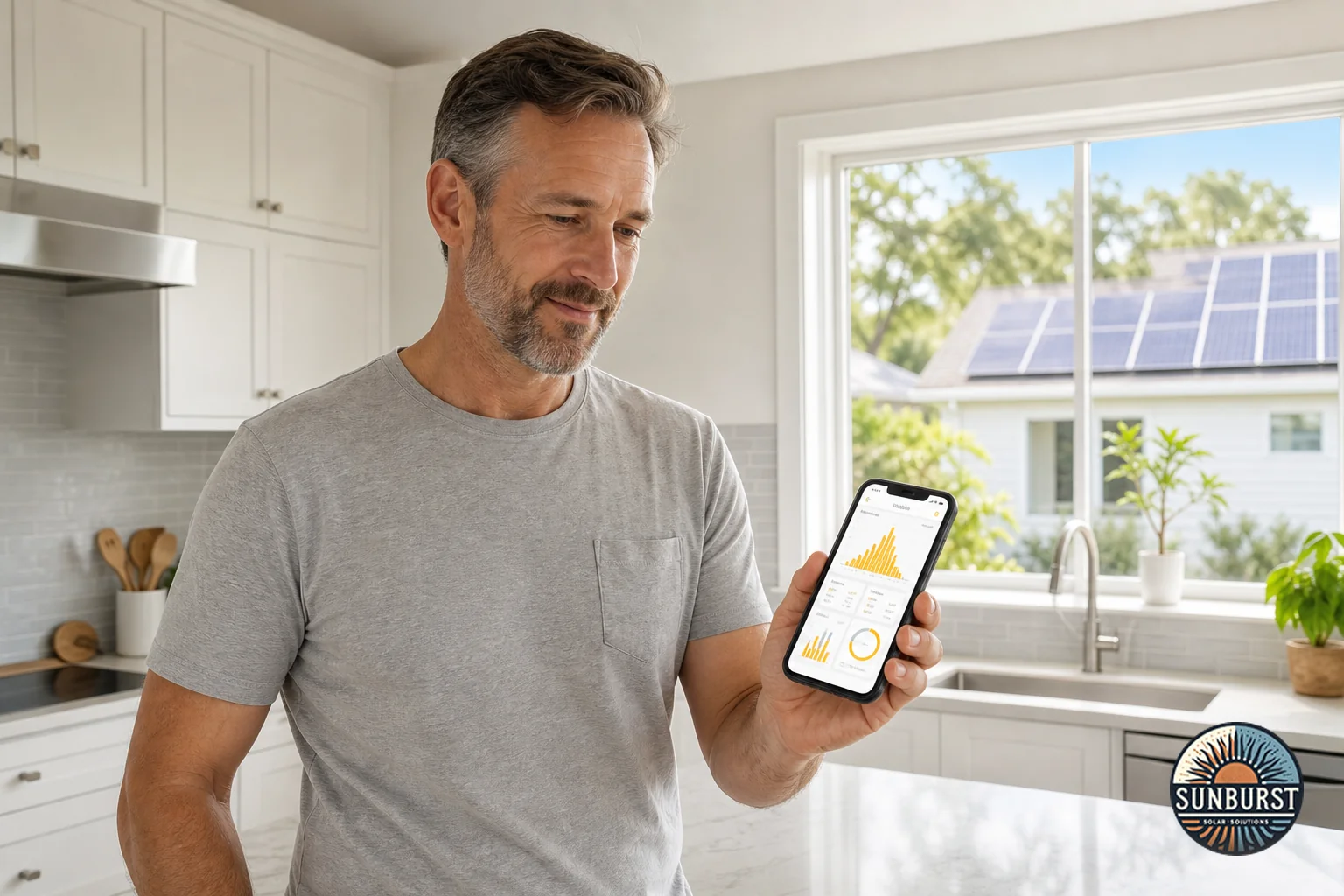
Ongoing performance monitoring matters more than most homeowners expect going in. It’s how you catch a shaded panel, a failing inverter, or an underperforming string before it costs you months of lost production. Ask to see the monitoring dashboard during your consultation, not just hear about it in the abstract.
Questions to Ask Every Solar Company Before You Sign
Bring this list to every consultation. A confident, transparent installer will answer each one clearly and without hesitation.
- Are your installation crews in-house employees, or subcontracted?
- How many years of experience does the lead installer on my project have?
- Who handles permitting and utility interconnection, and how long does it typically take in my area?
- Do you assist with HOA documentation and design approval if my neighborhood requires it?
- What’s included in my workmanship warranty, and for how many years?
- What happens to my warranty coverage if your company is acquired or closes?
- Can I see an itemized breakdown of equipment, labor, and fees, not just a total price?
- What monitoring tools do I get access to after installation, and what’s your response time for service requests?
- How does financing (cash, loan, lease, or PPA) affect who claims the tax credit?
- Can you provide references or examples of completed installations in my area?
If you want a structured version of this conversation, our guide on what to expect during solar installation in Charleston, SC outlines the full process from consultation through activation, so you know what a well-run project should look like at every stage.
How Many Contractors Do You Actually Need for a Solar Install?
Depending on your roof’s condition and electrical setup, a solar project can involve a roofer, an electrician, and a solar installer. Juggling three separate companies means three separate schedules, three separate warranties, and nobody fully accountable if something falls through the cracks between them. If your roof needs attention before panels go up, it’s worth reading whether your roof needs replacing before solar panels so you know that question before quotes come in. An installer who coordinates roofing and electrical work under one umbrella, rather than pointing you toward separate vendors, reduces the number of places accountability can slip.
Frequently Asked Questions
How do I verify a solar installer’s license and certifications in South Carolina?
Check that the company holds an active South Carolina contractor’s license through the South Carolina Department of Labor, Licensing and Regulation, and ask whether their lead installers hold NABCEP certification, a widely recognized credential for solar professionals.
Is a lower quote always a red flag?
Not always, but it should prompt questions. Compare equipment tier, warranty length, and what’s included in labor before assuming a lower number means better value. Sometimes it reflects genuine efficiency; other times it means corners are being cut somewhere in the proposal.
What’s a reasonable installation timeline in South Carolina?
From signed contract to activation, most residential projects take anywhere from six to twelve weeks, depending on permitting speed, HOA review if applicable, and equipment availability. An installer unwilling to give you a realistic range is worth a second look.
Should I get multiple quotes before choosing an installer?
Yes. Comparing at least two or three proposals side by side makes it much easier to spot which company is giving you a genuinely competitive offer and which one is relying on pressure tactics or vague terms to close the deal quickly.
Choosing the right solar partner shouldn’t feel like a gamble. If you’d rather skip the guesswork, check your solar potential to see what a system tailored to your roof and energy use could look like, then book an appointment with Sunburst Solar Solutions for a straightforward, pressure-free consultation. You can also join us to stay informed on South Carolina solar incentives, permitting updates, and tips for evaluating installers as you compare your options. Going solar is a long-term decision. Take the time to choose an installer who earns your trust before you sign anything.