
Does my roof need to be replaced before solar? It depends on how much life is left in your current roof. If your roof is more than 15 years old, shows curling or cracked shingles, or has fewer than 10-15 years of expected life remaining, most South Carolina installers will recommend replacing it before mounting panels, since removing and reinstalling a solar array later adds unnecessary labor costs and delays.
Key Takeaways
- Roof age is the first filter: Asphalt shingle roofs older than 15 years often won’t outlast a 25-30 year solar warranty, making replacement the smarter move.
- Installers require a minimum remaining lifespan: Most reputable South Carolina solar companies want at least 10-15 years of roof life left before they’ll install panels.
- Double labor costs add up fast: Removing and reinstalling an existing solar array to fix a failing roof later typically costs more than handling both projects together upfront.
- Coordination beats juggling contractors: Bundling roofing and solar work under one project manager cuts down on scheduling conflicts and warranty disputes.
- Ask before you sign: A written roof assessment, clear timeline, and warranty alignment should all be settled before you commit to a solar contract.
At a Glance: Roof Assessment Factors
| Factor | What Installers Check | Typical Recommendation |
|---|---|---|
| Roof age | Years since installation vs. material lifespan | Replace if less than 10-15 years remain |
| Shingle condition | Curling, cracking, granule loss | Repair or replace before mounting |
| Decking integrity | Soft spots, sagging, rot | Replace decking, then install |
| Roof material | Asphalt, metal, tile, wood shake | Confirms mounting hardware compatibility |
| Existing leaks | Attic water stains, active drips | Repair or replace before install |
| Number of shingle layers | Single vs. multiple layers | Tear-off often required if multiple layers |
| Structural load capacity | Rafters, trusses, decking thickness | Reinforcement if needed before install |
| Local climate exposure | Humidity, storms, UV exposure in SC | Shorter safety margin recommended |
Why the Roof-Solar Question Matters Before You Sign Anything
Solar panels are built to run for 25 to 30 years. Your roof, on the other hand, might not last nearly that long, especially if it’s already a decade or two old. Installing a solar array on a roof that needs replacement within the next five to ten years sets you up for an expensive redo: your installer has to send a crew back out to unbolt the panels, disconnect wiring, store the array safely, wait for the roofing crew to finish, then remount everything. That’s labor you pay for twice.
South Carolina’s climate makes this decision even more pressing. Coastal humidity, intense summer UV exposure, and the threat of tropical storms and hurricanes all wear down roofing material faster than in drier, cooler regions. A roof that might last 20 years in a mild climate could show real signs of wear closer to 15 years here. That’s why asking does my roof need to be replaced before solar isn’t just a box to check. It’s a financial decision that affects your total project cost and timeline.
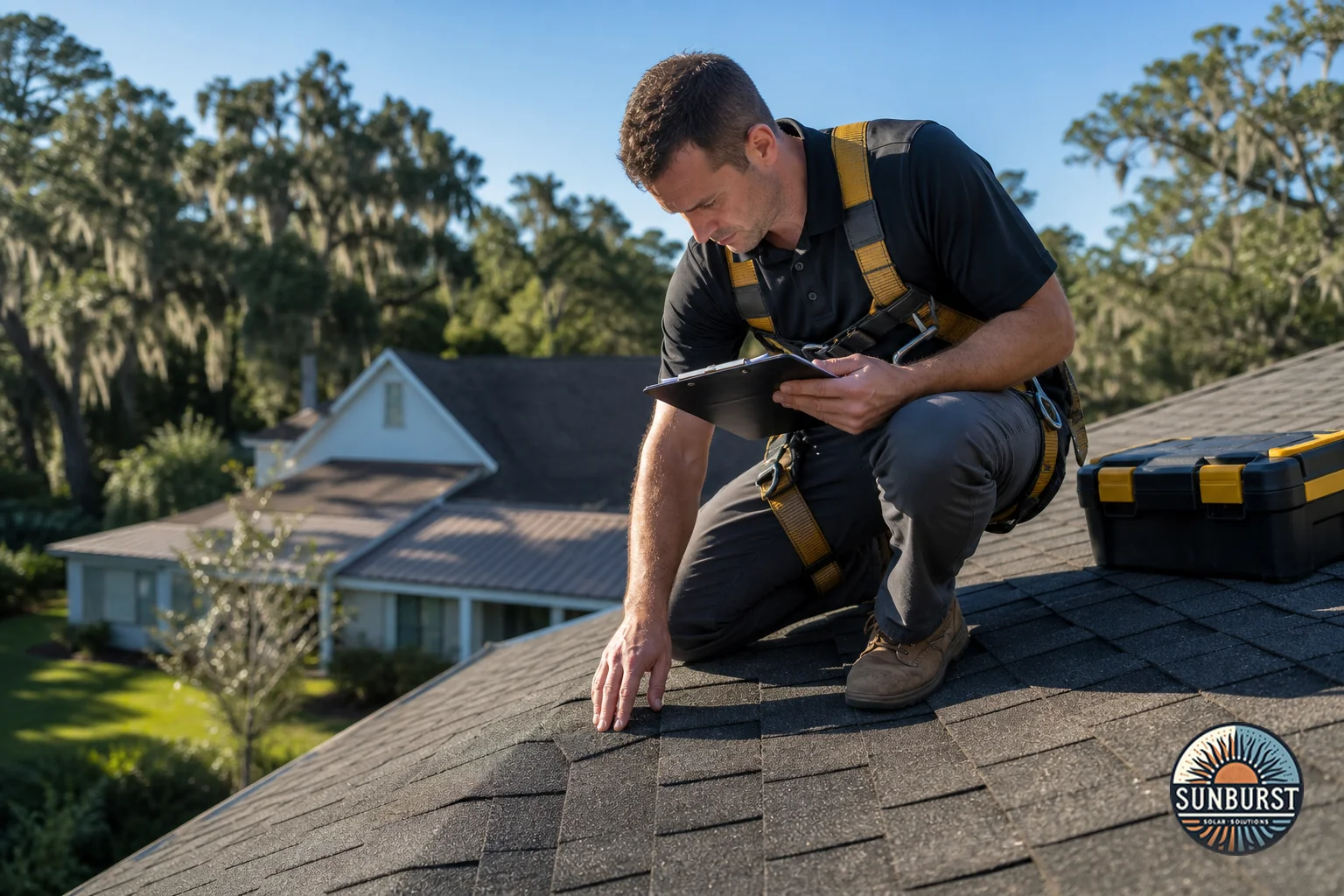
If you’ve already read about what to expect during a Charleston solar installation, you know the process involves several inspection steps. Roof condition is one of the first things a qualified installer will assess, often before they even finalize your system design.
1. Check Your Roof’s Age and Expected Lifespan
Start with a simple question: how old is your roof, and what’s it made of? Different materials age at very different rates, and knowing where your roof sits on that timeline tells you a lot about whether solar can go on now or needs to wait.
- Asphalt shingles (3-tab): Typically last 15-20 years. If yours is already past year 12 or 13, replacement before solar is usually the safer call.
- Architectural (dimensional) shingles: Last closer to 25-30 years, which usually lines up well with a solar panel’s own lifespan.
- Metal roofing: Can last 40-70 years and is one of the most solar-friendly materials because of its durability and clean mounting surface.
- Clay or concrete tile: Often lasts 50 years or more, but requires specialized mounting brackets to avoid cracking tiles during installation.
- Wood shake: Generally the shortest-lived option and the most likely to need replacement before any solar work begins.
A good rule of thumb: if your roof has less than 10-15 years of usable life left, plan on replacing it before or alongside your solar installation. Waiting means you’ll likely need a full teardown and remount within the panel’s warranty period, and that cost falls on you, not the manufacturer.
2. Know the Warning Signs an Installer Will Look For
Even if you’re not sure of your roof’s exact age, there are visible clues that tell installers (and you) that replacement should come first. During a site visit, a solar technician will walk the roof and look for specific red flags.
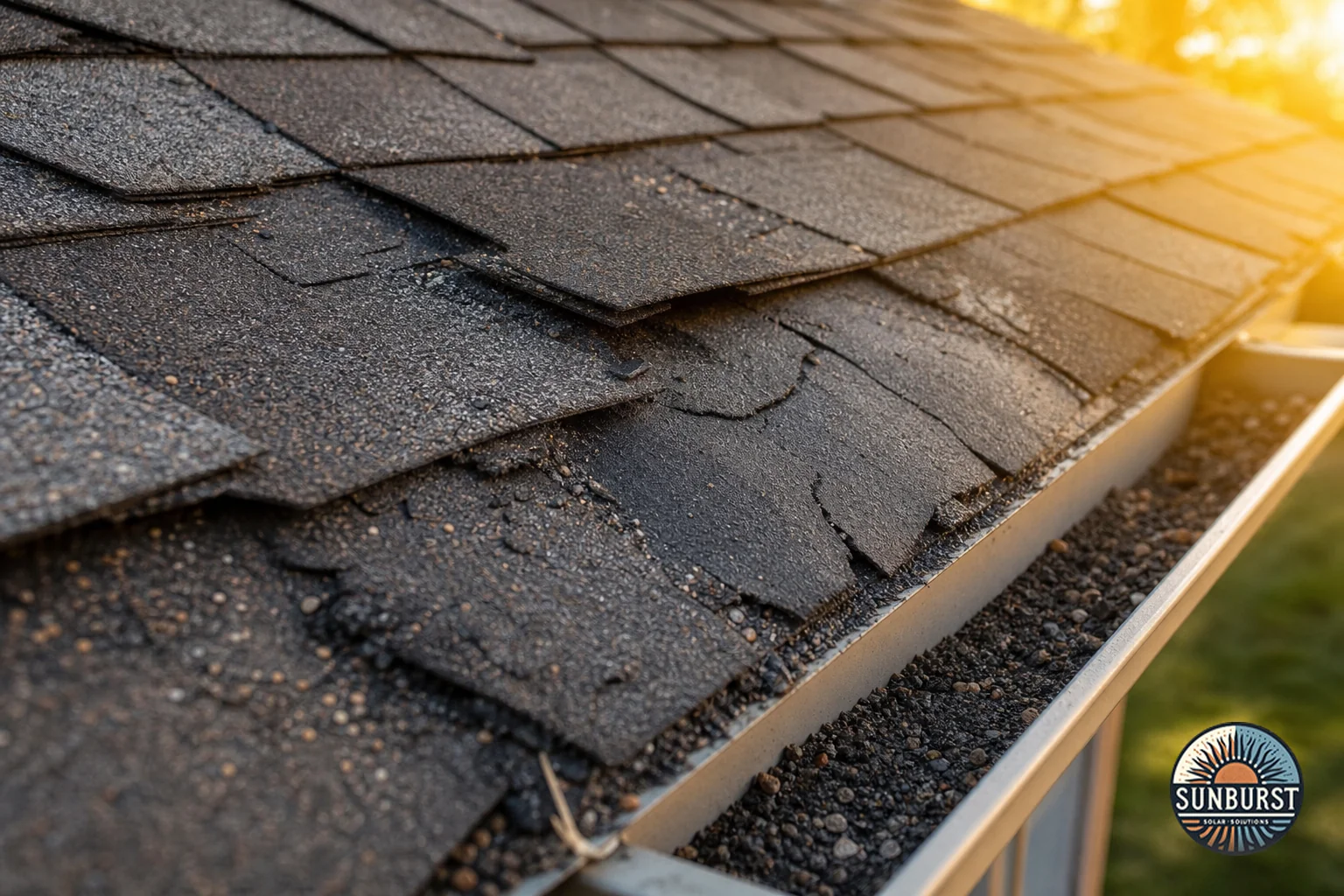
- Curling or cracked shingles: Edges that lift or crack indicate the shingles have lost flexibility and are nearing the end of their service life.
- Granule loss: Find gritty buildup in your gutters or downspouts? That’s the protective granule layer washing off your shingles, a sign of advanced wear.
- Soft spots or sagging: Walking the roof and feeling give underfoot usually points to decking rot, which must be fixed before anything is mounted.
- Visible leaks or attic stains: Water stains on ceilings or in the attic mean moisture is already getting in, a problem that will only get worse once panels are on top.
- Multiple shingle layers: If your roof already has two layers of shingles from a prior “roof-over” job, code often requires a full tear-off before new work, including solar mounts, can proceed.
- Moss and algae growth: Common in South Carolina’s humid climate, heavy moss can trap moisture against shingles and accelerate decay.
None of these signs alone means an automatic replacement, but two or more together are usually enough for an installer to recommend addressing the roof first.
3. Understand What a Professional Roof Assessment Covers
A proper pre-solar roof assessment goes well beyond a quick visual scan. Reputable installers, including teams that follow guidance similar to the U.S. Department of Energy’s homeowner solar guidance, evaluate several structural and code-related factors before giving the green light.
- Structural load capacity: Panels, mounting rails, and wind uplift forces add weight and stress. The assessment confirms your rafters and trusses can handle it.
- Decking condition: Technicians check for rot, delamination, or thin plywood that won’t hold mounting lag bolts securely.
- Material compatibility: Tile, metal, and shingle roofs each require different flashing and mounting hardware. The assessment confirms the right hardware for your roof type.
- Orientation and shading: While not a roof health issue, installers map roof angles and shade patterns during the same visit to finalize panel placement.
- Local code and permit requirements: South Carolina municipalities each have specific building code requirements for roof attachments and wind load ratings, which the installer must document for your permit application.
Ask your installer for a written summary of this assessment, not just a verbal “you’re good to go.” A documented report protects you if questions come up later about warranty coverage or code compliance.
4. Why Coordinating Roofing and Solar Work Saves You Headaches
Here’s where many homeowners get stuck: if the assessment shows your roof needs work, do you hire a separate roofer, then bring the solar company back afterward? That approach creates more friction than it solves.
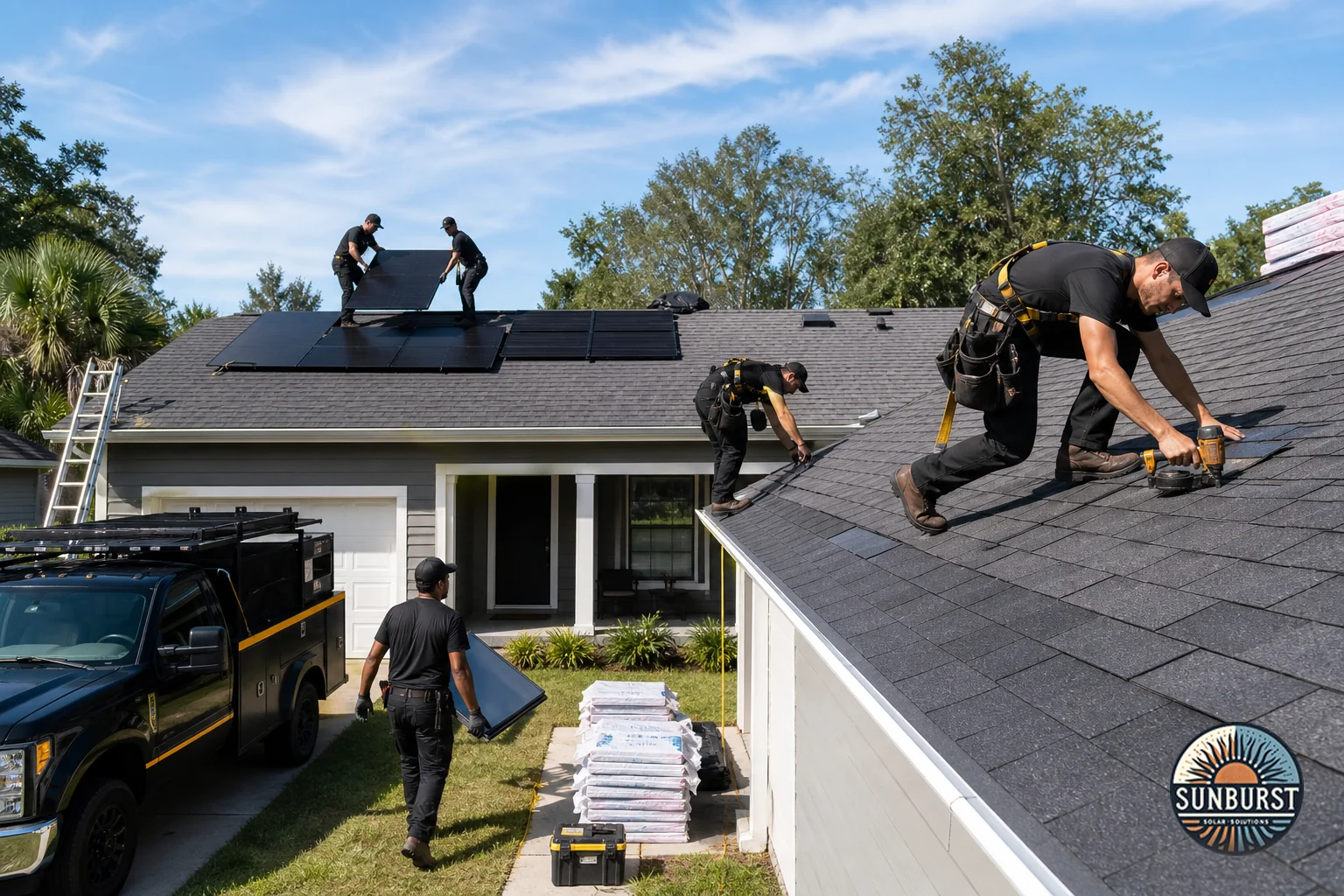
When roofing and solar are handled by separate, uncoordinated contractors, you become the go-between. You’re the one relaying measurements, chasing down schedule conflicts, and hoping both crews show up in the right order. If the roofer’s timeline slips, your solar installation slips too, sometimes pushing your project past a tax credit filing year or into permit renewal territory.
Coordinating both trades under one project umbrella solves several problems at once:
- No duplicate labor costs: The roof gets finished first, then panels go straight on, with no removal-and-remount step later.
- One point of contact: A single project manager tracks both the roofing and solar timelines, so you’re not stuck relaying information between two companies.
- Aligned warranties: When the same company manages both jobs, workmanship warranties can be written to cover the interaction between roofing and solar mounts, closing gaps that appear when two unrelated vendors point fingers at each other.
- Tighter scheduling: Combined projects are often completed in a single mobilization window instead of two separate visits weeks apart.
This is exactly why Sunburst Solar Solutions offers roofing partnership services alongside solar design and installation. Instead of managing two vendors, homeowners across South Carolina get one coordinated plan from roof assessment through final system activation.
Roof Replacement vs. Solar-Ready Roof Repair: Which Do You Need?
Not every roof needs a full replacement. Sometimes a targeted repair is enough to get 10-15 solid years out of the existing roof, which is often all you need to match your panel warranty. Here’s how the three most common outcomes compare.
| Option | Best For | Typical Timeline | Impact on Solar Project |
|---|---|---|---|
| Full roof replacement | Roofs over 15-20 years old, widespread wear, multiple shingle layers | 1-3 days for tear-off and re-roof | Solar mounted immediately after, no future disruption |
| Targeted repair (decking or section) | Isolated soft spots, minor leaks, otherwise sound roof under 15 years old | Half day to 1 day | Solar proceeds on original schedule once repair is verified |
| No roofing work needed | Roofs under 10 years old in good condition, architectural shingles, metal, or tile | None | Solar installation proceeds as planned |
The right choice comes down to the assessment findings, not guesswork. Trying to save money by skipping a needed repair or replacement almost always costs more later, once you factor in the labor to remove and remount panels.
5. Questions to Ask Before You Sign a Solar Contract
Whether or not your roof needs work, the contract you sign should spell out exactly how roofing and solar responsibilities are handled. If you haven’t yet reviewed the broader list of contract questions, our guide on what to expect during solar installation covers additional process details worth reviewing alongside these roof-specific questions.
- Who performs the roof assessment, and when? Make sure it happens before design finalization, not as an afterthought during installation day.
- What happens if roof issues are discovered mid-installation? Ask whether the contract includes a pause clause and how change orders are priced.
- Is roofing work done in-house or subcontracted? Subcontracted roofing isn’t automatically bad, but you want clear accountability if something goes wrong.
- How do warranties interact if roofing and solar come from different companies? Get this in writing. A roof leak under solar panels installed by one company and a roof replaced by another can turn into a liability dispute if it’s not addressed upfront.
- What’s the full project timeline, roofing included? A vague “6-8 weeks” estimate that doesn’t separate roofing from solar leaves room for surprises.
- Does the quote include HOA approval support? If you live in a managed community, ask how the company handles submissions, especially relevant if you’re comparing notes with neighbors going through South Carolina’s HOA governance framework for similar approvals.
These questions apply whether you’re weighing a lease, a loan, or a cash purchase. If financing structure is still an open question for you, it’s worth understanding the tradeoffs of ownership versus a lease before your roof and solar timelines get locked in together.
How Sunburst Solar Solutions Handles Roofing and Solar Together
Sunburst Solar Solutions built its roofing partnership service specifically to solve the disconnect homeowners run into when roofing and solar are treated as separate projects. During your initial site assessment, our team evaluates roof age, material, and structural condition alongside your solar system design, so you get one clear recommendation instead of conflicting opinions from two vendors.
If roofing work is needed, it’s scheduled as part of the same project timeline, with a single project manager coordinating both crews. That means no gaps in communication, no duplicated site visits, and no guessing about whose warranty covers what. We also handle HOA documentation, financing options that can cover combined roofing and solar costs, and ongoing system monitoring once everything is installed, backed by manufacturer warranties, a 10-year workmanship warranty, and third-party insurance protection.
Curious whether your roof is a good candidate for solar right now? You can check your solar potential online in a few minutes, which gives you a starting point before any in-person assessment.
Frequently Asked Questions
Can solar panels be installed on an old roof?
Technically yes, but most installers won’t recommend it if your roof has less than 10-15 years of remaining life. Installing on an aging roof risks needing a costly panel removal and remount when the roof eventually needs replacement.
Does adding solar panels shorten or extend my roof’s lifespan?
Panels can actually help protect the shingles underneath them from UV exposure and hail, but only if the roof was sound to begin with. Panels don’t fix an already-failing roof, and installing over damaged shingles can trap moisture and worsen existing problems.
Who pays to remove panels if the roof needs repair after solar is installed?
This depends entirely on your contract. Some workmanship warranties include a set number of “roof penetration” or panel removal services within the warranty period, while others require you to pay separately. Always clarify this before signing, especially if your roof wasn’t fully replaced beforehand.
Does a new roof qualify for any tax credit alongside solar?
New 2026 homeowner solar or battery installations do not qualify for the expired federal Residential Clean Energy Credit. Do not treat an ordinary roof replacement or structural roof work as a solar tax-credit expense. Older eligible projects and solar-generating equipment have distinct tax rules; verify them independently rather than financing roof work around an assumed federal refund. See current IRS Section 25D guidance.
How long does a combined roof and solar project take in South Carolina?
A straightforward roof replacement paired with solar installation typically takes one to three weeks from tear-off to panel activation, depending on permitting timelines in your municipality and whether HOA approval is required. Projects that only need solar, with no roofing work, often move faster.
Get a Clear Answer About Your Roof Before You Commit to Solar
Guessing whether your roof can handle 25 years of solar panels isn’t a risk worth taking, especially with South Carolina’s heat, humidity, and storm exposure working against older roofing material. The safest path is a professional assessment that looks at your roof’s age, material, and structural condition before any solar contract gets signed.
Sunburst Solar Solutions evaluates your roof and your solar potential together, so you get one honest recommendation instead of two separate opinions to reconcile. If you’re ready to find out where your roof stands, book an appointment for a full site assessment, or start by exploring financing and program options when you join us today. Your roof and your solar system should be planned together from day one, not patched together after the fact.