
A Level 2 home charger cuts EV charging time from nearly two full days down to 4-8 hours, but before that charger goes on your garage wall in Myrtle Beach, your electrical panel, your permit paperwork, and your utility rate plan all need a look. EV charger installation in Myrtle Beach is a straightforward project when it’s done in the right order: charger selection, panel check, permit, consultation, install, then ongoing monitoring. Skip a step and you risk a failed inspection or a breaker that trips every time you plug in.
Key Takeaways
- Panel capacity comes first: Most Horry County homes built before the early 2000s have 100-amp panels, and a 40-amp Level 2 charger circuit often pushes that panel to its limit, meaning many homeowners need a panel upgrade before install day.
- Permits are required: Myrtle Beach and Horry County both require an electrical permit and inspection for a new dedicated EV charging circuit, and skipping this step can jeopardize your homeowner’s insurance claim if there’s ever an electrical fire.
- Solar pairing lowers your marginal charging cost: Charging an EV adds roughly 300-500 kWh to a monthly bill for an average driver, and offsetting that with rooftop solar production keeps the added cost from riding on top of rising utility rates.
- Installation itself is fast: Once permitting and any panel work are done, most standalone Level 2 charger installs take half a day to a full day.
- Battery storage adds flexibility: Pairing a home battery with solar lets you charge overnight using stored solar energy instead of pulling straight from the grid at peak rates.
At a Glance: EV Charger Installation Basics
| Factor | What to Expect in Myrtle Beach |
|---|---|
| Charger type | Level 2, 240V, typically 32A-48A hardwired or NEMA 14-50 outlet |
| Typical charging time (Level 2) | 4-8 hours for a full charge, depending on battery size and amperage |
| Permit required | Yes, electrical permit through Horry County or City of Myrtle Beach building department |
| Common panel size in older homes | 100A (may require upgrade to 150A or 200A) |
| Standalone install timeline | Half day to full day once permitting is approved |
| Added monthly electricity load | Roughly 300-500 kWh for average daily driving |
| Solar pairing benefit | Offsets EV charging load with on-site production, reducing grid draw |
| Federal tax treatment | No new homeowner Section 25D credit for 2026 installations |
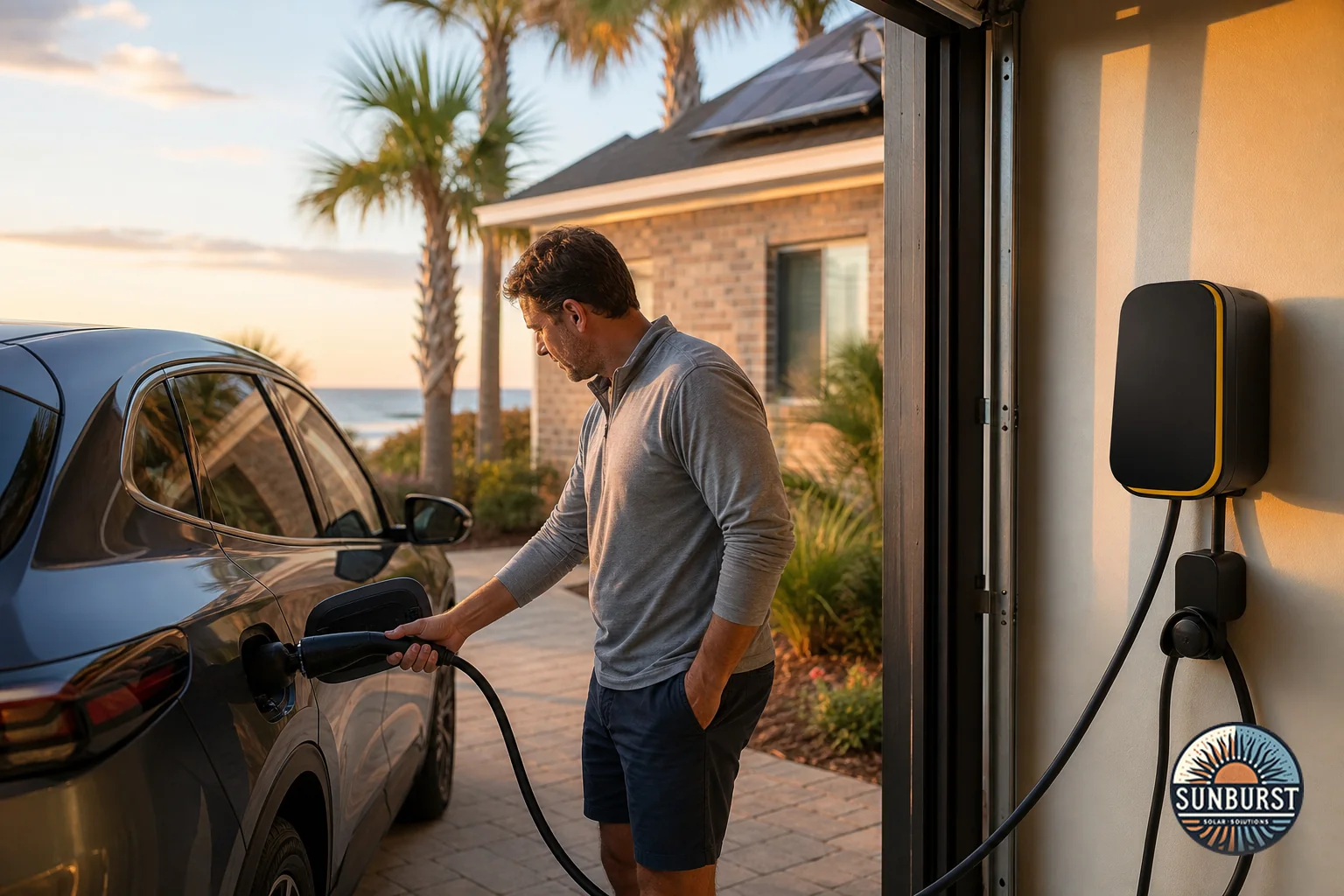
1. Decide Which Level 2 Charger Fits Your Myrtle Beach Home
Before anyone touches your electrical panel, you need to know what you’re installing. A standard 120V outlet, often called Level 1 charging, works in a pinch but adds only 3-5 miles of range per hour. For most homeowners who actually drive an EV daily, that’s not fast enough to keep up with a normal commute along Highway 501 or Ocean Boulevard.
Level 2 charging runs on 240V, the same circuit type as an electric dryer, and delivers 20-40 miles of range per hour depending on amperage. Chargers come in a few common sizes: 32A, 40A, and 48A. Higher amperage charges faster, but it also demands a beefier breaker and more headroom on your panel. Your vehicle’s onboard charger has its own maximum intake rate too, so pairing a 48A charger with a car that only accepts 32A wastes money on equipment you can’t fully use.
You’ll also choose between a hardwired charger and one that plugs into a NEMA 14-50 outlet. Hardwired units are generally more reliable outdoors, which matters near the coast where humidity and salt air can corrode outlet contacts over time. A plug-in unit offers flexibility if you might swap chargers or take it with you during a move.
- Daily short commuters: A 32A charger is usually plenty and costs less to install.
- Long commuters or multi-EV households: A 40A or 48A charger cuts overnight charging time significantly.
- Coastal exposure: Hardwired installation reduces long-term corrosion risk versus an exposed plug connection.
2. Check Your Electrical Panel Capacity First
This step trips up more homeowners than any other part of the process. Adding a 40-amp charging circuit to a home that already runs an HVAC system, an electric range, and a water heater can overload an older panel fast. Many homes in Myrtle Beach’s established neighborhoods, particularly those built before the early 2000s, still run on 100-amp electrical service. A licensed electrician needs to run a load calculation to confirm there’s enough spare capacity before adding a charger circuit.
Signs your panel might need an upgrade include frequent breaker trips, a panel that’s already near capacity with other large appliances, or a home that’s added a pool pump, tankless water heater, or central AC since the panel was last rated. If the load calculation comes back short, you have two paths: upgrade to a 150A or 200A panel, or install a smart load-management device that shares capacity between the charger and other high-draw circuits without a full panel swap.
This is also the point where solar and battery storage planning intersects with your EV charging project. If you’re already considering rooftop solar or a whole-home battery, it makes sense to size any panel upgrade around both needs at once rather than paying for electrical work twice. Homeowners weighing how to choose a solar installer should ask specifically whether panel upgrades and EV charger wiring are handled by the same crew, since coordinating both in one visit saves time and labor cost.
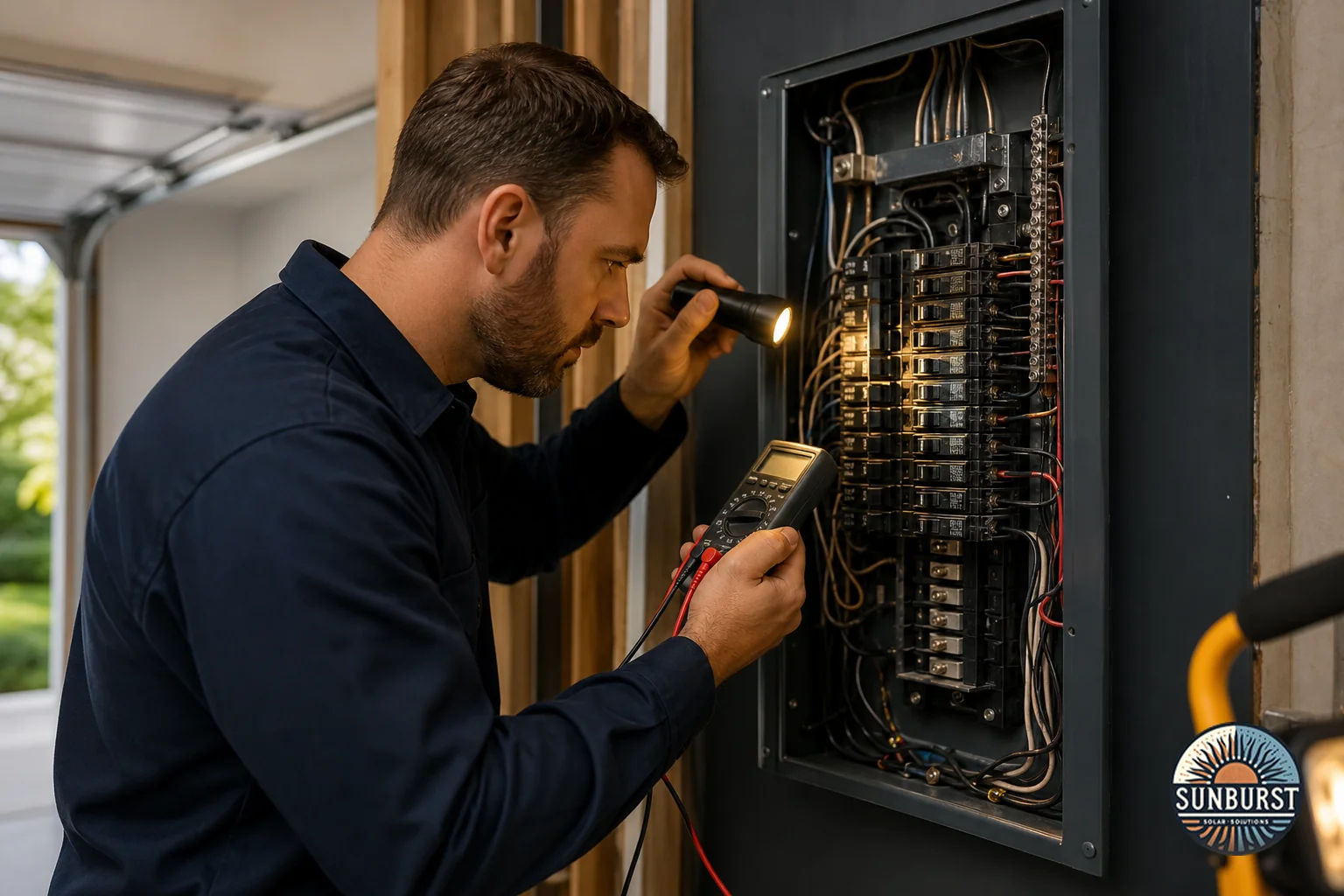
3. Pull the Right Permits in Horry County and Myrtle Beach
South Carolina requires a licensed electrical contractor to pull a permit for any new dedicated circuit, and EV chargers fall squarely into that category. Both Horry County and the City of Myrtle Beach building departments require an electrical permit application, a rough-in inspection in some cases, and a final inspection once the charger is mounted and energized. Skipping this step isn’t just a technicality. Unpermitted electrical work can void parts of your homeowner’s insurance policy and create real problems if you ever sell the house and a buyer’s inspector flags unlicensed wiring.
Permit review timelines vary by season, since building departments along the Grand Strand see a spike in permit volume during peak construction months. Most straightforward EV charger permits move faster than a full solar interconnection application, but it still pays to build a buffer of one to two weeks into your project timeline rather than assuming next-day approval.
Working with a licensed South Carolina electrical contractor who regularly files permits with your specific jurisdiction speeds this up considerably, since they already know the inspector’s checklist and common rejection points. If you’re bundling the charger install with a broader home electrical upgrade, ask what to ask before signing a solar contract for guidance on making sure permitting responsibility is spelled out clearly before you sign anything.
4. Schedule a Site Consultation and Load Assessment
A proper consultation covers more than just where the charger will hang on the wall. Expect a technician to walk your garage or driveway, measure the distance from your parking spot to the electrical panel, and note whether conduit will run through a finished wall, an attic space, or underground. Longer conduit runs add labor cost, so this is where estimates can shift from an initial phone quote to a final written proposal.
The consultation should also review your utility rate plan. Some South Carolina utilities offer time-of-use rates that make overnight charging significantly cheaper than daytime charging, and knowing that in advance changes how you might schedule your charging sessions. It’s also the right time to talk through your actual driving habits: daily mileage, whether you charge to full every night or top off periodically, and whether a second EV might join the household later.
If you live in a coastal HOA community, charger visibility can be a factor too. Some associations in Myrtle Beach’s planned developments have architectural guidelines about exterior equipment, similar to the review process covered in HOA solar approval in Columbia, SC: how it works. A garage-mounted charger rarely triggers objections, but an exterior wall-mounted unit visible from the street sometimes needs a quick documentation submission first.
5. Pair Your Charger with Solar to Manage Charging Costs
Charging an EV at home adds real load to your electric bill. An average driver covering 1,000 miles a month adds roughly 300-500 kWh of monthly usage, depending on the vehicle’s efficiency. On a standard residential rate, that’s a noticeable jump layered on top of already rising utility costs across South Carolina.
Rooftop solar changes that math. A correctly sized solar array can offset most or all of the extra kilowatt-hours an EV pulls each month, effectively letting you drive on sunshine instead of paying retail utility rates for every charging session. Homeowners who’ve already gone solar and are now adding an EV often need to revisit their system size, since the original design may have been calculated before charging load entered the picture. If you’re weighing whether your existing array covers a new EV, a quick way to check is running your numbers through a tool like Sunburst’s solar potential estimator before committing to charger specs.
Battery storage adds another layer of control. Charging an EV overnight from grid power still means paying utility rates, even if solar covered your daytime usage. A home battery sized to your EV load lets you store daytime solar production and release it in the evening when your car is plugged in, keeping more of your charging cost off the grid entirely. This is the same sizing logic covered in guides on solar installation and system planning, just applied specifically to EV load instead of general household usage.
New 2026 homeowner solar or battery installations do not qualify for the expired federal Residential Clean Energy Credit. EV charging equipment falls under separate rules and deadlines, not the homeowner solar credit. Consult the IRS refueling-property credit guidance and a qualified tax professional for the actual installation; do not copy last year’s solar or charger assumptions into a new quote.
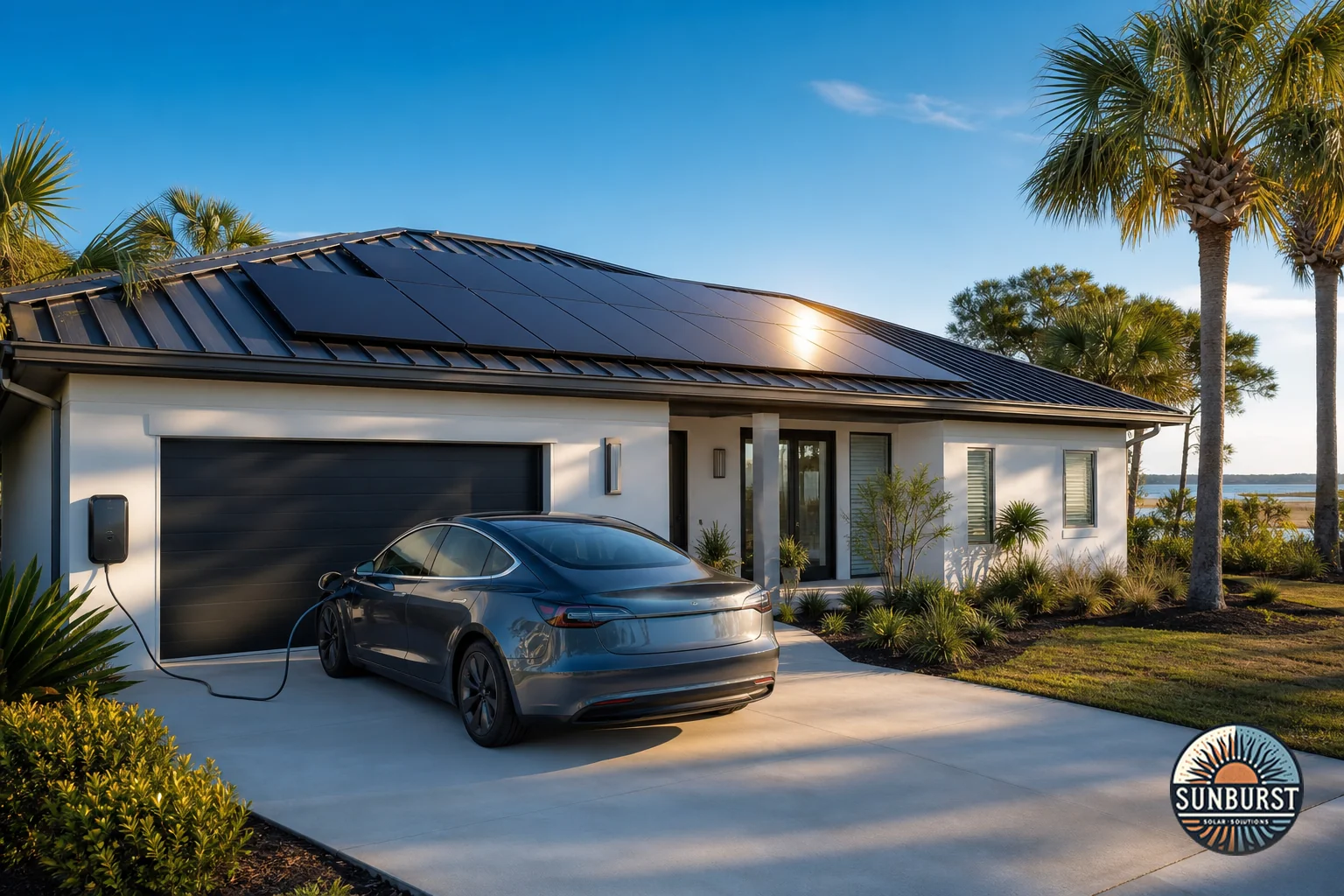
6. What Happens on Installation Day
Once permits are approved and any panel upgrade is scheduled, the actual charger install moves quickly. A standalone Level 2 charger, with no panel upgrade needed, typically takes half a day. If a panel upgrade is bundled in, plan for a full day, since the utility may need to briefly disconnect service while the new panel is set.
The crew will run wiring from your panel to the charger location, install a dedicated breaker sized to your charger’s amperage, mount the charging unit, and terminate all connections to code. After the electrical work is complete, the installer tests the circuit and confirms proper voltage before calling for a final inspection. Many installers will also plug in your vehicle on-site to confirm the charger communicates correctly and begins charging as expected, so you’re not left troubleshooting alone after the crew leaves.
A good installation team walks you through the finished work: where the breaker is located, how to reset it if it trips, and any app or monitoring setup that comes with your specific charger model. Clear communication at this stage matters, since a common complaint homeowners have about other providers is being left with equipment and no explanation of how it actually operates day to day.
7. Maintain and Monitor Your Charging Setup
A hardwired Level 2 charger needs very little upkeep, but a few habits extend its life, especially in a humid coastal climate. Keep the charging cable and connector free of sand and moisture, and avoid letting the cable sit directly on a hot driveway surface for long stretches. Periodically check that the charger housing seal remains intact if it’s mounted outdoors.
If your charger is paired with a solar system, monitoring both together gives you a clearer picture of your real energy costs. Solar monitoring apps let you see daily production alongside your household consumption, so you can spot whether your charging schedule lines up with peak solar output or whether shifting a charging session by a few hours would use more free solar energy and less grid power.
Call a licensed electrician if you notice the charger’s breaker tripping repeatedly, the charging cable feels unusually warm, or charging speed drops off noticeably compared to when it was first installed. These are early signs worth addressing before they turn into a larger electrical issue.
Frequently Asked Questions
How much does EV charger installation cost in Myrtle Beach?
Cost depends heavily on whether your panel needs an upgrade and how far the charger sits from your electrical panel. A straightforward install with an adequate panel costs less than one requiring new conduit runs or a full panel swap. Contact a local installer for a firm quote based on your specific home.
Do I need a permit for a home EV charger in South Carolina?
Yes. Both Horry County and the City of Myrtle Beach require an electrical permit for any new dedicated circuit, including EV charger installations. A licensed electrical contractor pulls this permit on your behalf and schedules the required inspection.
Can I install a Level 2 charger myself?
It’s not recommended and, in most cases, not legal without a licensed electrician pulling the permit. A 240V circuit carries real risk if installed incorrectly, and unpermitted work can create insurance and resale problems down the line.
How long does installation take once permits are approved?
A standalone charger install without panel work typically takes half a day. Add a panel upgrade and plan for a full day, since utility coordination may be needed for a brief service disconnect.
Does adding an EV charger affect my solar system size?
It can. An EV adds meaningful monthly kilowatt-hour usage, so a solar array sized before you owned an EV may need to be reassessed to fully offset the new load. Checking your solar potential after adding a charger helps confirm whether your current or planned system still covers your total household usage.
Get Your Myrtle Beach EV Charger and Solar Pairing Done Right
Getting a Level 2 charger installed the right way means the permit gets filed correctly, your panel has the capacity to handle it safely, and your utility bill doesn’t spike the moment you start plugging in every night. Pairing that charger with a properly sized solar system is how Myrtle Beach homeowners keep their driving costs predictable even as grid rates climb. Sunburst Solar Solutions handles the full process locally, from the initial panel assessment through permitting, installation, and ongoing monitoring, so you’re not juggling separate contractors for wiring, solar, and inspections.
If you’re ready to talk through your home’s specific panel capacity and charging needs, book an appointment with our team to get a clear plan and timeline. Curious what solar could offset before you commit to a charger size? check your solar potential first. And if you want updates on incentives, permitting changes, and local solar news as they happen, join us to stay informed.