
Picture a homeowner in West Ashley staring at three different phone numbers on her kitchen counter: one for the solar installer, one for the roofer, one for the electrician who still hasn’t called back about the panel upgrade. That’s the version of going solar nobody wants, and it’s more common than it should be. A well-run solar panel installation process in Charleston, SC should feel like the opposite: one team, one timeline, and one point of contact from the first phone call to the moment your system switches on.
Charleston brings its own wrinkles to solar installation. Between historic district review boards, HOA architectural committees, coastal wind-load requirements, and two different utility territories, there’s more to coordinate here than in a typical suburban market. This guide walks through exactly what happens at each stage, how long it realistically takes, and how a local, education-first team like Sunburst Solar Solutions keeps homeowners from becoming their own project manager.
What the Solar Panel Installation Process in Charleston, SC Actually Involves
At a high level, the journey from “I’m curious about solar” to “my panels are generating power” involves seven distinct stages: consultation, system design, financing paperwork, permitting and HOA approval, physical installation, utility interconnection, and final inspection. Each stage has its own paperwork, its own approvals, and its own potential delays.
Many national solar companies split these tasks across subcontractors, a sales rep here, a design team there, a separate crew for install, and a call center for permitting questions. Homeowners often end up as the one relaying information between parties who aren’t talking to each other. Sunburst Solar Solutions structures the process differently, assigning a single local contact who stays with the project from the initial assessment through system activation, so Charleston homeowners always know who to call and what’s happening next.
1. Initial Consultation and Home Energy Assessment
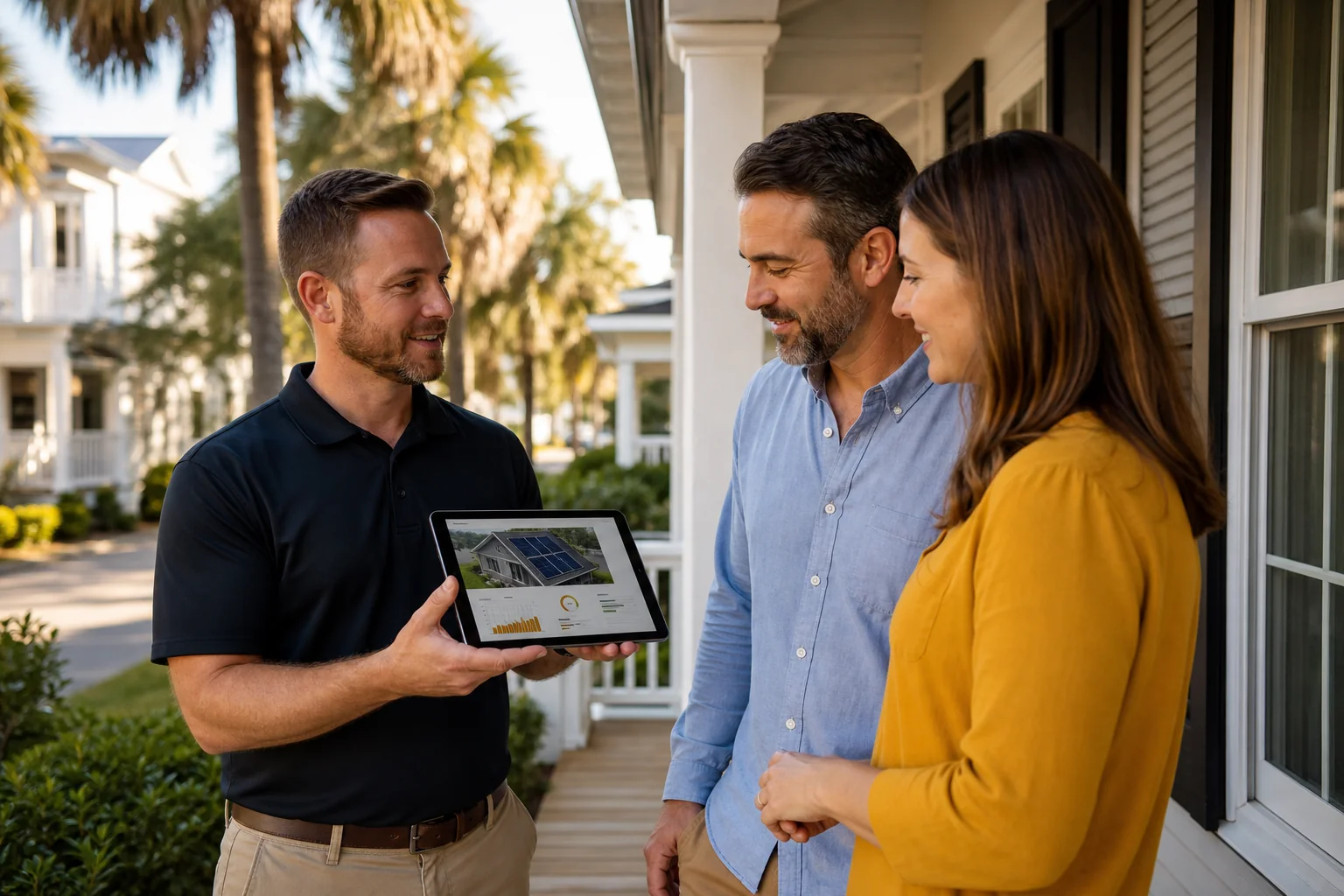
Every project starts with a conversation, not a sales pitch. A Sunburst representative reviews the last 12 months of your utility bills to understand your actual usage patterns, since South Carolina’s hot, humid summers can push air conditioning costs well above the national average. This history matters more than a single month’s bill because it shows how your energy needs shift with the seasons.
Next comes an honest look at your roof: its age, material, orientation, pitch, and any shading from oak trees or neighboring structures, which is a real factor in many of Charleston’s older, tree-lined neighborhoods. If your roof is nearing the end of its life, this is also the point where a roofing partnership conversation happens, so you’re not installing panels on shingles that will need replacing in five years.
This step also covers your personal goals. Some homeowners want to eliminate their monthly bill entirely. Others want backup power for hurricane season outages, or simply want to understand what solar could mean for their home’s resale value. If you’re not sure where you stand, you can get a no-obligation sense of your options through Sunburst’s solar potential estimator before ever scheduling a home visit.
2. Custom System Design and Site Survey
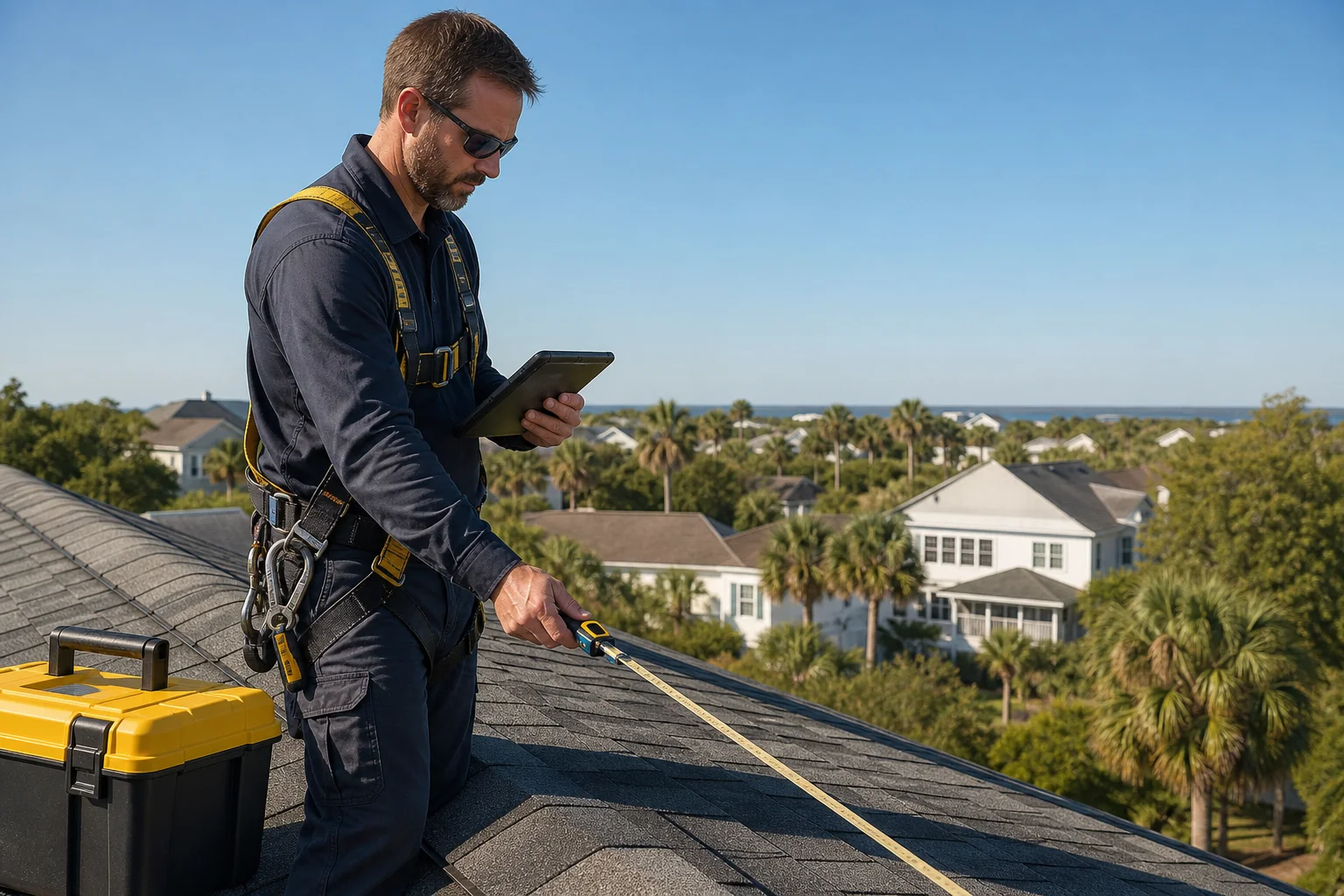
Once there’s mutual interest in moving forward, a technician schedules an in-person site survey. Satellite imagery and design software can estimate sun exposure and system size from a desk, but Charleston’s mix of steep historic rooflines, flat mid-century additions, and newer subdivision homes means software estimates need to be verified on-site.
During the survey, the technician measures usable roof area, checks your electrical panel’s capacity, inspects attic access for wiring runs, and confirms structural condition. This is also when the design team finalizes panel placement, decides whether battery storage makes sense for your household, and produces a proposed layout using Tier 1 black-on-black panels manufactured in North America.
The output of this stage is a system design you can actually see: panel count, expected production, and equipment specifications. If your household is concerned about power availability during grid outages, a common worry among coastal South Carolina homeowners, this is the point to discuss battery storage sizing in detail.
3. Financing and Incentive Paperwork
Solar financing confuses a lot of people, and that confusion is one of the biggest reasons homeowners delay a decision they’ve already mentally made. There are generally four paths: paying cash, financing through a solar loan, a lease, or a power purchase agreement (PPA). Each has different implications for who owns the system, who claims the tax credits, and how payments are structured.
New 2026 homeowner solar or battery installations do not qualify for the expired federal Residential Clean Energy Credit. South Carolina incentives are a separate calculation with their own eligibility, annual limits and tax-liability requirements. Confirm the actual project with a qualified tax professional; do not assume combined federal/state credits cut a new purchase price in half. See current IRS Section 25D guidance.
During this stage, Sunburst helps gather the documentation needed for whichever path you choose, whether that’s a loan application, lease agreement, or the paperwork your accountant will need come tax season. Nothing moves to permitting until financing is settled, so this step typically overlaps with the design phase rather than adding extra weeks to the timeline.
4. HOA Approval and Permitting in Charleston
This is where a lot of Charleston-area solar projects stall with other providers, and it’s the step homeowners worry about most. South Carolina law generally limits how much homeowners associations can restrict solar installations, but HOAs can still regulate placement, equipment visibility, and aesthetics through architectural review committees. If you live in a historic district covered by the City of Charleston’s Board of Architectural Review, there’s an additional layer of review to account for roof-mounted equipment on visible facades.

Sunburst handles this coordination directly rather than leaving homeowners to interpret HOA bylaws on their own. That means preparing the application packet, including site plans, equipment specs, and color samples where required, and communicating with the HOA board or historic review staff on your behalf. For county and municipal building permits, requirements vary depending on whether your property falls under Charleston County, the City of Charleston, Mount Pleasant, or one of the surrounding municipalities, each with its own permitting office and review queue.
Typical permit turnaround in the Charleston area runs anywhere from one to four weeks, depending on the jurisdiction’s current workload. HOA architectural review timelines vary by community, some boards meet monthly, which can add time if your paperwork narrowly misses a meeting date. Submitting a complete, professionally prepared packet the first time is the single biggest lever for avoiding delays here.
5. Installation Day: What Homeowners Can Expect
Once permits and HOA approvals are in hand, installation is scheduled. For a typical residential system, physical installation takes one to three days depending on system size, roof complexity, and whether battery storage is included. The crew arrives with mounting hardware, panels, inverters, and safety equipment, and begins by setting up fall protection and staging materials.
Mounting the racking system comes first, followed by panel installation, wiring, and connection to the inverter and your home’s electrical panel. Crews work to minimize disruption. Most households can continue their normal routine during installation, though your main electrical panel will be briefly powered down for safety during the final connection.
By the end of installation day, the physical system is complete, but it is not yet legally allowed to generate power for your home. That authorization comes in the next two stages.
6. Utility Interconnection and Permission to Operate (PTO)
Before your panels can send power to your home or the grid, your utility provider has to review and approve the interconnection. Depending on your address, that means submitting an application to Dominion Energy South Carolina or one of the regional electric cooperatives serving the Lowcountry, such as Berkeley Electric Cooperative.
This application confirms your system meets safety and technical standards and establishes your net metering agreement, which determines how you’re credited for excess energy your system sends back to the grid. Net metering policy in South Carolina has evolved over the past several years, so Sunburst reviews current utility tariffs with each homeowner rather than relying on outdated assumptions.
Utility review timelines vary by provider and current application volume, but homeowners should expect this stage to take anywhere from a few days to several weeks. Your system physically exists on your roof during this waiting period, but it stays inactive until you receive official Permission to Operate (PTO).
7. Final Inspection and System Activation
Before or around the same time as utility interconnection, a local building inspector visits the property to verify the installation meets electrical and structural code. This inspection is separate from the utility’s review and is handled by the county or municipal building department that issued your original permit.
Once both the building inspection and utility PTO are complete, your system is cleared for activation. Sunburst’s team walks you through the monitoring app so you can track daily production, watch your savings accumulate, and get alerts if system performance ever dips. For most homeowners, this final switch-on moment, watching real-time production numbers appear for the first time, is the payoff for weeks of paperwork and planning.
Realistic Timeline: How Long Does Solar Installation Take in Charleston?
Homeowners often ask for a single number, but the honest answer is that timelines vary by jurisdiction, HOA, and utility provider. The table below reflects typical ranges based on the stages described above.
| Stage | Typical Duration | Main Factors That Affect Timing |
|---|---|---|
| Consultation & energy assessment | 1 day to 1 week | Scheduling availability, gathering utility bill history |
| System design & site survey | 1 to 2 weeks | Roof complexity, battery storage decisions |
| Financing & incentive paperwork | Runs parallel to design (adds minimal time) | Financing type chosen, documentation readiness |
| HOA approval & permitting | 1 to 6 weeks | HOA meeting schedule, historic district review, municipal permit backlog |
| Physical installation | 1 to 3 days | System size, roof condition, weather |
| Utility interconnection (PTO) | 1 to 6 weeks | Utility provider workload, net metering application volume |
| Final inspection & activation | 1 to 2 weeks | Building department scheduling |
Adding these stages together, most Charleston homeowners can expect roughly two to four months from signed agreement to system activation, though straightforward projects can move faster and complex historic-district or HOA cases can take longer. Hurricane season, roughly June through November per the National Hurricane Center, can also affect scheduling, since installation crews may need to pause work ahead of storm forecasts for safety reasons.
Frequently Asked Questions About Going Solar in Charleston
Will solar panels work with my HOA?
In most cases, yes. South Carolina law limits how restrictive HOAs can be regarding solar equipment, though boards can still set reasonable rules about placement and appearance. Sunburst prepares your HOA submission package and communicates with your board directly so you don’t have to decode bylaws on your own.
What happens to my solar system during a power outage?
Standard grid-tied solar systems, without battery storage, are designed to shut off during a grid outage for utility worker safety, so panels alone won’t keep your lights on in a blackout. Homeowners who want power during outages typically add battery storage, which is worth discussing during your initial consultation if hurricane-season resilience is a priority.
Does adding solar affect my home’s resale value?
Buyer interest in solar-equipped homes has grown, and owned systems in particular are often viewed as a valuable feature by buyers who want lower utility costs. Resale impact can vary by market and by whether the system is owned outright or under a lease, so ask your Sunburst representative how your specific financing choice may factor into a future sale.
How many different contractors will I need to manage?
With Sunburst’s approach, you work with one company and typically one point of contact throughout design, permitting, installation, and interconnection, rather than juggling separate sales, design, and installation vendors. If a roof replacement is needed first, that coordination happens through Sunburst’s roofing partnership rather than requiring you to hire and manage a separate contractor.
What maintenance does a solar system need after installation?
Modern residential solar systems require minimal upkeep. Sunburst provides ongoing performance monitoring so any drop in production gets flagged early, backed by manufacturer warranties, a 10-year workmanship warranty, and third-party insurance protection for added peace of mind.
Ready to See What Solar Could Look Like at Your Charleston Address?
Every roof, every HOA, and every utility account is a little different, which is exactly why a generic online quote can’t tell you what you actually need to know. If you’re ready to see real numbers for your own home, start with a free look at your solar potential using Sunburst’s online estimator, then take the next step and book a home consultation to walk through design, financing, and HOA requirements with a local specialist who will stay with your project start to finish. Prefer to learn more about the team first? You’re welcome to connect with Sunburst Solar Solutions and ask any questions before committing to anything. Going solar in Charleston doesn’t have to mean juggling five contractors and a stack of confusing paperwork, it can be one clear process, from your first consultation to the day your panels switch on.