
A roof that has 8 years of life left cannot carry a solar system built to run for 25. That mismatch is the single biggest reason Charleston homeowners end up replacing a roof before, not after, going solar. A solar-ready roof replacement in Charleston, SC means pairing your new roof’s material, warranty, and installation timeline with the solar system going on top of it, so you never have to pull panels off in ten years to fix a leak underneath.
Key Takeaways
- Match roof life to panel life: If your roof has less remaining life than a 25-30 year solar warranty, replace it first rather than installing panels on borrowed time.
- Material matters for mounting: Standing seam metal and architectural asphalt shingles both pair well with solar racking, but they attach differently and affect long-term maintenance access.
- Coordination beats juggling: Homeowners who use separate roofing and solar contractors often face scheduling gaps of several weeks between tear-off and panel install.
- One warranty conversation, not two: Combined roof-and-solar projects mean a single company stands behind the flashing, the shingles, and the racking penetrations.
- Charleston’s coastal climate raises the stakes: Salt air, humidity, and hurricane wind loads make roof condition checks before solar even more important here than inland.
At a Glance: Solar-Ready Roof Replacement in Charleston
| Factor | What to Expect |
|---|---|
| Roof age threshold for replacement | Generally 15+ years old, or fewer than 10-15 years of remaining life before solar |
| Recommended materials for solar | Architectural asphalt shingle or standing seam metal |
| Typical wind rating needed (coastal SC) | 110-130 mph rated products in most Charleston-area jurisdictions |
| Combined roof + solar timeline | Roughly 3-6 weeks from tear-off to solar activation, permitting dependent |
| Separate contractor timeline risk | Add 2-4+ weeks for rescheduling gaps between roofer and installer |
| Warranty coverage under one contractor | Single workmanship warranty covering roof penetrations and racking |
| Utility interconnection | Handled after roof and racking are complete, through Santee Cooper or Dominion depending on service area |
What “Solar-Ready” Actually Means for a Charleston Roof
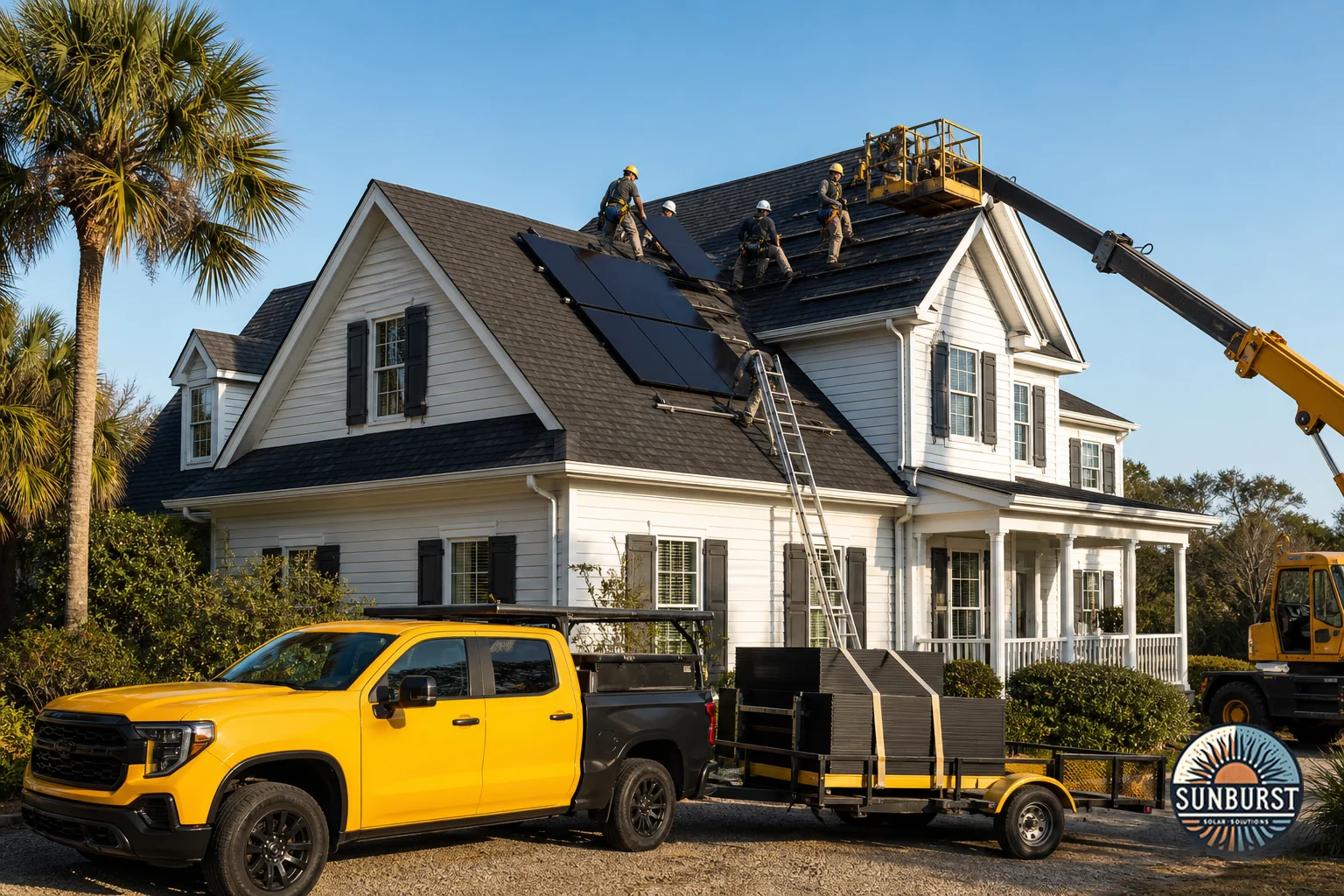
A solar-ready roof is one built to outlast, or at least match, the solar system going on top of it. Most Tier 1 panels carry 25-year performance warranties. If your roof only has 8-10 years left in it, you’re setting up a future project where panels have to come off, get stored, and go back on just to fix a leak or replace shingles. That extra labor costs more than doing it right the first time.
Charleston adds its own wrinkles. Salt air accelerates corrosion on fasteners and flashing near the coast. Humidity speeds up shingle granule loss and encourages moss and algae growth on north-facing slopes. And because the Lowcountry sits in a hurricane-prone zone, local building codes require wind-rated materials and proper attachment methods, which matters even more once you’re adding the weight and wind load of a solar array.
A solar-ready roof also means the deck underneath is sound enough to hold lag bolts and flashing for racking attachment points, not just shingles. Soft or rotted decking under old shingles is one of the most common surprises roofers find once tear-off begins.
Signs Your Roof Needs Replacing Before Solar Goes On
Not every roof needs full replacement before solar. Here’s what typically triggers the recommendation:
- Age approaching or past 15 years for asphalt shingle roofs, especially three-tab shingles rather than architectural grade
- Curling, cracking, or missing shingles visible from the ground or in a drone inspection
- Prior leak history, even if patched, since patched areas are weak points for new penetrations
- Soft spots or visible sagging in the decking, which a solar installer’s structural assessment should catch
- Granule loss heavy enough to expose the underlying felt or asphalt mat
If your roof shows none of these and has 15+ years of remaining life, you may be fine installing solar directly. Our earlier breakdown on whether your roof needs replacing before solar panels walks through the inspection criteria in more detail if you want to check your own roof against it first.
Material Choices That Pair Well With Solar
Two roofing materials dominate solar-ready replacements in the Charleston area: architectural asphalt shingles and standing seam metal. Each has tradeoffs worth weighing before you commit.
| Material | Solar Mounting Method | Typical Lifespan | Wind Rating | Cost Tier |
|---|---|---|---|---|
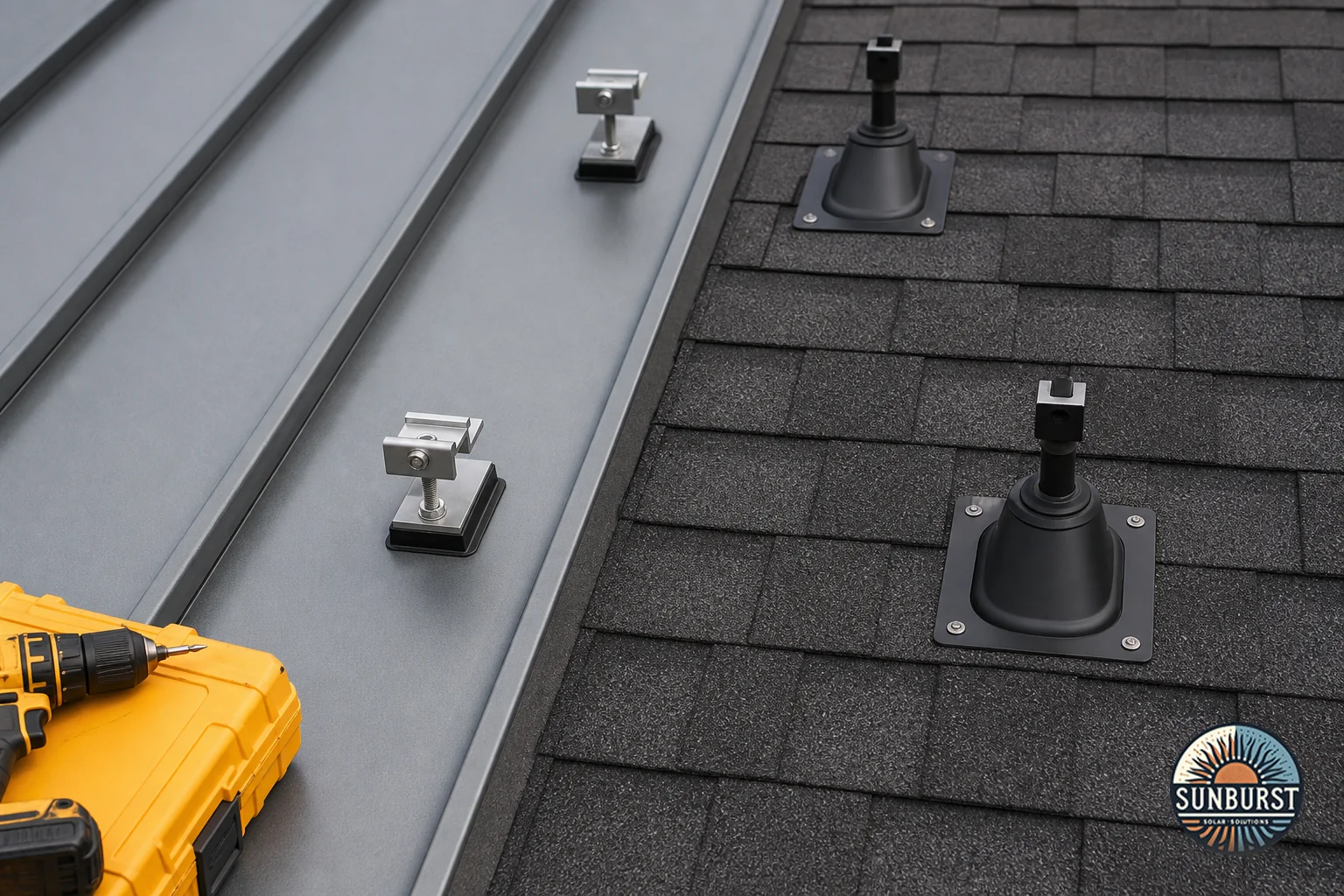
| Architectural asphalt shingle | Flashed penetration mounts through rafters | 25-30 years | 110-130 mph rated products available | Lower to moderate |
| Standing seam metal | Clamps attach directly to seams, no penetrations needed | 40-50 years | 140+ mph rated in many products | Moderate to higher |
| Three-tab asphalt shingle | Flashed penetration mounts, less durable long-term | 15-20 years | Often below coastal minimums | Lowest |
Standing seam metal has become popular for solar-ready Charleston homes because clamp-based mounts don’t puncture the roof surface at all. That eliminates one of the most common failure points on shingle roofs: flashing around lag bolts. Metal roofs also tend to outlast the solar system itself, so you likely won’t face a second roof replacement mid-way through your panels’ service life.
Architectural shingles remain the more budget-friendly choice and still work well with solar when installed with proper flashing and by a crew that understands where racking attachment points will land. The key is having the roofer and the solar designer talk to each other before the shingles go down, not after.
Timing: Coordinating Roofing and Solar Installation
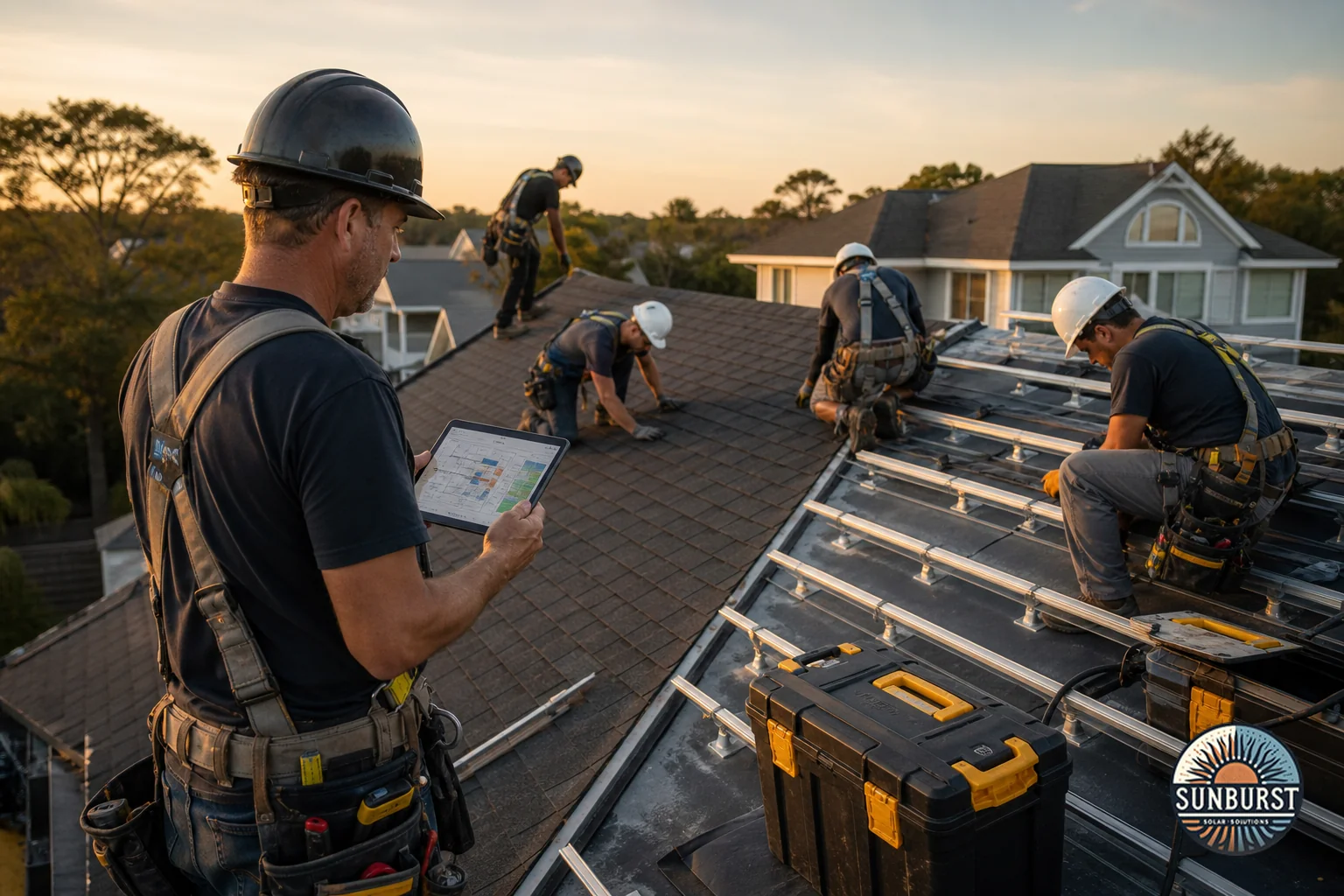
Sequencing matters more than most homeowners expect. The roof has to be fully torn off, decked, and dried in before racking attachment points get marked. Then the roofing crew finishes shingles or metal panels around those marked points, and the solar crew installs racking, wiring, and panels on top.
Permitting adds another layer. Charleston-area jurisdictions typically require separate permits for roofing and for solar, and utility interconnection through Santee Cooper’s interconnection process doesn’t start until the physical installation is complete. If you want a sense of how long that back half of the timeline runs, our guide on how long solar permitting approval takes breaks down the county-by-county variation.
The friction point is when a roofer and a solar installer are two separate companies with two separate schedules. The roofer finishes and moves to their next job. The solar crew has to get back on your calendar, sometimes weeks later, and by then weather, material lead times, or a change in crew availability can push things further. Homeowners sometimes end up living with a bare roof and no panels for a month or more simply because two businesses couldn’t align calendars.
One Contractor vs Two: How Sunburst’s Combined Process Works
Sunburst Solar Solutions handles roof replacement and solar installation as one coordinated project rather than two handoffs. The same project team schedules the tear-off, marks racking attachment points before the new roofing material goes down, and moves straight into panel installation once the roof is dried in. There’s no second contractor to chase down, no second set of change orders, and no gap where your roof sits bare while you wait for a callback.
That coordination also simplifies the warranty conversation. Instead of a roofer’s workmanship warranty and a separate solar installer’s workmanship warranty potentially disputing who’s responsible for a leak near a mounting bracket, one company stands behind the whole assembly. Sunburst backs its work with a 10-year workmanship warranty alongside manufacturer coverage on the panels themselves.
If you’re weighing whether you actually need multiple contractors for a project like this, our post on solar, roofing, and battery: do you need multiple contractors lays out exactly when a single contractor makes sense versus when you might genuinely need to bring in specialists.
What to Ask Before You Sign for a Combined Roof + Solar Project
Even with one contractor handling both trades, a few questions protect you before you sign anything:
- Who is responsible for flashing around racking penetrations, and is that covered under the roofing warranty or the solar workmanship warranty?
- What happens if the decking needs repair once tear-off begins, and is that priced separately or included in the estimate?
- How is the project sequenced, and what’s the expected gap between roof completion and panel installation?
- Does the wind rating on the new roofing material meet local code for coastal Charleston, not just a statewide minimum?
Our detailed guide on what to ask before signing a solar contract covers the financing and equipment questions in depth, while our piece on red flags to avoid when choosing a solar installer is worth a look if you’re comparing more than one company for this kind of combined project.
Local wind requirements come from South Carolina’s residential building code, which coastal counties like Charleston adopt with additional wind-borne debris provisions. You can review the state’s adopted code through the South Carolina Office of State Fire Marshal’s building code resources, and the FEMA building code resources explain why wind ratings matter more near the coast than inland.
Frequently Asked Questions
Do I need a new roof before solar panels in Charleston?
Only if your current roof has less remaining life than your solar warranty, or shows signs of age like curling shingles, past leaks, or soft decking. A roof with 15+ years of life left generally doesn’t need replacement first.
How long does a combined roof and solar project take?
Most combined projects in the Charleston area run 3-6 weeks from tear-off through solar activation, depending on permitting timelines and material availability. Using separate contractors for each trade often adds several more weeks due to scheduling handoffs.
Does replacing my roof affect my solar tax credit?
New 2026 homeowner solar or battery installations do not qualify for the expired federal Residential Clean Energy Credit. Do not treat an ordinary roof replacement or structural roof work as a solar tax-credit expense. Older eligible projects and solar-generating equipment have distinct tax rules; verify them independently rather than financing roof work around an assumed federal refund. See current IRS Section 25D guidance.
What roofing material holds up best in Charleston’s climate for solar?
Standing seam metal and architectural asphalt shingles both perform well when properly installed and wind-rated for coastal exposure. Metal roofs generally outlast the solar system’s service life, while shingles cost less upfront but may need attention again before the panels do.
If your roof is showing its age and you’re planning to add solar, the smartest move is getting both assessed together instead of separately. Get a free assessment from Sunburst Solar Solutions and find out whether your Charleston roof is ready for solar now, or needs a coordinated replacement first, so your roof and your panels are built to last together from day one.