


A whole-home standby generator on Hilton Head Island typically takes four to eight weeks from signed contract to final inspection, once you count Beaufort County permitting, equipment lead times, and utility coordination. Backup generator installation Hilton Head Island projects also need to account for flood-zone setbacks, salt-air corrosion, and fuel delivery risk that mainland South Carolina homes rarely face. Get the sizing and site placement right the first time, and the unit will carry your home through a multi-day outage without a second thought.
Key Takeaways
- Timeline: Expect 4-8 weeks total, including a 2-3 week Beaufort County or Town of Hilton Head Island permit review before equipment can be installed.
- Fuel choice matters most on an island: Propane is the dominant choice because it can be stored on-site, unlike natural gas lines that can be disrupted and diesel deliveries that stall when bridges close pre-storm.
- Sizing depends on real load, not guesswork: A licensed electrician should run a load calculation covering HVAC, well pumps, and appliances rather than sizing off square footage alone.
- Pairing with solar and battery storage extends runtime: A hybrid setup lets solar recharge batteries during the day so the generator only kicks in overnight or during extended cloud cover, cutting fuel use significantly.
- Elevation and setback rules apply: Many Hilton Head properties sit in FEMA flood zones, so generator pads often need to meet elevation and distance-from-structure requirements before a permit is approved.
Backup Generator Installation at a Glance
| Factor | Typical Range or Requirement on Hilton Head Island |
|---|---|
| Permit review time | 2-3 weeks through Beaufort County or Town of Hilton Head Island |
| Total project timeline | 4-8 weeks, contract to final inspection |
| Most common fuel type | Propane (on-site storage, no pipeline dependency) |
| Typical whole-home sizing | 16-26 kW for a standard single-family coastal home |
| Setback from structure | Generally 18-36 inches from windows, doors, and vents (manufacturer- and code-specific) |
| Flood zone consideration | Elevated pad or platform often required in AE/VE flood zones |
| Hurricane season readiness window | Installation and testing ideally completed before June 1 |
| Hybrid pairing option | Solar + battery storage + generator, with automatic transfer switch integration |
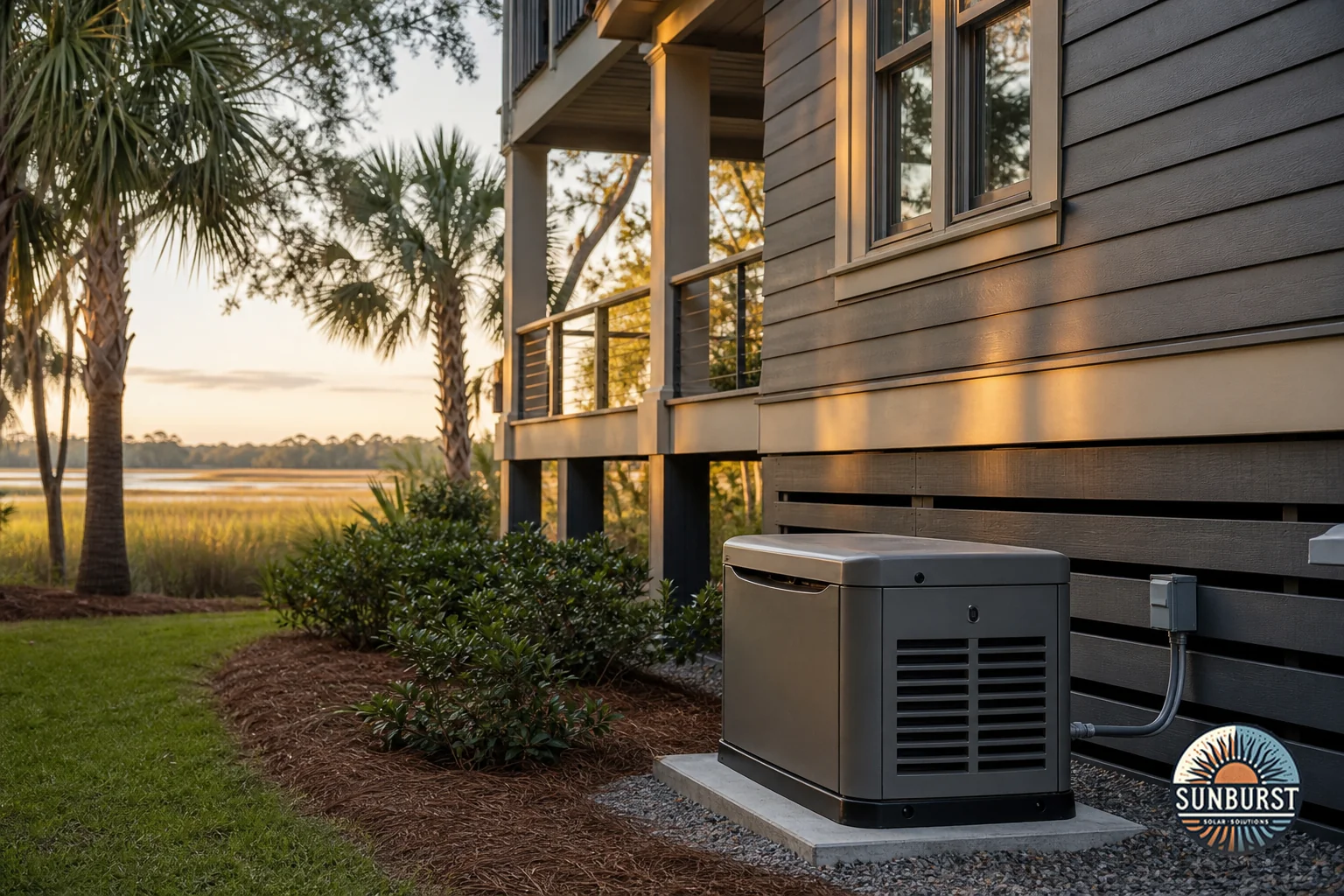
1. Assess Your Whole-Home Power Needs First
Every generator project starts with a question most homeowners never ask correctly: what actually needs to stay on? A licensed electrician performs a load calculation that adds up your air conditioning system, well pump if you have one, refrigerator, and any medical equipment, then compares that against a generator’s continuous and surge wattage ratings. Sizing off square footage alone leads to units that stall out the moment the AC compressor kicks on.
Hilton Head homes tend to run heavier cooling loads than homes further inland, thanks to humidity and long summers that push HVAC systems hard even in shoulder seasons. That changes the math. A 16 kW generator might cover a modest home in Columbia comfortably, but a similarly sized home on the island with two AC units and a pool pump often needs closer to 22-26 kW to run everything at once without load-shedding some circuits.
Before you get a quote, decide whether you want whole-home coverage or a critical-circuits-only setup that powers the refrigerator, a few lights, and one AC zone. Critical-circuit systems cost less and use a smaller generator, but they mean rationing power during a long outage. Whole-home systems cost more upfront but remove that daily decision-making during a stressful storm recovery period.
2. Choose the Right Fuel Type for a Barrier Island Home
Fuel choice on Hilton Head Island isn’t just a cost decision, it’s a resilience decision. Propane is the most common fuel for standby generators here because it’s stored in a tank on your property, which means you’re not dependent on a pipeline or a fuel truck making it across the bridge during an evacuation order. A properly sized propane tank, usually 250 to 500 gallons for a whole-home system, can run a generator for several days to a week depending on load.
Natural gas is available in parts of the island and offers the advantage of never running out of fuel, since it draws from the utility line continuously. The tradeoff is that a natural gas line can be damaged during severe weather or shut off as a precaution, which defeats the purpose during the exact event you installed the generator for.
Diesel generators are common in commercial settings but less practical for residential use on a barrier island. Diesel needs periodic delivery, and fuel trucks are often the first vehicles restricted from crossing bridges when storm evacuation orders go into effect. For most homeowners here, propane strikes the best balance of on-site storage, reliability, and long-term fuel stability.
One more coastal-specific factor: salt air accelerates corrosion on exposed metal components. Ask your installer about enclosure materials and coatings rated for coastal environments, since a generator housing that isn’t built for salt exposure can degrade years faster than the same unit installed 40 miles inland.
3. Understand Beaufort County & Town of Hilton Head Island Permitting
Every standby generator installation on the island requires both a building permit and an electrical permit, and gas-fueled units also need a mechanical or fuel-line permit depending on the fuel source. The Town of Hilton Head Island and unincorporated Beaufort County both maintain their own review processes, so the first step is confirming which jurisdiction your property falls under.
Typical review takes two to three weeks, though it can run longer during peak spring demand when everyone is trying to get installed before hurricane season starts. Your installer should handle the permit application, but you as the homeowner are the one whose name is on the property, so it’s worth confirming the paperwork was actually submitted rather than assuming it happened.
Because Hilton Head Island sits within Palmetto Electric Cooperative’s service territory in most areas, with some pockets served by other providers, your installer also needs to coordinate the electrical interconnection and any required utility notification, particularly if you’re pairing the generator with solar. If you already have or are planning a solar array, this is also the moment to ask how long solar permitting approval typically takes so you can plan both projects on a realistic combined timeline.
Work with a licensed, insured electrical contractor for this step. An unlicensed installation can void manufacturer warranties and create real liability if a permit is never actually filed. If you’re unsure how to vet a contractor for this kind of project, the same due diligence used for solar applies here too, and our guide on red flags to avoid when choosing a solar installer covers warning signs that carry over to generator contractors as well.
4. Site Placement, Flood Zones, and Elevation Requirements
Placement is where Hilton Head Island installations differ most from a typical inland South Carolina project. Large portions of the island fall within FEMA-designated flood zones, including AE and VE zones near the marsh and beachfront. If your property sits in one of these zones, your generator pad may need to be elevated above base flood elevation, or mounted on a platform that keeps the unit above expected storm surge levels.
Manufacturer guidelines and local code both set minimum setback distances from windows, doors, and fresh air intakes, typically 18 to 36 inches depending on the model and BTU output. Your installer also needs to account for property line setbacks and, in many Hilton Head neighborhoods, an architectural review board or HOA that has its own rules about generator placement and screening.
Noise is a practical consideration too. Many Hilton Head communities have quiet-hours ordinances or HOA covenants that affect where a generator can sit relative to neighboring homes. A good installer will position the unit to satisfy code, minimize noise complaints, and still keep maintenance access convenient.
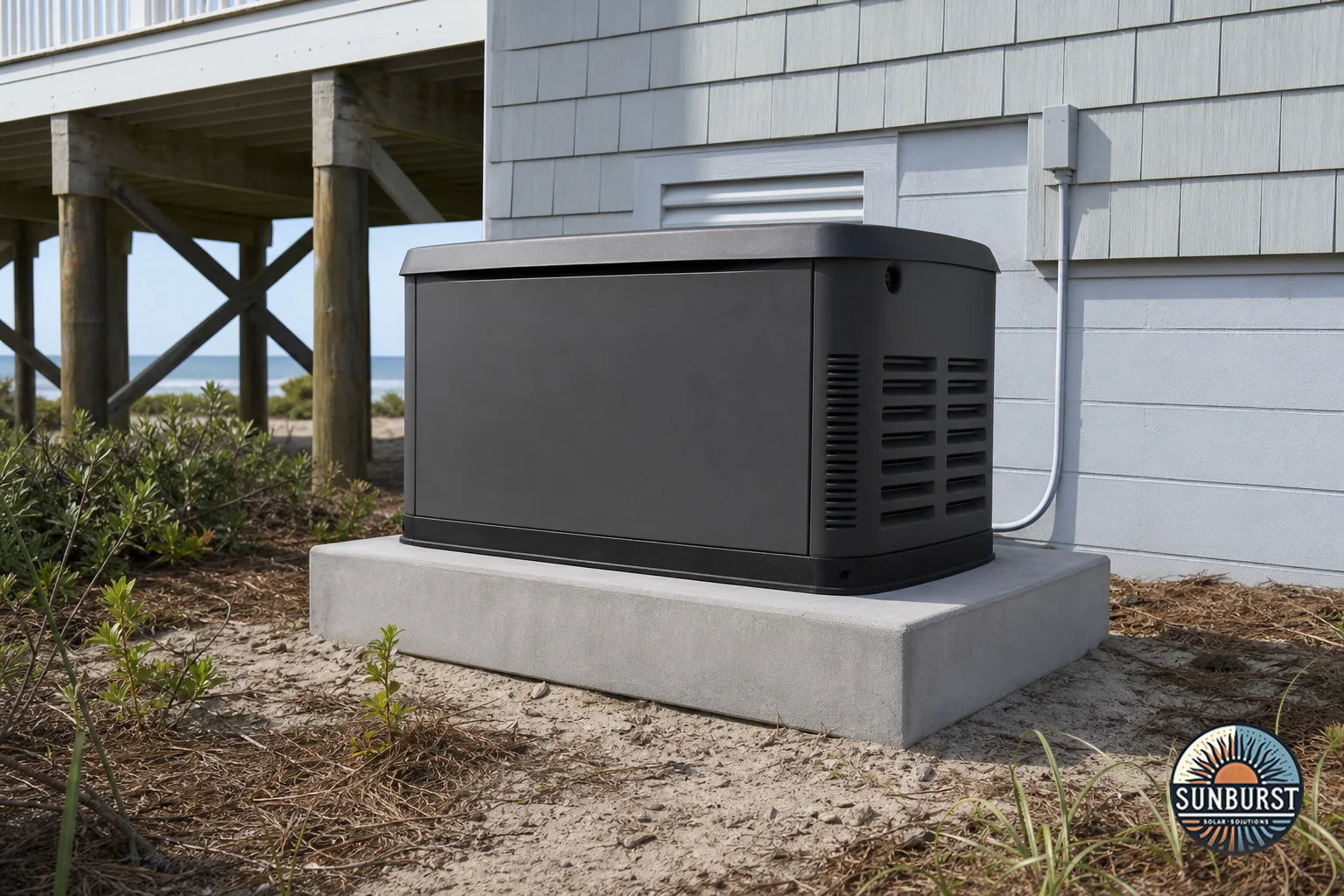
If your property is also being evaluated for solar, this is a good time to have a single site visit cover both systems. Roof condition, panel placement, and generator siting all interact with each other, and coordinating them upfront avoids the redundant truck rolls covered in our post on whether solar, roofing, and battery projects need multiple contractors.
5. Pair Your Generator With Solar and Battery Storage
A generator alone solves the outage problem, but it has a hidden weakness: it depends entirely on fuel supply. During a multi-day outage after a major hurricane, propane delivery trucks face the same road closures and bridge restrictions everyone else does. That’s where pairing a generator with rooftop solar and a home battery changes the equation.
In a hybrid setup, solar panels recharge your battery during daylight hours, even under the overcast skies that typically follow a storm. The battery covers your critical loads through the night, and the generator only needs to run when the battery gets low or when a heavier load, like central air conditioning, needs extra capacity. This can cut fuel consumption dramatically compared to a generator running around the clock for a week straight.
The integration point is an automatic transfer switch, which senses when utility power drops and switches your home to backup power automatically, whether that’s battery, generator, or both working together. A properly configured system prioritizes battery and solar first, since that power is free and silent, and brings the generator online only as a supplement.
Homeowners often ask which is actually better for their situation: a standalone generator, a solar-plus-battery system, or both together. We’ve covered that tradeoff in detail in our comparison of solar battery versus generator backup for Hilton Head homes, and the short version is that most coastal households get the best resilience from combining the two rather than choosing one exclusively.
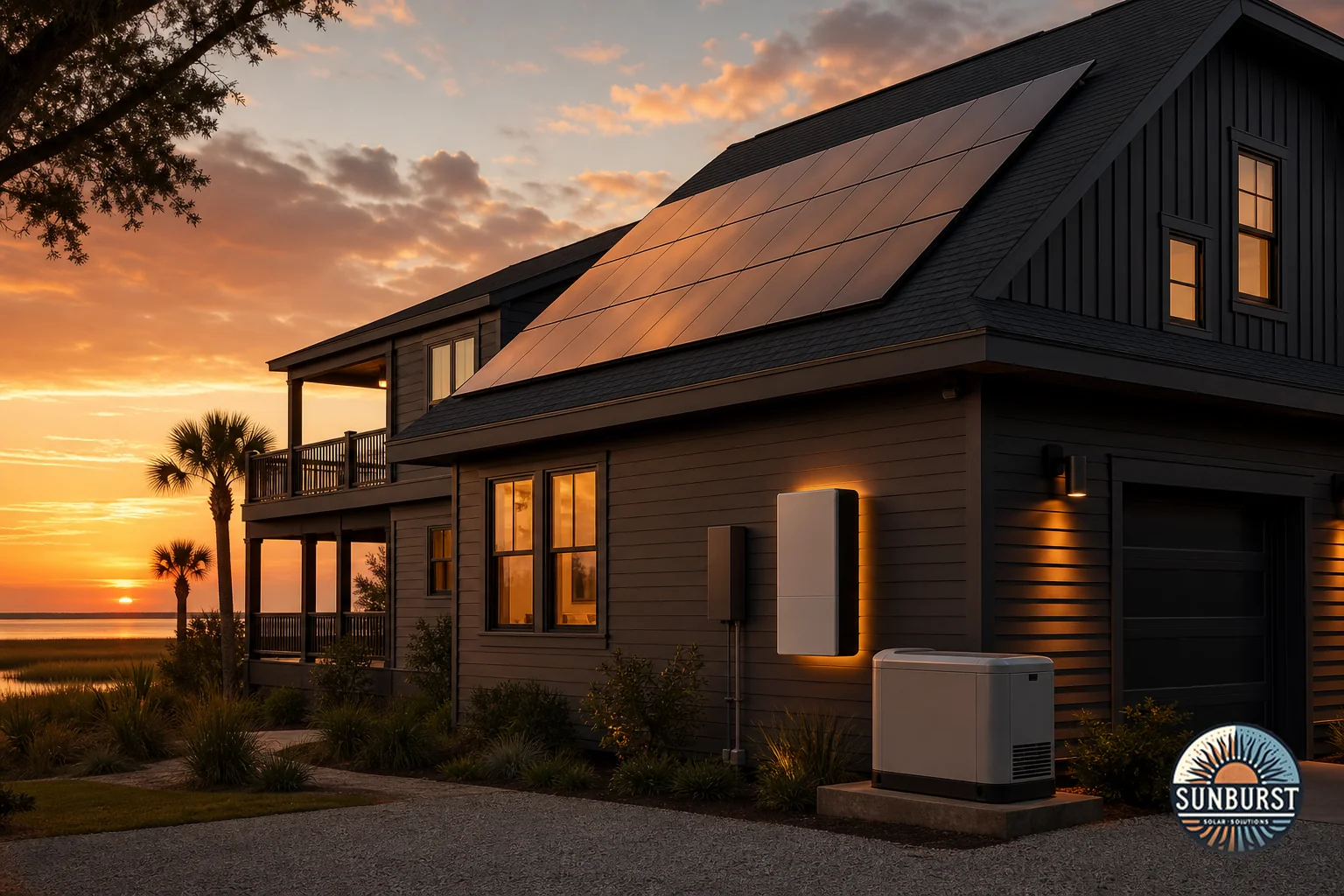
If you’re not sure whether your roof and electrical panel can support solar alongside a generator, Sunburst Solar Solutions can walk through both systems in a single consultation. You can start by using our solar potential estimator to see what your roof could generate before deciding how big a role solar should play in your backup strategy.
6. Installation Day: What to Expect
Once permits clear, the physical installation itself usually takes one to three days depending on system complexity. The crew pours or sets the concrete pad first, then places the generator unit and runs the fuel line, whether that’s connecting to an existing propane tank or coordinating delivery of a new one. Electricians handle the transfer switch wiring and tie the unit into your main electrical panel.
After installation, a final inspection from the local building department confirms the unit meets code before it’s approved for use. Your installer should also perform a full load test, running the generator under real household demand rather than just an idle startup check, to confirm it handles your actual power draw.
Ask your contractor to schedule this test with enough time before hurricane season to fix anything that comes up. A generator that starts fine in a quiet driveway test but stumbles under full AC and appliance load is a problem you want caught in May, not during an August storm.
7. Maintaining Your Generator Through Hurricane Season
South Carolina’s hurricane season runs June through November, and a standby generator needs attention before it, not just after a storm knocks out power. Most manufacturers recommend the unit run a brief self-test cycle weekly or biweekly, which keeps the engine lubricated and the battery charged even when it’s never called on for real backup duty.
Before peak season, have a technician check oil levels, air filters, spark plugs or injectors depending on fuel type, and battery health. If you’re on propane, confirm your tank level is topped off well before storm forecasts start naming systems, since delivery trucks get backed up island-wide once a storm is tracking toward the coast.
Fuel storage safety deserves its own mention on a barrier island. Propane tanks need to be properly secured and positioned away from flood-prone low points where possible, and diesel or gasoline backup fuel, if you keep any on hand for a portable unit, should never be stored inside an attached garage.
If your generator is paired with solar and battery storage, your monitoring app becomes a useful hurricane-season tool. You can check battery state of charge and generator run status remotely, which matters if you evacuate ahead of a storm and want visibility into your home’s power situation without being there.
Comparing Backup Power Options for Hilton Head Homes
Not every home needs the same solution. Here’s how the main backup power options stack up for coastal South Carolina properties:
| Option | Runtime During Multi-Day Outage | Fuel Dependency | Noise Level | Best Fit |
|---|---|---|---|---|
| Portable generator | Hours at a time, requires manual refueling | High (gasoline, frequent trips to refuel) | Loud | Short outages, tight budgets |
| Whole-home standby generator (propane) | Several days to a week on a full tank | Moderate (on-site tank, but finite supply) | Moderate | Homes without solar wanting full whole-home coverage |
| Solar + battery storage only | Ongoing, recharges daily with sunlight | None | Silent | Homes prioritizing quiet, fuel-free backup for critical circuits |
| Solar + battery + generator hybrid | Extended indefinitely, generator as supplement only | Low (generator runs only when needed) | Low to moderate | Coastal homes wanting maximum resilience through week-plus outages |
For most Hilton Head Island homeowners, the hybrid path offers the strongest protection against the reality of coastal storms: outages that stretch well past what a single fuel tank or a single battery can cover alone. It also spreads your investment across systems that each do what they do best, solar and battery for silent daily coverage, generator for the heavy-load backstop.
Frequently Asked Questions
How long does generator installation take on Hilton Head Island?
Most projects take four to eight weeks from signed contract to final inspection. Permitting through Beaufort County or the Town of Hilton Head Island typically accounts for two to three weeks of that window, with equipment lead times and physical installation making up the rest.
Do I need a permit for a standby generator in Beaufort County?
Yes. A building permit and electrical permit are both required, and gas-fueled units also need a fuel-line or mechanical permit. Your contractor should file these on your behalf, but confirm the paperwork is submitted before installation begins.
Can a generator run my whole house during a hurricane?
A properly sized whole-home standby generator can run your entire electrical system, including HVAC, as long as it’s sized correctly for your actual load. Undersized units force you to shed circuits manually, which is why a licensed load calculation matters more than square footage estimates.
Is a generator or solar battery better for storm outages?
Each has strengths. A generator delivers high, continuous output but depends on fuel that can run out during extended outages. A solar battery recharges daily and runs silently but has a capacity ceiling. Many Hilton Head homeowners combine both for the most complete coverage, as detailed in our solar battery versus generator comparison.
How many contractors do I need for a generator plus solar project?
It depends on scope. Some solar installers, including Sunburst Solar Solutions, coordinate generator, battery, and solar work through a single point of contact, which simplifies permitting and site planning compared to hiring separate companies for each system.
What happens to my system if the power goes out before installation is finished?
If a storm approaches mid-project, your installer should secure any exposed equipment and communicate a revised timeline. This is one more reason to start the process well ahead of June, giving enough buffer for weather delays without leaving your home unprotected going into peak season.
Plan Your Backup Power Before the Next Storm Season Peak
Waiting until a storm is named in the Atlantic is the most common mistake Hilton Head homeowners make with backup power planning. Permitting queues fill up, propane tank availability tightens, and installation crews book out weeks in advance once storm season gets underway. Getting ahead of that curve, with the right fuel choice, proper sizing, and code-compliant placement, is what actually keeps your home running when the grid doesn’t.
Sunburst Solar Solutions works with Hilton Head Island homeowners to design backup power systems that fit the island’s flood zones, HOA rules, and storm patterns, whether that means a standalone generator or a hybrid setup with solar and battery storage. Book an appointment to get a site assessment scheduled before the next storm system starts forming, or start with our free solar potential check to see how much of your backup power could come from the sun instead of a fuel tank. If you’d rather stay in the loop on hurricane prep tips and incentive updates first, you can join our community list before making a decision.