


Your HOA can’t legally block you from going solar in Columbia, SC, but it can control how your panels look from the street. South Carolina’s solar access law (S.C. Code Ann. § 27-30-10) limits what homeowners associations can restrict, and most HOA solar panel approval columbia sc cases hinge on placement, color, and paperwork, not an outright yes-or-no vote. Once you know the rules, the process usually takes 30 to 45 days.
Key Takeaways
- HOAs can’t ban solar outright: South Carolina law prevents associations from prohibiting solar energy devices, though they can regulate placement and appearance.
- Performance loss is the legal test: An HOA can require panels moved to a different roof plane only if that move doesn’t reduce system output by more than 10%, per SC statute.
- Paperwork drives timelines: Most approval delays come from incomplete site plans or missing spec sheets, not board resistance.
- Review windows run 30-45 days: Many Columbia-area HOA governing documents set a response deadline; some treat silence past that window as approval.
- Sunburst handles the packet for you: Sunburst Solar Solutions prepares and submits your architectural review request, tracks deadlines, and communicates directly with your board or management company.
HOA Solar Approval in Columbia, SC at a Glance
| Factor | What to Expect |
|---|---|
| Governing law | S.C. Code Ann. § 27-30-10 (Solar Energy Rights) |
| Can HOA ban solar entirely? | No, but it can regulate placement and appearance |
| Typical review timeline | 30-45 days, varies by HOA bylaws |
| Performance loss threshold | HOA-mandated relocation can’t cut output by more than 10% |
| Common required documents | Site plan, equipment spec sheet, color/finish samples, structural diagram |
| Who submits paperwork | Homeowner, or installer on homeowner’s behalf (Sunburst offers this) |
| Common Columbia HOA neighborhoods | Woodcreek Farms, Spring Valley, Lake Carolina |
| What happens if HOA doesn’t respond | Many bylaws deem the request approved after the stated review period |
1. Understand What South Carolina Law Actually Protects
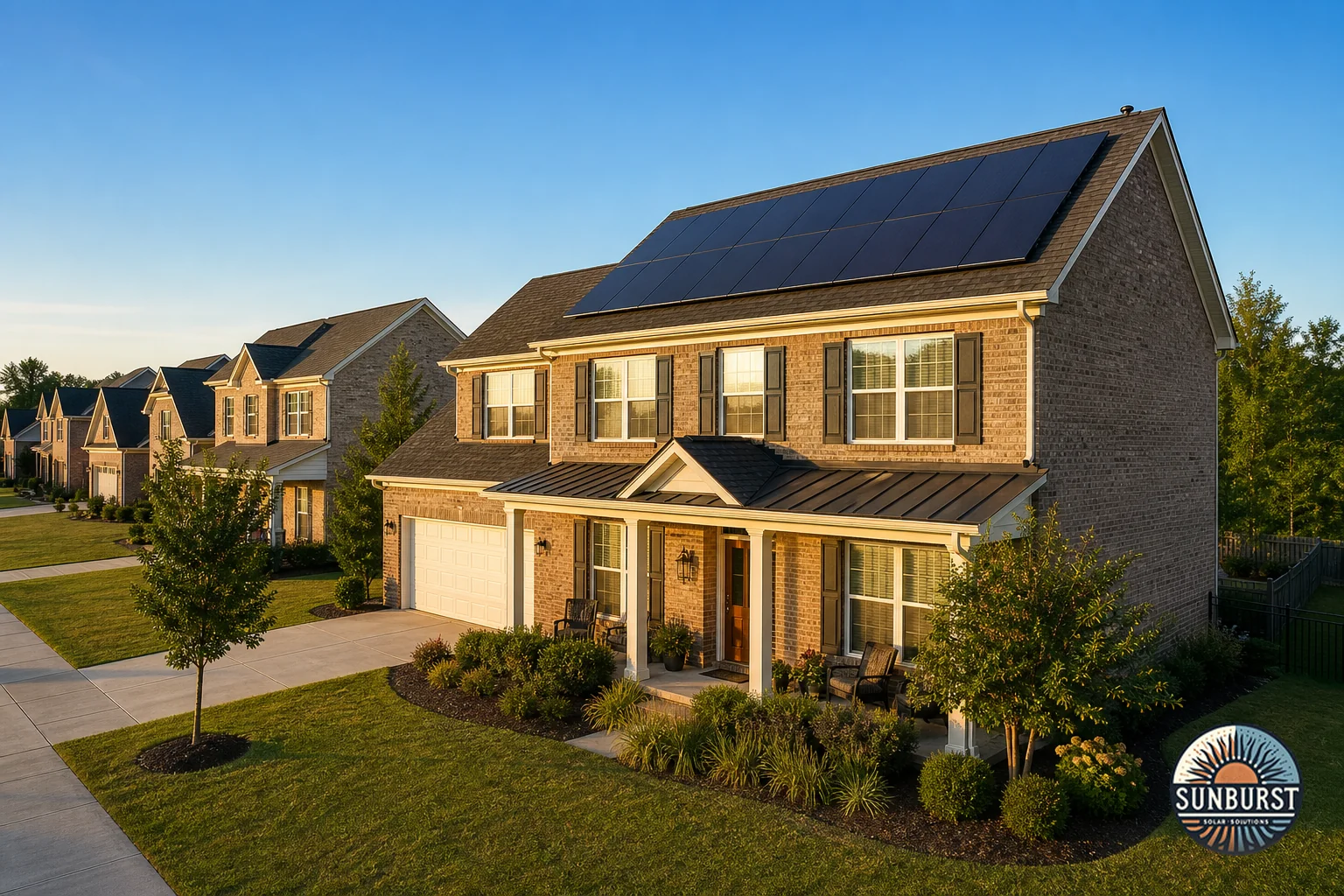
South Carolina passed a solar access law specifically because HOAs across the state, including plenty in the Columbia area, used to deny solar requests without much explanation. Under S.C. Code Ann. § 27-30-10, a homeowners association cannot adopt or enforce a restriction that effectively prohibits the installation of a solar energy system. That’s the core protection every Columbia homeowner should know before their first conversation with a board.
The law doesn’t strip HOAs of all authority, though. Boards keep the right to set reasonable rules about where panels go and how they look, as long as those rules don’t function as a backdoor ban. If your HOA’s covenants were written before solar became common, don’t assume they automatically forbid panels. Most older restrictions get overridden by the state statute, but your board may not realize that until you point it out with the code section in hand.
This matters because Columbia has dozens of established HOA communities, and many still operate off covenants drafted in the 1990s or early 2000s, long before rooftop solar was mainstream. Citing the actual law tends to move conversations forward faster than arguing about aesthetics alone.
2. Know What Columbia-Area HOAs Can and Can’t Restrict
Here’s where most homeowners get tripped up: the law protects your right to install solar, but it also gives your HOA real leverage over the details. Knowing the difference before you submit anything saves weeks of back-and-forth.
What your HOA can typically require:
- Panels placed on a roof plane that isn’t visible from the street, if that placement doesn’t reduce system performance by more than 10%
- Frames, wiring, and mounting hardware in colors that blend with the roof (this is one reason black-on-black panels have become the default choice in HOA neighborhoods)
- Screening or landscaping around ground-mounted equipment like inverters or battery enclosures
- Submission of a complete architectural review packet before work begins
What your HOA generally cannot do:
- Deny a solar installation outright with no path to approval
- Force a roof placement that would cut energy production by more than 10%
- Charge excessive or punitive review fees designed to discourage applications
- Sit on a complete application indefinitely without a decision
In practice, Columbia neighborhoods like Woodcreek Farms, Spring Valley, and Lake Carolina all have active architectural review committees, and each handles solar slightly differently. Some have already approved several systems and have a template process. Others are reviewing their first request and may need a bit more education on what state law requires. Either way, the fix is the same: bring a complete, professional packet.
3. Gather the Documents Your HOA Will Ask For
Architectural review committees aren’t trying to make your life difficult. They’re trying to protect neighborhood consistency, and they can only approve what they can clearly evaluate. A thin, one-page request almost always gets bounced back with questions, which restarts your review clock.
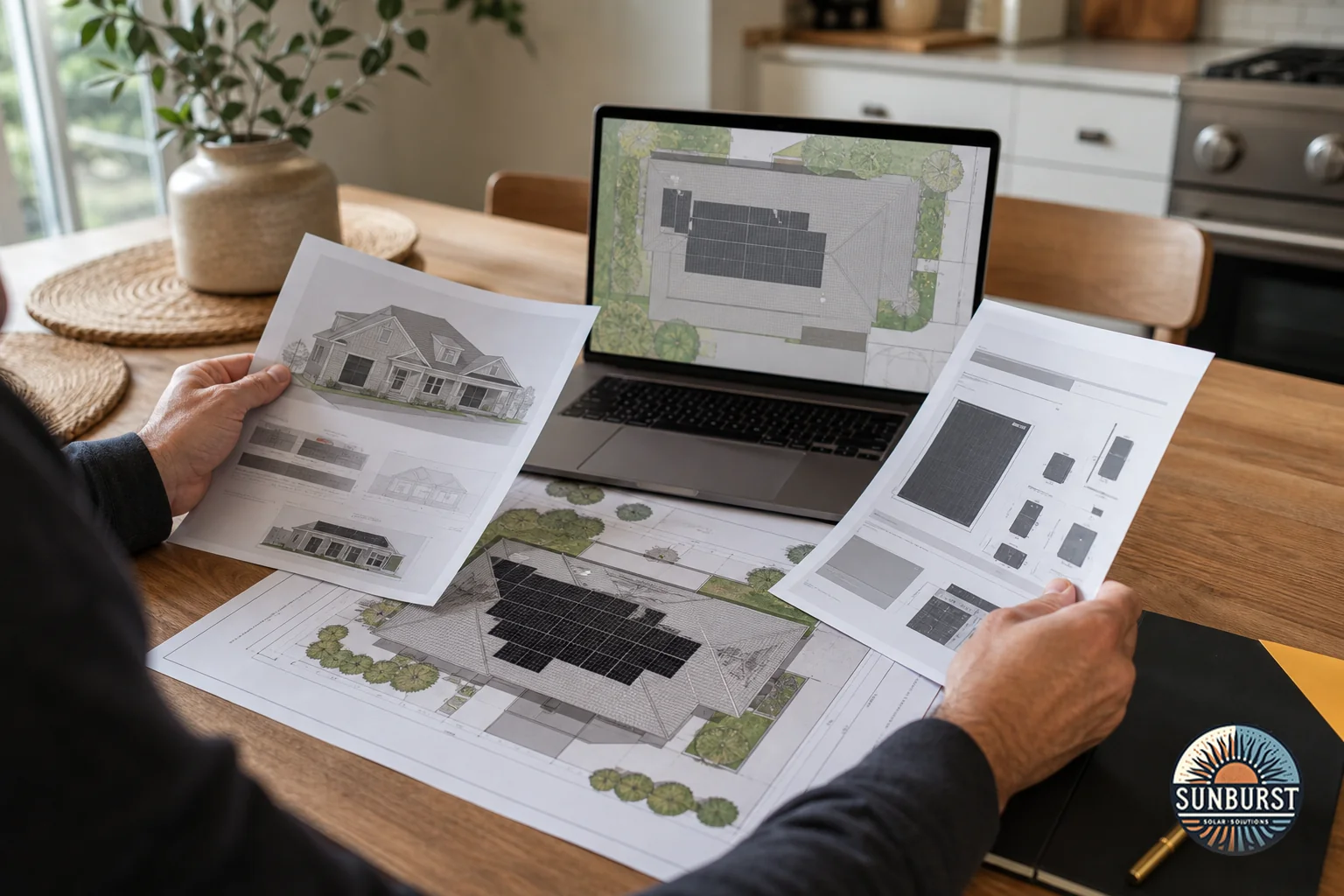
A strong submission usually includes:
- Site plan or plot plan: Shows exactly where panels sit on the roof, including setbacks and orientation relative to the street
- Equipment specification sheets: Manufacturer details on panel dimensions, frame color, and finish (black-on-black panels are easiest to get approved since they read as low-profile from a distance)
- Structural and electrical diagrams: Confirms the racking system and wiring meet code and won’t visibly clutter the roofline
- Photos or renderings: A simple visual mockup showing what the finished roof will look like from the street
- Contractor license and insurance information: Many boards want proof the installer is properly licensed in South Carolina
If your home also needs roofing work before installation, plan that into your submission timeline too. Our related guide on whether your roof needs replacing before solar panels walks through how to evaluate that before you even start the HOA conversation, since a roof replacement mid-review can complicate your architectural packet.
4. Submit Your Architectural Review Request the Right Way
Every HOA has its own form and process, but the general playbook is consistent across Columbia communities. Start by requesting the association’s specific architectural review (ARC) application, not a generic template. Management companies like those overseeing many Richland and Lexington County communities usually have this on file and will send it within a few business days of your request.
Submit your packet before you sign a final installation contract if your HOA’s bylaws require pre-approval. Some homeowners make the mistake of signing with an installer first and then discovering their board wants changes to the layout, which can mean redesign fees or delays. Submitting early protects your timeline and your budget.
Once submitted, follow up in writing. Email is fine, but keep a dated paper trail of every communication. Most South Carolina HOA governing documents set a specific review window, commonly 30 to 45 days, and some bylaws state that a complete application is automatically deemed approved if the board doesn’t respond within that window. Knowing your specific HOA’s deadline gives you leverage if things stall.
A complete, professional-grade packet is the single biggest factor in how fast your HOA approves solar. Boards approve what they can clearly picture; vague requests get tabled.
5. Common Approval Hurdles (and How to Solve Them)
Even with a solid packet, a few recurring issues show up again and again in Columbia HOA reviews. Here’s how to handle each one.
The board wants panels moved off the front-facing roof
This is allowed under state law, but only if the move doesn’t cut your system’s output by more than 10%. Ask your installer to run the production numbers for both roof planes. If the difference is under that threshold, moving the panels is often the fastest path to approval. If it’s over 10%, you have a legal basis to push back.
The board asks for screening around ground equipment
Battery enclosures, inverters, and disconnect boxes sometimes draw more objections than the panels themselves. A simple landscaping plan, like low shrubs or a small fence panel, usually satisfies this request without adding real cost.
The board delays without responding
Check your governing documents for a stated review deadline. Many South Carolina HOAs build in a default approval clause for exactly this situation. If yours doesn’t, a polite written follow-up citing the state solar access law often gets a response within days.
Aesthetic disputes over panel color
Blue polycrystalline panels can stand out sharply against a dark roof, which is often what triggers pushback. Tier 1 black-on-black monocrystalline panels solve this before it becomes a conversation, which is one reason installers increasingly default to them in HOA-governed neighborhoods.
6. How Sunburst Solar Solutions Handles HOA Paperwork For You
Most homeowners don’t want to become experts in architectural review procedure, and you shouldn’t have to. Sunburst Solar Solutions builds HOA coordination directly into the installation process rather than leaving it as an afterthought.
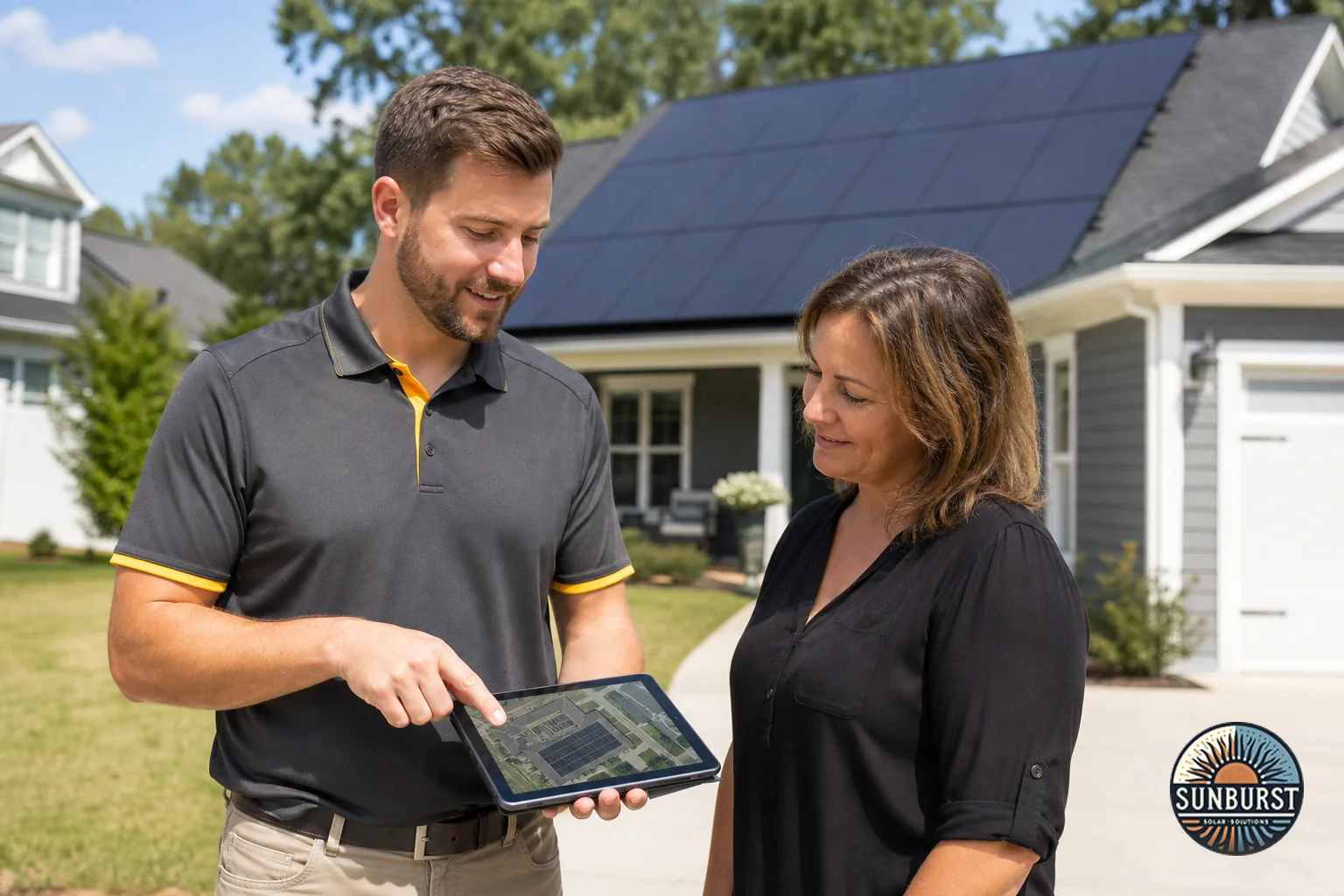
Here’s what that looks like in practice. Sunburst’s design team prepares your full ARC packet, including the site plan, equipment spec sheets, and a rendering showing exactly how the black-on-black panels will sit on your specific roofline. That packet gets submitted directly to your board or management company, often with a cover letter referencing the relevant South Carolina statute so the board has everything it needs to say yes on the first pass.
From there, Sunburst tracks your HOA’s review deadline and follows up on your behalf if the board goes quiet. If your roof needs work before panels go up, the team coordinates with its roofing partner so the timeline stays realistic instead of stalling out between two separate contractors. You can see how that full sequence plays out in our breakdown of what to expect during solar installation, which covers the same coordination approach Sunburst uses across South Carolina, including Columbia.
The result is fewer surprise emails from your board, fewer redesign requests, and a homeowner who isn’t stuck playing translator between an installer and an architectural review committee. If you want a sense of what your roof could realistically support before you’re deep into HOA paperwork, you can check your solar potential first and use that information to guide your ARC submission.
7. Tips to Speed Up Your HOA Solar Approval
- Read your CC&Rs before signing anything. Know your HOA’s specific review window and required forms before you commit to an installer’s timeline.
- Choose black-on-black, low-profile panels. They’re far less likely to draw aesthetic objections than older-style blue panels with visible frames.
- Ask if your HOA has approved solar before. Precedent matters. If a neighbor already has panels, request their layout as a reference point for your own submission.
- Consider attending the board meeting. A five-minute in-person explanation can resolve questions that would otherwise take three rounds of emails.
- Submit early. Build HOA review time into your project timeline before you finalize a contract, not after.
If you’re still comparing installers and want to understand what separates a smooth process from a frustrating one, our guide on roof readiness before going solar and the broader installation walkthrough both cover ground that applies directly to Columbia homeowners working through HOA review.
FAQ: HOA Solar Approval in Columbia, SC
Can an HOA in South Carolina deny solar panels entirely?
No. Under South Carolina’s solar access law, an HOA cannot adopt a rule that effectively bans solar installations. It can regulate placement, color, and screening, but it can’t issue a flat denial.
How long does HOA solar approval take in Columbia?
Most Columbia-area HOAs review complete applications within 30 to 45 days. Incomplete packets, missing spec sheets, or unclear site plans are the most common causes of longer delays.
What if my HOA ignores my request?
Check your governing documents for a default approval clause tied to the review deadline. If your bylaws don’t include one, follow up in writing and reference S.C. Code Ann. § 27-30-10 directly.
Do I need HOA approval if my panels aren’t visible from the street?
Most HOA covenants require review of any exterior modification regardless of visibility, so submit an application even for a rear-facing roof. It’s typically a faster approval, but skipping the process can still violate your covenants.
Does HOA approval affect my solar tax credit timeline?
HOA review happens before installation, and your tax credit eligibility is tied to when your system is installed and placed in service, not when your HOA approves the request. Delays in HOA review can push back your installation date, though, so starting the paperwork early helps keep your project on the timeline you want for claiming available incentives.
Getting HOA solar panel approval in Columbia SC doesn’t have to mean months of back-and-forth with your board. With the right paperwork, the right panel choice, and a clear understanding of what South Carolina law actually protects, most homeowners get through review without a fight. Sunburst Solar Solutions handles the entire architectural review packet, from site plans to board follow-up, so you’re not the one chasing signatures. Book an appointment to start your custom design and HOA submission today, or join us to stay updated on South Carolina solar incentives and neighborhood approval trends near you.