


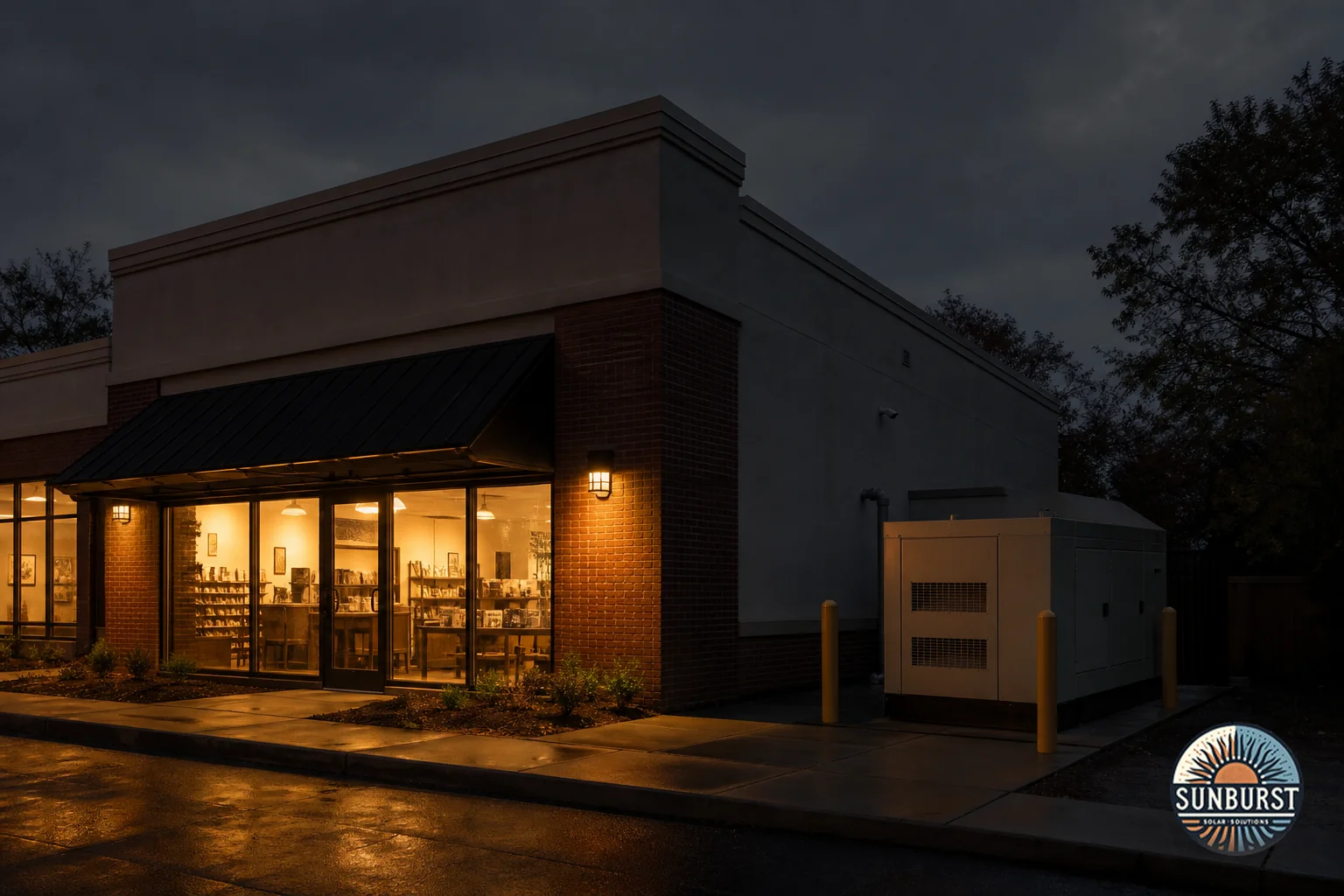
A restaurant walk-in cooler in the Vista can lose safe holding temperature within four hours of a grid outage, and a medical office running on a dead panel can’t process a single patient. That’s the real cost driving business generator installation in Columbia, SC: sized correctly and permitted properly, a commercial standby unit keeps a building’s critical circuits alive from the moment utility power drops until crews restore it, often with automatic switching that requires no one on-site to act.
Key Takeaways
- Sizing matters more than brand: A commercial load study, not a rough square-footage guess, determines whether you need a 20kW or a 150kW unit.
- Permitting adds real time: Richland County and City of Columbia electrical and fire inspections typically add two to five weeks to your project timeline.
- Fuel type changes the math: Natural gas units run indefinitely on utility supply, while diesel needs on-site fuel storage and periodic refueling contracts.
- Hybrid setups cut runtime: Pairing a generator with solar and battery storage lets the battery absorb short outages, saving fuel and engine hours for longer events.
- One contractor can often handle both: Businesses adding solar, battery, and generator together avoid coordination gaps between separate crews.
Columbia, SC Business Backup Power at a Glance
| Factor | Typical Range for Small/Mid-Size Business |
|---|---|
| Generator size for a small retail or office space | 20-60kW |
| Generator size for a restaurant with kitchen equipment | 60-100kW |
| Generator size for light manufacturing or warehouse | 100-250kW |
| Fuel options | Natural gas, propane, diesel |
| Permit timeline (Richland County/City of Columbia) | 2-5 weeks after application |
| Total project timeline from contract to operation | 6-10 weeks |
| Hybrid pairing option | Solar + battery storage + generator with automatic transfer switch |
| Key inspections required | Electrical, fire/life safety, and mechanical (fuel storage) |
Why Columbia Businesses Are Rethinking Backup Power
Ice storms, summer thunderstorm clusters, and the occasional tropical system remnant all put pressure on the grid serving the Midlands. Dominion Energy and other regional utilities do a solid job restoring power quickly in most neighborhoods, but a business that loses even four hours of operation can lose spoiled inventory, missed appointments, or an entire day’s point-of-sale revenue. A dentist’s office with sedation equipment, a daycare with security and refrigeration needs, or a small grocer with frozen cases all face a different risk calculus than a homeowner would.
Unlike a single-family home, a commercial building often runs three-phase power, multiple HVAC zones, and specialized equipment that a residential-grade generator simply can’t support. That’s the core reason business generator installation in Columbia, SC needs its own planning process rather than a scaled-up version of a home backup setup.
Sizing a Generator for Commercial Loads
Get the sizing wrong and you either overpay for capacity you’ll never use, or you install a unit that trips offline the moment your rooftop HVAC compressor kicks on. Commercial sizing starts with two numbers for every piece of equipment: running watts and starting watts. A walk-in freezer compressor, for example, might run at 3,000 watts but spike to 9,000 watts for a few seconds at startup. Add those spikes together across your building’s critical circuits and you get the true peak demand a generator has to handle.
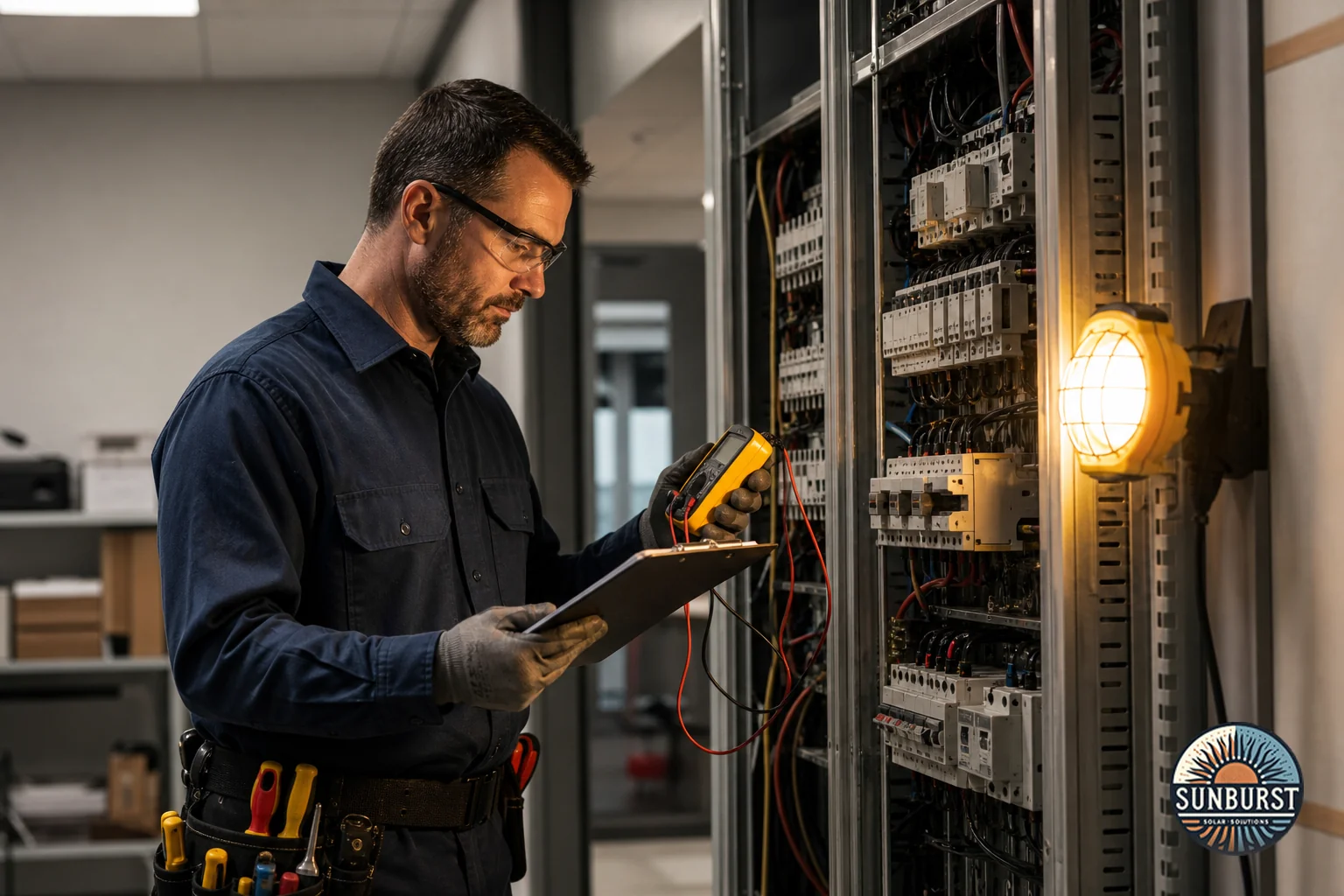
A licensed electrician typically performs this assessment on-site, reviewing your electrical panel, checking nameplate data on major equipment, and deciding whether you need to back up the entire building or just the circuits that matter most, refrigeration, life safety systems, a few outlets, and basic lighting. Many Columbia businesses choose partial backup to control both generator cost and fuel consumption.
If you’re weighing generator sizing against a solar plus battery approach instead, the same load math applies. Our guide on how to size a battery storage system walks through the residential version of this exercise, though commercial jobs scale the same principles up to three-phase equipment.
Permitting a Business Generator Installation in Columbia, SC
Commercial generator permitting runs through both Richland County and the City of Columbia, depending on your address, and it moves on a separate track from any solar or electrical permits you might also need. Expect at least three review layers:
- Electrical permit: Covers the generator’s wiring, the automatic transfer switch, and any panel upgrades needed to handle the new load.
- Fire and life safety review: Diesel and propane units with on-site fuel tanks trigger fire marshal review of tank placement, setback distances, and containment.
- Mechanical or zoning check: Noise ordinances and setback rules affect where the unit can physically sit relative to property lines and neighboring businesses.
Plan for two to five weeks of review time once your application is submitted, longer if your site needs a variance for tank placement. This timeline runs parallel to, not instead of, whatever solar or battery permitting you might pursue at the same time. Our post on how long solar permitting approval takes covers the interconnection side of that process if you’re bundling projects.
Standby vs Portable Generators for Commercial Sites
Most Columbia business owners quickly rule out portable units once they understand how automatic standby systems actually work, but the comparison is worth laying out clearly.
| Feature | Portable Generator | Standby (Natural Gas/Propane) | Standby (Diesel) |
|---|---|---|---|
| Startup | Manual, requires staff on-site | Automatic within seconds of outage | Automatic within seconds of outage |
| Fuel source | Gasoline, needs refueling trips | Utility gas line or propane tank | On-site diesel tank |
| Typical capacity | Up to 15kW | 20-500kW+ | 20kW-2MW+ |
| Runtime | Hours before refueling | Continuous while gas supply lasts | Limited by tank size, needs refueling contract |
| Best fit | Very small operations, temporary use | Most retail, office, medical, restaurant sites | Larger facilities, sites without gas access |
For nearly every small or mid-size business in Columbia with access to a natural gas line, a standby unit paired with an automatic transfer switch is the practical choice. It starts on its own, runs as long as needed, and doesn’t require anyone to physically show up during a storm at 2 a.m.
Pairing a Generator with Solar and Battery Storage
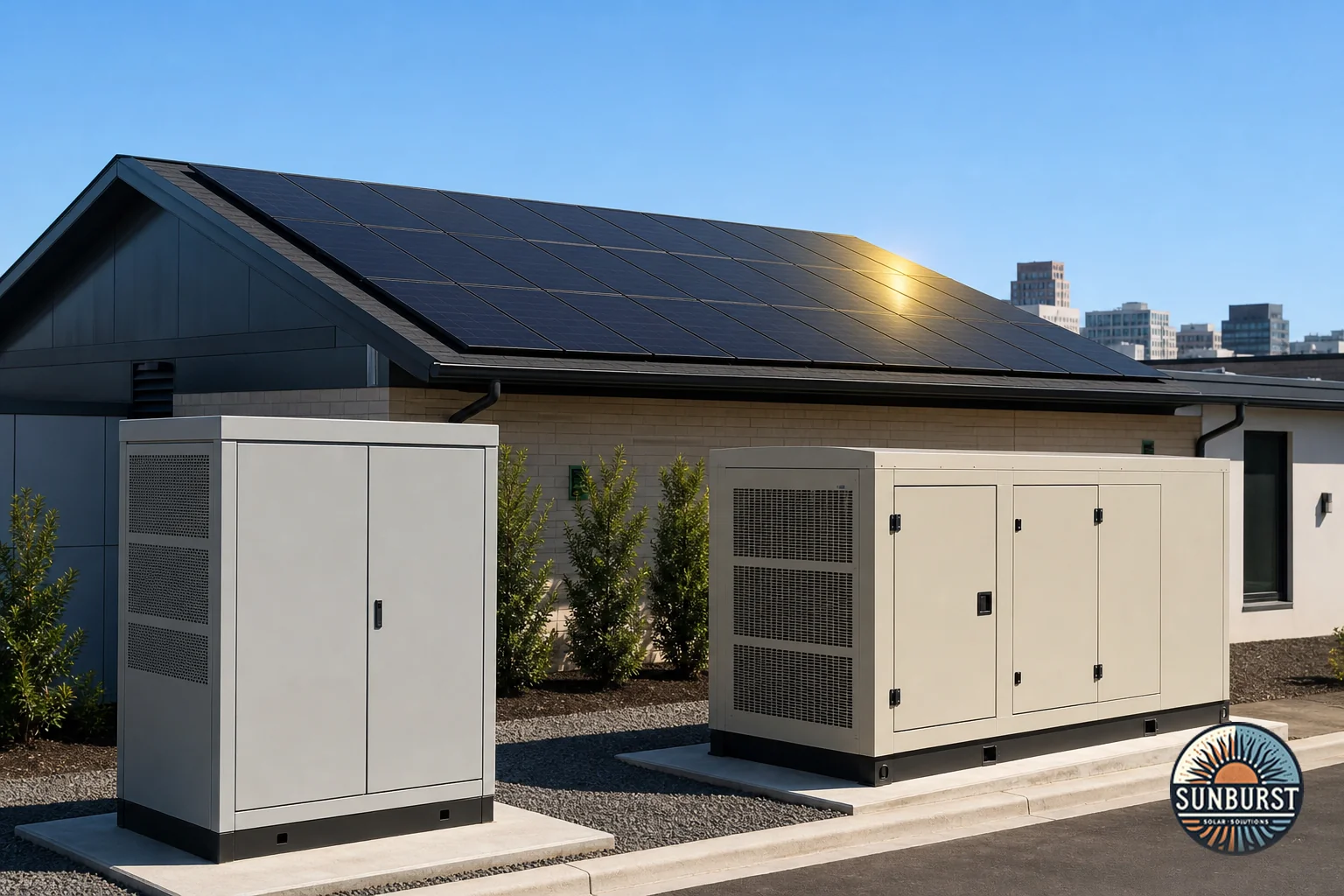
A generator alone solves outages, but it runs on fuel and needs maintenance whether or not the grid ever fails. Businesses that add rooftop solar and battery storage alongside a generator get a fundamentally different setup: daily energy savings from solar production, instant seamless backup from the battery for short blips, and the generator held in reserve only for extended multi-day outages.
This layered approach also changes your relationship with fuel costs. A battery can carry your critical loads through a two- or three-hour outage without the generator ever starting, which means less wear on the engine and fewer refueling calls over the year. When an extended outage does hit, the generator and battery can work together through the automatic transfer switch, with the battery smoothing the transition and the generator carrying sustained load.
If you’re deciding between a battery-only backup and a generator, our comparison on solar battery vs generator breaks down the tradeoffs in more detail, though the same logic applies whether you’re on Hilton Head or in the Midlands. For businesses specifically, see our broader look at commercial solar installation for how system design differs from residential jobs. And if outages are your main worry, do solar panels work during a power outage explains why panels alone, without storage, won’t keep your lights on.
EV Chargers and Other Loads to Plan For
Businesses adding EV charging for a fleet vehicle or a customer-facing charger need to fold that load into the same sizing conversation as refrigeration or HVAC. A single Level 2 charger can draw 7,000 to 11,000 watts continuously while charging, which is a meaningful chunk of a generator’s capacity if it’s running during an outage. Most businesses choose to leave EV chargers off the backed-up circuit list, since charging can typically wait until grid power returns, but it’s a decision worth making deliberately rather than by accident. Our guide on EV charger installation covers electrical requirements in more depth if you’re planning both projects together.
Choosing a Contractor for Your Columbia Business
Generator, solar, and battery work all touch your building’s electrical system, so the contractor you hire needs licensed electricians on staff, not subcontracted labor with no direct accountability. Ask how many commercial installations they’ve completed in Richland County specifically, since local permitting familiarity speeds up inspections and avoids rework. Ask whether they handle solar, battery, and generator work under one roof or whether you’ll need to coordinate separate crews and separate warranties.
Watch for the same warning signs that apply to any electrical contractor: no local references, pressure to sign before you’ve seen a written load study, or vague answers about permit responsibility. Our post on red flags to avoid when choosing a solar installer applies just as directly to generator and battery contractors, since the underlying trust issues are the same.
FAQ: Business Generator Installation in Columbia, SC
How long does a business generator installation take from contract to operation?
Most projects run six to ten weeks total, factoring in equipment lead time, electrical work, and the permitting review described above. Larger units or sites needing a fire marshal variance can take longer.
Do I need a permit for a commercial generator in Columbia?
Yes. Electrical permits are required for any standby generator installation, and fuel-storage units typically trigger a separate fire and life safety review.
Can solar and battery storage replace a generator entirely for my business?
For short outages, often yes. For extended multi-day events, most Columbia businesses still want a generator as a backstop, since battery capacity is finite and depends on how much roof space and budget you’ve allocated to the system.
Does an EV charger affect my generator size?
Only if you plan to keep it running during an outage. Most businesses exclude EV charging from backed-up circuits to reduce the generator size needed.
If your business in Columbia is weighing a standby generator, a solar and battery system, or some combination of both, the right first step is an on-site load assessment rather than a guess based on square footage. Get a free assessment from Sunburst Solar Solutions and walk away with a clear sizing plan, a realistic permitting timeline, and a straight answer on whether a hybrid solar-battery-generator setup makes sense for your operation.