
Batteries paired with rooftop solar can keep your fridge, well pump, and medical equipment running through a multi-day outage, but only if the system is sized and configured for storm conditions before hurricane season starts. A hurricane preparedness solar battery Myrtle Beach plan means checking your battery’s reserve settings, confirming your critical loads panel, and knowing exactly what your system will and won’t power once the grid goes down.
Key Takeaways
- Size for critical loads, not averages: A fridge, well pump, and a few outlets typically need 8-12 kWh of usable battery capacity to last through a multi-day outage.
- Hurricane season runs June through November: Storm-mode settings and inspections should happen by late May, before Horry County’s outage risk peaks.
- Batteries beat generators for most coastal homes: No fuel line disruptions, and they recharge for free once the sun returns after a storm passes.
- Installation timing matters: Permitting and interconnection with Santee Cooper can take four to ten weeks, so spring bookings beat last-minute June requests.
- Warranty coverage varies by damage type: Wind and flood damage during a named storm is usually a homeowner’s insurance matter, not a manufacturer warranty claim.
At a Glance: Hurricane Season Battery Readiness
| Factor | What to Know |
|---|---|
| Hurricane season (SC coast) | June 1 - November 30, peak activity August-October |
| Typical critical-load battery size | 8-12 kWh usable capacity for fridge, well pump, wifi, a few circuits |
| Whole-home backup battery size | 20-30+ kWh, often multiple stacked units |
| Battery recharge source in outage | Solar panels during daylight, assuming panels survived the storm |
| Permitting + interconnection timeline | 4-10 weeks through Horry County and Santee Cooper |
| Best time to schedule install | February-April, ahead of peak storm season demand |
| Storm-mode battery reserve setting | Typically raised to 50-100% reserve before landfall forecasts |
Why Myrtle Beach Homes Need a Storm-Specific Battery Plan
Horry County sits directly in the path of Atlantic storm systems that move up the Carolina coast almost every summer. Grid crews here handle downed lines from wind, salt spray corrosion, and storm surge flooding, and outages after a direct hit can stretch past a week in some neighborhoods. A grid-tied solar system without a battery shuts itself off automatically the moment utility power fails, a safety feature required by code, which means panels alone won’t run your home during an outage.
Adding battery storage changes that. Once the grid drops, the battery’s inverter can island your home’s critical circuits from the grid instantly, keeping essentials running while panels recharge the battery each sunny afternoon. For a deeper look at why panels alone aren’t enough, see our explainer on whether solar panels work during a power outage.
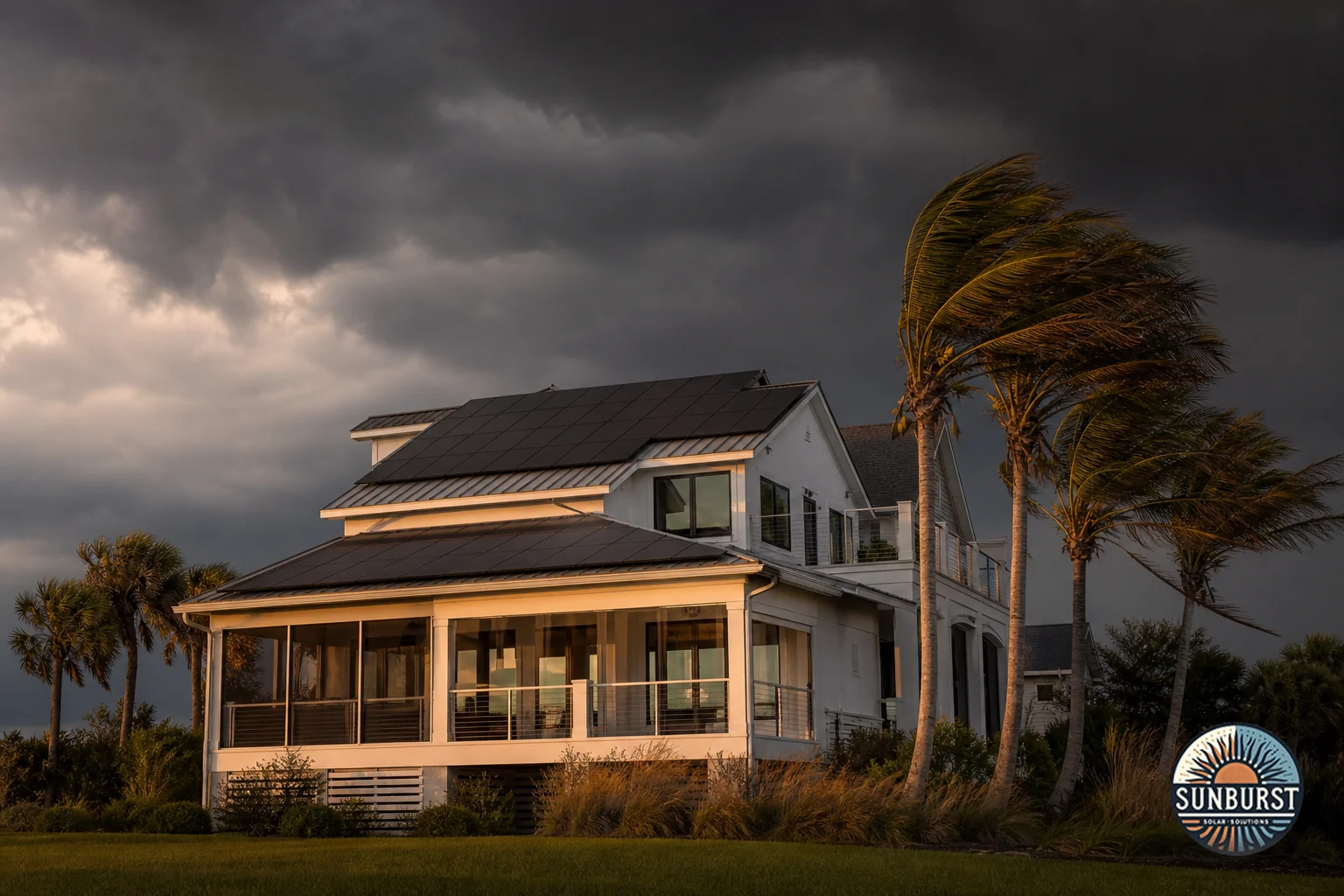
Hurricane season on the South Carolina coast runs from June through November, with the highest activity typically landing in late August through October. That window overlaps directly with peak electricity demand from air conditioning, so outages during a storm often hit homes already running near capacity.
1. Size Your Battery for Real Storm Outages, Not Average Days
Most battery sizing guides focus on shaving daily utility bills. Hurricane prep is a different math problem: you need enough stored energy to run specific loads for multiple days with limited or no sun, since storm cloud cover cuts panel output well before and after landfall.
Start by listing what actually needs to stay on:
- Refrigerator and freezer (roughly 1.5-2 kWh per day combined)
- Well pump or sump pump, if you have one (spikes on startup, so check the surge rating)
- Wifi router and a few phone-charging outlets
- Medical devices such as CPAP machines or oxygen concentrators
- A handful of lights and a window AC or fan unit
Add that up and most Myrtle Beach households land between 8 and 12 kWh of usable capacity per day to cover critical loads comfortably. Homes that want to keep central air running, or that have a well pump plus medical equipment, often need 20 kWh or more, sometimes across two stacked battery units. If you’re starting from scratch on sizing logic, our detailed guide on home battery storage cost and what affects price breaks down how capacity choices change your budget.
One detail people miss: battery capacity on a spec sheet is rarely all usable. Manufacturers reserve a margin to protect battery health, so the real number you can draw down is usually 90-95% of the rated size. Ask your installer for the usable kWh figure, not just the nameplate number, when comparing systems.
2. Choose Battery vs Generator (or Both) for Coastal Outages
Generators and batteries solve the same problem differently, and coastal storm conditions expose the tradeoffs fast. Fuel delivery trucks can’t reach flooded roads, gas stations lose power to run their own pumps, and propane tanks run dry after a few days of heavy use. A battery has none of those supply chain risks, since it recharges from sunlight the moment skies clear.
| Factor | Solar Battery | Standalone Generator | Battery + Generator Hybrid |
|---|---|---|---|
| Fuel dependency | None, recharges from sun | Gas, diesel, or propane, needs refueling | Battery covers daily needs, generator as backup |
| Runtime in extended outage | Limited by sun exposure and cloud cover | Limited by fuel supply on hand | Longest realistic runtime combo |
| Noise during operation | Silent | Loud, audible from neighboring yards | Quiet most of the time |
| Startup during outage | Automatic, instant transfer | Manual or automatic transfer switch | Automatic with manual override option |
| Maintenance | Minimal, no moving parts | Regular oil changes, testing runs | Both maintenance needs apply |
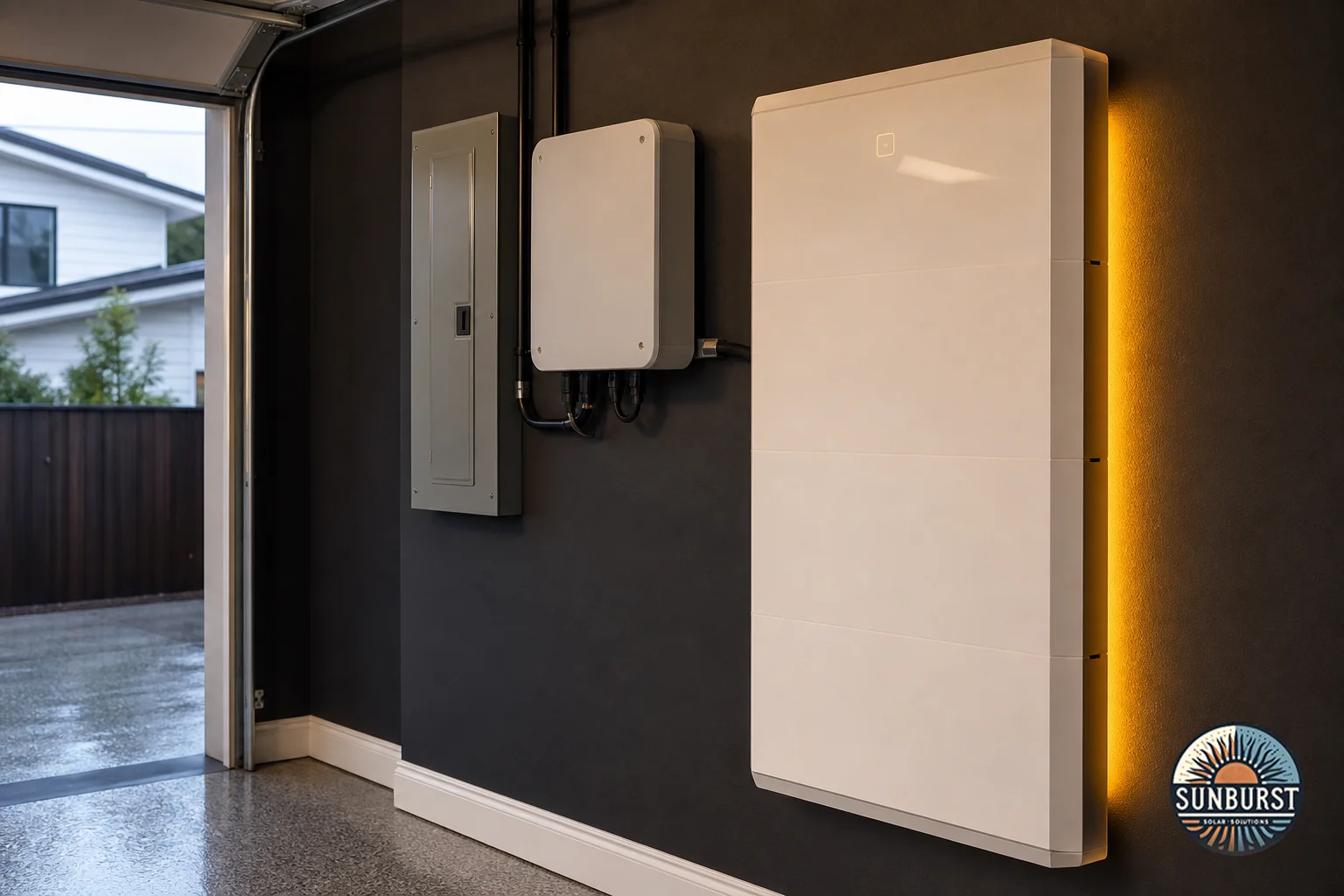
For most Myrtle Beach homes, a solar battery paired with existing panels outlasts a standalone generator once a storm clears and sunlight returns, because the recharge cycle is free and automatic. Generators still make sense as a supplement for whole-home coverage during multi-day cloud cover after a major hurricane. We covered this tradeoff in more depth for a neighboring coastal market in Solar Battery vs Generator: Best Backup for Hilton Head, and if a standby generator is on your radar as a companion system, our backup generator installation guide covers permitting and lead times.
3. Build Your Pre-Hurricane Season Checklist
Waiting until a storm is named in the forecast is too late to fix equipment issues. Handle these tasks by late May, before the season’s first real threat:
- Inspect panel mounting hardware. Have your installer check rail attachments and flashing for corrosion or loosening, especially if your system is more than five years old.
- Test your battery’s storm reserve mode. Most battery apps let you raise the minimum reserve level so the battery holds more charge in anticipation of a storm instead of draining daily for bill savings.
- Confirm your critical loads panel is correctly wired. Verify with your installer exactly which circuits are on backup power and which aren’t; surprises here happen more often than they should.
- Update your monitoring app credentials. Make sure you can log in and check production and battery charge remotely, since cell service sometimes outlasts home wifi during outages.
- Gather your paperwork. Keep warranty documents, your interconnection agreement, and installer contact information in a waterproof folder or a phone photo backup.
- Trim trees and secure loose items near panels. Falling branches are the most common cause of storm panel damage on the Grand Strand.
If you’re unsure whether your current warranty covers storm-related repairs versus normal equipment failure, our guide on comparing solar warranty coverage walks through what’s typically included and what falls to homeowner’s insurance instead.
Why Local Installation Timing in Horry County Matters
New solar and battery installs in Horry County go through building permitting and a separate utility interconnection review with Santee Cooper or your local utility, and both steps take time. Most projects run four to ten weeks from signed contract to full permission to operate, a timeline we detail in How Long Does Solar Permitting Approval Take? If you’re adding battery storage to an existing solar system, the interconnection paperwork often needs to be updated too. Our overview of Santee Cooper’s interconnection process covers what documentation to expect.
The practical takeaway: if you want a hurricane-ready battery installed and fully operational before peak season, start the process in February or March. Installers across coastal South Carolina see a scheduling crunch every May and June as more homeowners realize they need backup power, and that crunch pushes install dates further out the longer you wait.
5. Ask the Right Questions Before You Sign
A battery is only as good as the system design and support behind it. Before committing to any installer for a hurricane-focused install, ask how they size critical loads panels, what happens if permitting is delayed past storm season, and how warranty claims are handled if equipment is damaged during a named storm. Our checklist on what to ask before signing a solar contract covers the contract language worth scrutinizing, and 7 red flags to avoid when choosing a solar installer flags the sales tactics that tend to show up around storm season, when urgency-based pitches are common.
If your project also involves roof work or you’re weighing whether one contractor can handle panels, roofing, and battery together, Solar, Roofing & Battery: Do You Need Multiple Contractors? explains when one company can manage the whole scope versus when you’ll need separate crews.
During the Storm: What Your System Should Be Doing
Once a storm is bearing down, your battery should already be sitting at its raised reserve level, and your monitoring app becomes your main window into what’s happening at the house if you evacuate or lose direct visibility. A well-configured system will automatically switch to battery power the instant grid service drops, with no action needed from you.
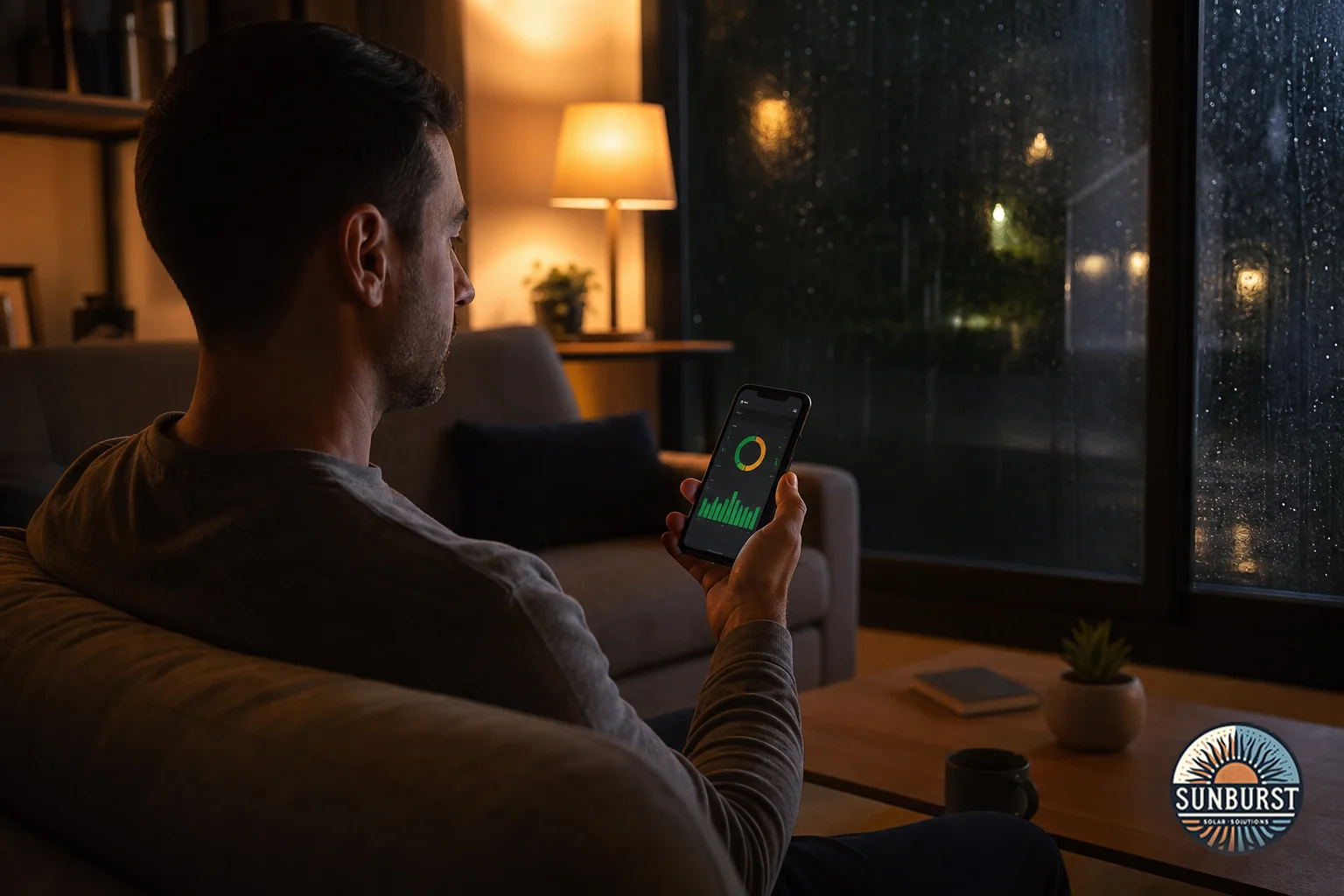
Check the app periodically for battery charge percentage and confirm critical circuits are drawing power as expected. Avoid running large discretionary loads like a second refrigerator or space heater on battery power during an active outage; reserve that capacity for essentials until you know how long the grid will stay down. Once skies clear and panels start producing again, the battery recharges on its own, no manual restart required in most configurations.
Frequently Asked Questions
Do solar panels work during a power outage without a battery?
No. Standard grid-tied panels shut off automatically when utility power fails as a safety measure. You need a battery or a properly configured generator transfer system to keep power flowing. See our full explanation in Do Solar Panels Work During a Power Outage?
How much battery storage do I need for a hurricane in Myrtle Beach?
Most households covering critical loads only, like a fridge, wifi, and a few outlets, need 8-12 kWh of usable capacity. Homes wanting central AC or a well pump covered too often need 20 kWh or more.
Can I add a battery to solar panels I already own?
In most cases, yes. Retrofitting a battery to existing panels is a common upgrade, though your installer will need to verify your inverter is compatible or add a separate battery inverter, and your interconnection paperwork with the utility may need updating.
Will my EV charger still work if the power goes out?
Only if your EV charger circuit is included on your critical loads panel and your battery has enough capacity to spare after covering essentials. Most homeowners prioritize refrigeration and medical equipment first. Our guide on EV charger installation in Myrtle Beach covers panel capacity considerations that affect this decision.
Are there tax credits for adding battery storage in South Carolina?
New 2026 homeowner solar or battery installations do not qualify for the expired federal Residential Clean Energy Credit. Battery capability and outage resilience are engineering decisions, not proof of tax eligibility. Confirm any South Carolina benefit for the exact equipment, ownership and project; do not presume a battery or standby generator receives a homeowner federal solar credit. See current IRS Section 25D guidance.
Get Your System Storm-Ready Before the Next Named Storm
A hurricane preparedness solar battery Myrtle Beach plan works best when it’s built months before the first storm warning, not scrambled together the week a tropical system enters the forecast cone. Whether you’re sizing a new battery, retrofitting an existing solar system, or just want a second opinion on whether your current setup can actually carry you through a multi-day outage, getting the sizing and configuration right now saves stress later. Sunburst Solar Solutions works with homeowners across Horry County to design systems that hold up when the grid doesn’t. Get a free assessment to find out exactly what battery capacity and configuration your home needs before this season’s storms arrive.