


A salesperson who won’t give you a straight answer about warranty terms usually can’t back up the promises they’re making about your bill. The questions to ask before hiring a solar company aren’t complicated, but most homeowners never get the chance to ask them before a contract lands in front of them. Get through eight questions on equipment, permitting, HOA approval, and quote structure, and you’ll know which installer actually deserves your roof.
Key Takeaways
- Warranty layers matter: Ask separately about equipment, workmanship, and production warranties — a 25-year panel warranty doesn’t cover the labor if a roof leak shows up in year three.
- Permitting timelines vary: South Carolina installs typically take four to ten weeks from signed contract to Permission to Operate, depending on your county and utility.
- HOA approval needs a real process: Ask who prepares your HOA documentation and who handles pushback, not just whether “HOA approval is possible.”
- Quotes should show cost per watt: A transparent quote breaks down equipment, labor, permitting, and financing costs instead of one lump number.
- Local accountability counts: A company with a physical presence in your service area is easier to reach for warranty claims and maintenance than a call center three states away.
At a Glance: The Core Questions Checklist
| Question | Why It Matters | Red Flag Answer |
|---|---|---|
| What panel tier and brand are you installing? | Determines long-term output and durability | ”Doesn’t matter, they’re all the same” |
| Who performs the physical installation? | In-house crews are typically more accountable than subcontractors | Won’t name the installing crew or subcontractor |
| What does the workmanship warranty cover, and for how long? | Separates equipment issues from install-caused problems | Vague answer like “it’s all covered” |
| Who pulls permits and how long does approval usually take? | Sets realistic install timeline expectations | ”We’ll figure that out later” |
| How do you handle HOA approval? | Prevents costly rejections and redesigns | No documented HOA process |
| How is the quote broken down (cost per watt)? | Lets you compare installers on substance, not one number | Refuses an itemized breakdown |
| Who manages utility interconnection? | Affects when your system can actually turn on | Doesn’t mention interconnection at all |
| Do I need additional contractors for roofing or battery? | Avoids surprise scope gaps mid-project | Says roof condition “won’t be an issue” without inspecting it |
Why the Right Questions Matter More Than the Lowest Quote
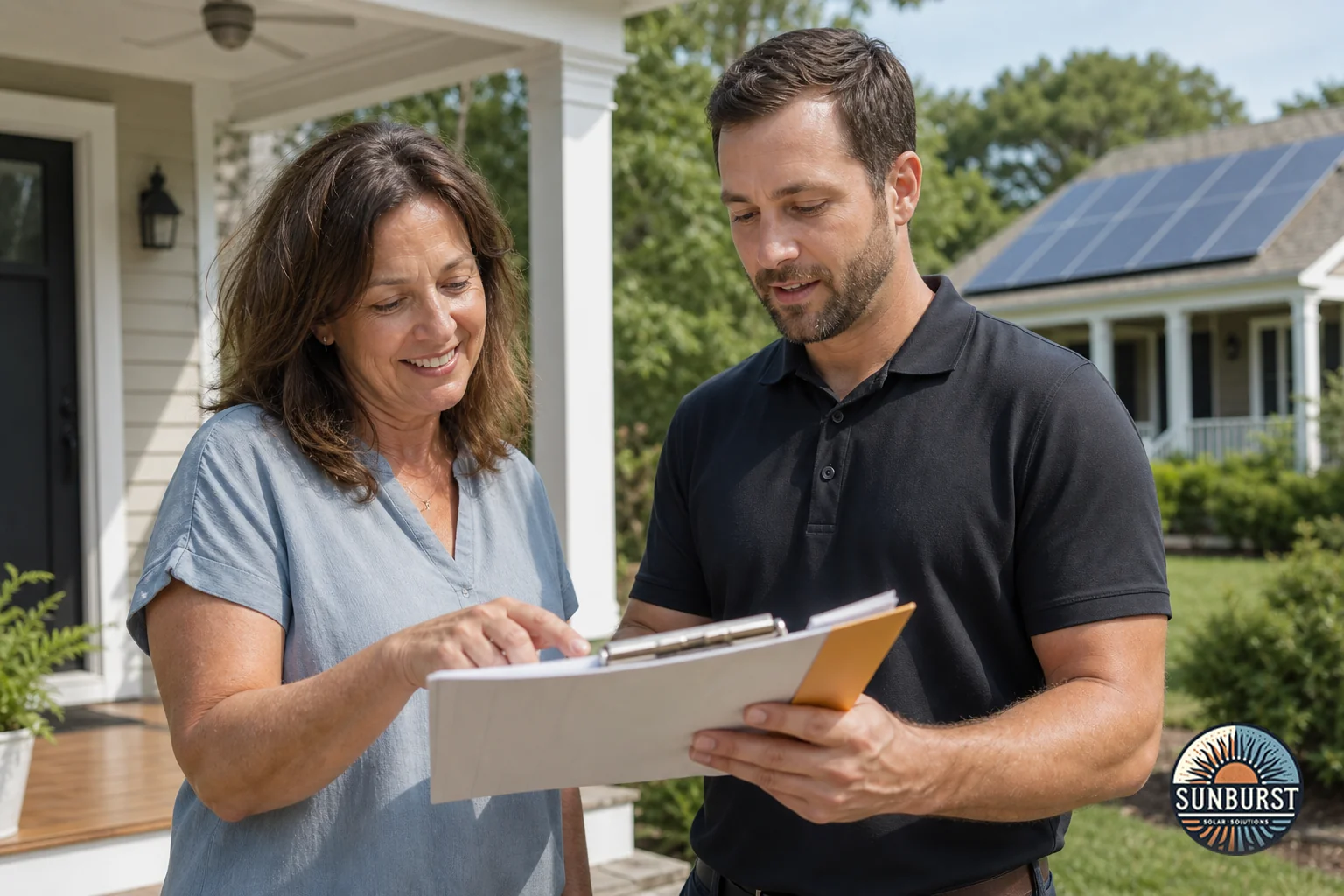
Solar sales in South Carolina can move fast. A rep shows up with a laptop, runs a savings estimate, and asks for a signature before leaving your kitchen. That pressure is exactly why the questions to ask before hiring a solar company matter more than whatever number sits at the bottom of the proposal. A lower quote built on a thinner panel, a subcontracted crew, and a vague warranty can cost you more over 25 years than a slightly higher bid from a company that stands behind its work.
Homeowners across Charleston, Columbia, Myrtle Beach, and Hilton Head Island face the same decision: several installers, several proposals, and no easy way to compare them apart from price. The questions below give you a consistent way to score every installer on the same scale, so the choice comes down to substance instead of who talked fastest.
1. Ask About Equipment and Who Actually Installs It
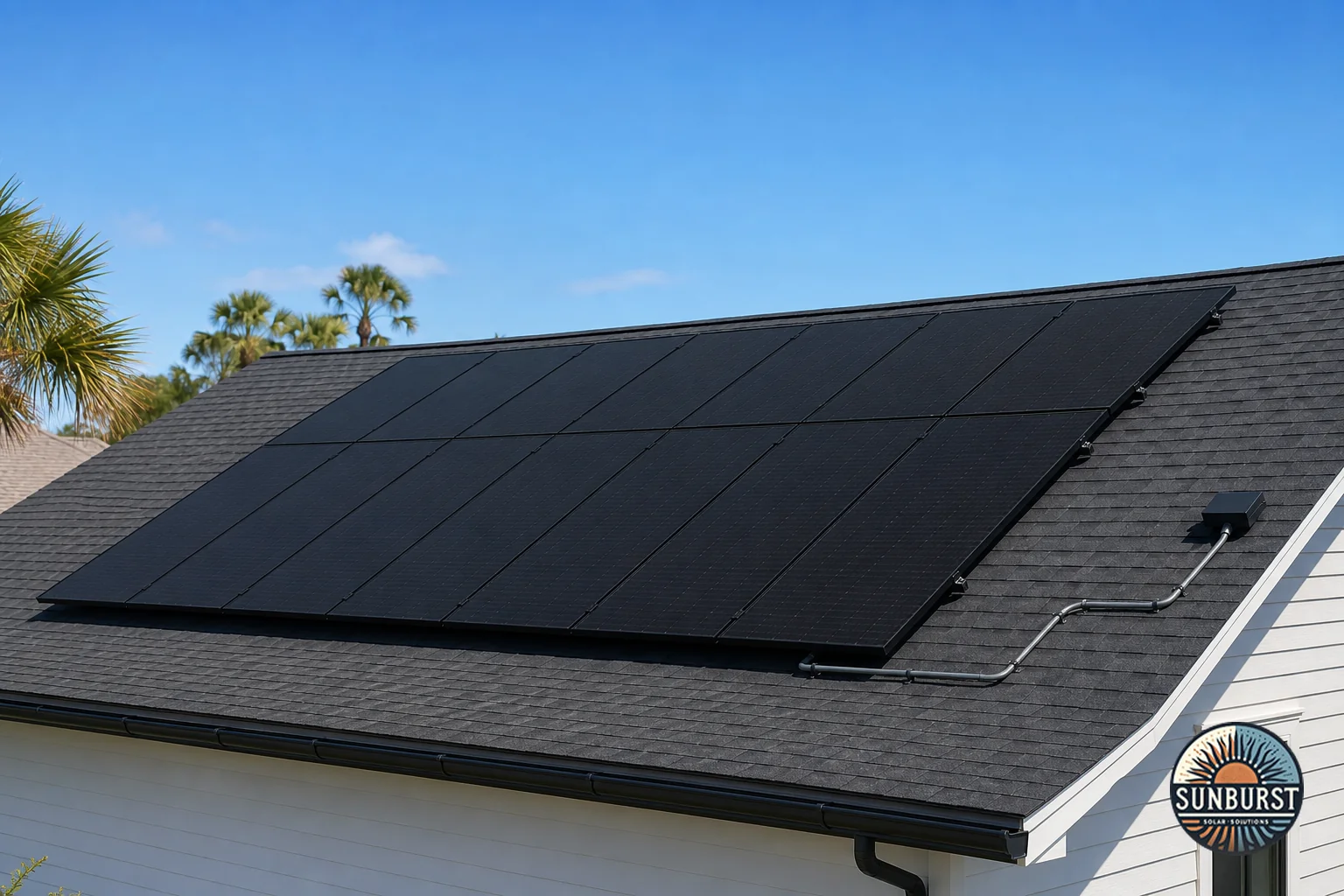
Start with the hardware. Ask what panel tier the company installs and whether it’s Tier 1 equipment made by a manufacturer with a track record, not a private-label panel assembled to hit a price point. Sunburst Solar Solutions installs Tier 1 black-on-black panels manufactured in North America, and any installer worth hiring should be able to tell you exactly where their panels come from and why.
Then ask who physically installs the system. Some companies sell the job and hand it off to a rotating list of subcontracted crews. Others use certified in-house technicians who show up on day one and stay accountable through the final inspection. Ask directly: “Will the crew that installs my system be your employees, or a subcontractor?” The answer tells you a lot about who you’ll be calling if something goes wrong two years from now.
2. Ask How Warranty Coverage Actually Works
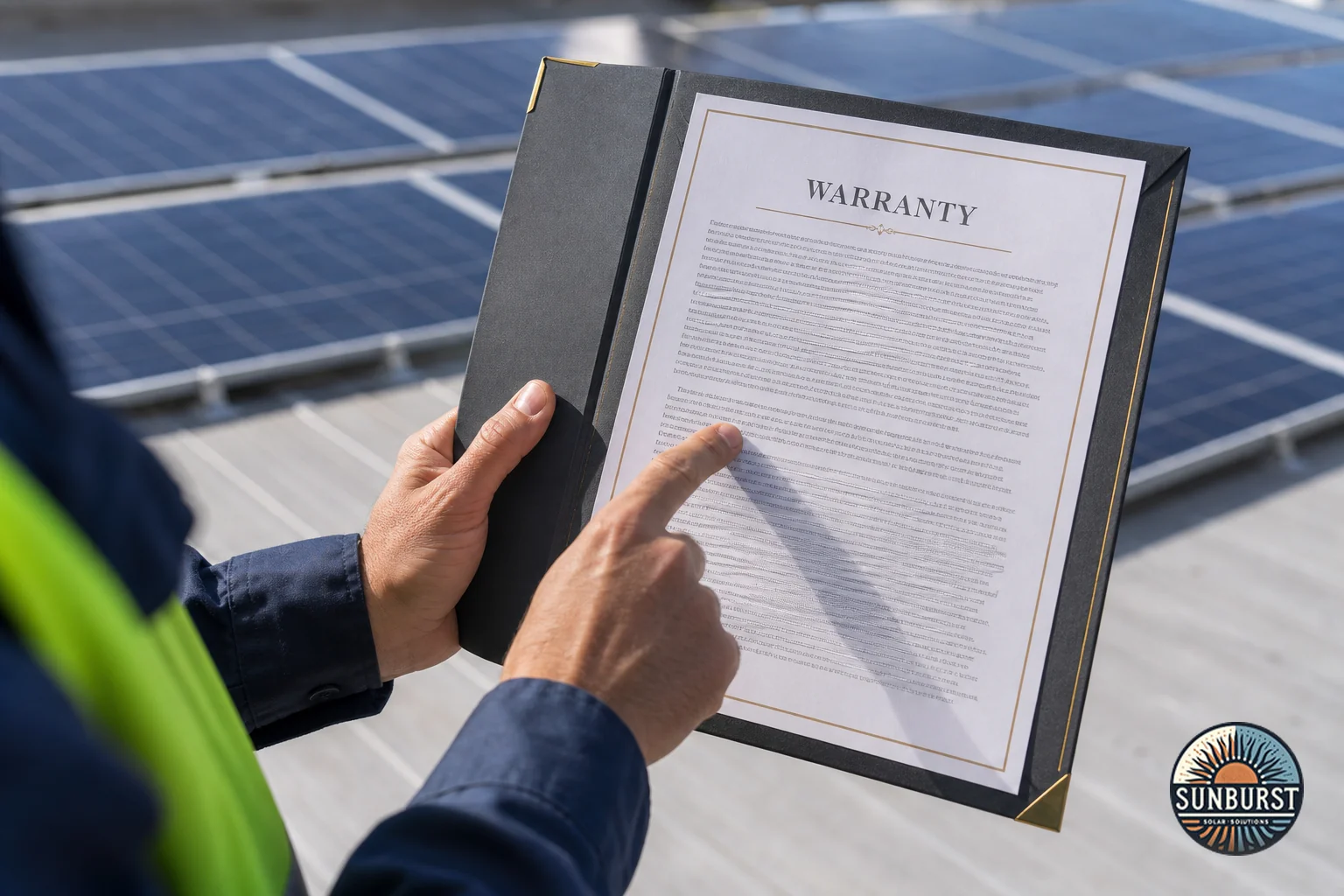
Solar warranties come in three separate pieces, and installers who blur them together are doing you a disservice. There’s the equipment warranty from the manufacturer, the production warranty guaranteeing a minimum output over time, and the workmanship warranty covering the installer’s own labor. A strong workmanship warranty, like a 10-year term backed by third-party insurance protection, tells you the company expects its installs to hold up.
Ask each installer to explain all three warranties separately and in writing. If they can only describe one blended answer, that’s worth pressing on further. For a full breakdown of how these layers interact, read how to compare solar warranty coverage before you buy before you sign anything.
3. Ask Who Handles Permitting and How Long It Takes
Permitting is the part of the process most homeowners don’t think about until it delays their install. In South Carolina, the gap between signing a contract and receiving Permission to Operate usually runs four to ten weeks, depending on your county’s permit office and your utility’s review process. Ask upfront: “Do you pull permits in-house, or does that fall to me or a third party?”
A company that handles permitting internally, and can give you a realistic timeline based on your specific county, is signaling they’ve done this enough times to know where the delays typically happen. For a deeper look at what affects that timeline, see how long solar permitting approval takes.
4. Ask How HOA Approval Is Handled
If you live in a neighborhood with a homeowners association, HOA approval can make or break your install timeline. Ask the installer whether they prepare HOA submission packets, including panel layout renderings and color specifications, or whether that responsibility falls on you. Ask what happens if the HOA pushes back or asks for a revised layout.
Documentation support matters here. A company that has submitted dozens of HOA packages across South Carolina neighborhoods will know which boards tend to object to visible conduit or ground-mounted equipment, and can design around it from the start rather than after a rejection.
5. Ask How the Quote Is Structured
A one-line total on a solar proposal tells you almost nothing. Ask for an itemized breakdown: equipment cost, labor, permitting fees, and financing terms if you’re not paying cash. Ask what the cost per watt works out to, and compare that figure across every quote you collect. This is the single fastest way to spot whether one installer is quietly using cheaper panels or padding margin somewhere you can’t see.
New 2026 homeowner solar or battery installations do not qualify for the expired federal Residential Clean Energy Credit. South Carolina incentives are a separate calculation with their own eligibility, annual limits and tax-liability requirements. Confirm the actual project with a qualified tax professional; do not assume combined federal/state credits cut a new purchase price in half. See current IRS Section 25D guidance.

6. Ask About Interconnection and Utility Coordination
Your system can be fully installed and still sitting dark, waiting on utility sign-off. Ask who manages the interconnection application with your utility provider and how long that step usually adds to the project. If you’re served by Santee Cooper, the process runs on its own review track separate from your county’s building permit, and it’s worth understanding both timelines before your install date gets set. See Santee Cooper solar interconnection: what SC owners need for the specifics.
7. Ask Whether You Need Additional Contractors
Some installers quote a project assuming your roof is ready for solar, without ever climbing up to check. Ask directly whether your roof’s age and condition were factored into the design, and whether you’ll need a separate roofing contractor before installation starts. The same question applies to battery storage: ask if the installer handles battery design and installation in-house, or if that gets outsourced to a different company entirely.
A single company that handles roofing coordination, panel installation, and battery integration under one contract removes a lot of the coordination headaches that come with managing multiple vendors. For more on when you actually need more than one contractor, read solar, roofing & battery: do you need multiple contractors? and does your roof need replacing before solar panels?.
8. Ask About Local Presence vs National Scale
National solar companies can offer scale and fixed online pricing, but that scale often means a call center handling warranty claims instead of a local office that knows your neighborhood’s permitting quirks. Ask where the company is physically based, whether they have a local office you can visit, and who handles service calls after your system is installed. A regional installer serving South Carolina directly tends to move faster on warranty claims than a national brand routing your ticket through a national queue. Read more in local solar installer vs national company in Charleston if that comparison affects your decision.
Red Flags That Should End the Conversation
Some answers should stop the conversation before it goes further. Watch for these patterns:
- Pressure to sign the same day: A discount that disappears if you don’t sign immediately is a sales tactic, not a real deadline.
- Vague warranty answers: If a rep can’t clearly separate equipment, production, and workmanship coverage, they may not fully understand what they’re selling.
- No mention of permitting or HOA process: If these topics never come up unprompted, ask directly. Silence usually means they haven’t planned for it.
- Refusal to itemize the quote: A single bottom-line number with no breakdown makes it impossible to compare installers fairly.
- No local references or completed projects nearby: Ask to see recent installs in your area. A company with real local history should have plenty to show.
For a longer list built specifically around installer selection, see how to choose a solar installer: 7 red flags to avoid.
FAQ: Solar System Installers Near Me
How do I find solar system installers near me that are actually reliable?
Search for companies with a physical office in your service area, ask for references from installs completed in the last year, and confirm they handle permitting, HOA approval, and warranty claims in-house rather than outsourcing them.
Who handles solar panel maintenance near me after installation?
Ask before you sign whether ongoing maintenance and system monitoring are included, and who you’d call if your production drops. A company offering monitoring as a standard service can often catch performance issues before your utility bill reflects them.
What should I ask about commercial solar repair near me?
For business systems, ask about response time guarantees for repairs, whether the installer stocks common replacement parts locally, and whether commercial systems fall under the same workmanship warranty as residential installs. Commercial projects, like those covered in commercial solar installation in Charleston, SC, often carry different service level expectations than residential work.
Do I need to ask different questions for battery storage or backup generator projects?
Yes. If you’re pairing solar with a battery, ask how the installer sizes the system to your actual essential loads rather than a flat percentage of your bill. If you’re considering a generator instead, similar due diligence applies, as outlined in backup generator installation in Hilton Head Island, SC.
Every question above exists to protect you from the same outcome: a system that underperforms, a warranty that doesn’t hold up, or a project that stalls in permitting because nobody planned for it. Bring this checklist to your next consultation, and don’t sign anything until every answer is in writing. If you’re ready to compare a proposal built on transparent pricing, in-house permitting, and real HOA support, get a free assessment from Sunburst Solar Solutions and see how your questions get answered before you commit to anything.