


Serves Midlothian
Dominion Energy Virginia
- Average home rate (2024)
- 14.09¢/kWh
- Paid for exported solar
- credited one-for-one at retail against your own annual usage
- Net-metered home solar, utility-wide
- 53,368
Commercial solar · Midlothian, VA
Commercial solar in Midlothian is sized to daytime load: a business on Dominion Energy at an average 14.1¢ per kWh uses most of its output on site, which is where the value is.
Why the numbers favour business · as of August 2026
Dominion Energy Virginia credits exported power at credited one-for-one at retail against your own annual usage against the applicable residential retail rate, confirmed against your own bill rate, so the value sits in consuming your own production. A Midlothian business that runs through daylight hours self-consumes most of what it generates, which is exactly what the current net energy metering under §56-594 structure rewards. That is a structural advantage over a typical home.
Looking for a solar company in Midlothian? See solar companies in Midlothian: our local team, costs and a free assessment.
Free roof and bill assessment
Takes under a minute. No pressure, and no guaranteed-savings math.
Local commercial reality
Non-residential net metering in Virginia is capped at 100 kW, and on the commercial stock around Midlothian that ceiling rather than roof area usually shapes the design. Below it the economics are unusually clean, because retail crediting means the building does not need to consume its own production to capture its value.
Written for Midlothian specifically.
How we work
We start from interval data and the Dominion Energy tariff, then check roof structure and service capacity before quoting a size.
How we scope a building
Your Dominion Energy Virginia interval data and tariff, read before anything is sized.
Low-slope membrane, standing-seam metal or ballasted, plus service capacity and switchgear. Inland Piedmont. No salt exposure, with snow loading a modest but real racking input and freeze-thaw a genuine consideration in penetration detailing.
Building and electrical permits with plan review, structural sign-off, and Dominion Energy Virginia interconnection.
Sequenced around your operations, then Chesterfield County inspection and monitoring handover.
Commercial systems carry our lifetime full-system and roof-penetration warranty alongside manufacturer coverage, so one contractor stands behind the roof and the array.
Midlothian specifics
The constraints that actually shape a Midlothian commercial design.
Inland Piedmont. No salt exposure, with snow loading a modest but real racking input and freeze-thaw a genuine consideration in penetration detailing.
Dominion Energy Virginia approval precedes energising, and the queue rather than the install usually sets your date.
Chesterfield County reviews the work. Under SB 686 the property-tax exemption for residential systems of 25 kW or less has been mandatory statewide since 1 January 2023, so for a typical rooftop system there is no local ordinance question to research. Above 25 kW the locality’s own position governs, and it is worth knowing that published county-by-county lists disagree: the Weldon Cooper Center found some localities answering yes were in fact describing the statutory mandate rather than an adopted ordinance. Under SB 504 an association may impose only reasonable restrictions on rooftop solar, unreasonable being a cost increase above 5% or a generation loss above 10%.
Tax
We build and document a Midlothian system for your CPA; Virginia commercial tax treatment depends on your entity, so it is theirs to call.
Permits and approvals
5 approvals for a Midlothian system. We file every one.
Standing monthly charge:about $1 a month for customers connecting under NEM 2.0, included in our payback figures.
Local factors
Established Midlothian neighbourhoods carry substantial mature hardwood; the newer development further out is more open. This is one of the more shaded parts of the metro.
Chesterfield County reviews the work. Under SB 686 the property-tax exemption for residential systems of 25 kW or less has been mandatory statewide since 1 January 2023, so for a typical rooftop system there is no local ordinance question to research. Above 25 kW the locality’s own position governs, and it is worth knowing that published county-by-county lists disagree: the Weldon Cooper Center found some localities answering yes were in fact describing the statutory mandate rather than an adopted ordinance. Under SB 504 an association may impose only reasonable restrictions on rooftop solar, unreasonable being a cost increase above 5% or a generation loss above 10%.
Hot humid Richmond summers with cooling load peaking alongside production, and lower winter output. Retail net metering smooths that across the year in a way an export-credit state cannot.
Your utility decides payback
Your utility sets what exported power is worth, which shapes the right system size more than any panel choice.
Serves Midlothian
For comparison: Virginia average 14.41¢ · U.S. average 16.48¢. Virginia had 69,553 net-metered home solar systems at the end of 2024.
Rates: US EIA Form EIA-861, 2024 averages incl. fixed charges, not tariffs. Export terms as of August 2026.
Midlothian sun, month by month
About 12,560 kWh a year from a south-facing roof with no shade. July is the strongest month at about 1,251 kWh and December the weakest at about 713 kWh.
Your roof will differ. Established Midlothian neighbourhoods carry substantial mature hardwood; the newer development further out is more open.
Estimate: NASA POWER sun data for Midlothian, PVWatts model, south-facing, no shade.
Our work
Our own job photos, not stock or renders. Inland Piedmont.
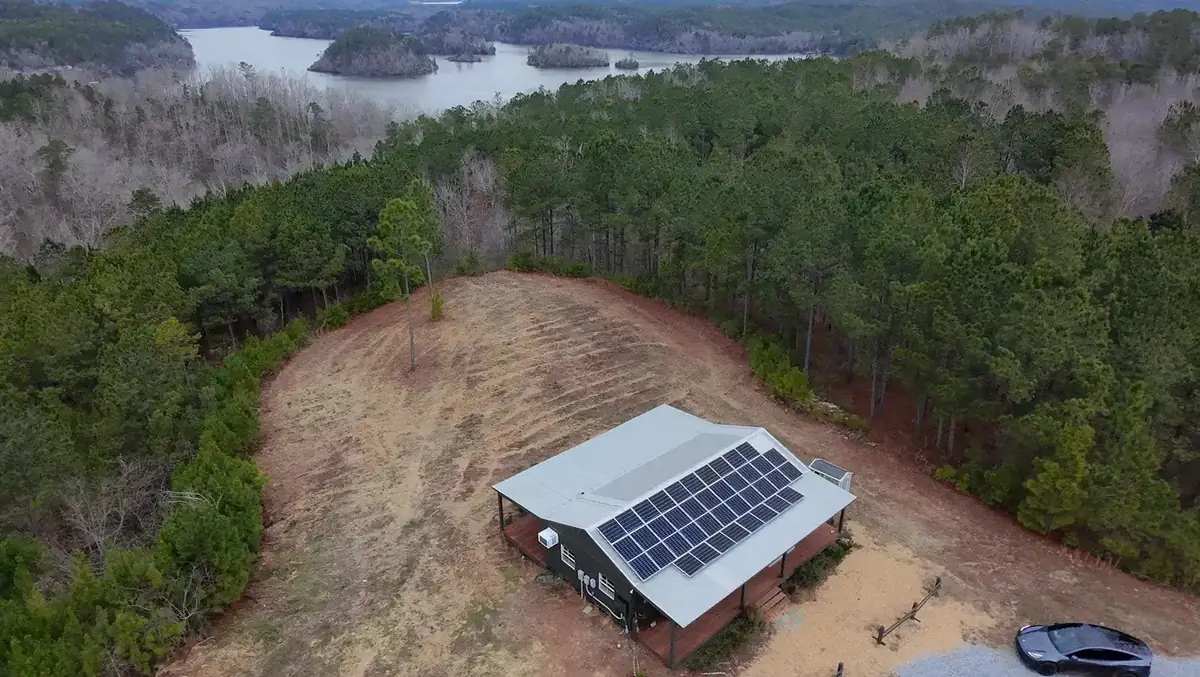
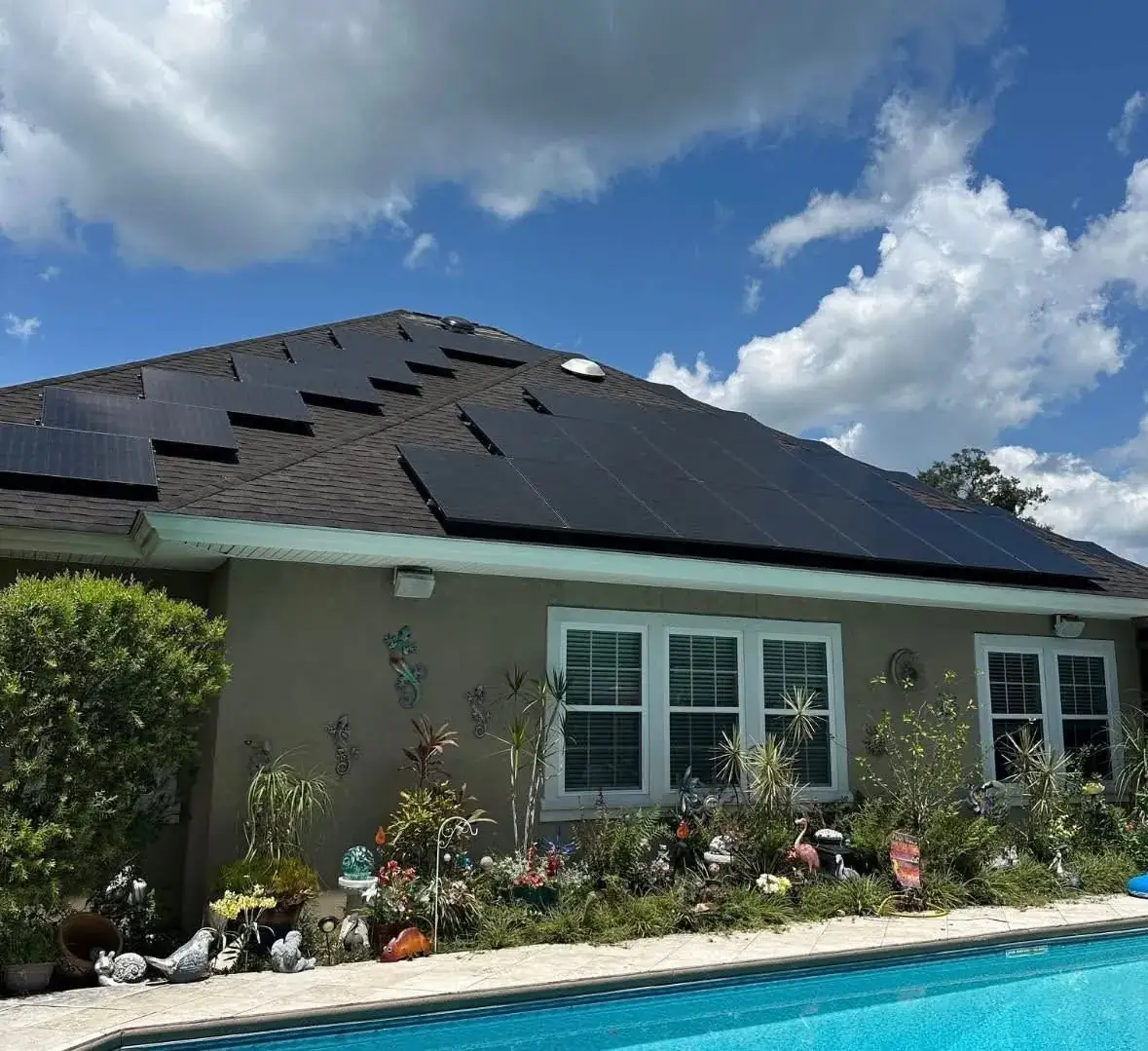
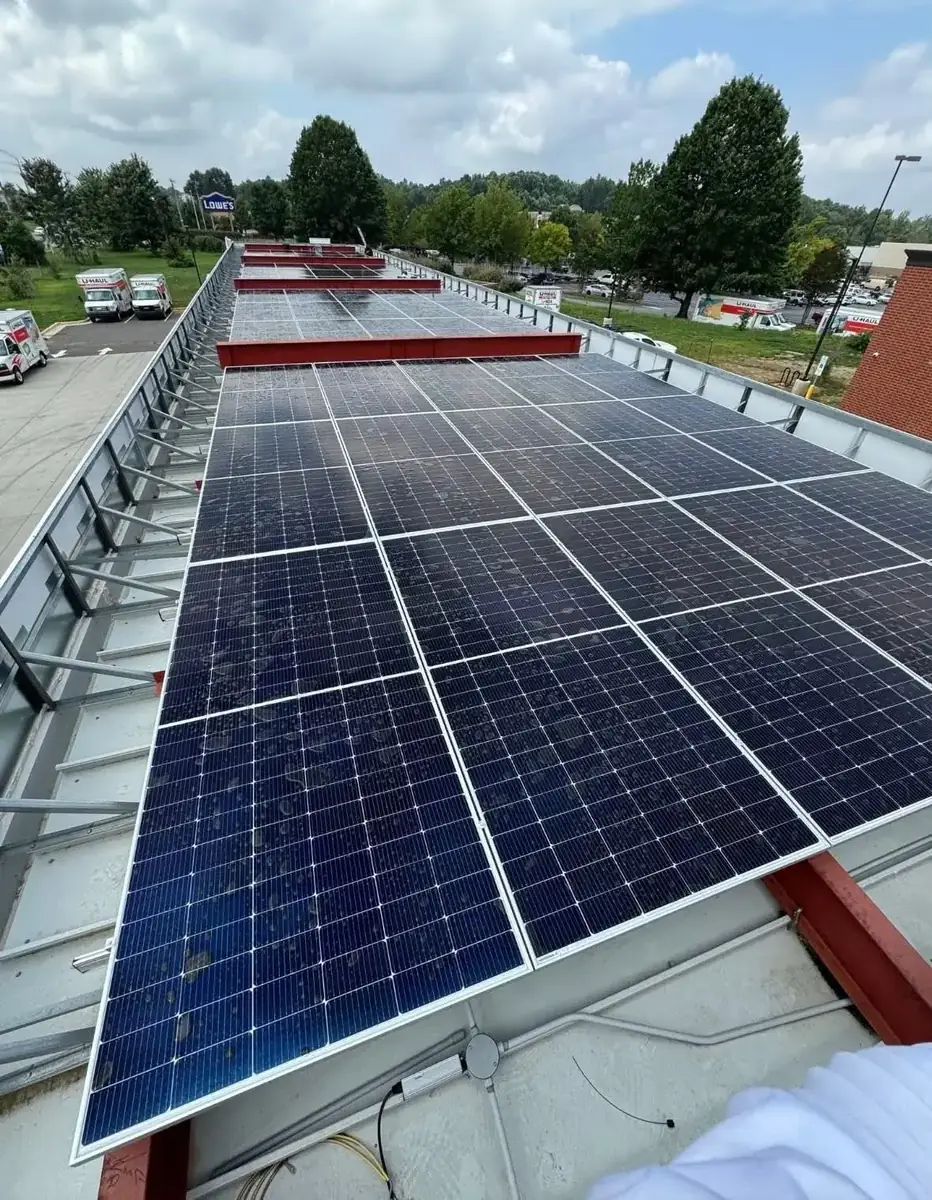
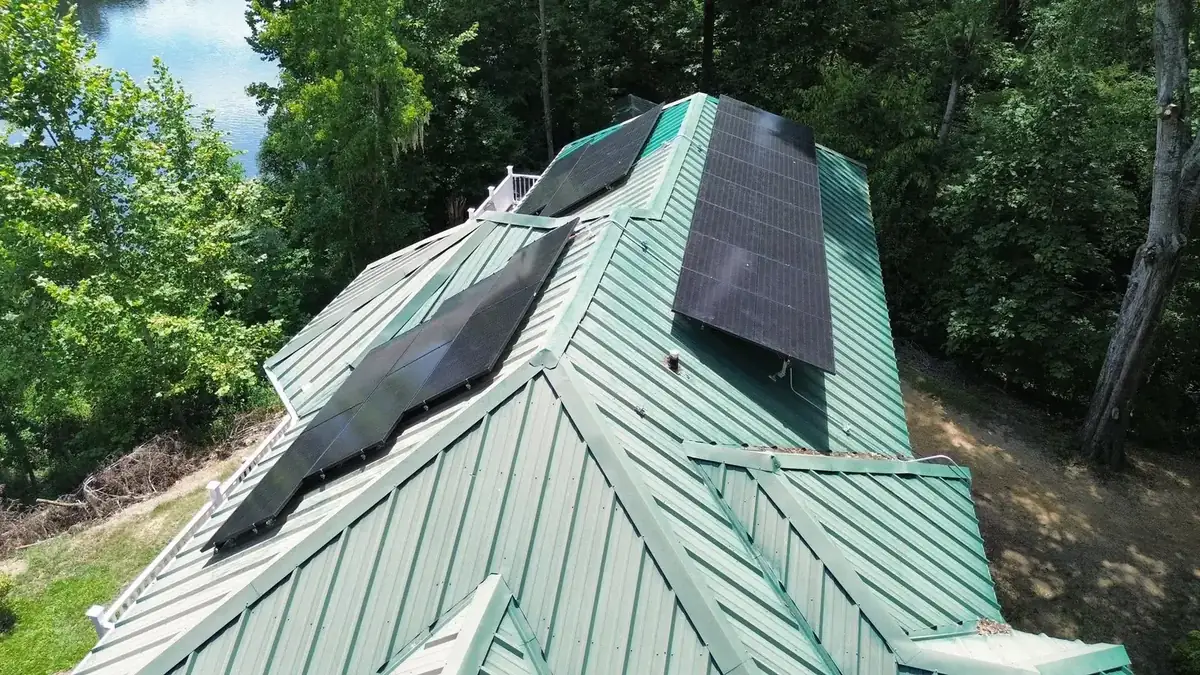
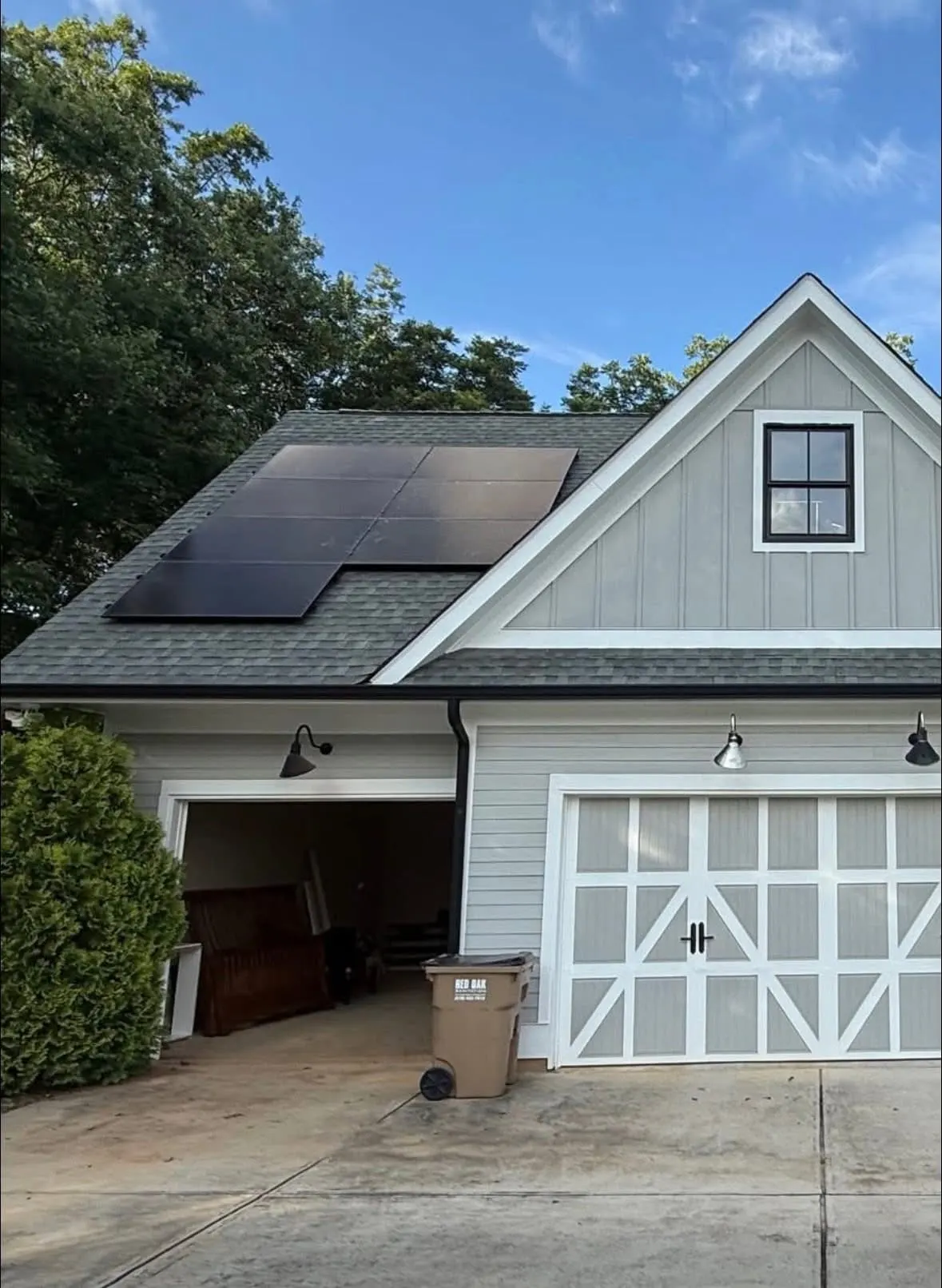
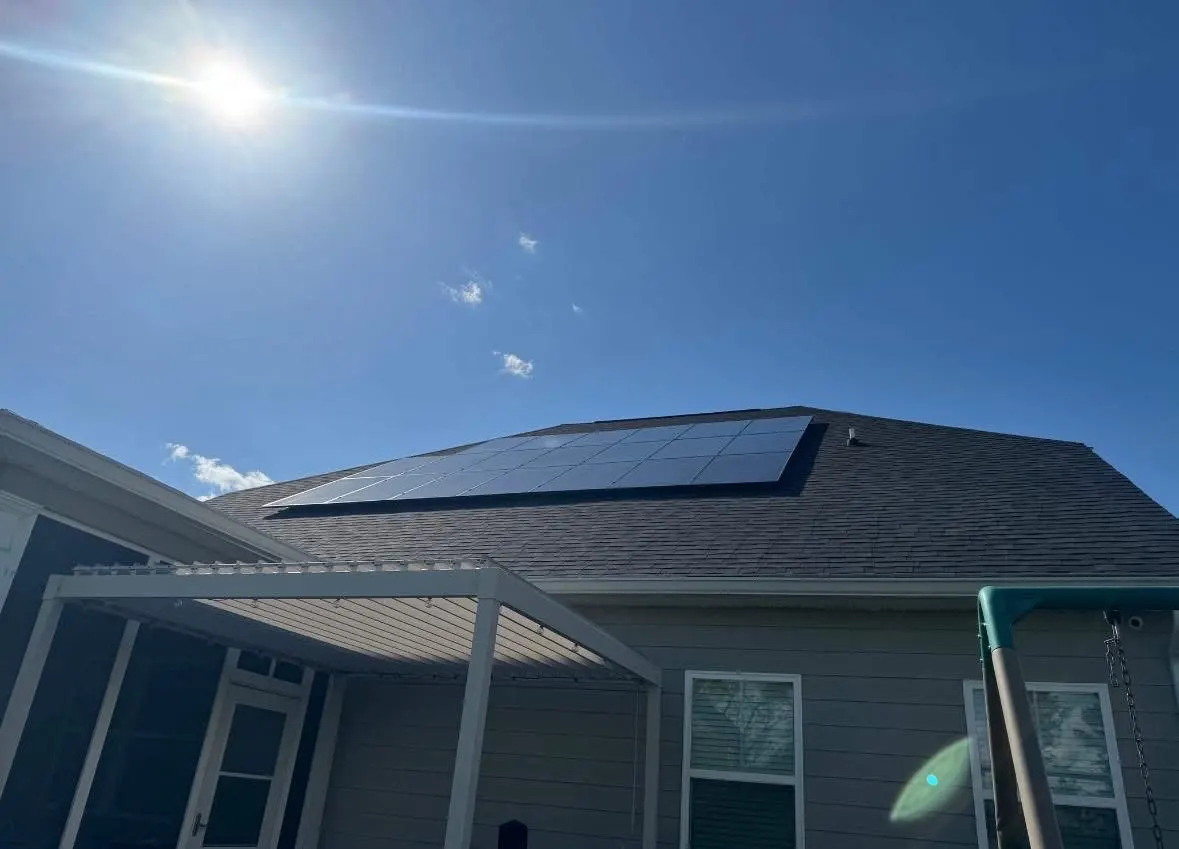
Photo locations are not published.
Free assessment · Midlothian, VA
We read your bill, confirm your Dominion Energy Virginia export terms, and tell you what your roof in Chesterfield County will actually carry, and say so if it will not pay.
Prefer to talk? (843) 310-1128
Midlothian commercial solar FAQ
Often yes, for a structural reason. Dominion Energy Virginia credits exported power at credited one-for-one at retail against your own annual usage against the applicable residential retail rate, confirmed against your own bill, so the value is in consuming your own production. A business that operates through daylight hours self-consumes most of what it generates, which is precisely what the current net energy metering under §56-594 structure rewards.
A building permit and an electrical permit, with standard plan review for systems of roughly 10 kW and above, which covers essentially all commercial work. Inland Piedmont. No salt exposure, with snow loading a modest but real racking input and freeze-thaw a genuine consideration in penetration detailing. Dominion Energy Virginia interconnection approval is required before energising.
It is sized to the building's daytime load rather than to the roof. Each kW here makes about 1,322 kWh a year unshaded, so a 50 kW array makes roughly 66,100 kWh. Dominion Energy households paid about 14.1¢ per kWh on average in 2024.
Yes. A building permit and a separate electrical permit from Chesterfield County; An interconnection application to Dominion Energy Virginia on its own forms. We pull all of it through Chesterfield County.
Dominion Energy households paid about 14.1¢ per kWh on average in 2024. A 100 kW array in Midlothian makes roughly 132,000 kWh a year; the share used on site is worth the retail rate, exports earn credited one-for-one at retail against your own annual usage.
Nearby
Free, no-pressure assessment
We will read your interval data and tariff, review your roof structure and service capacity, and give you an honest scope, with no guaranteed-savings math.
Mon–Sat, 10am–6:30pm ET · We typically follow up within the hour.