
2026 incentives · Graniteville, SC
Solar incentives in Graniteville, SC
Graniteville solar incentives start with Aiken Electric Cooperative: it pays the cooperative’s Value of Renewable Generation, confirmed per account for exported power. After that comes the 25% SC credit ($6,151 over 2 tax years on a 9.5 kW system).
The 30% federal credit ended on December 31, 2025.
The short answer · as of July 2026
Graniteville homeowners can claim South Carolina’s 25% state tax credit (Form TC-38), capped at $3,500 per tax year with a 10-year carry-forward, plus property-tax exemption on qualifying systems of 20 kW or less and sales-tax exemption on equipment. Aiken Electric Cooperative credits exported power at the cooperative’s Value of Renewable Generation, confirmed per account under distributed generation rider (Schedule NM-TOU). The 30% federal credit is no longer available.
Looking for a solar company in Graniteville? See solar companies in Graniteville: our local team, costs and a free assessment.


Free roof and bill assessment
Takes under a minute. No pressure, and no guaranteed-savings math.
Local incentive reality
The incentive picture in Graniteville
The state position is the same across South Carolina and it is now the main incentive for homeowners: 25% of installed cost on Form TC-38, capped at $3,500 per tax year and at half your annual state liability, carried forward up to ten years. On a typical system that means claiming across two or three returns rather than one, which is worth understanding before signing financing built around a single large first-year payment.
What is different in Graniteville is the export side. Aiken Electric Cooperative is not an electrical utility under South Carolina’s net energy metering chapter, so its export credit is not a Commission-approved tariff. The cooperative sets it, and it is the number that governs the back half of your payback. Any page quoting you a single South Carolina export rate has not accounted for that.
There is no meaningful upfront residential rebate from either provider here, and the federal residential credit ended for systems placed in service on or after 1 January 2026. Systems of 20 kW or less remain exempt from South Carolina property tax and solar equipment is exempt from state sales tax, both of which still apply on a mill cottage.
Written for Graniteville specifically.
Start here, it matters most
What Aiken Electric Cooperative pays you for solar in Graniteville
In Graniteville, Aiken Electric Cooperative's export terms are worth more over 25 years than any one-off credit: 13,780 kWh a year from a 9.5 kW system, every year.
| Item | Current position (July 2026) |
|---|---|
| Programme | distributed generation rider (Schedule NM-TOU) |
| Retail rate you avoid | a rate set by the cooperative board, confirmed against your own bill for power you use as you generate it |
| Export credit | the cooperative’s Value of Renewable Generation, confirmed per account for power you send back, on a time-of-use basis |
| Monthly rider | None specific to this programme, though standard service charges still apply. |
| Annual true-up | Leftover credits settle each November at an avoided-cost rate |
| Upfront utility rebate | None. There is no residential cash-back programme in this territory. |
| Who confirms your territory | We do, at the assessment. In and around Graniteville, Dominion Energy South Carolina serves some addresses in the Horse Creek Valley, and terms differ. |
The practical consequence: a kilowatt-hour you use yourself is worth roughly three to five times a kilowatt-hour you export. That is why we size to your consumption rather than to your roof area, and why load shifting or storage now matters more in Graniteville than it did two years ago.
Rebates
Why Graniteville has no utility rebate, and who does
There is no upfront residential solar rebate in Aiken Electric Cooperative territory around Graniteville.
Quoted a rebate for Graniteville? Check it on Aiken Electric Cooperative's own site first.
Statewide rules
The parts that are the same everywhere in SC
Statewide, the strongest remaining incentive is the 25% state credit on Form TC-38.
In Graniteville, a 9.5 kW system's credit of $6,151 arrives over 2 tax years because of the $3,500 yearly cap.
South Carolina solar incentives in full →
Eligibility depends on your circumstances and none of this is tax advice, so confirm with a tax professional. Property-tax treatment is administered locally, see Aiken County below.
Aiken County
What the exemption is worth in Aiken County
An eligible rooftop system of 20 kW or less should not increase your assessed value in Aiken County, so you are not paying annually for an improvement that is reducing your power bill.
The exemption's cash value scales with local millage, so it is worth more in higher-millage jurisdictions. We do not publish a millage figure for Aiken County without an auditor-current schedule on file, because a wrong number here is worse than no number. Your assessment walks through how the exemption works for your parcel instead.
The 20 kW threshold matters if you are considering a large system in Graniteville. Sizing past it can cost you the exemption entirely, which is another reason right-sizing beats maximising, and another reason Aiken Electric Cooperative's export rate of the cooperative’s Value of Renewable Generation, confirmed per account should shape the design.
Adding it up
What a Graniteville homeowner actually nets in 2026
9.5 kW at the $2.59 per watt Graniteville benchmark, July 2026. Illustrative, not a quote.
| Line | Amount |
|---|---|
| 9.5 kW system at $2.59 per watt | $24,605 |
| State sales tax | Exempt |
| Federal credit | $0, expired for 2026 installs |
| Aiken Electric Cooperative rebate | $0, no programme in this territory |
| SC 25% credit (TC-38) | −$6,033, claimed across 2 tax years |
| Net cost | about $18,454 |
| Annual property tax added | $0 on qualifying systems ≤20 kW |
For what that net figure means as a payback period, and why the answer depends far more on when you use power than on which panels you buy, see solar panel cost in Graniteville.
Businesses
Incentives for Graniteville businesses
Commercial projects in Graniteville follow different rules from homes, including federal commercial provisions that your CPA, not an installer, should confirm. Daytime business load on Aiken Electric Cooperative uses most solar output on site.
Permits and approvals
What approval takes in Graniteville
6 approvals for a Graniteville system. We file every one.
- 01A building permit and a separate electrical permit for a rooftop system, issued by Aiken County Planning & Development
- 02Two sets of drawings with the county application, filed through the county Development Services online portal
- 03A zoning review as well for any ground-mounted array
- 04An additional electrical permit where battery storage is included
- 05Care with placement where the property sits inside the Graniteville or Vaucluse historic districts
- 06Interconnection approval from Aiken Electric Cooperative, or from Dominion Energy South Carolina where it serves the address
Local factors
What changes the net value of Graniteville solar incentives
- 01
Shade in Graniteville
Horse Creek Valley sits low and wooded, and the original village lots are tight with mature trees between them. Neighbouring canopy shades more roofs here than the roofs shade themselves.
- 02
Approvals that shape the layout
Graniteville is unincorporated, so permitting runs through Aiken County Planning & Development rather than a city. The significant constraint is historic: the Graniteville Historic District is a National Historic Landmark district, and the Vaucluse Mill Village Historic District nearby is on the National Register. Federal and state historic designation does not automatically bar solar, but it does mean placement and visibility deserve care, and that a design assuming a clear street-facing plane may not survive contact with review.
- 03
When incentives will not rescue it
You own an original mill cottage whose roof structure or age will not carry an array without work first.
- 04
Also worth knowing
Neighbouring canopy shades your best plane for much of the day, which is common on the original village lots.
Graniteville sun, month by month
What Graniteville solar incentives are worth on real output
About 13,780 kWh a year from a south-facing roof with no shade. May is the strongest month at about 1,315 kWh and December the weakest at about 866 kWh.
Your roof will differ. Horse Creek Valley sits low and wooded, and the original village lots are tight with mature trees between them.
Estimate: NASA POWER sun data for Graniteville, PVWatts model, south-facing, no shade.
Homes in Graniteville
Who can claim Graniteville solar incentives
- 590owner-occupied homes (68% of 866)
- 1966median year homes were built
- 61%of homes are single-family detached
- $104kmedian owner-occupied home value
- Half of Graniteville homes are more than 60 years old, so the roof check matters here: a roof with under ten years left should be replaced before solar goes on, or at the same time.
- Only 61% of homes are single-family detached; in the other 39% the association or shared roof decides first.
- 590 Graniteville households own their home, the ones who can install and claim the state credit.
- A 9.5 kW system at about $24,605 is roughly 24% of the median $104k Graniteville home value.
Source: US Census Bureau, American Community Survey 2023 5-year estimates for Graniteville CDP. Estimates, rounded.
Our work
Real systems our crews have installed
Our own job photos, not stock or renders. Inland, no salt exposure.
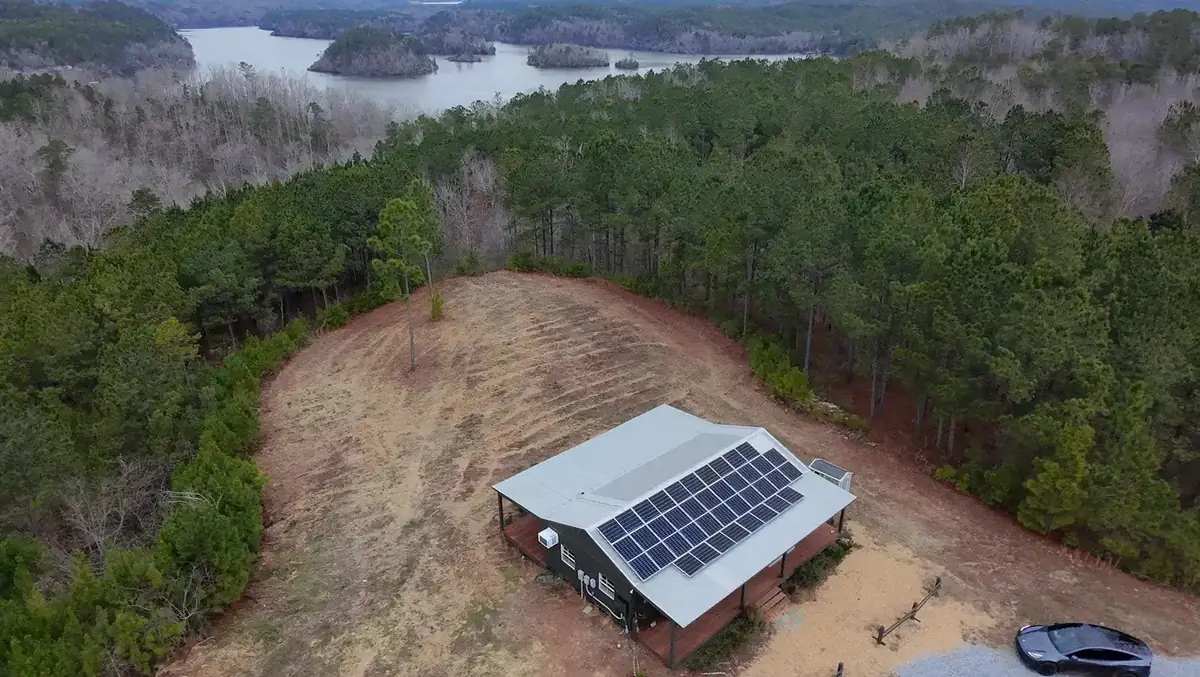 Off-GridOff-grid lake cabinGround-tilt metal roof array
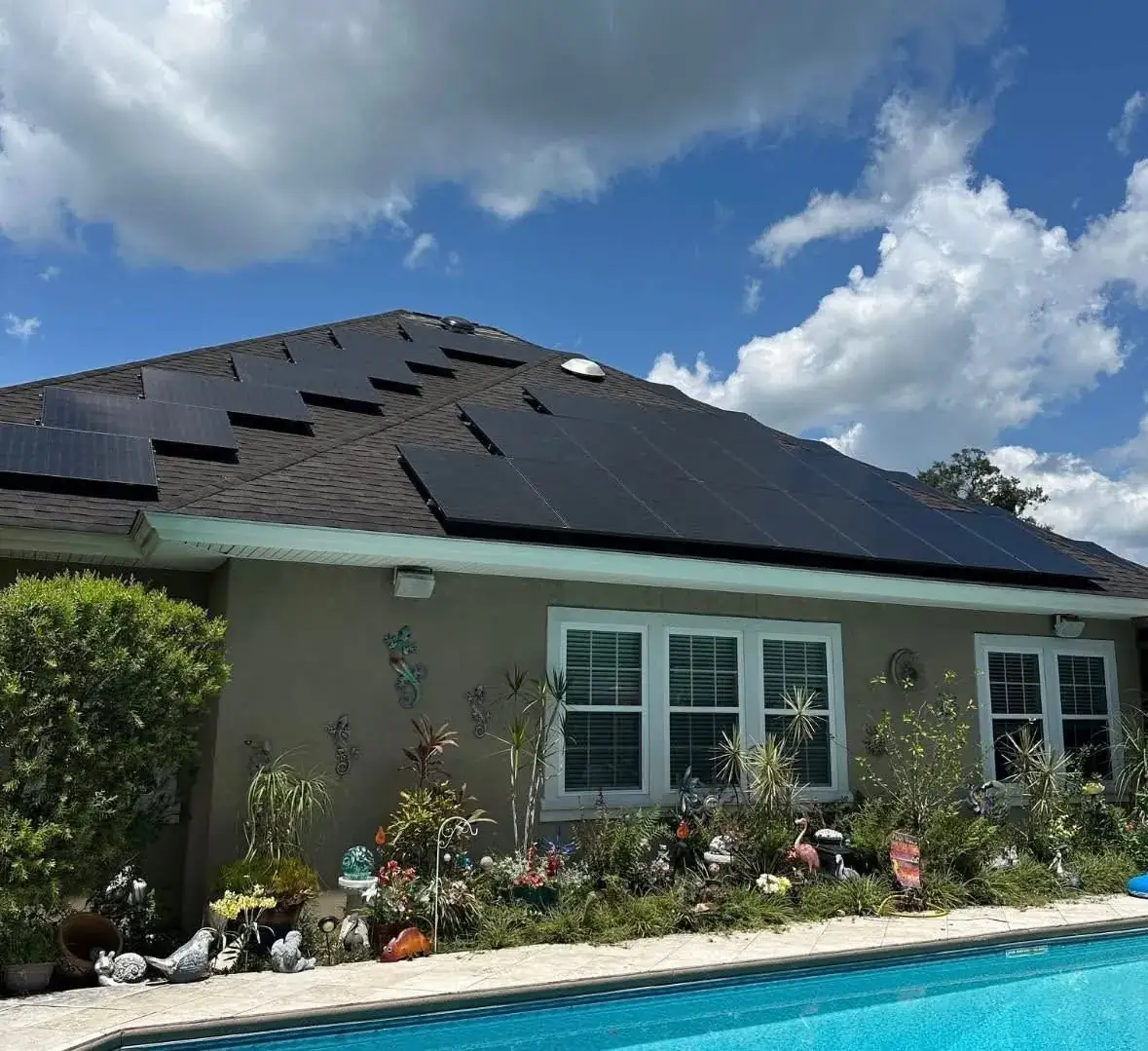 ResidentialFull black-on-blackPoolside single-story home
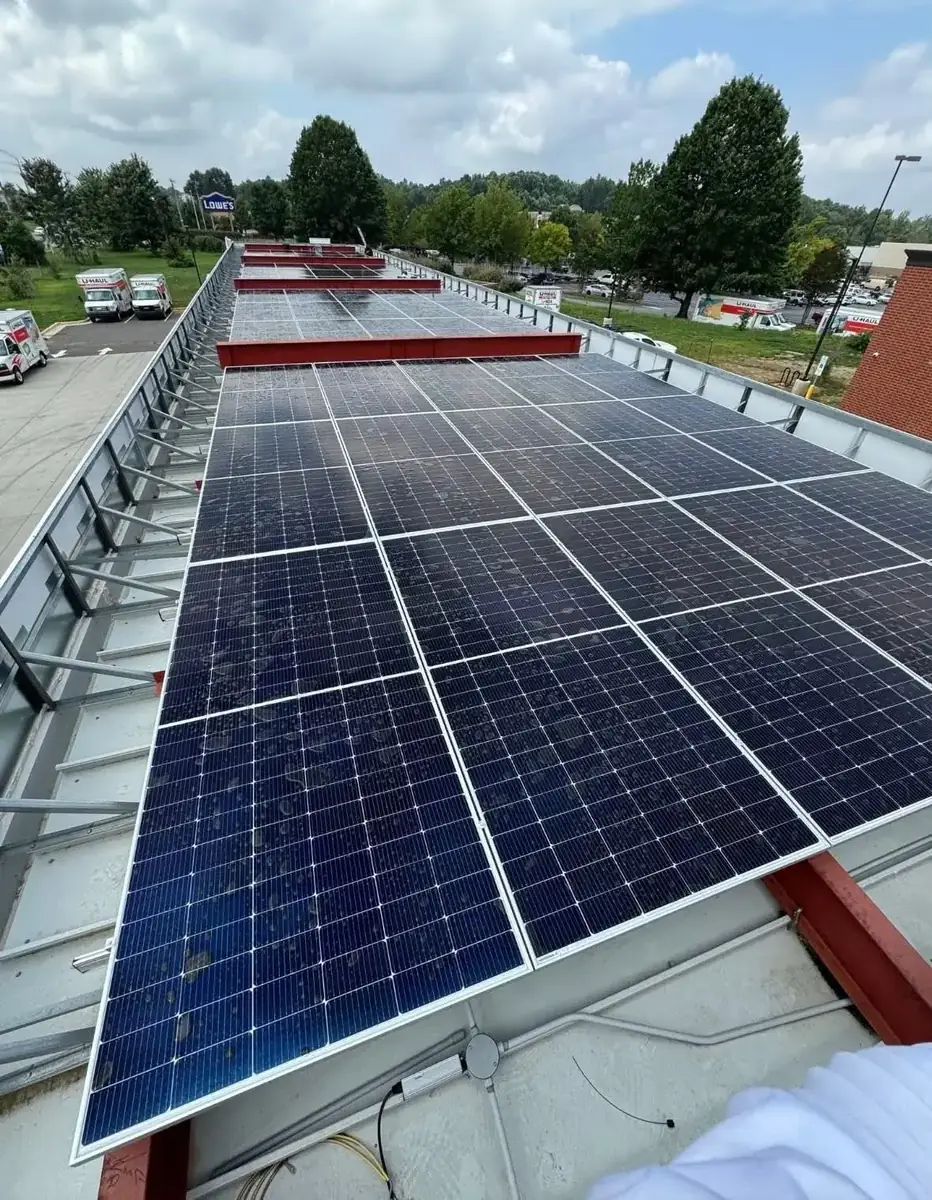 CommercialCommercial rooftopTilt-mounted rooftop system
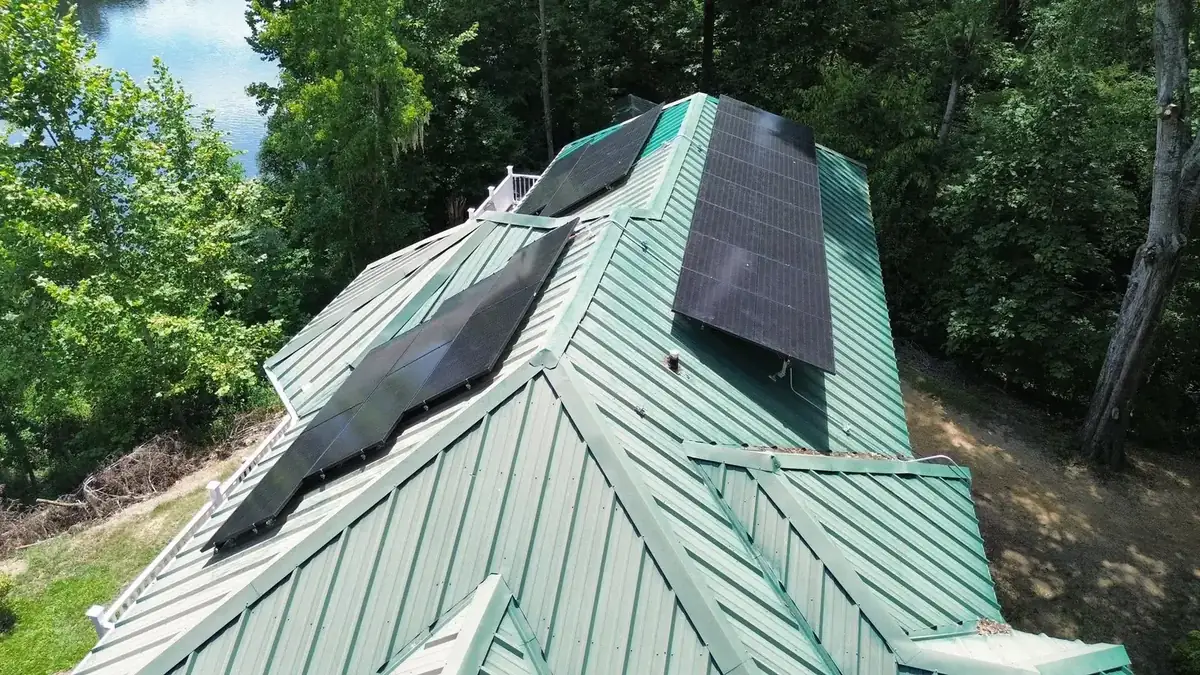 ResidentialStanding-seam metal roofLakeside multi-facet install
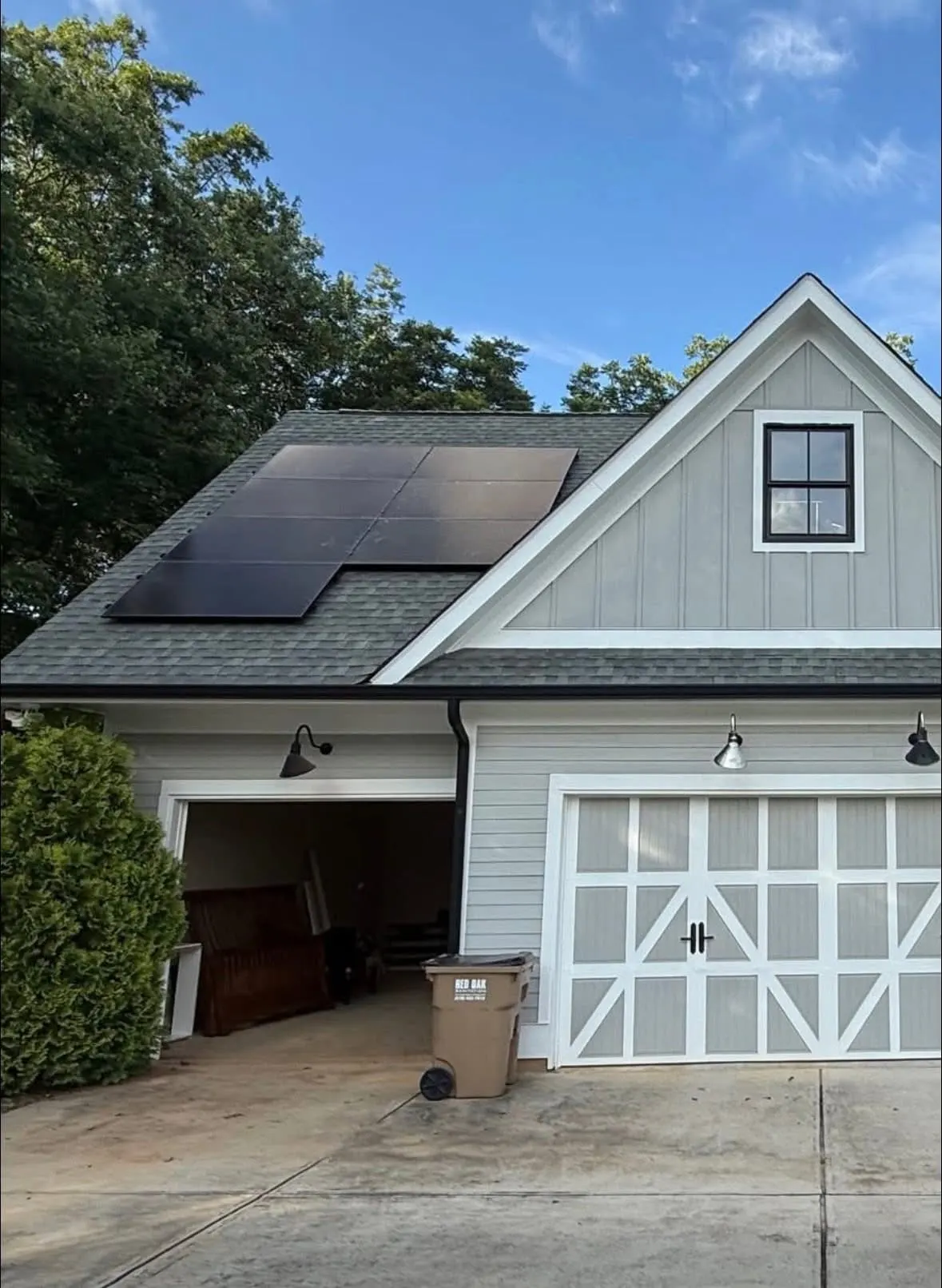 ResidentialDetached garage arrayFarmhouse-style home
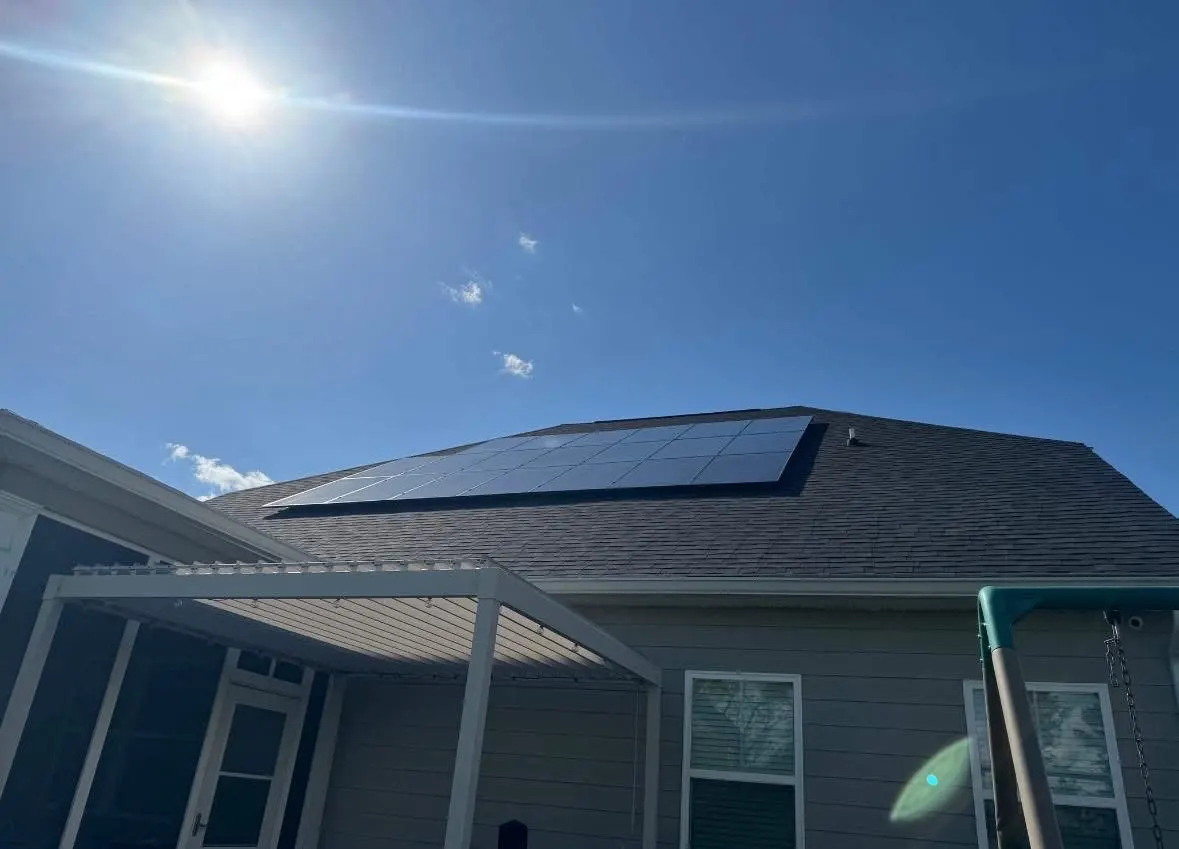 ResidentialShingle rooftop arrayBackyard-facing slope
Photo locations are not published.
Free assessment · Graniteville, SC
Get a straight answer for your Graniteville roof
We read your bill, confirm your Aiken Electric Cooperative export terms, and tell you what your roof in Aiken County will actually carry, and say so if it will not pay.
- Most addresses here are on Aiken Electric Cooperative, but Dominion Energy South Carolina serves some addresses in the Horse Creek Valley. We confirm yours from your bill before we quote anything
- A building permit and a separate electrical permit for a rooftop system, issued by Aiken County Planning & Development: we pull it and manage the inspections
- Graniteville is unincorporated, so permitting runs through Aiken County Planning & Development rather than a city.
Prefer to talk? (843) 310-1128
Graniteville incentives FAQ
Common questions about solar incentives in Graniteville
What solar incentives can I get in Graniteville, SC in 2026?
South Carolina offers a 25% state income tax credit on Form TC-38, capped at $3,500 in any one tax year and at 50% of your annual state liability, with a ten-year carry-forward. Qualifying residential systems of 20 kW or less are exempt from South Carolina property tax. Solar equipment is exempt from South Carolina state sales tax. The 30% federal credit expired for systems placed in service on or after January 1, 2026.
How do I claim South Carolina’s 25% state tax credit?
You claim it on South Carolina Form TC-38 with your state income tax return for the year the system is placed in service. Because the credit is capped at $3,500 per year and at 50% of your state tax liability, most systems are claimed across two or three returns using the 10-year carry-forward. Keep your final invoice and commissioning documentation. Confirm your own eligibility with a tax professional.
Is there a Aiken Electric Cooperative rebate for solar in Graniteville?
No. Aiken Electric Cooperative does not offer an upfront residential solar rebate, so there is no cash-back programme to stack here. Rebates in South Carolina are set by individual providers rather than statewide, so the answer genuinely depends on which utility serves your meter.
Will solar panels increase my property taxes in Graniteville?
Qualifying residential systems of 20 kW or less are exempt from South Carolina property tax. Confirm your own position with Aiken County and a tax professional, since eligibility depends on your circumstances.
What Graniteville solar incentives can a homeowner claim in 2026?
South Carolina's 25% state credit, worth $6,151 over 2 tax years on a 9.5 kW system, plus the Aiken County property-tax treatment covered below. Aiken Electric Cooperative runs no upfront residential rebate.
Do Graniteville solar incentives include net metering?
Aiken Electric Cooperative sets its own export credit, which sits outside South Carolina's net metering chapter, so we confirm the current figure per account before modelling anything. Aiken Electric Cooperative households paid about 15.5¢ per kWh on average in 2024.
Do Graniteville solar incentives cover batteries?
A battery charged by your solar can count toward the SC credit as part of the system; confirm with a tax professional. In Graniteville, a 9.5 kW system's afternoon surplus (up to about 1,315 kWh in its best month) is what a battery would hold.
Nearby
Solar incentives near Graniteville
Keep reading
Incentive and financing guides
- Financing & Ownership
What Determines a Monthly Solar Payment?
Learn what determines a monthly solar payment in South Carolina, when it may change, and how to compare the payment schedule with total cost.
23 min read - Financing & Ownership
Solar Loan Dealer Fees Explained for Buyers
Learn how to detect possible solar loan dealer fees by reconciling the cash price, financed amount, APR, itemization, and South Carolina disclosures.
22 min read
Free, no-pressure assessment
See which incentives you actually qualify for in Graniteville
We confirm whether Aiken Electric Cooperative serves your meter, size to your real usage, and show what applies to you.
Mon–Sat, 10am–6:30pm ET · We typically follow up within the hour.