
2026 incentives · Pooler, GA
Solar incentives in Pooler, GA
Pooler solar incentives start with Georgia Power: it pays about 7.22¢ per kWh (a 3.2188¢ avoided-cost rate plus a 4¢ adder) for exported power. After that comes the property-tax rules, since Georgia has no state solar tax credit.
The 30% federal credit ended on December 31, 2025, and Georgia has no state solar income-tax credit.
The short answer · as of August 2026
Pooler homeowners cannot claim a Georgia state tax credit, because Georgia does not offer one. What decides the economics here is the export credit your utility pays, alongside the HOA protections HB 389 introduced for rules made on or after 1 January 2026. Georgia Power credits exported power at about 7.22¢ per kWh (a 3.2188¢ avoided-cost rate plus a 4¢ adder) under RNR Instantaneous Netting. The 30% federal credit is no longer available.
Looking for a solar company in Pooler? See solar companies in Pooler: our local team, costs and a free assessment.


Free roof and bill assessment
Takes under a minute. No pressure, and no guaranteed-savings math.
Local incentive reality
The incentive picture in Pooler
There is no Georgia state income tax credit for residential solar and the federal residential credit expired for systems placed in service on or after 1 January 2026. Any Pooler quote still applying 30 per cent federal is wrong by several thousand dollars. What remains is the export credit, which is a utility question rather than a tax one.
Georgia Power credits exported power at roughly 7.22 cents per kilowatt-hour for 2026, made up of a 3.2188 cent avoided-cost rate and a 4 cent adder, against a retail rate near 13 cents. The avoided-cost half is reset annually, so it is a 2026 number rather than a twenty-five year assumption. With open roofs and that gap, Pooler rewards daytime self-consumption more than almost anywhere else in the metro.
Pooler-specific point worth checking before you sign: with over seven in ten homes here built after 2000, most covenants in this city postdate the older boilerplate, but HB 389 only protects rules created, renewed or modified on or after 1 January 2026. A 2015 subdivision covenant is not automatically covered, and the date on yours is worth finding.
Written for Pooler specifically.
Start here, it matters most
What Georgia Power pays you for solar in Pooler
In Pooler, Georgia Power's export terms are worth more over 25 years than any one-off credit: 14,010 kWh a year from a 9.5 kW system, every year.
| Item | Current position (August 2026) |
|---|---|
| Programme | RNR Instantaneous Netting |
| Retail rate you avoid | about 13¢ per kWh for power you use as you generate it |
| Export credit | about 7.22¢ per kWh (a 3.2188¢ avoided-cost rate plus a 4¢ adder) for power you send back |
| Monthly rider | None specific to this programme, though standard service charges still apply. |
| Upfront utility rebate | None. There is no residential cash-back programme in this territory. |
| Who confirms your territory | We do, at the assessment. In and around Pooler, Canoochee EMC serves parts of west Chatham County, and terms differ. |
The practical consequence: the gap between the retail rate you avoid and the export credit decides whether a kilowatt-hour you export is worth as much as one you use yourself. We read both off your own bill and size to your consumption rather than to your roof area.
Rebates
Why Pooler has no utility rebate, and who does
There is no upfront residential solar rebate in Georgia Power territory around Pooler.
Quoted a rebate for Pooler? Check it on Georgia Power's own site first.
Statewide rules
The parts that are the same everywhere in Georgia
Statewide, the strongest remaining incentive is the export credit your utility pays.
Georgia solar incentives in full →
Eligibility depends on your circumstances and none of this is tax advice, so confirm with a tax professional. Property-tax treatment is administered locally, see Chatham County below.
Chatham County
Property tax on solar in Chatham County
Georgia property-tax treatment of solar is genuinely unsettled: reputable sources describe a $25,000 exemption, a full exemption and no statewide exemption. Confirm with the Georgia Department of Revenue and your county assessor rather than relying on any figure printed online.
Confirm your own position with Chatham County and a tax professional, since eligibility depends on your circumstances. We do not publish a tax figure for Chatham County that we cannot stand behind.
Adding it up
What a Pooler homeowner actually nets in 2026
With no Georgia credit and no Georgia Power rebate, a 9.5 kW system's net cost is its installed price, about $24,605; the value comes from the export terms above.
Businesses
Incentives for Pooler businesses
Commercial projects in Pooler follow different rules from homes, including federal commercial provisions that your CPA, not an installer, should confirm. Daytime business load on Georgia Power uses most solar output on site.
Permits and approvals
What approval takes in Pooler
6 approvals for a Pooler system. We file every one.
- 01A building permit and a separate electrical permit issued by the City of Pooler, not by Chatham County, for addresses inside city limits
- 02HOA architectural review, which applies across most of the newer subdivisions here
- 03A zoning review as well for any ground-mounted array
- 04An additional electrical permit where battery storage is included
- 05Coastal wind-load documentation
- 06Interconnection approval from Georgia Power, whose residential programme caps systems at 10 kW AC
Local factors
What changes the net value of Pooler solar incentives
- 01
Shade in Pooler
West Chatham is substantially more open than the city. Most Pooler roofs are unshaded, which is the single biggest production advantage this market has over an address near the squares.
- 02
Approvals that shape the layout
Pooler is an incorporated city running its own planning and development, so permits come from the city rather than from Chatham County. There is no historic district here. What most Pooler homes do have is an HOA with architectural guidelines, and we prepare that packet as part of the install.
- 03
When incentives will not rescue it
Your household is out during daylight and you do not want storage, which is the weakest case under a 7.22¢ export credit against a 13¢ retail rate.
- 04
Also worth knowing
You need more than 10 kW AC to cover your usage, which Georgia Power’s residential programme will not allow.
Pooler sun, month by month
What Pooler solar incentives are worth on real output
About 14,010 kWh a year from a south-facing roof with no shade. May is the strongest month at about 1,337 kWh and December the weakest at about 903 kWh.
Your roof will differ. West Chatham is substantially more open than the city.
Estimate: NASA POWER sun data for Pooler, PVWatts model, south-facing, no shade.
Homes in Pooler
Who can claim Pooler solar incentives
- 6,694owner-occupied homes (60% of 11,199)
- 2006median year homes were built
- 62%of homes are single-family detached
- $289kmedian owner-occupied home value
- The median Pooler home was built in 2006, so many roofs are reaching their second half. We check remaining roof life before we design.
- Only 62% of homes are single-family detached; in the other 38% the association or shared roof decides first.
- 6,694 Pooler households own their home, the ones who can install and claim the system as an asset.
- A 9.5 kW system at about $24,605 is roughly 9% of the median $289k Pooler home value.
Source: US Census Bureau, American Community Survey 2023 5-year estimates for Pooler city. Estimates, rounded.
Our work
Real systems our crews have installed
Our own job photos, not stock or renders. Coastal.
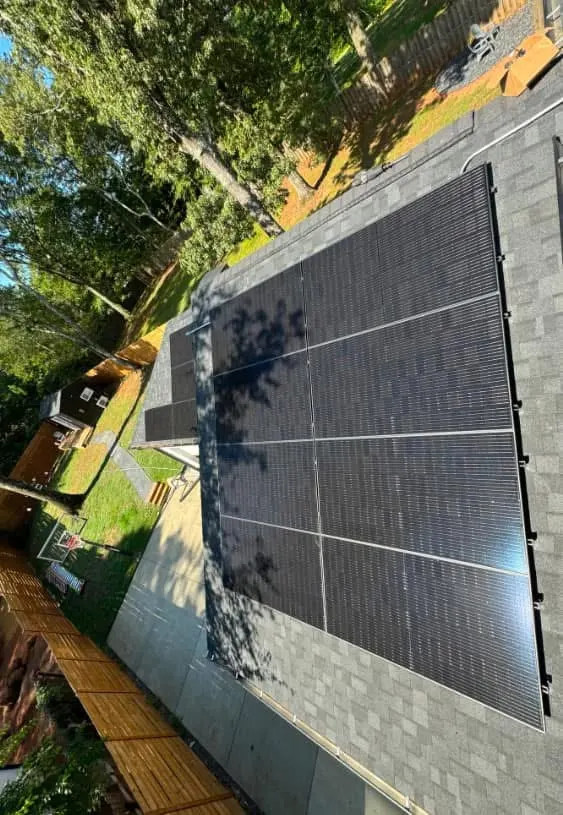 ResidentialClean rooftop layoutBlack-framed panels
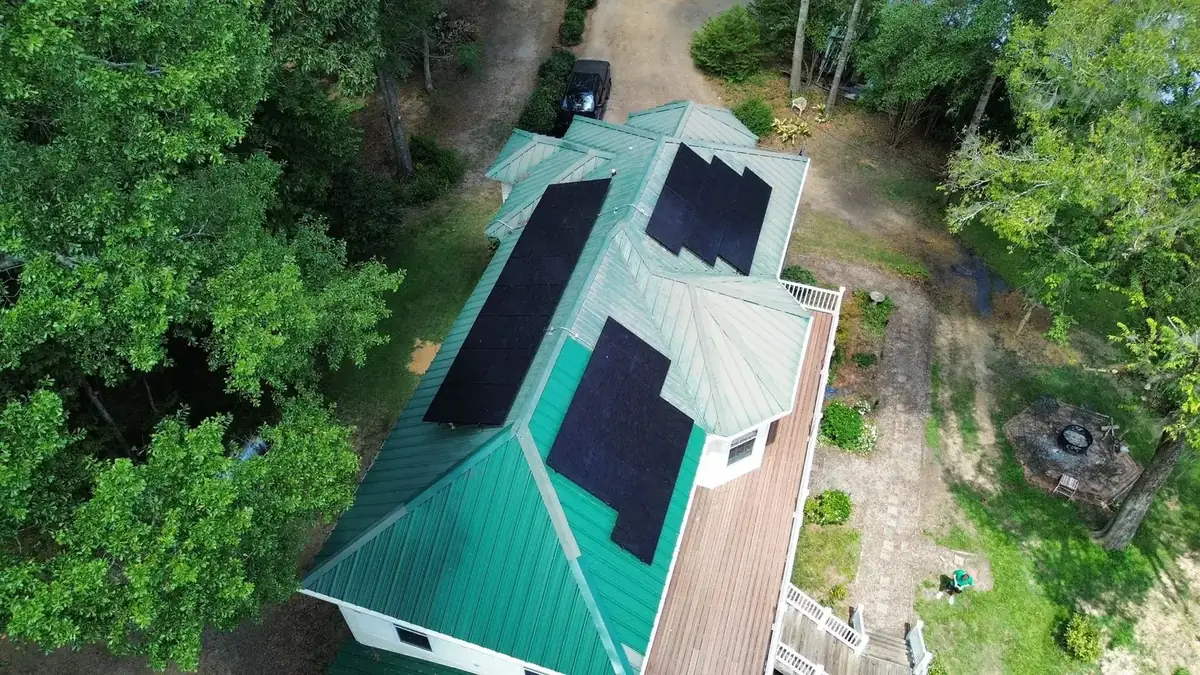 ResidentialMulti-facet metal roofWooded aerial view
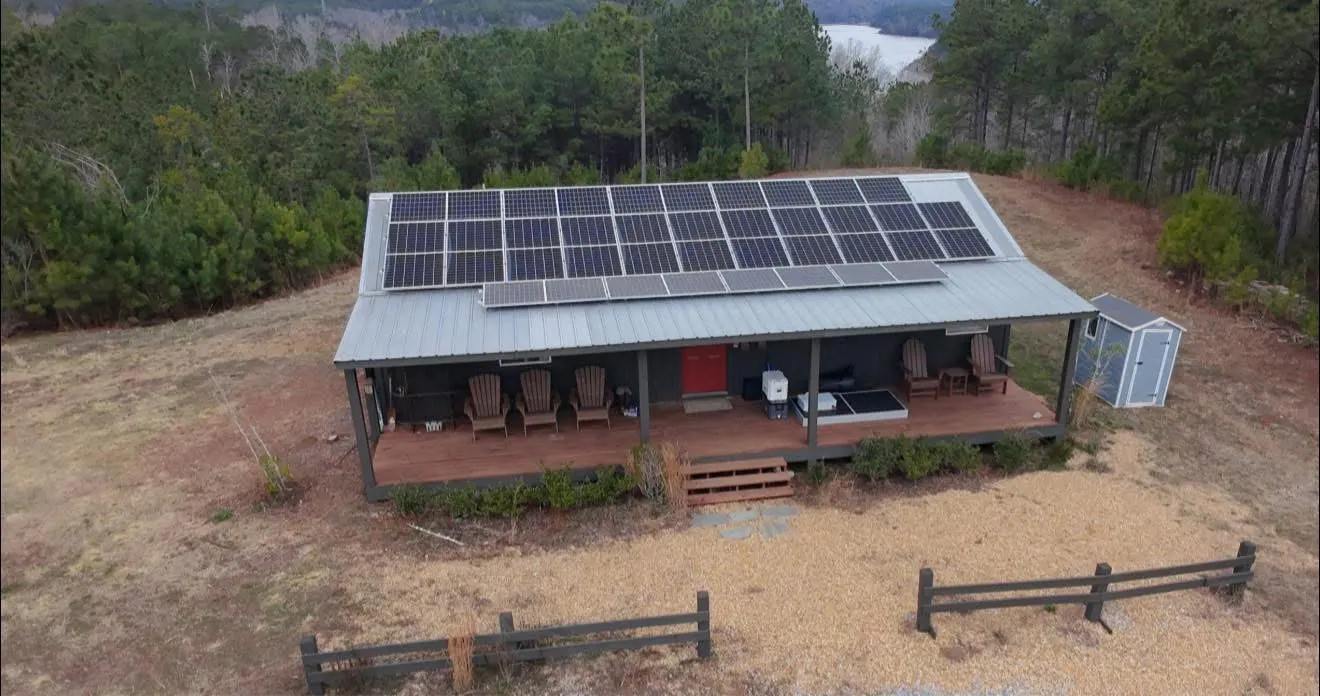 Off-GridCabin porch viewFull-slope roof array
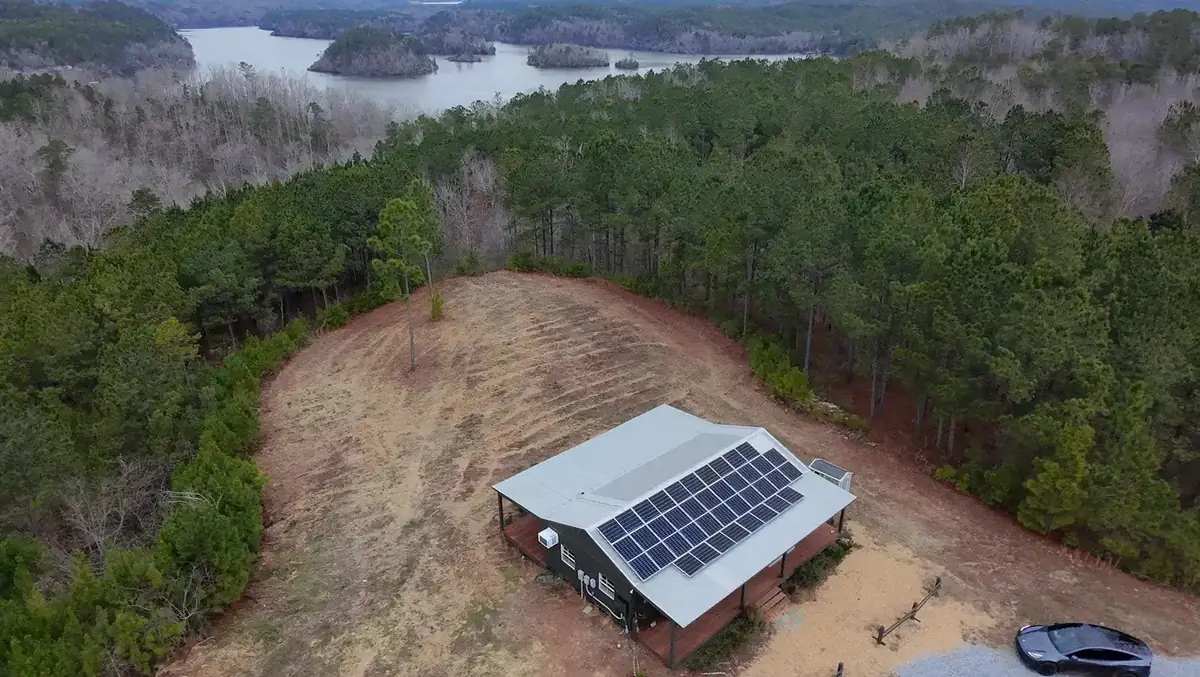 Off-GridOff-grid lake cabinGround-tilt metal roof array
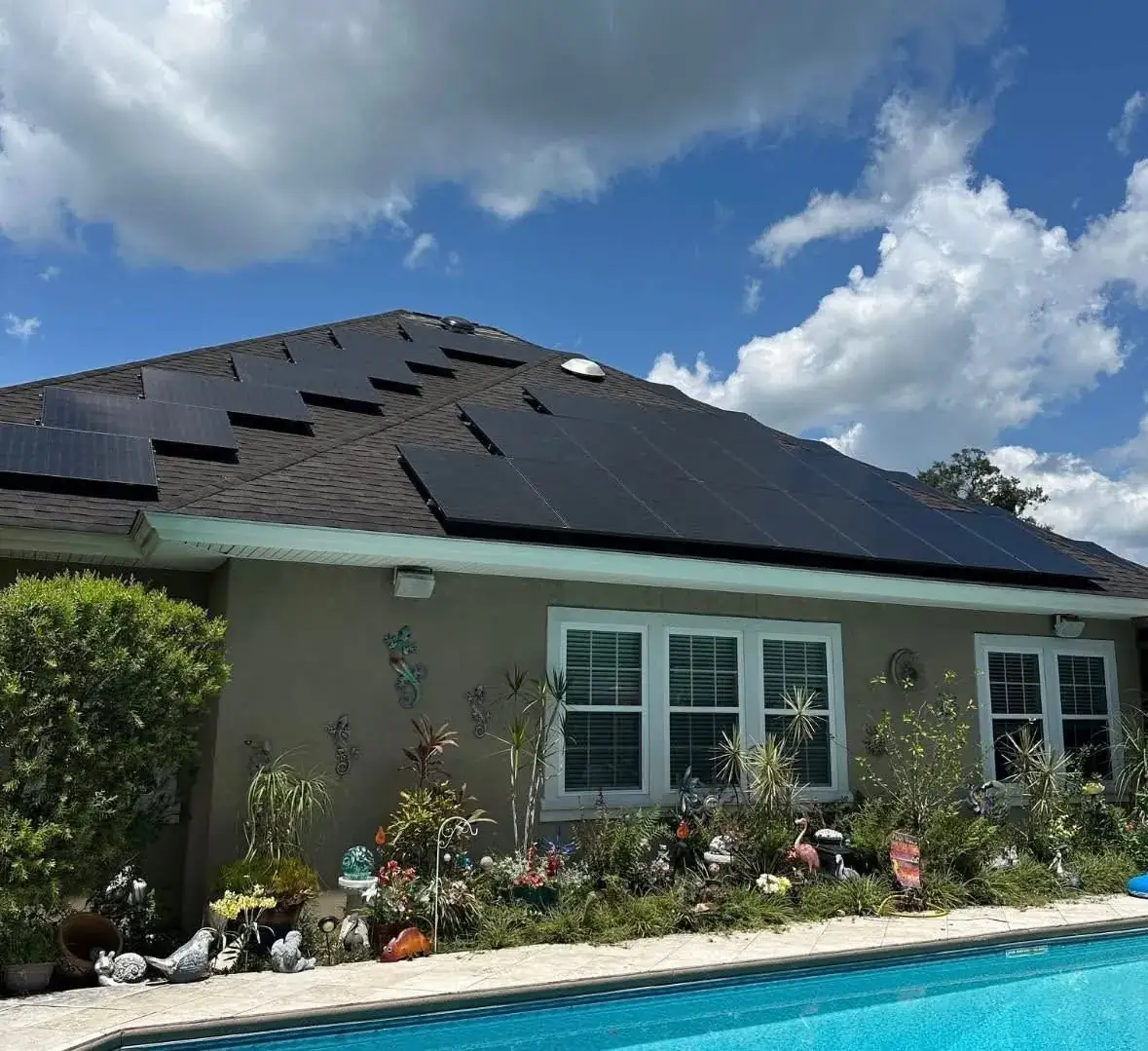 ResidentialFull black-on-blackPoolside single-story home
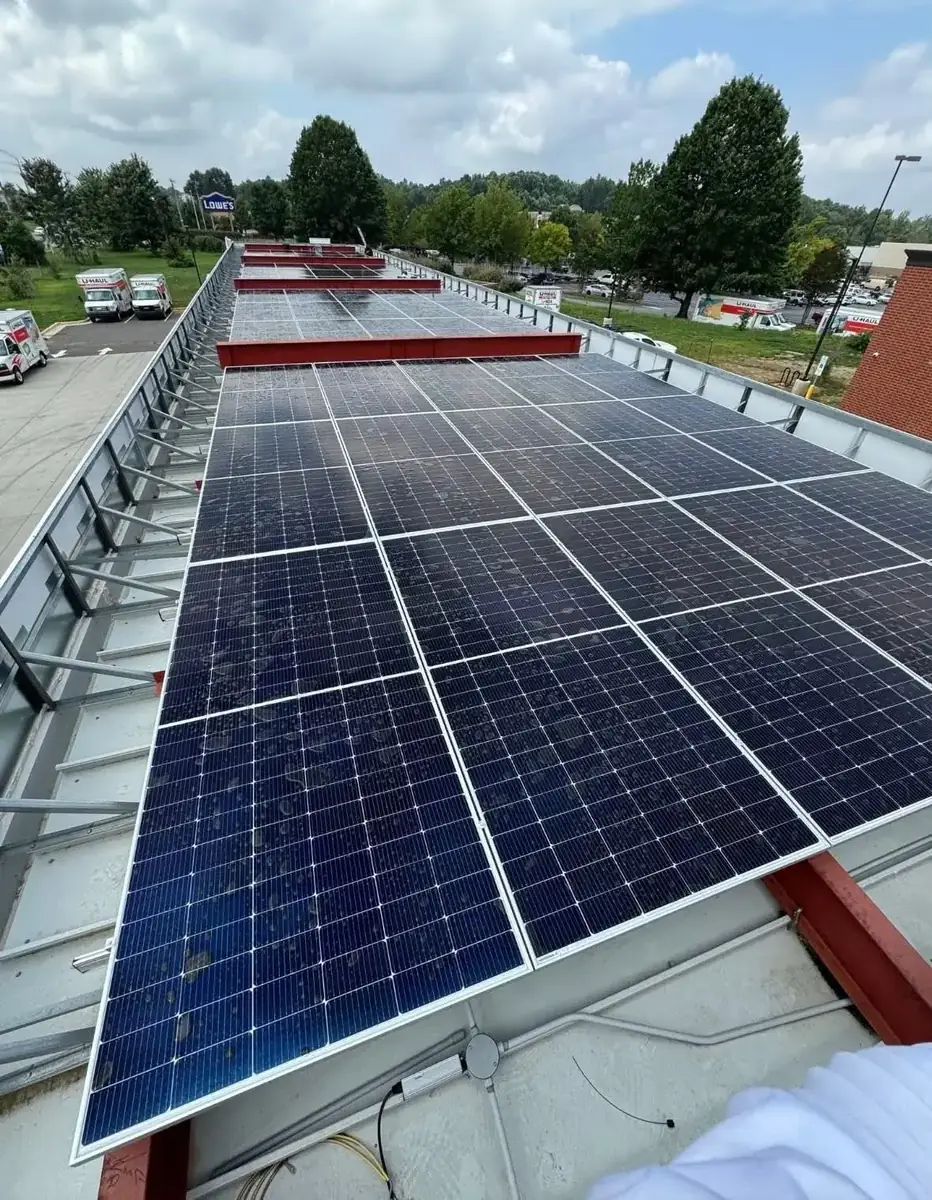 CommercialCommercial rooftopTilt-mounted rooftop system
Photo locations are not published.
Free assessment · Pooler, GA
Get a straight answer for your Pooler roof
We read your bill, confirm your Georgia Power export terms, and tell you what your roof in Chatham County will actually carry, and say so if it will not pay.
- Most addresses here are on Georgia Power, but Canoochee EMC serves parts of west Chatham County. We confirm yours from your bill before we quote anything
- A building permit and a separate electrical permit issued by the City of Pooler, not by Chatham County, for addresses inside city limits: we pull it and manage the inspections
- Pooler is an incorporated city running its own planning and development, so permits come from the city rather than from Chatham County.
Prefer to talk? (843) 310-1128
Pooler incentives FAQ
Common questions about solar incentives in Pooler
What solar incentives can I get in Pooler, GA in 2026?
Georgia has no state income tax credit for residential solar, and the federal residential credit expired for systems placed in service on or after 1 January 2026. Georgia property-tax treatment of solar is genuinely unsettled: reputable sources describe a $25,000 exemption, a full exemption and no statewide exemption. Confirm with the Georgia Department of Revenue and your county assessor rather than relying on any figure printed online. Georgia sales-tax treatment of solar equipment is not settled in the sources we can verify; confirm with the Georgia Department of Revenue. The 30% federal credit expired for systems placed in service on or after January 1, 2026.
Does Pooler still have net metering?
One-for-one netting is not available to new Georgia Power systems: its monthly netting pilot was capped at 5,000 customers and filled in 2021, so exports are credited at about 7.22¢ per kWh (a 3.2188¢ avoided-cost rate plus a 4¢ adder). Confirm current terms with Georgia Power before deciding.
Is there a Georgia state tax credit for solar?
There is nothing to claim. Georgia has no state income tax credit for residential solar, and the federal residential credit expired for systems placed in service on or after 1 January 2026. The number that decides a Georgia system is what your utility pays for exported power, which for a Georgia Power customer is roughly 7.2 cents per kilowatt-hour in 2026 against a retail rate near 13 cents. Confirm your own tax position with a professional.
Is there a Georgia Power rebate for solar in Pooler?
No. Georgia Power does not offer an upfront residential solar rebate, so there is no cash-back programme to stack here. Rebates in Georgia are set by individual providers rather than statewide, so the answer genuinely depends on which utility serves your meter.
Will solar panels increase my property taxes in Pooler?
Georgia property-tax treatment of solar is genuinely unsettled: reputable sources describe a $25,000 exemption, a full exemption and no statewide exemption. Confirm with the Georgia Department of Revenue and your county assessor rather than relying on any figure printed online. Confirm your own position with Chatham County and a tax professional, since eligibility depends on your circumstances.
What Pooler solar incentives can a homeowner claim in 2026?
There is no Georgia solar tax credit. What applies is the Chatham County property-tax treatment covered below. Georgia Power runs no upfront residential rebate.
Do Pooler solar incentives include net metering?
One-for-one netting is not available to new Georgia Power systems: its monthly netting pilot was capped at 5,000 customers and filled in 2021, so exports are credited at about 7.22¢ per kWh (a 3.2188¢ avoided-cost rate plus a 4¢ adder). Georgia Power households paid about 15.5¢ per kWh on average in 2024.
Do Pooler solar incentives cover batteries?
Georgia has no state credit for batteries either. In Pooler, a 9.5 kW system's afternoon surplus (up to about 1,337 kWh in its best month) is what a battery would hold.
Free, no-pressure assessment
See which incentives you actually qualify for in Pooler
We confirm whether Georgia Power serves your meter, size to your real usage, and show what applies to you.
Mon–Sat, 10am–6:30pm ET · We typically follow up within the hour.