
2026 incentives · Woodstock, GA
Solar incentives in Woodstock, GA
Woodstock solar incentives start with Cobb EMC: it pays a rate set by the cooperative rider, confirmed per account for exported power. After that comes the property-tax rules, since Georgia has no state solar tax credit.
The 30% federal credit ended on December 31, 2025, and Georgia has no state solar income-tax credit.
The short answer · as of August 2026
Woodstock homeowners cannot claim a Georgia state tax credit, because Georgia does not offer one. What decides the economics here is the export credit your utility pays, alongside the HOA protections HB 389 introduced for rules made on or after 1 January 2026. Cobb EMC credits exported power at a rate set by the cooperative rider, confirmed per account under cooperative distributed-generation rider. The 30% federal credit is no longer available.
Looking for a solar company in Woodstock? See solar companies in Woodstock: our local team, costs and a free assessment.


Free roof and bill assessment
Takes under a minute. No pressure, and no guaranteed-savings math.
Local incentive reality
The incentive picture in Woodstock
On a Cobb EMC meter the payback number comes from the cooperative’s own Distributed Generation Rate Schedule rather than from any Commission tariff, and Cobb is explicit that it is not a one-for-one retail credit. That plain statement is more than most Georgia cooperatives publish, and it is worth reading before you accept a third-party summary of what Georgia net metering means.
The Woodstock-specific item is a refund rather than an incentive. Cobb EMC charges the interconnection fee to the member directly, so if it appears inside your solar contract you are entitled to ask for it back, and its presence there tells you something about how the rest of the quote was assembled.
Written for Woodstock specifically.
Start here, it matters most
What Cobb EMC pays you for solar in Woodstock
In Woodstock, Cobb EMC's export terms are worth more over 25 years than any one-off credit: 13,100 kWh a year from a 9.5 kW system, every year.
| Item | Current position (August 2026) |
|---|---|
| Programme | cooperative distributed-generation rider |
| Retail rate you avoid | a rate set by the cooperative board, confirmed against your own bill for power you use as you generate it |
| Export credit | a rate set by the cooperative rider, confirmed per account for power you send back |
| Monthly rider | None specific to this programme, though standard service charges still apply. |
| Upfront utility rebate | None. There is no residential cash-back programme in this territory. |
| Who confirms your territory | We do, at the assessment. In and around Woodstock, Georgia Power and Sawnee EMC serve other parts of Cherokee County, and terms differ. |
The practical consequence: the gap between the retail rate you avoid and the export credit decides whether a kilowatt-hour you export is worth as much as one you use yourself. We read both off your own bill and size to your consumption rather than to your roof area.
Rebates
Why Woodstock has no utility rebate, and who does
There is no upfront residential solar rebate in Cobb EMC territory around Woodstock.
Quoted a rebate for Woodstock? Check it on Cobb EMC's own site first.
Statewide rules
The parts that are the same everywhere in Georgia
Statewide, the strongest remaining incentive is the export credit your utility pays.
Georgia solar incentives in full →
Eligibility depends on your circumstances and none of this is tax advice, so confirm with a tax professional. Property-tax treatment is administered locally, see Cherokee County below.
Cherokee County
Property tax on solar in Cherokee County
Georgia property-tax treatment of solar is genuinely unsettled: reputable sources describe a $25,000 exemption, a full exemption and no statewide exemption. Confirm with the Georgia Department of Revenue and your county assessor rather than relying on any figure printed online.
Confirm your own position with Cherokee County and a tax professional, since eligibility depends on your circumstances. We do not publish a tax figure for Cherokee County that we cannot stand behind.
Adding it up
What a Woodstock homeowner actually nets in 2026
With no Georgia credit and no Cobb EMC rebate, a 9.5 kW system's net cost is its installed price, about $24,605; the value comes from the export terms above.
Businesses
Incentives for Woodstock businesses
Commercial projects in Woodstock follow different rules from homes, including federal commercial provisions that your CPA, not an installer, should confirm. Daytime business load on Cobb EMC uses most solar output on site.
Permits and approvals
What approval takes in Woodstock
4 approvals for a Woodstock system. We file every one.
- 01A building permit and a separate electrical permit from the City of Woodstock or Cherokee County, depending on the address
- 02A Cobb EMC interconnection agreement, with the interconnection fee charged to you directly rather than through your contractor
- 03An additional electrical permit where battery storage is included
- 04A zoning review as well for any ground-mounted array
Local factors
What changes the net value of Woodstock solar incentives
- 01
Shade in Woodstock
A mix of established wooded streets and newer open subdivisions, so two houses a mile apart can be genuinely different systems.
- 02
Approvals that shape the layout
Cherokee County and the City of Woodstock each handle permitting for their own areas, so establish which applies before filing. There is also a consumer point worth knowing: Cobb EMC charges the interconnection fee to the member directly, so if a contractor has folded that fee into your contract you are entitled to ask for it back.
- 03
When incentives will not rescue it
Your household is out during daylight and you do not want storage, which is the weakest case under a below-retail export credit.
- 04
Also worth knowing
Mature canopy shades your best roof planes for much of the day.
Woodstock sun, month by month
What Woodstock solar incentives are worth on real output
About 13,100 kWh a year from a south-facing roof with no shade. May is the strongest month at about 1,269 kWh and December the weakest at about 760 kWh.
Your roof will differ. A mix of established wooded streets and newer open subdivisions, so two houses a mile apart can be genuinely different systems.
Estimate: NASA POWER sun data for Woodstock, PVWatts model, south-facing, no shade.
Homes in Woodstock
Who can claim Woodstock solar incentives
- 9,516owner-occupied homes (66% of 14,495)
- 2005median year homes were built
- 59%of homes are single-family detached
- $387kmedian owner-occupied home value
- The median Woodstock home was built in 2005, so many roofs are reaching their second half. We check remaining roof life before we design.
- Only 59% of homes are single-family detached; in the other 41% the association or shared roof decides first.
- 9,516 Woodstock households own their home, the ones who can install and claim the system as an asset.
- A 9.5 kW system at about $24,605 is roughly 6% of the median $387k Woodstock home value.
Source: US Census Bureau, American Community Survey 2023 5-year estimates for Woodstock city. Estimates, rounded.
Our work
Real systems our crews have installed
Our own job photos, not stock or renders. Inland.
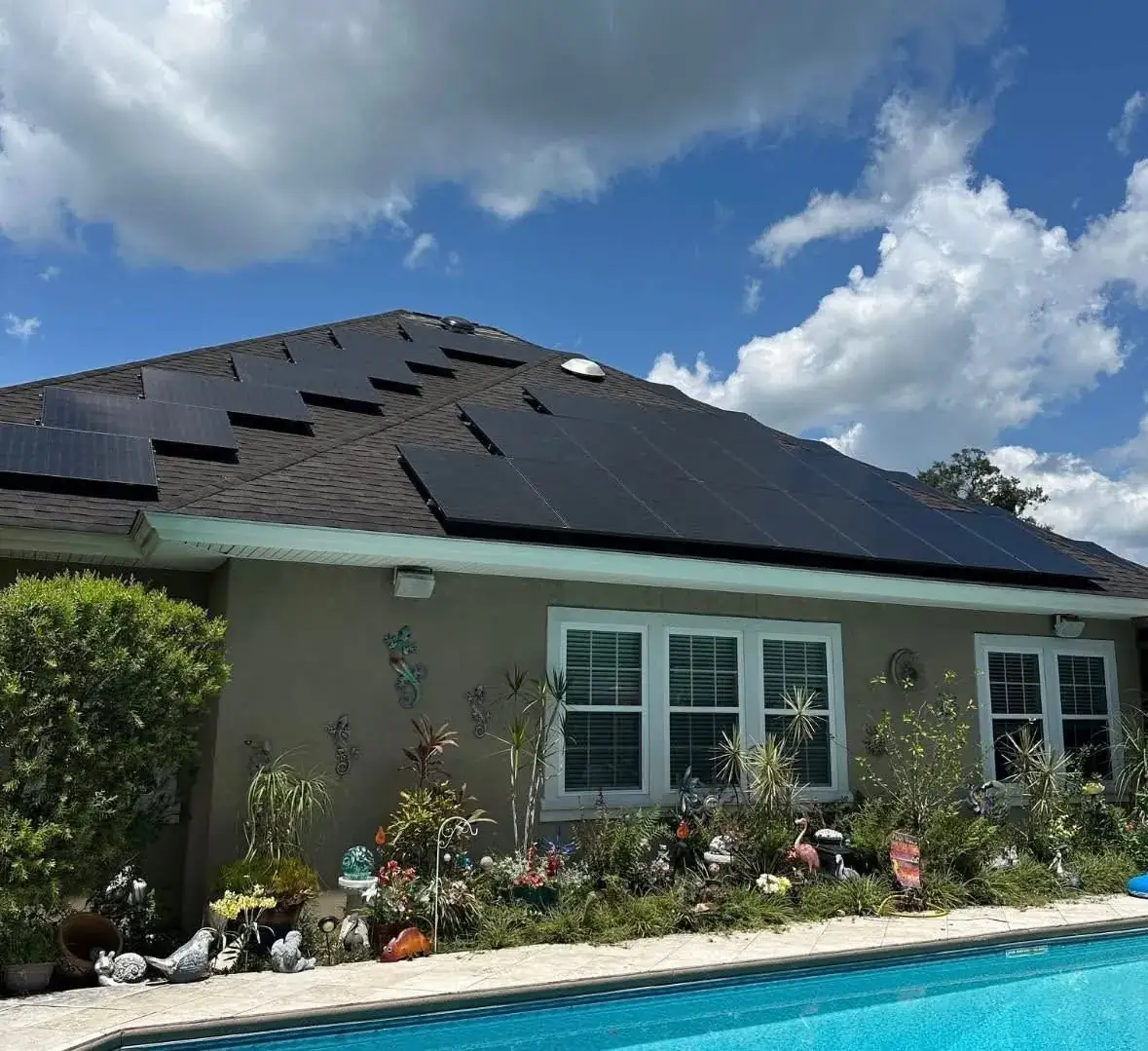 ResidentialFull black-on-blackPoolside single-story home
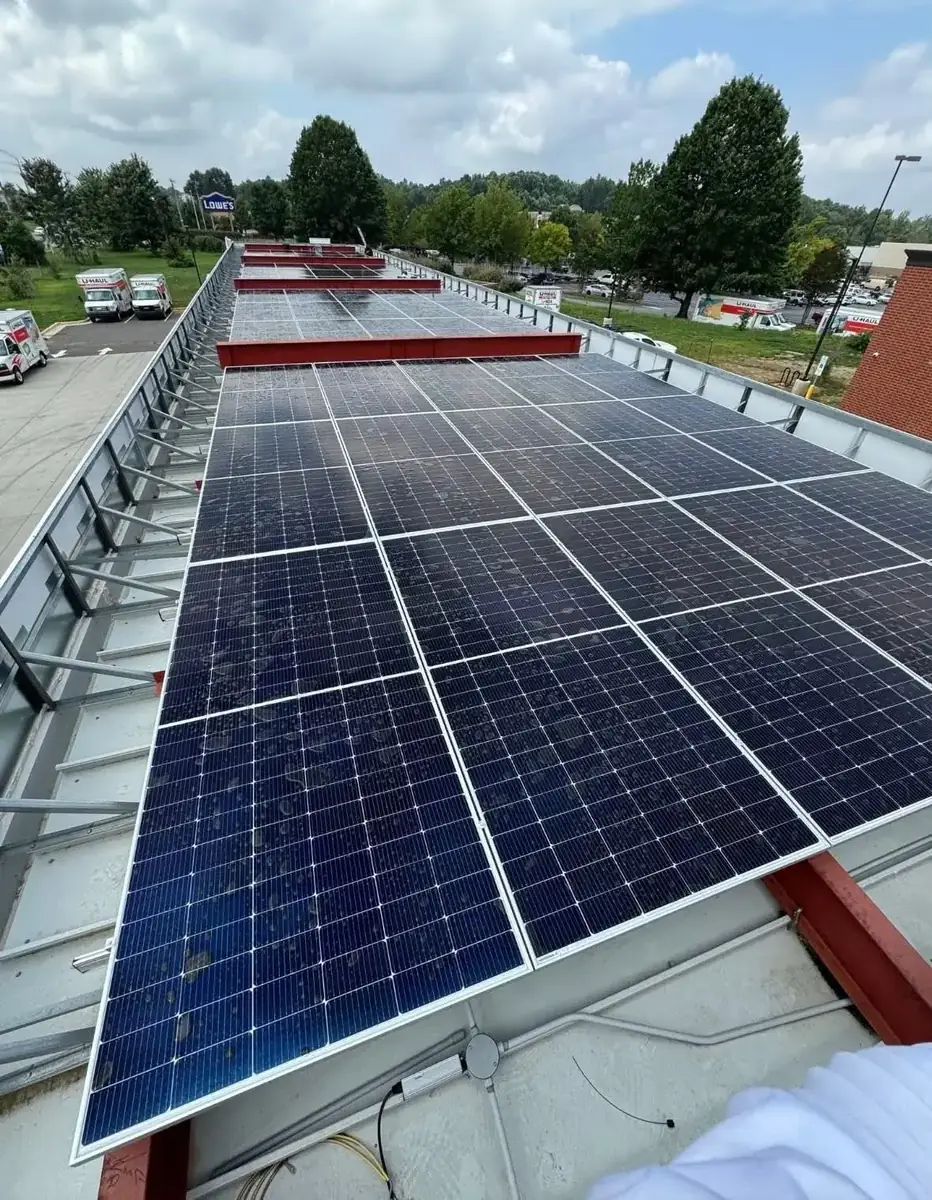 CommercialCommercial rooftopTilt-mounted rooftop system
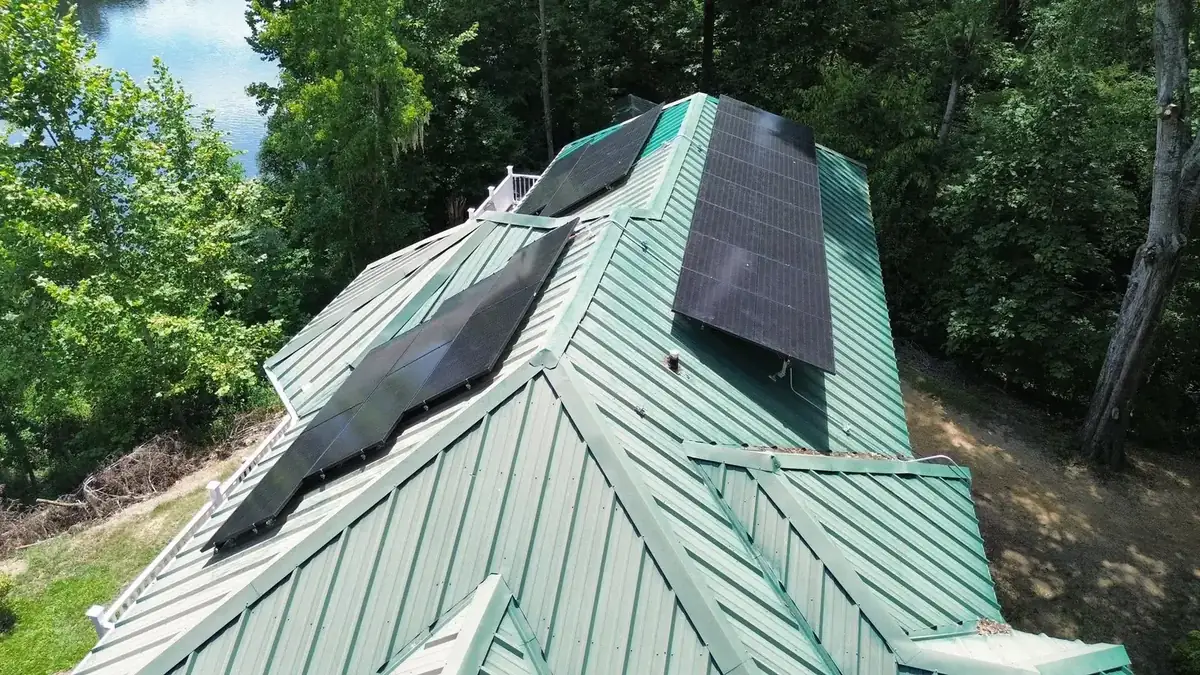 ResidentialStanding-seam metal roofLakeside multi-facet install
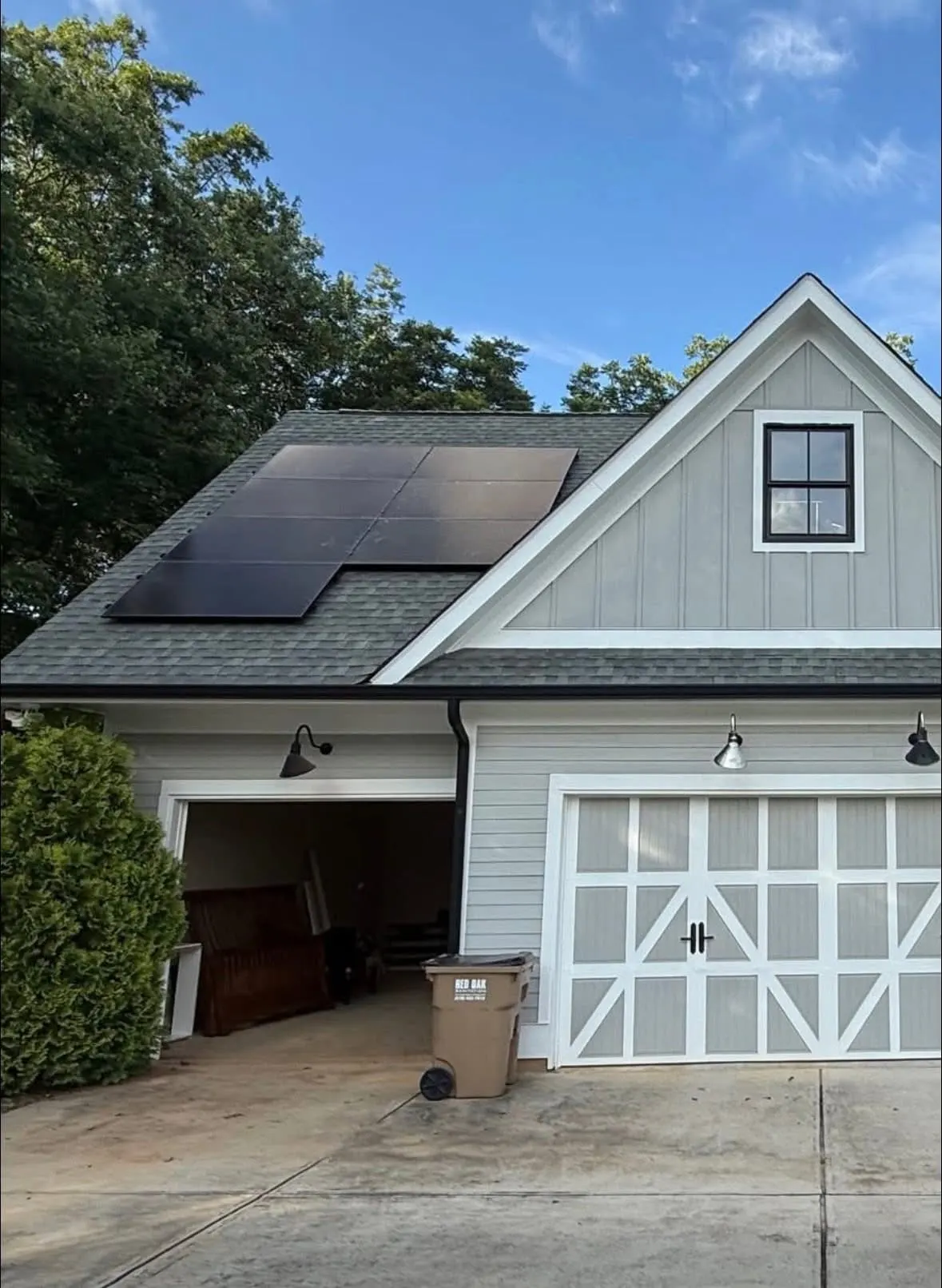 ResidentialDetached garage arrayFarmhouse-style home
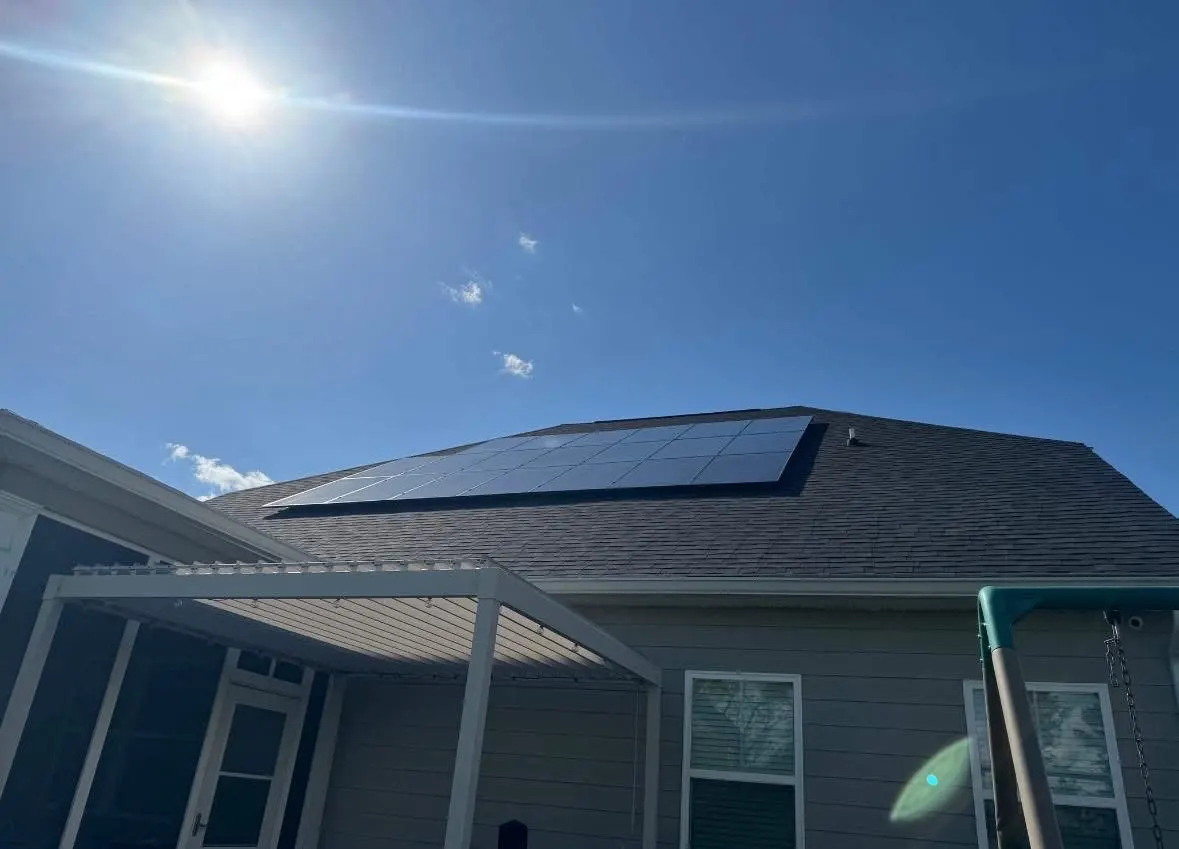 ResidentialShingle rooftop arrayBackyard-facing slope
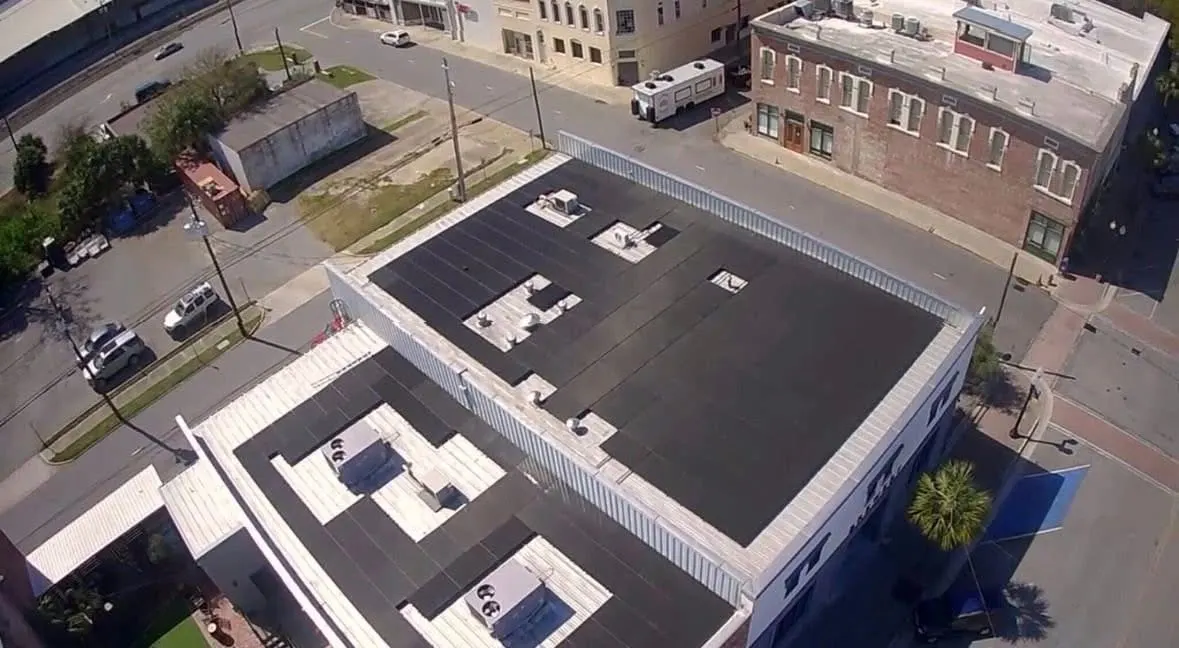 CommercialDowntown flat roofLow-slope membrane rooftop
Photo locations are not published.
Free assessment · Woodstock, GA
Get a straight answer for your Woodstock roof
We read your bill, confirm your Cobb EMC export terms, and tell you what your roof in Cherokee County will actually carry, and say so if it will not pay.
- Most addresses here are on Cobb EMC, but Georgia Power and Sawnee EMC serve other parts of Cherokee County. We confirm yours from your bill before we quote anything
- A building permit and a separate electrical permit from the City of Woodstock or Cherokee County, depending on the address: we pull it and manage the inspections
- Cherokee County and the City of Woodstock each handle permitting for their own areas, so establish which applies before filing.
Prefer to talk? (843) 310-1128
Woodstock incentives FAQ
Common questions about solar incentives in Woodstock
What solar incentives can I get in Woodstock, GA in 2026?
Georgia has no state income tax credit for residential solar, and the federal residential credit expired for systems placed in service on or after 1 January 2026. Georgia property-tax treatment of solar is genuinely unsettled: reputable sources describe a $25,000 exemption, a full exemption and no statewide exemption. Confirm with the Georgia Department of Revenue and your county assessor rather than relying on any figure printed online. Georgia sales-tax treatment of solar equipment is not settled in the sources we can verify; confirm with the Georgia Department of Revenue. The 30% federal credit expired for systems placed in service on or after January 1, 2026.
Does Woodstock still have net metering?
Cobb EMC sets its own export credit through its own board, so we confirm the current figure per account before modelling anything. Confirm current terms with Cobb EMC before deciding.
Is there a Georgia state tax credit for solar?
There is nothing to claim. Georgia has no state income tax credit for residential solar, and the federal residential credit expired for systems placed in service on or after 1 January 2026. The number that decides a Georgia system is what your utility pays for exported power, which for a Georgia Power customer is roughly 7.2 cents per kilowatt-hour in 2026 against a retail rate near 13 cents. Confirm your own tax position with a professional.
Is there a Cobb EMC rebate for solar in Woodstock?
No. Cobb EMC does not offer an upfront residential solar rebate, so there is no cash-back programme to stack here. Rebates in Georgia are set by individual providers rather than statewide, so the answer genuinely depends on which utility serves your meter.
Will solar panels increase my property taxes in Woodstock?
Georgia property-tax treatment of solar is genuinely unsettled: reputable sources describe a $25,000 exemption, a full exemption and no statewide exemption. Confirm with the Georgia Department of Revenue and your county assessor rather than relying on any figure printed online. Confirm your own position with Cherokee County and a tax professional, since eligibility depends on your circumstances.
What Woodstock solar incentives can a homeowner claim in 2026?
There is no Georgia solar tax credit. What applies is the Cherokee County property-tax treatment covered below. Cobb EMC runs no upfront residential rebate.
Do Woodstock solar incentives include net metering?
Cobb EMC sets its own export credit through its own board, so we confirm the current figure per account before modelling anything. Cobb EMC households paid about 11.4¢ per kWh on average in 2024.
Do Woodstock solar incentives cover batteries?
Georgia has no state credit for batteries either. In Woodstock, a 9.5 kW system's afternoon surplus (up to about 1,269 kWh in its best month) is what a battery would hold.
Nearby
Solar incentives near Woodstock
Free, no-pressure assessment
See which incentives you actually qualify for in Woodstock
We confirm whether Cobb EMC serves your meter, size to your real usage, and show what applies to you.
Mon–Sat, 10am–6:30pm ET · We typically follow up within the hour.