


Most addresses
Dominion Energy South Carolina
- Average home rate (2024)
- 14.59¢/kWh
- Paid for exported solar
- about 2.8–4.1¢ per kWh
- Net-metered home solar, utility-wide
- 16,090
Honest numbers · Daniel Island, SC
Solar panel cost in Daniel Island runs about $2.54 per watt installed in 2026: a 9.5 kW system is about $24,130, or $18,098 after the 25% SC credit, and makes about 13,940 kWh a year here.
The short answer · as of July 2026
Solar in the Daniel Island area costs about $2.54 per watt installed before incentives as of July 2026. A system near our ~9.5 kW average runs roughly $24,130 gross and about $18,098 once South Carolina’s 25% state tax credit is fully claimed. Illustrative payback lands between 12 years and 20 years, driven mostly by how much power you use on site rather than export.
Looking for a solar company in Daniel Island? See solar companies in Daniel Island: our local team, costs and a free assessment.
Free roof and bill assessment
Takes under a minute. No pressure, and no guaranteed-savings math.
Local pricing reality
Daniel Island is our home market and the housing stock works in your favour: mostly younger roofs with predictable planes and documented construction, which shortens design and reduces surprises. That shows up as a tighter quote with fewer contingencies rather than as a headline discount, and it is the main reason island projects tend to run to schedule.
Two things add cost here. The first is island-grade hardware specification, which we do not compromise on, because salt exposure on this side of the harbour will find under-specified fasteners and clamps within a few years. The second is the architectural-review process, which occasionally pushes an array to a less productive orientation and therefore requires more modules for the same annual output.
Worth checking your utility before comparing per-watt figures with a neighbour, since Daniel Island straddles Dominion Energy South Carolina and Berkeley Electric Cooperative. That does not change the installed price, but it changes what the system earns, and a per-watt number without the export rate beside it tells you only half of what you are buying.
Written for Daniel Island specifically.
The numbers
Priced at the local $2.54 per watt benchmark (July 2026) and shown before and after South Carolina’s 25% state tax credit. These are worked examples to set expectations, not a quote, and not a promise of savings.
| System size | Cost before incentives | SC 25% credit (TC-38) | Net after credit |
|---|---|---|---|
| 6 kW | $15,240 | $3,810 over 2 tax years | $11,430 |
| 9.5 kW Closest to our ~9.5 kW average system | $24,130 | $6,033 over 2 tax years | $18,098 |
| 12 kW | $30,480 | $7,620 over 3 tax years | $22,860 |
| 15 kW | $38,100 | $9,525 over 3 tax years | $28,575 |
Note the third column carefully. The credit is 25% of system cost but capped at $3,500 per tax year, so a larger system is claimed across several returns rather than all at once. Most pages quoting "25% off" skip this, and it is the most common reason homeowners feel misled later. See exactly how the credit is claimed.
Sizing
Calculators assume a national-average system of 14.51 kW; our average is about 9.5 kW, which makes about 13,940 kWh a year here. Sizing past your own use earns only Dominion Energy's export rate.
The part competitors leave out
Most Daniel Island homes are served by Dominion Energy South Carolina , though Berkeley Electric Cooperative is common on parts of the island. One-for-one net metering closed to new applicants on 1 June 2021, and new Dominion Energy South Carolina systems are credited under Solar Choice instead, at roughly 2.8–4.1¢ per kWh for exports. So Daniel Island payback depends on how much you use at home.
| How you use your production | Illustrative annual saving | Illustrative simple payback |
|---|---|---|
| 40% used on-site | about $925 | roughly 20 years |
| 60% used on-site | about $1,199 | roughly 15 years |
| 80% used on-site | about $1,473 | roughly 12 years |
The mechanic is simple. Power you consume the moment you generate it offsets electricity you would have bought at about 14.4¢ per kWh. Power you export earns only roughly 2.8–4.1¢ per kWh, and Solar Choice also carries a rider of about $14 a month plus a true-up in November that settles leftover credits at an avoided-cost rate. Daytime use is what pays here.
That also explains why payback in Daniel Island is longer now than the 13-year figures still published on aggregator sites. Those figures were calculated when a 30% federal credit existed and when exports earned retail rates. Both of those changed. We would rather show you the current number than a flattering old one.
2026 incentives
The net column above already applies South Carolina’s 25% state tax credit. Two things worth knowing about it: the $3,500 annual cap means larger systems are claimed across more than one tax return, and the credit is non-refundable, so it is limited by your state tax liability.
The 30% federal credit expired for systems placed in service on or after 1 January 2026. If a quote you are comparing still applies it, that quote is wrong by thousands.
Dominion Energy South Carolina runs no upfront residential rebate, so there is nothing to stack on top of the state credit in Daniel Island.
Incentives specific to Daniel Island · statewide mechanics and worked examples · financing
Line items
In Daniel Island the swings come from roof age (the median Daniel Island home was built in 2010), coastal wind-load attachment and salt-rated hardware, the 6 approvals Berkeley County requires, and whether Dominion Energy's export terms favour a smaller system.
Paying for it
On a 9.5 kW system at $24,130, ask for the cash and financed price side by side; a low loan rate often hides a dealer fee in the price.
The South Carolina-specific trap: because the state credit is capped at $3,500 a year, it arrives across several tax years. A loan structured around one large first-year credit payment will not behave as presented.
The honest part
If two or more of these describe your home, we will say so during the assessment and we will not design a system to talk you past them. That is the whole point of a free, no-pressure assessment. If circumstances change, we will still be here.
Our work
Our pricing comes from ~450 combined experienced installs and a ~9.5 kW average system, priced for Berkeley County permitting and coastal hardware.
Permits and approvals
6 approvals for a Daniel Island system. We file every one.
Your utility decides payback
Dominion Energy South Carolina and Berkeley Electric Cooperative split Daniel Island street by street. We read yours off your bill first.
Most addresses
Some addresses
For comparison: South Carolina average 14.23¢ · U.S. average 16.48¢. South Carolina had 40,055 net-metered home solar systems at the end of 2024.
Rates: US EIA Form EIA-861, 2024 averages incl. fixed charges, not tariffs. Export terms as of July 2026.
Daniel Island sun, month by month
About 13,940 kWh a year from a south-facing roof with no shade. May is the strongest month at about 1,379 kWh and December the weakest at about 857 kWh.
Your roof will differ. As a planned community much of the housing stock is relatively young with predictable roof planes, though street trees have matured enough to matter on some lots.
Estimate: NASA POWER sun data for Daniel Island, PVWatts model, south-facing, no shade.
Homes in Daniel Island
Source: US Census Bureau, American Community Survey 2023 5-year estimates for ZIP 29492. Estimates, rounded.
Our work
Our own job photos, not stock or renders. Island siting means salt air and full coastal wind loading, so hardware specification and roof-penetration detail carry more weight than they would inland.
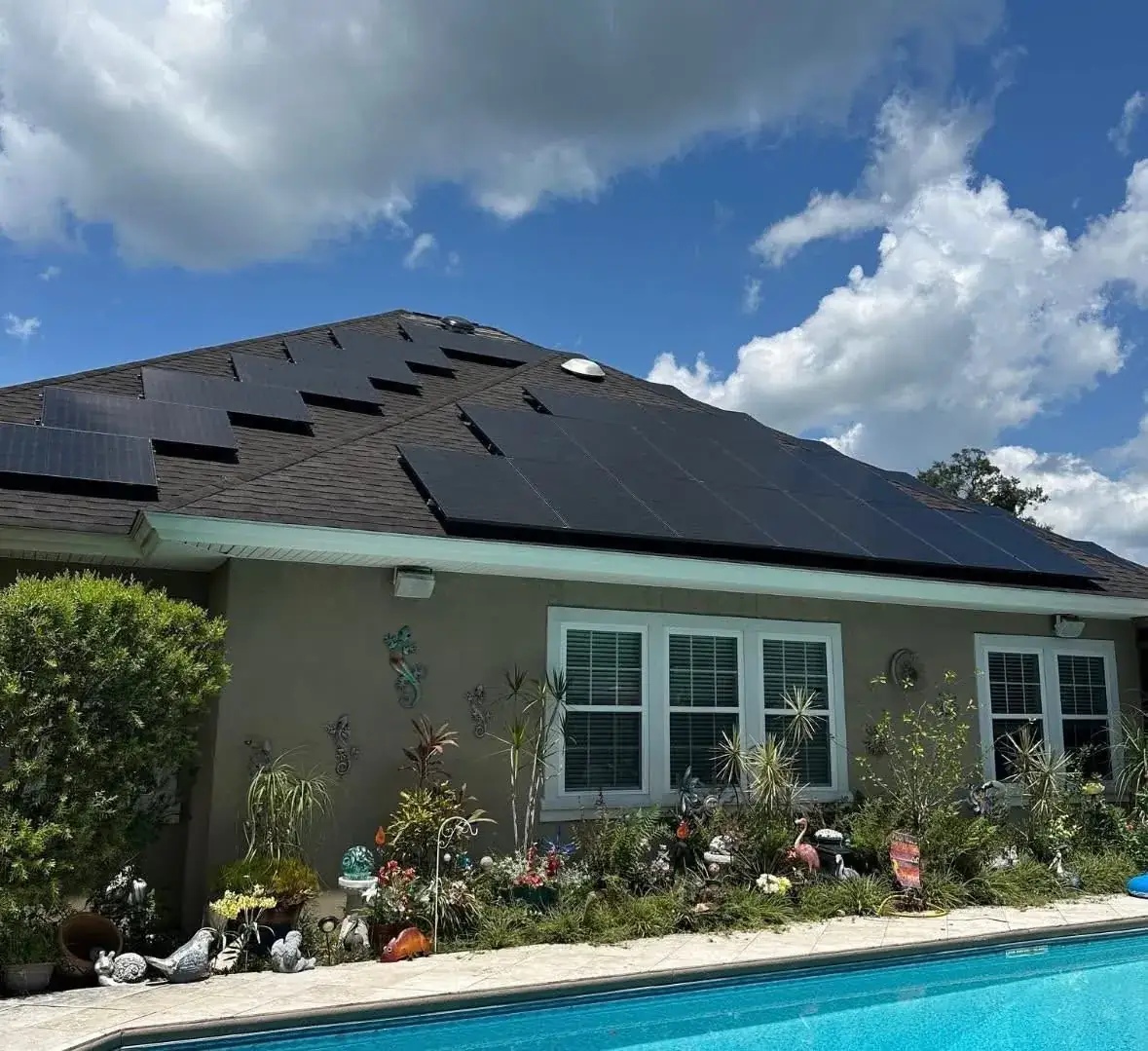
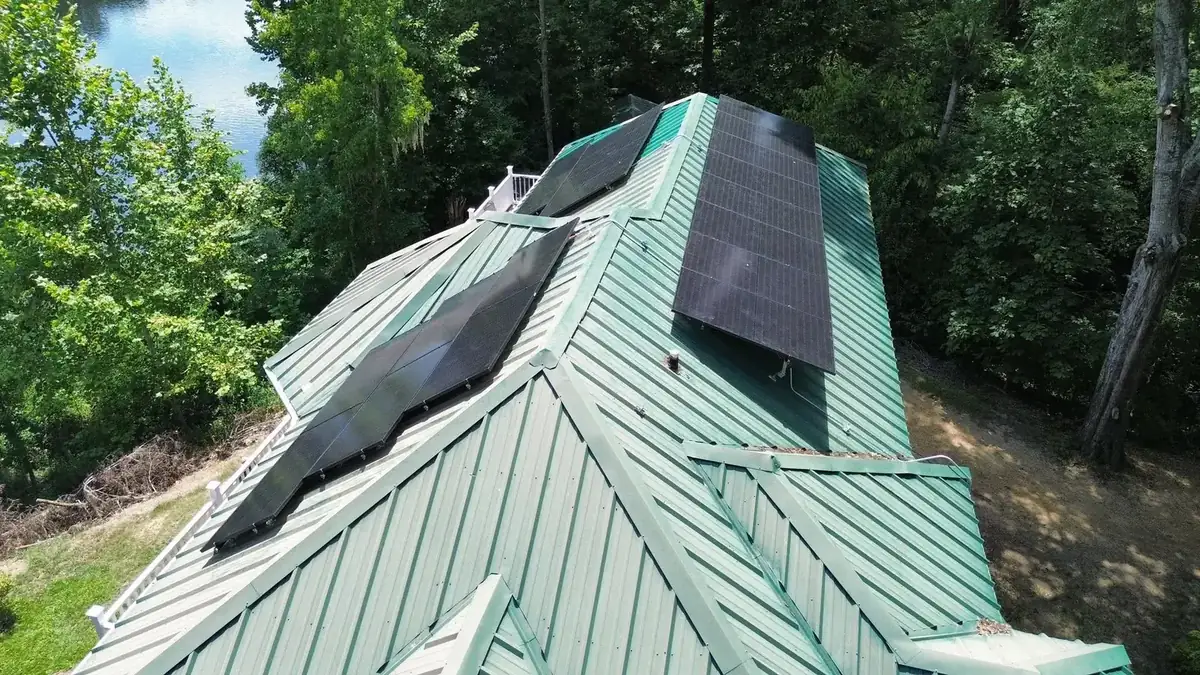
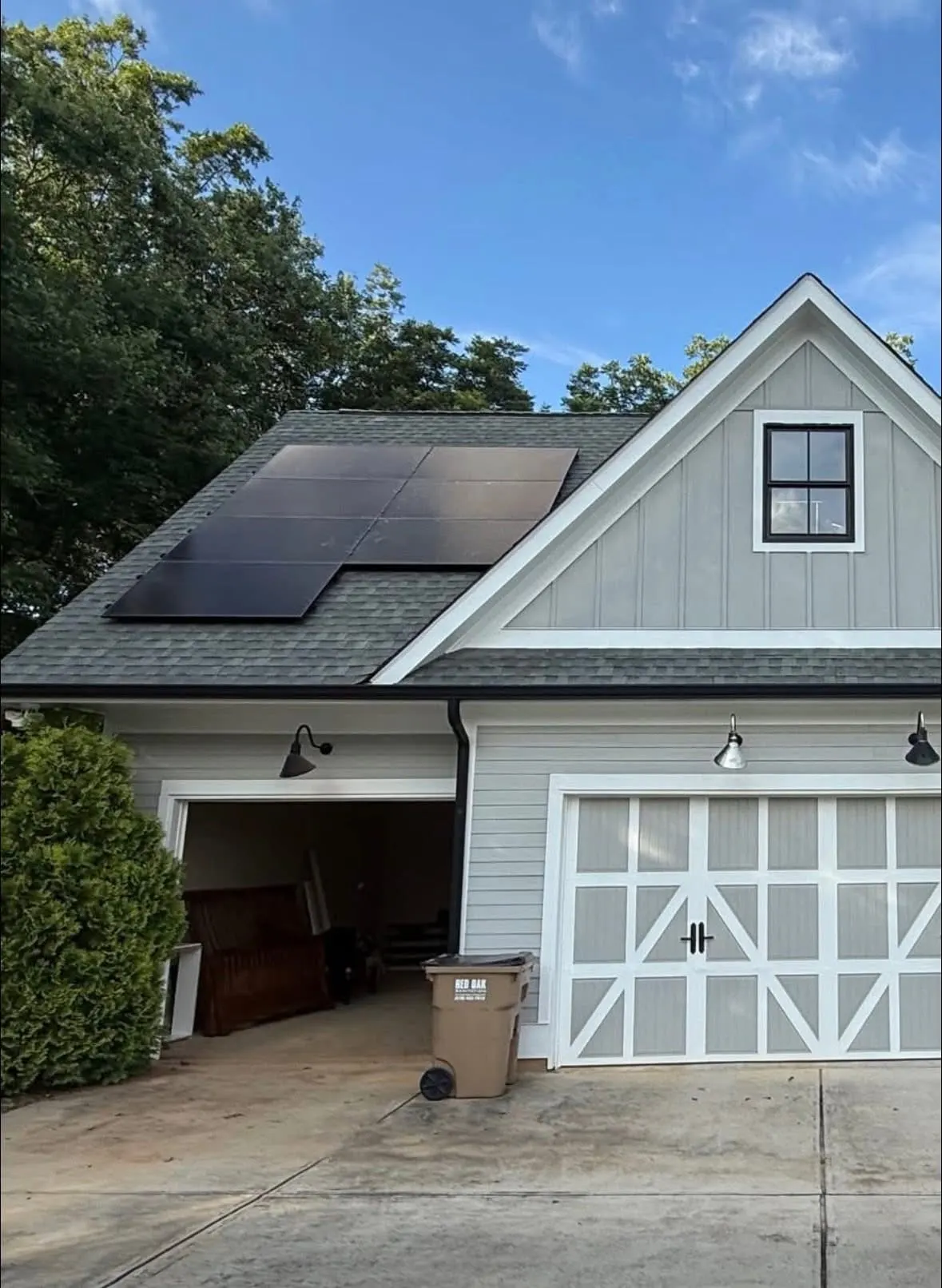
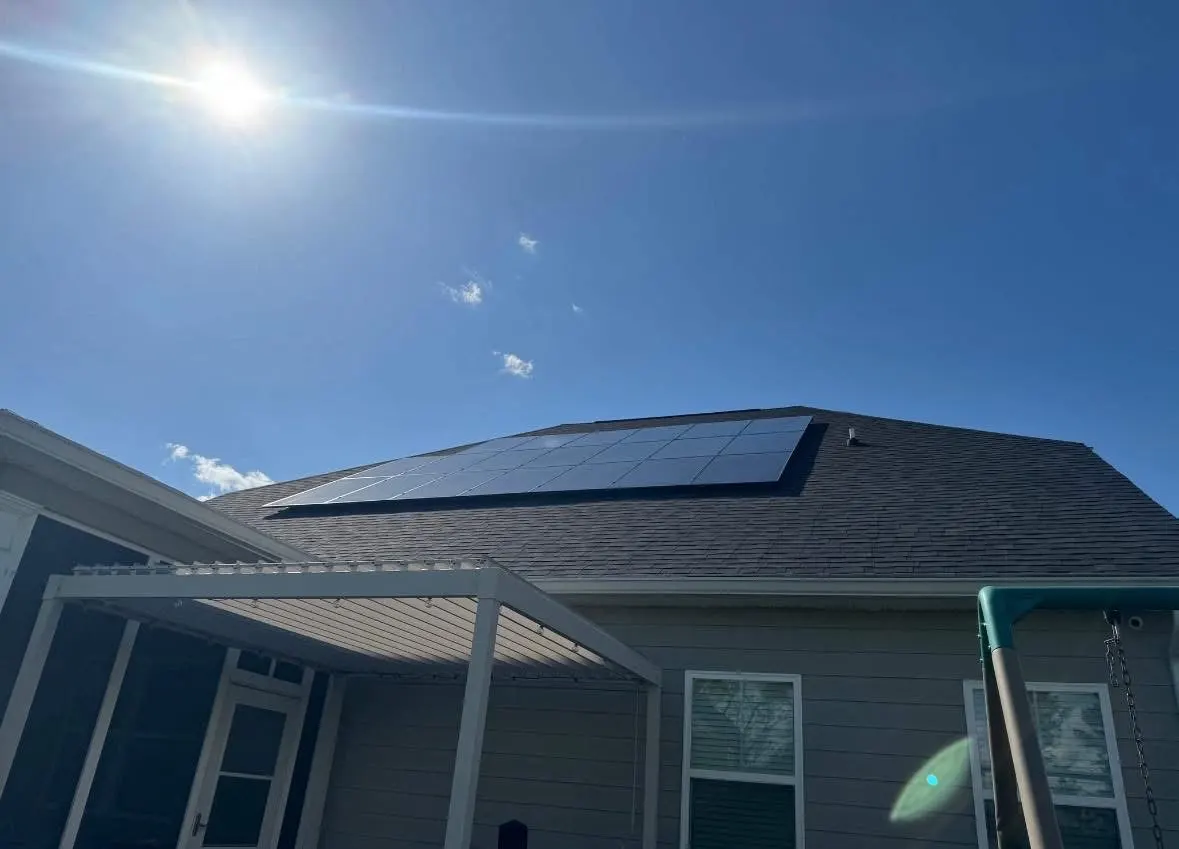
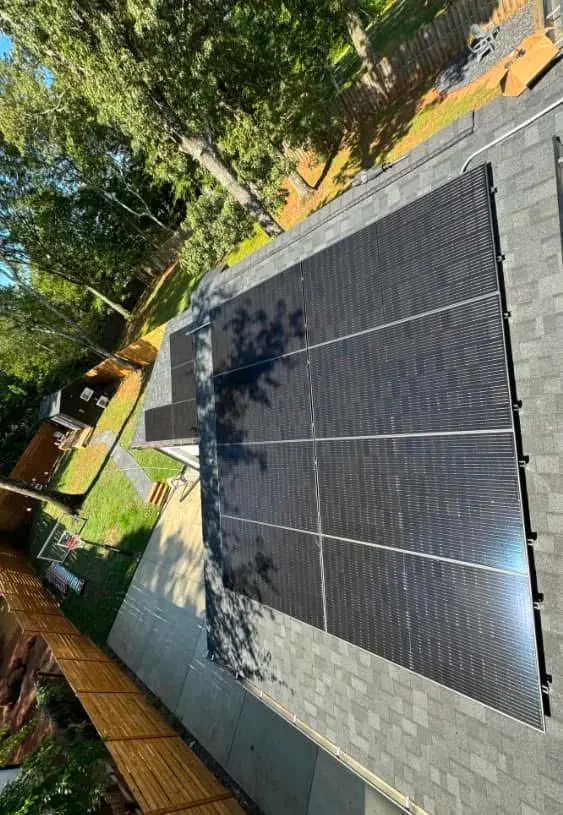
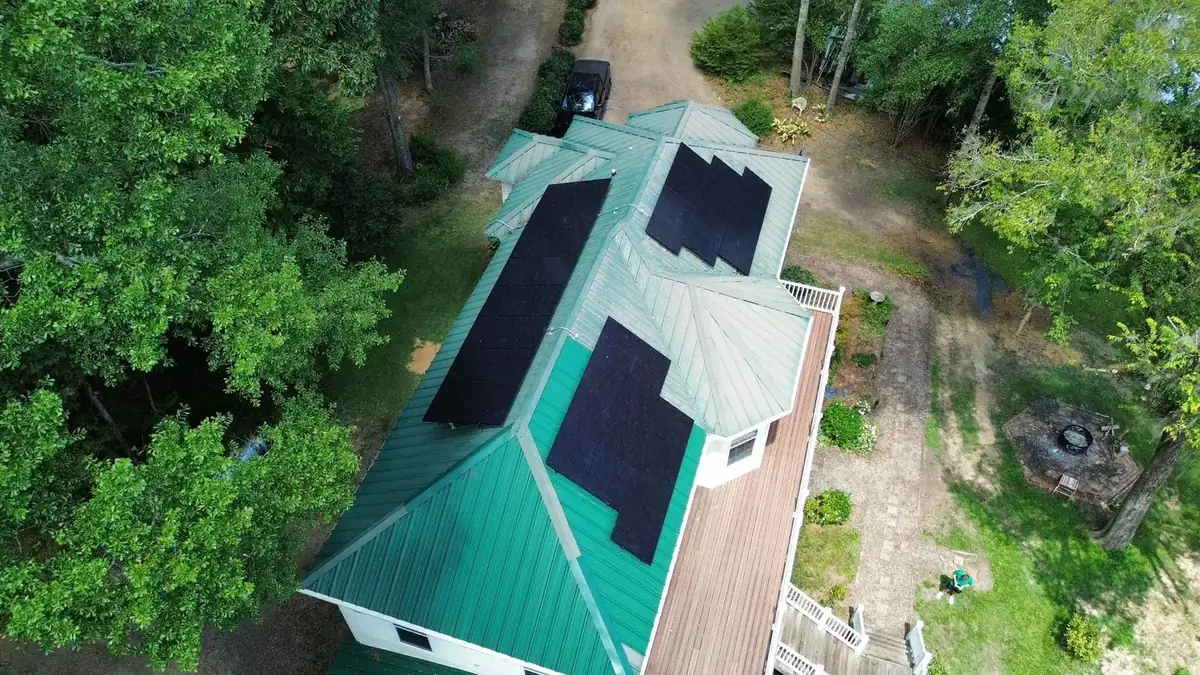
Photo locations are not published.
Free assessment · Daniel Island, SC
We read your bill, confirm your Dominion Energy South Carolina export terms, and tell you what your roof in Berkeley County will actually carry, and say so if it will not pay.
Prefer to talk? (843) 310-1128
Daniel Island solar cost FAQ
As of July 2026, solar in the Daniel Island area runs about $2.54 per watt installed before incentives. A system close to our ~9.5 kW average works out to roughly $24,130 gross, or about $18,098 once South Carolina’s 25% state tax credit is fully claimed. Your own number depends on your roof, your usage and your utility.
No. The federal residential clean energy credit (Section 25D) expired for systems placed in service on or after January 1, 2026. Many pages online still advertise it. South Carolina’s 25% state tax credit did not expire and is now the main incentive for homeowners here. The strongest remaining lever here is the 25% state credit on Form TC-38.
Illustratively, 12 years to 20 years, and the single biggest variable is how much of your production you use on site rather than export. Under Dominion Energy South Carolina's Solar Choice, power you use as you generate it offsets about 14.4¢ per kWh, while exported power credits at only roughly 2.8–4.1¢ per kWh. These are examples, not guarantees.
Because we size to your bill rather than to a sales quota. National cost calculators model 14.51 kW for this market, which inflates both the price and the projected savings for a typical home. Our combined install experience averages about 9.5 kW.
Qualifying residential systems of 20 kW or less are exempt from South Carolina property tax. Confirm your own situation with Berkeley County and a tax professional, since eligibility depends on your circumstances.
About $24,130 installed at $2.54 per watt, then $6,033 over 2 tax years back through the SC credit, for about $18,098 net. It makes about 13,940 kWh a year here unshaded. Dominion Energy households paid about 14.6¢ per kWh on average in 2024.
The median Daniel Island home was built in 2010, so many roofs are reaching their second half. We check remaining roof life before we design. A roof that needs replacing within a few years adds its cost to the project, so we price both together when it does.
Illustrative payback on a 9.5 kW system here runs 12 years to 20 years, depending on how much of the 13,940 kWh a year you use at home. Dominion Energy households paid about 14.6¢ per kWh on average in 2024.
Keep reading
Compare South Carolina solar quotes by system size, production, cash price, financing, warranties, utility assumptions, and scope before you sign.
17 min readCompare microinverters and string inverters by roof fit, shade, rapid shutdown, monitoring, storage, warranties, service, and replacement planning.
27 min readLearn what determines a monthly solar payment in South Carolina, when it may change, and how to compare the payment schedule with total cost.
23 min readLearn when solar may need panel, service, meter, feeder, or connection work, and what a South Carolina proposal should document before signing.
19 min readLearn how to detect possible solar loan dealer fees by reconciling the cash price, financed amount, APR, itemization, and South Carolina disclosures.
22 min readLearn how to audit measured roof shade, production-model inputs, tree assumptions, layout alternatives, inverter architecture, and the pause decision.
18 min readFree, no-pressure assessment
We will confirm your utility, measure your roof, read your actual usage history, and give you honest figures, with no guaranteed-savings math and no pressure.
Mon–Sat, 10am–6:30pm ET · We typically follow up within the hour.