
Repair & service · Charleston, SC
Solar panel repair in Charleston, SC
If your system stopped working
We diagnose and repair solar systems in Charleston including ones we did not install. Most production problems come down to an inverter fault, a tripped disconnect, vegetation growth or a monitoring failure rather than the panels themselves, and several of those are inexpensive to fix. The assessment is free, and if repair is not economic we will tell you.


Local failure patterns
What actually fails in Charleston
The systems we are called out to in Charleston are old enough that salt corrosion on racking, clamps and fasteners is a routine finding rather than a theoretical risk. The second most common finding is a roof leak traced to a badly detailed penetration. Both come back to the same root cause: inland-specification hardware installed on a coastal roof by a company that did not price the difference, or did not know there was one.
We test electrically rather than judging by eye, because the failures that matter here do not announce themselves from the ground. Micro-cracking from thermal cycling and storm debris shows up as a string that underperforms in specific conditions, not as visible damage. String-level IV measurement and thermal imaging separate a genuinely failed module from one that is simply shaded, which decides whether you are buying a panel or trimming a tree.
If your system was installed inside a historic district, expect the repair conversation to include the review question again. Replacing a module like for like is generally straightforward; changing the array outline, the mounting height or the equipment visible from the public right of way may not be. We establish that before quoting, because the worst outcome is a repair that fixes the fault and creates a compliance problem in its place.
Written for Charleston specifically. Your own roof, bill and meter still decide the answer, which is what the free assessment settles.
Orphaned systems
Your installer closed. Your system is still yours.
South Carolina has roughly fifteen years of installed rooftop solar behind it, and a good number of the companies that sold those systems are no longer trading. If you are searching for repair in Charleston because the number on your paperwork does not connect any more, you are not in an unusual position.
Here is the honest picture on your coverage. Manufacturer warranties on your panels and inverter usually survive, because they attach to the equipment rather than to the installer, and they are often 25 years on panels. What does not survive is the original company's workmanship warranty. Nobody can honour that on their behalf, and any company telling you otherwise is not being straight with you.
What we can do is diagnose the fault, tell you which manufacturer coverage still applies and help you make the claim, quote honestly for anything not covered, and stand behind our own work with our lifetime warranty on what we install or reinstall.
Bring whatever paperwork you have, even if it is incomplete. Panel and inverter model numbers and the install date are the useful parts, and we can read most of that off the equipment if the documents are gone.
What usually goes wrong
Six causes, in roughly the order we find them
- 01
Inverter fault or end of life
The most common single point of failure, and usually not the panels.
- 02
Microinverter or optimiser failure
Shows as a few panels underproducing rather than a total outage.
- 03
Tripped breaker or open disconnect
Sometimes the whole problem. Worth ruling out before buying anything.
- 04
Vegetation growth
Common in Charleston: mature live oaks are part of what makes Charleston beautiful and they are the most common reason a design gets smaller here.
- 05
Roof leak around penetrations
Poor original flashing, usually surfacing years later.
- 06
Monitoring or comms failure only
Production is fine but you cannot see it, often after a router change.
Notice how many of these are not panel failures. Panels are the most durable part of a solar system and usually the last thing at fault. The full diagnostic sequence is set out in what to check when a system stops producing, and inverter replacement covers the most common finding in detail.
Roof replacement
Panel removal and reinstall in Charleston
One sequence, one party accountable for the roof and the array, and our roof-penetration warranty on the result. What a detach-and-reset involves generally is covered in removal and reinstallation for roof work.
Charleston County sits in a high-wind coastal zone, so attachment spacing, structural review and roof-penetration detailing are more demanding than inland, and salt air punishes under-specified hardware. A reinstall is also a chance to correct mounting that was marginal the first time.
One thing to know before you plan a reinstall: if your system has to be re-interconnected, Dominion Energy South Carolina's current Solar Choice terms may apply rather than the terms your system was originally signed up under. That is worth understanding before you commit to a sequence, and we will walk you through it.
Solar roofing and roof-first projects · current Charleston interconnection terms
Maintenance
What actually needs doing here
Solar is low-maintenance, not no-maintenance, and Charleston has its own list.
- 01
Watch your monitoring monthly
The cheapest maintenance there is. A fault caught in a month costs you a month of production, not a year.
- 02
Vegetation, annually
Mature live oaks are part of what makes Charleston beautiful and they are the most common reason a design gets smaller here.
- 03
Rain does most of the cleaning
Panel washing is oversold. Pollen season and salt film are the exceptions worth a look.
- 04
Inspect after severe weather
Wind-lifted modules and loosened attachments are not always visible from the ground, and this coast gets tested.
- 05
Inverters are consumables
Budget for one replacement across the system's life. That is normal, not a defect, and it is the most common repair we do.
- 06
Keep your documents
Model numbers, install date and interconnection paperwork make every future service call cheaper and faster.
- 07
What the weather does here
Multi-day hurricane-season outages are the scenario worth designing for on this coast, which favours essentials-first backup over whole-house ambition.
- 08
Re-approval with Dominion Energy South Carolina
An inverter swap or a capacity change usually means notifying Dominion Energy South Carolina, and Berkeley Electric Cooperative and Santee Cooper serve some addresses, so we confirm the account first. Exports credit at roughly 2.8–4.1¢ per kWh against about 14.4¢ per kWh (July 2026), which is also why a system running at reduced output costs more than it looks like it does.
- 09
Permit position in Charleston County
A building permit and a separate electrical permit for a rooftop system. Like-for-like component swaps often do not, but a design change does, and we establish which applies before quoting.
Our work
Real systems our crews have installed
Genuine job photos, not stock images and not renders. Every system here was designed, permitted and installed by our own crews, and the same crews cover Charleston.Charleston County sits in a high-wind coastal zone, so attachment spacing, structural review and roof-penetration detailing are more demanding than inland, and salt air punishes under-specified hardware.
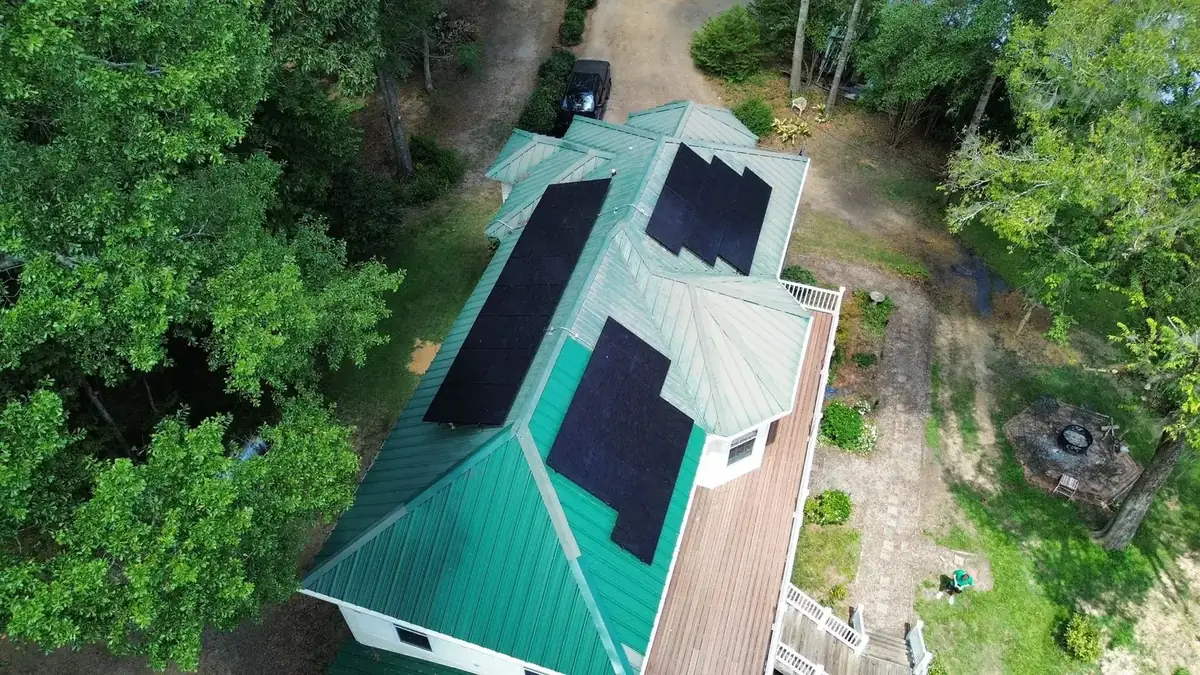 ResidentialMulti-facet metal roofWooded aerial view
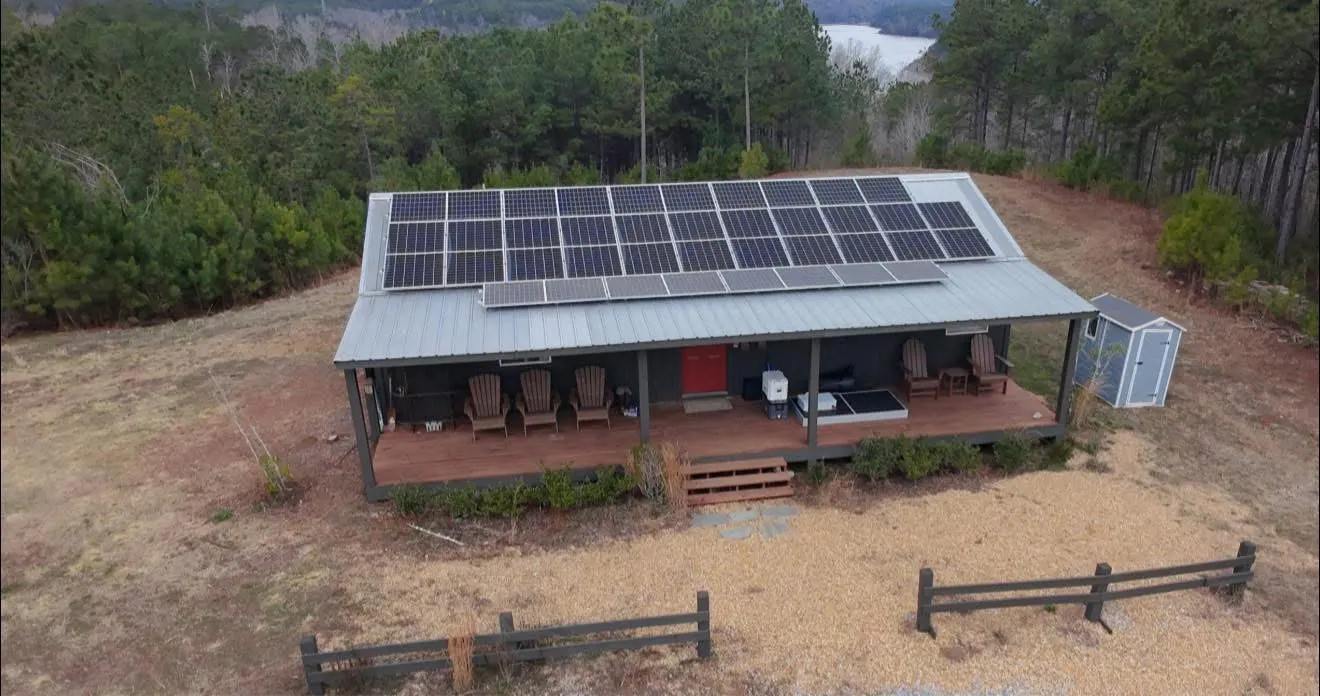 Off-GridCabin porch viewFull-slope roof array
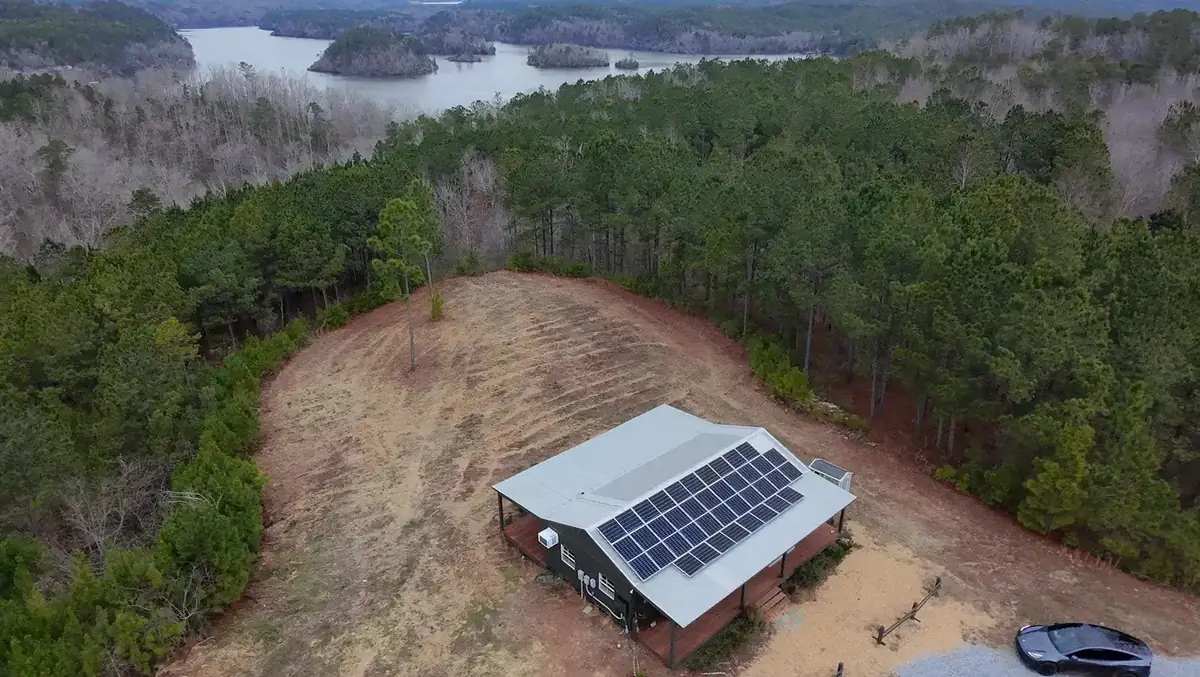 Off-GridOff-grid lake cabinGround-tilt metal roof array
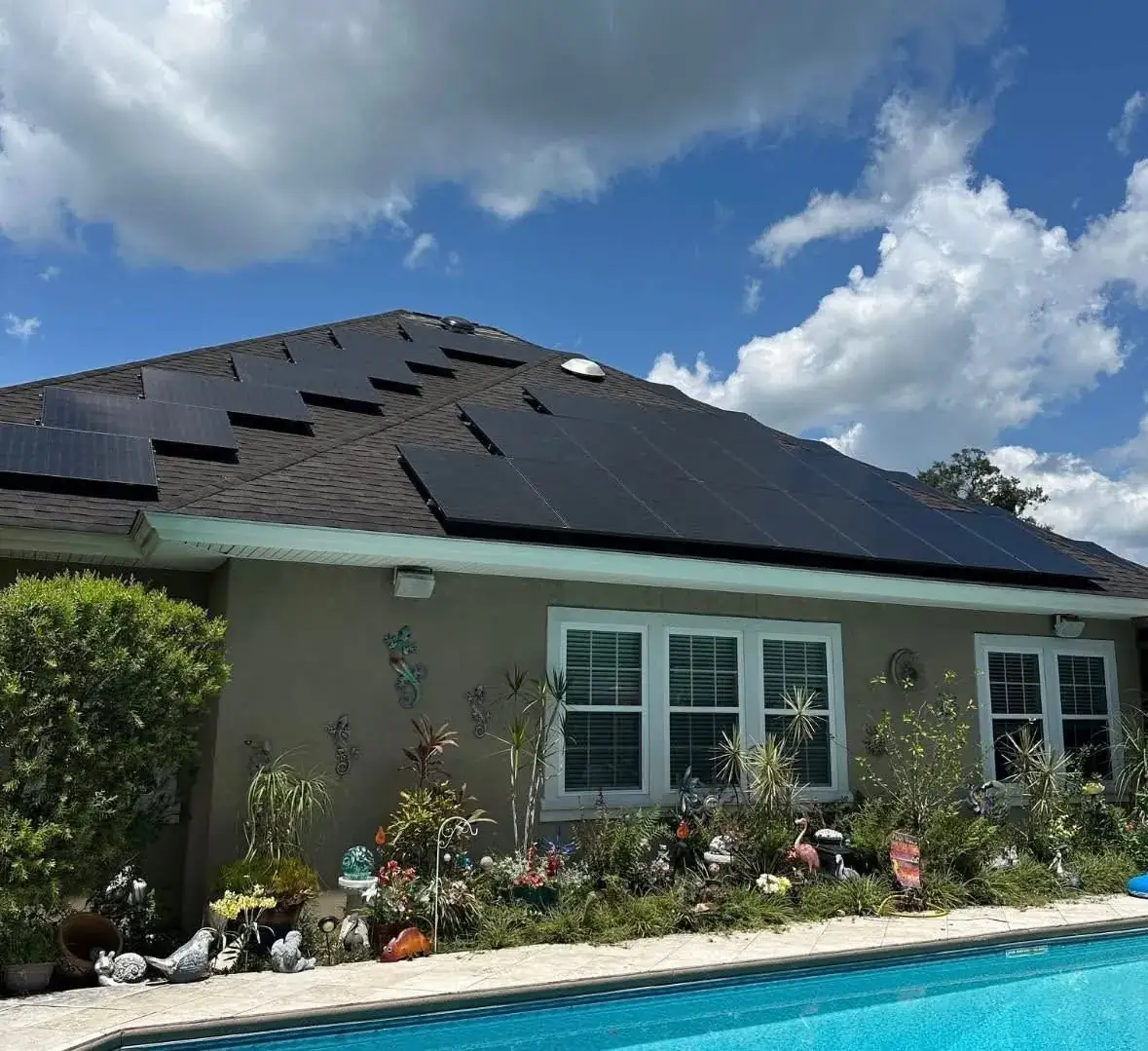 ResidentialFull black-on-blackPoolside single-story home
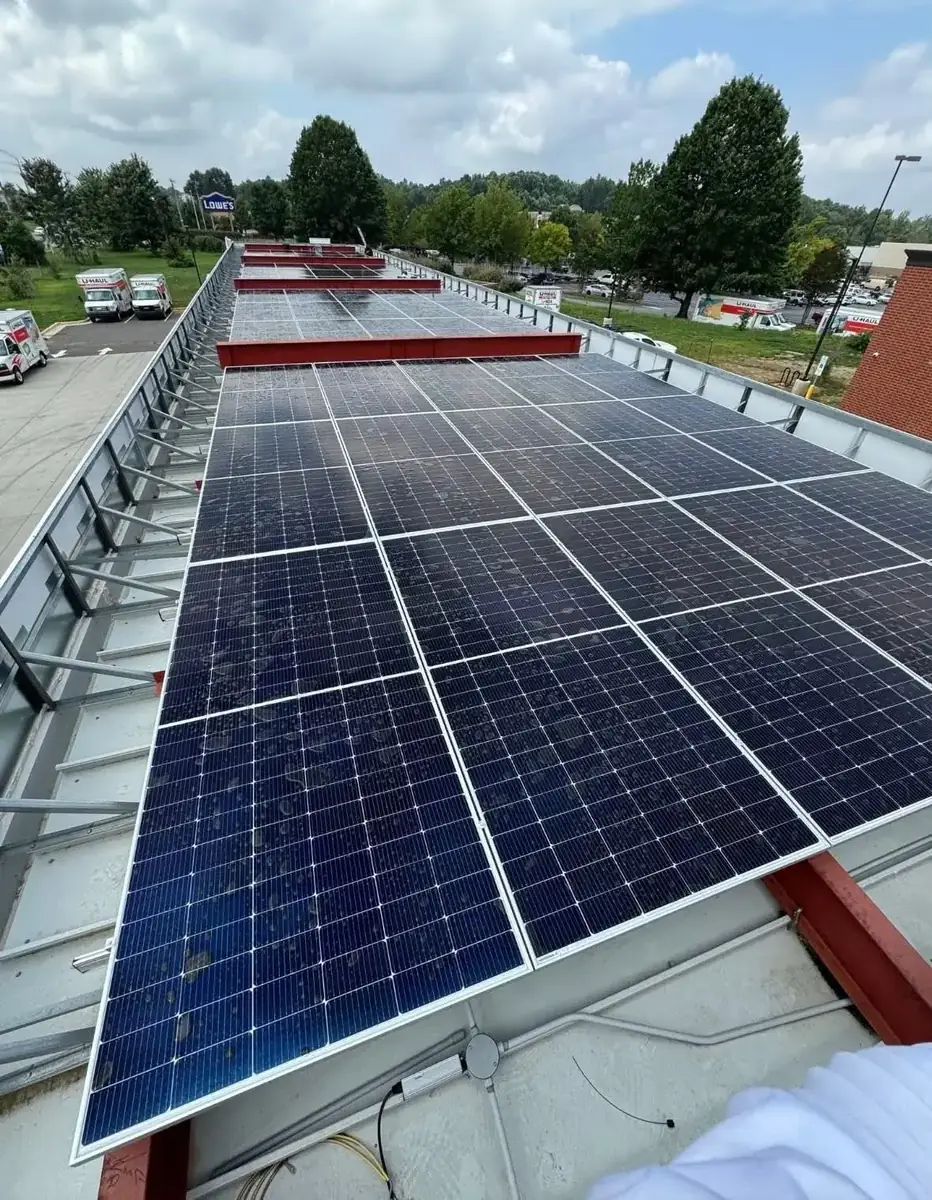 CommercialCommercial rooftopTilt-mounted rooftop system
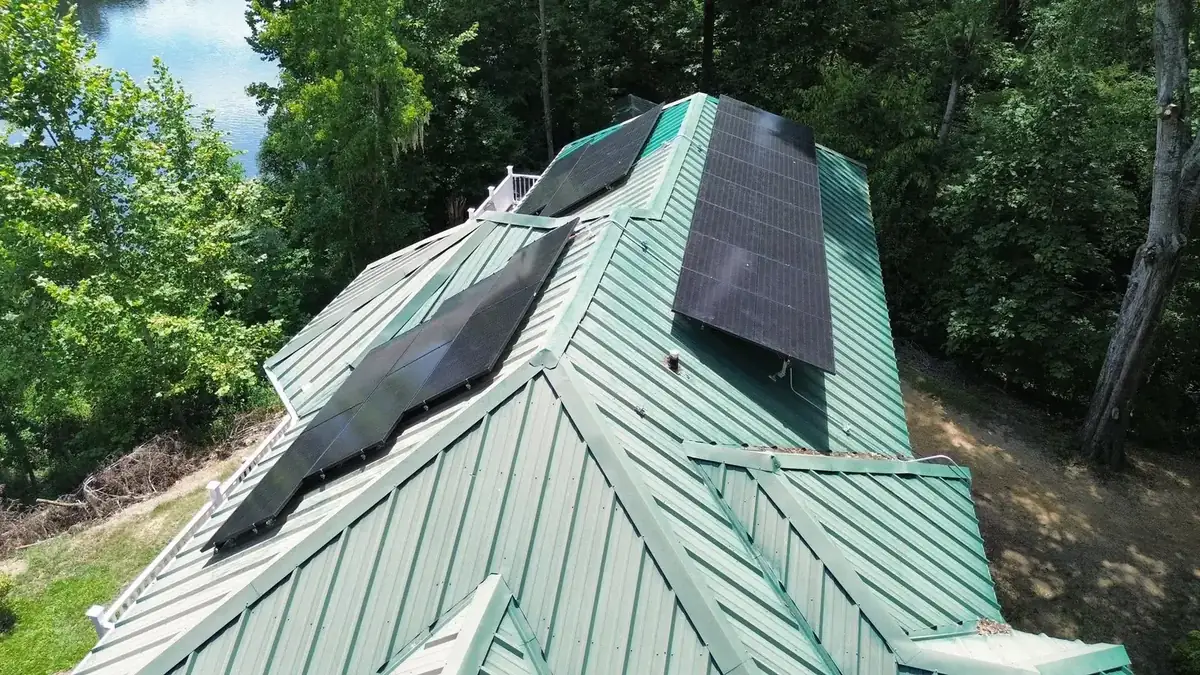 ResidentialStanding-seam metal roofLakeside multi-facet install
Photo locations are not published at customer level. Where a customer has agreed to it, we name the job and the market on the completed-job records above.
Not sure it is actually broken?
A lower winter bill is usually the season, not a fault. Four questions will tell you whether what you are seeing looks like a stopped system or a normal December, before you book anything.
Free assessment · Charleston, SC
Get a straight answer for your Charleston roof
We read your bill, confirm your Dominion Energy South Carolina export terms, and tell you what your roof in Charleston County will actually carry. If solar does not make sense at your address, we will say so, and that answer is free too.
- We confirm whether Dominion Energy South Carolina or Berkeley Electric Cooperative and Santee Cooper serve some addresses serves your meter before we quote anything
- Permitting runs through A building permit and a separate electrical permit for a rooftop system, and we handle it
- Charleston's historic districts and Board of Architectural Review can restrict panel placement and street visibility, and many neighbourhoods also have active HOAs.
Prefer to talk? (843) 310-1128
Charleston solar repair FAQ
Repair questions from Charleston homeowners
My solar installer went out of business. Can you service my Charleston system?
Often yes. We diagnose systems we did not install, and this is one of the most common calls we get in South Carolina. What we cannot do is honour another company's workmanship warranty, and we will be straight with you about which parts of your original coverage survive. Your panel and inverter manufacturer warranties usually do, and they transfer with the equipment rather than the installer.
Why has my solar production dropped?
The common causes, roughly in order: an inverter fault or end of service life, a tripped breaker or disconnected string, shading from vegetation that has grown, soiling, a failed optimiser or microinverter on one or more panels, or a monitoring fault where production is fine but reporting is not. A diagnostic visit distinguishes these. Several are inexpensive fixes.
Do I need to remove my panels to replace my roof in Charleston?
Yes, panels have to come off and go back on, and it is worth planning as one project rather than two. We remove and store the array, coordinate with the roofing work, then reinstall and recommission with fresh flashing and roof-penetration detail. Doing it as a single sequence avoids paying twice for scaffolding and avoids gaps in who is responsible for the roof.
Can you repair panels damaged in a storm?
We assess storm damage and document it for an insurance claim, which matters on the coast. Individual panels can usually be replaced, though matching a discontinued model sometimes means replacing a string. Micro-cracks are not always visible from the ground, so we test electrically rather than judging by eye.
Is it worth repairing an older system or replacing it?
It depends on the fault and the age. An inverter replacement on a healthy ten-year-old array is usually worth it. Widespread panel degradation or a system that was undersized to begin with can favour replacement. We will give you the honest comparison including what Dominion Energy South Carolina's current Solar Choice terms mean for a new interconnection, because that has changed since your system was installed.
Do you charge for a diagnostic in Charleston?
The initial assessment is free and there is no obligation. If the fix is straightforward we will tell you what it is. If it needs parts or significant labour we will quote it before doing the work, and if the honest answer is that repair is not economic we will say that too.
Nearby
Solar panel repair near Charleston
Keep reading
Service and repair guides
- Home & Roof
Roof Replacement and Solar Cost: Compare Complete Contract Scope
Compare roof replacement and solar cost by roofing, equipment, electrical work, financing and warranty handoffs, including Georgia contract scope checks.
27 min read - Service & Repair
Solar Inverter Replacement Cost in South Carolina
Learn what drives solar inverter replacement cost in South Carolina, how to verify the fault, compare quote scope, and protect warranties and monitoring.
25 min read - Service & Repair
Solar Maintenance Cost in South Carolina
Plan solar maintenance cost in South Carolina by separating monitoring, cleaning, diagnostics, repairs, warranties, roof work, and quote scope.
26 min read - Home & Roof
Solar Panel Removal and Reinstallation for Roof Work
Compare solar panel removal and reinstall cost by scope, storage, roof coordination, component reuse, permits, warranties, and acceptance testing.
28 min read - Home & Roof
Can Your Roof Structurally Support Solar Panels?
Learn what structural evidence a South Carolina solar proposal should provide for roof framing, loads, attachments, calculations, reinforcement, and closeout.
20 min read - Service & Repair
Solar System Not Producing Enough? What to Check
Diagnose solar underproduction safely by comparing the right evidence, separating monitoring from generation, and contacting the correct provider.
29 min read
Free, no-pressure diagnostic
Find out what is actually wrong with your Charleston system
Tell us what you are seeing and we will diagnose it, including systems we did not install. If the fix is cheap we will say so, and if repair is not economic we will tell you that instead.
Mon–Sat, 10am–6:30pm ET · We typically follow up within the hour.