


Most addresses
Dominion Energy Virginia
- Average home rate (2024)
- 14.09¢/kWh
- Paid for exported solar
- credited one-for-one at retail against your own annual usage
- Net-metered home solar, utility-wide
- 53,368
Commercial solar · Leesburg, VA
Commercial solar in Leesburg is sized to daytime load: a business on Dominion Energy at an average 14.1¢ per kWh uses most of its output on site, which is where the value is.
Why the numbers favour business · as of August 2026
Dominion Energy Virginia credits exported power at credited one-for-one at retail against your own annual usage against the applicable residential retail rate, confirmed against your own bill rate, so the value sits in consuming your own production. A Leesburg business that runs through daylight hours self-consumes most of what it generates, which is exactly what the current net energy metering under §56-594 structure rewards. That is a structural advantage over a typical home.
Looking for a solar company in Leesburg? See solar companies in Leesburg: our local team, costs and a free assessment.
Free roof and bill assessment
Takes under a minute. No pressure, and no guaranteed-savings math.
Local commercial reality
Leesburg commercial work divides the way the residential side does. The historic core has older buildings where the roof and the structure are the constraint before the electrics are, and street-visible equipment brings the district into the conversation. Out from the centre the stock is modern low-slope where the service is the limit.
Virginia caps non-residential net metering at 100 kW, and that ceiling rather than roof area usually shapes the design here. Below it the economics are unusually clean, because retail crediting means a building does not need to consume its own production to capture its value.
Written for Leesburg specifically.
How we work
We start from interval data and the Dominion Energy tariff, then check roof structure and service capacity before quoting a size.
How we scope a building
Your Dominion Energy Virginia interval data and tariff, read before anything is sized.
Low-slope membrane, standing-seam metal or ballasted, plus service capacity and switchgear. Inland Mid-Atlantic, no salt exposure, snow loading a real input. Older properties near the centre want a structural check before design rather than after.
Building and electrical permits with plan review, structural sign-off, and Dominion Energy Virginia interconnection.
Sequenced around your operations, then Loudoun County inspection and monitoring handover.
Commercial systems carry our lifetime full-system and roof-penetration warranty alongside manufacturer coverage, so one contractor stands behind the roof and the array.
Leesburg specifics
The constraints that actually shape a Leesburg commercial design.
Inland Mid-Atlantic, no salt exposure, snow loading a real input. Older properties near the centre want a structural check before design rather than after.
Dominion Energy Virginia approval precedes energising, and the queue rather than the install usually sets your date.
Leesburg is an incorporated town issuing its own permits inside its limits, with Loudoun County handling everything outside them, so the jurisdiction is worth confirming from the parcel. The town also has a historic district around its core where exterior changes visible from the street get more scrutiny than they would elsewhere in the county. Loudoun County has adopted a solar equipment tax exemption, and the terms are worth knowing before you apply: the amount and duration are tied to the system’s nameplate capacity in DC watts, the equipment must be certified by the county as used primarily for collecting or generating energy, and the county will not process an application until the system is operating and has passed all required permits. Under SB 504 a Virginia association may impose only reasonable restrictions on rooftop solar, unreasonable being a cost increase above 5% or a generation loss above 10%.
Tax
We build and document a Leesburg system for your CPA; Virginia commercial tax treatment depends on your entity, so it is theirs to call.
Permits and approvals
6 approvals for a Leesburg system. We file every one.
Standing monthly charge:about $1 a month for customers connecting under NEM 2.0, included in our payback figures.
Local factors
The historic core carries mature canopy on tight lots; the newer development out from the town centre is substantially more open.
Leesburg is an incorporated town issuing its own permits inside its limits, with Loudoun County handling everything outside them, so the jurisdiction is worth confirming from the parcel. The town also has a historic district around its core where exterior changes visible from the street get more scrutiny than they would elsewhere in the county. Loudoun County has adopted a solar equipment tax exemption, and the terms are worth knowing before you apply: the amount and duration are tied to the system’s nameplate capacity in DC watts, the equipment must be certified by the county as used primarily for collecting or generating energy, and the county will not process an application until the system is operating and has passed all required permits. Under SB 504 a Virginia association may impose only reasonable restrictions on rooftop solar, unreasonable being a cost increase above 5% or a generation loss above 10%.
Four genuine seasons, with summer cooling peaks aligned to peak production and lower winter output. Retail net metering smooths that across the year in a way an export-credit state cannot, which is the main reason a Loudoun system behaves better than its latitude suggests.
Your utility decides payback
Dominion Energy Virginia and NOVEC split Leesburg street by street. We read yours off your bill first.
Most addresses
Some addresses
For comparison: Virginia average 14.41¢ · U.S. average 16.48¢. Virginia had 69,553 net-metered home solar systems at the end of 2024.
Rates: US EIA Form EIA-861, 2024 averages incl. fixed charges, not tariffs. Export terms as of August 2026.
Leesburg sun, month by month
About 11,600 kWh a year from a south-facing roof with no shade. July is the strongest month at about 1,226 kWh and December the weakest at about 593 kWh.
Your roof will differ. The historic core carries mature canopy on tight lots; the newer development out from the town centre is substantially more open.
Estimate: NASA POWER sun data for Leesburg, PVWatts model, south-facing, no shade.
Our work
Our own job photos, not stock or renders. Inland Mid-Atlantic, no salt exposure, snow loading a real input.
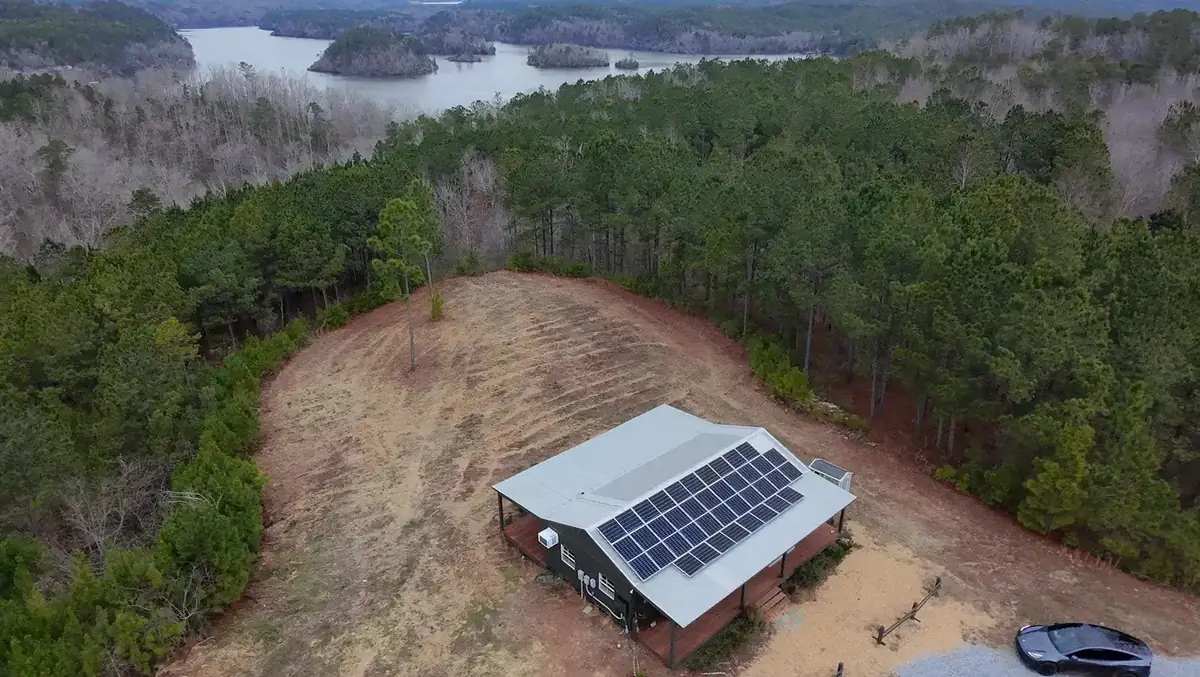
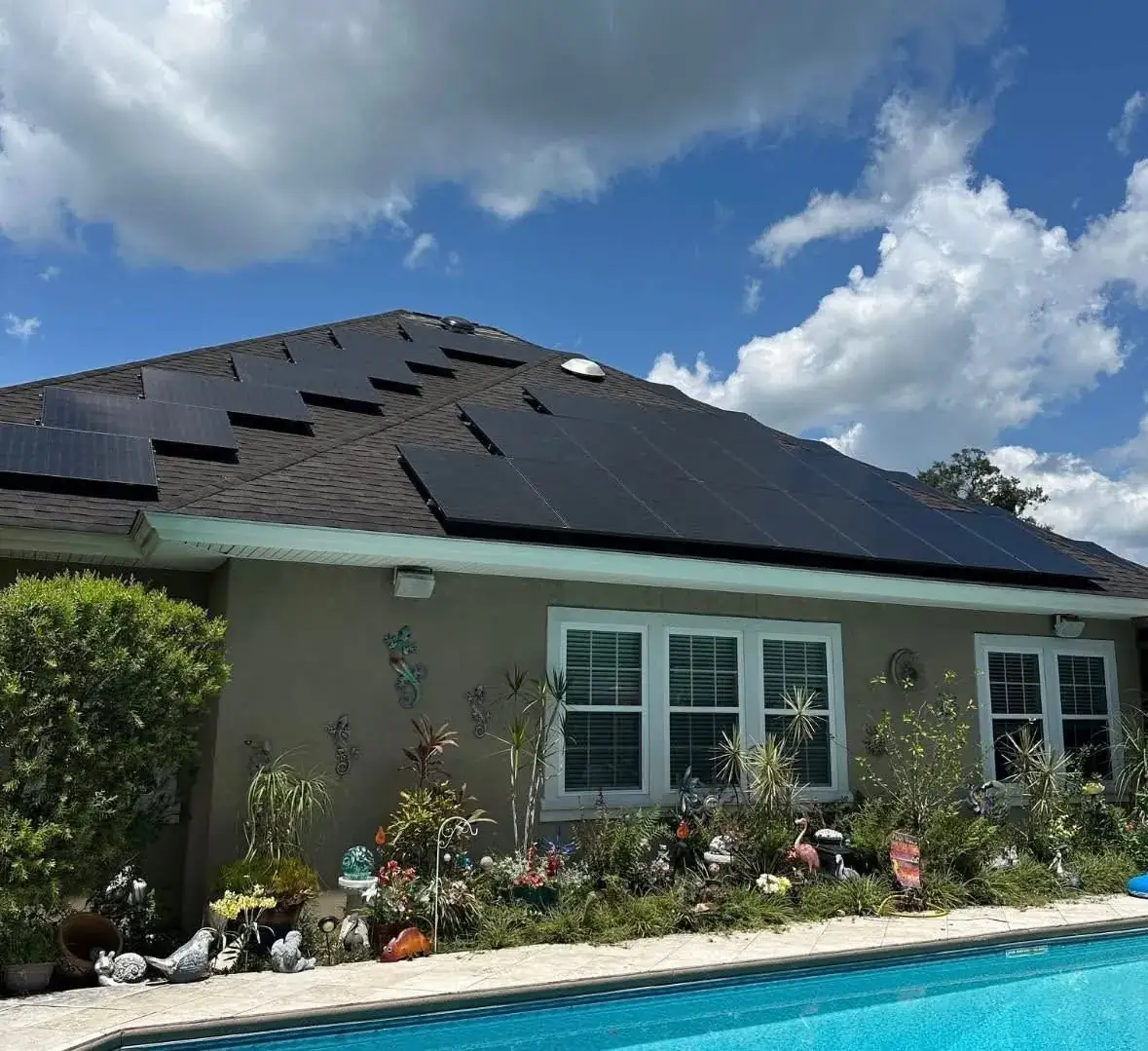
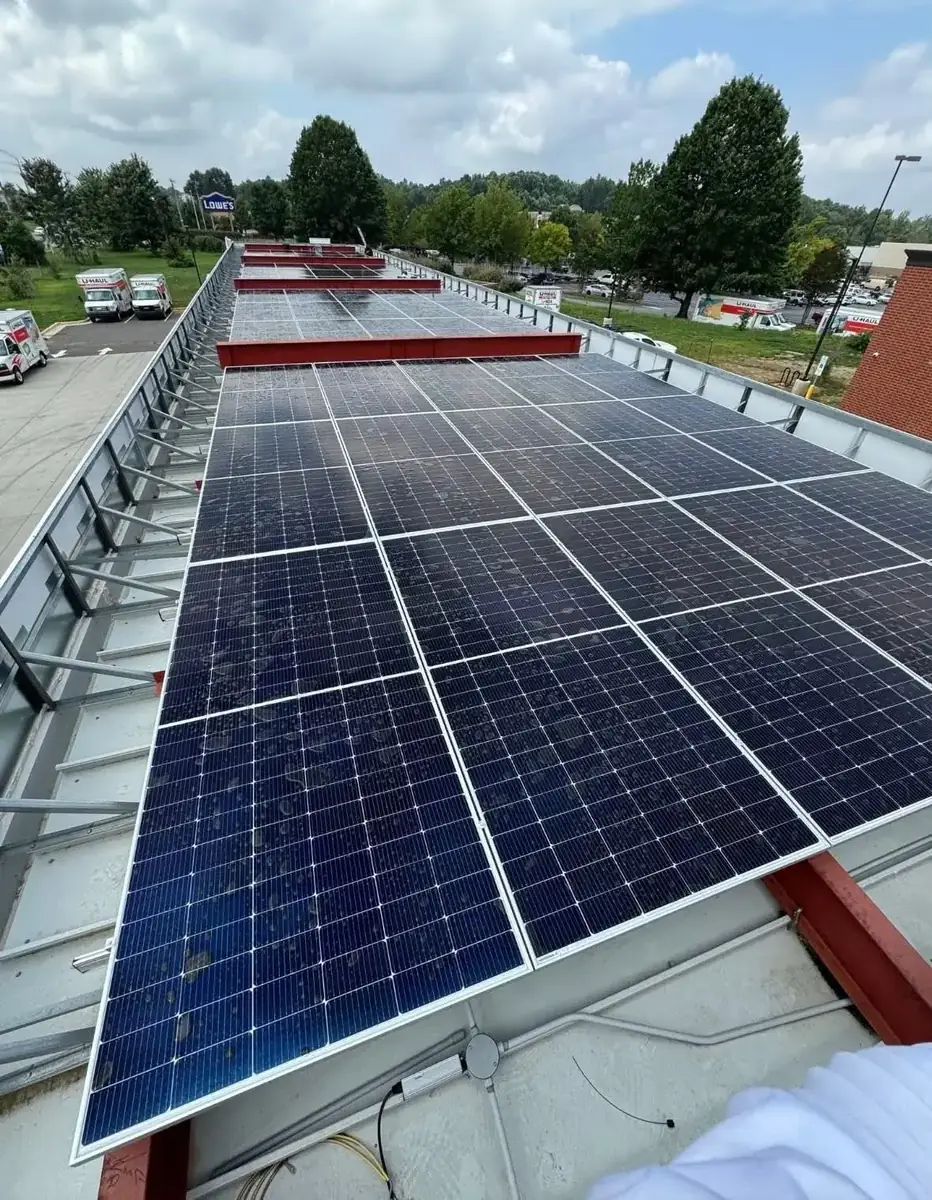
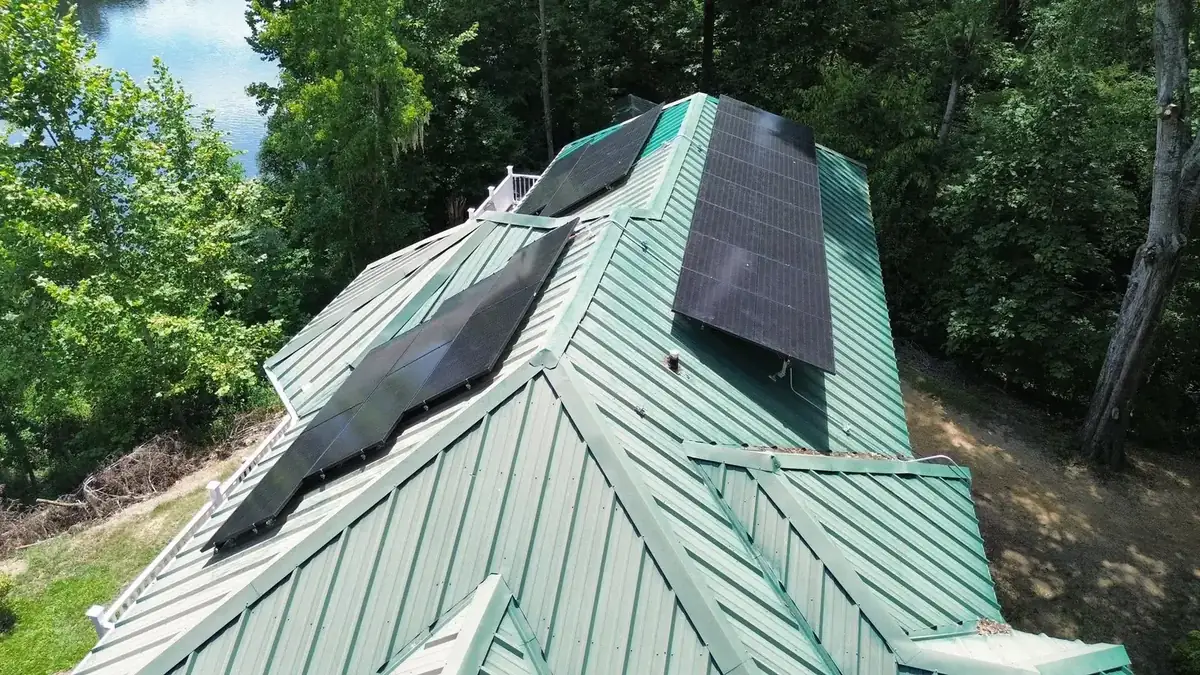
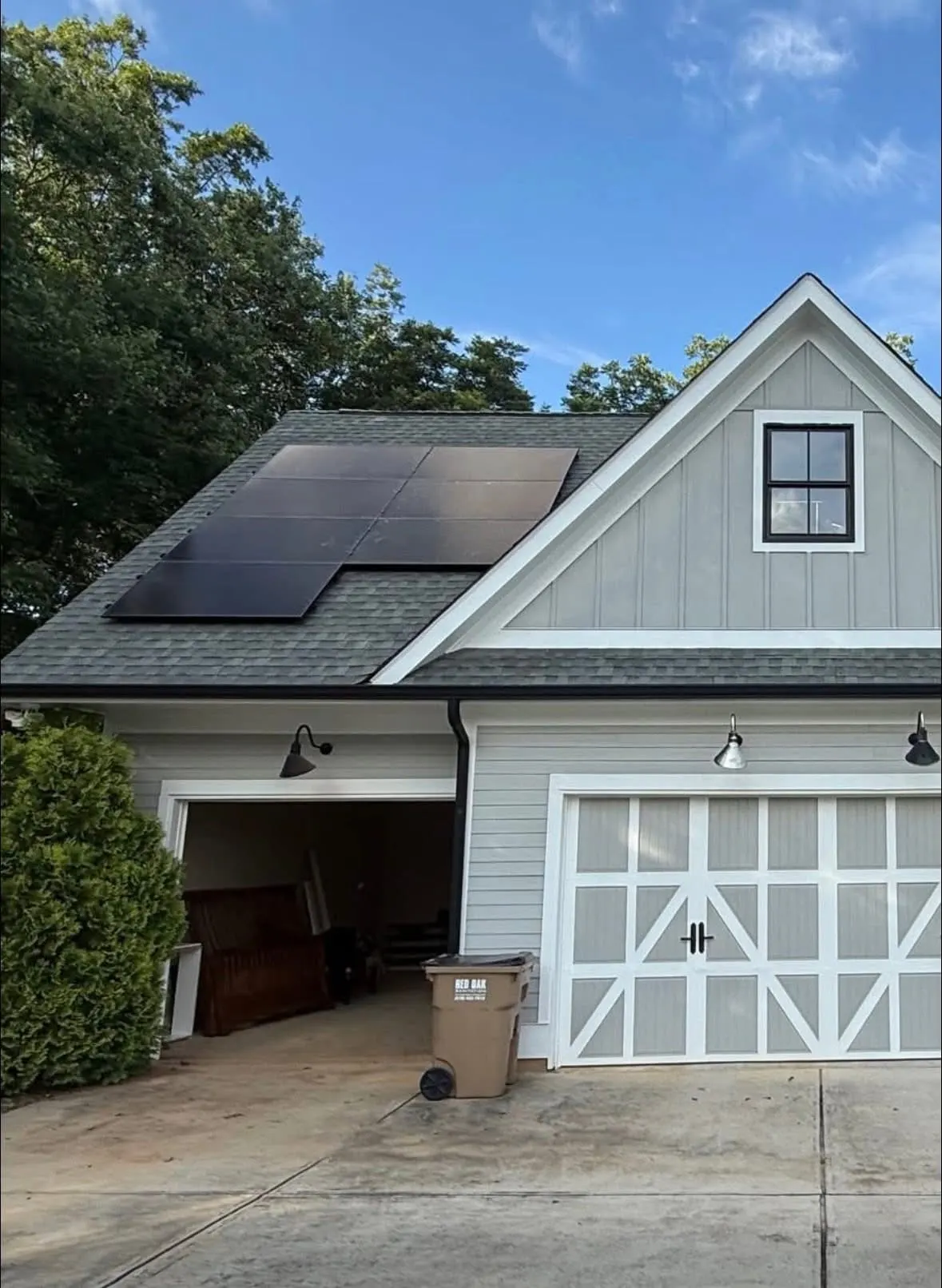
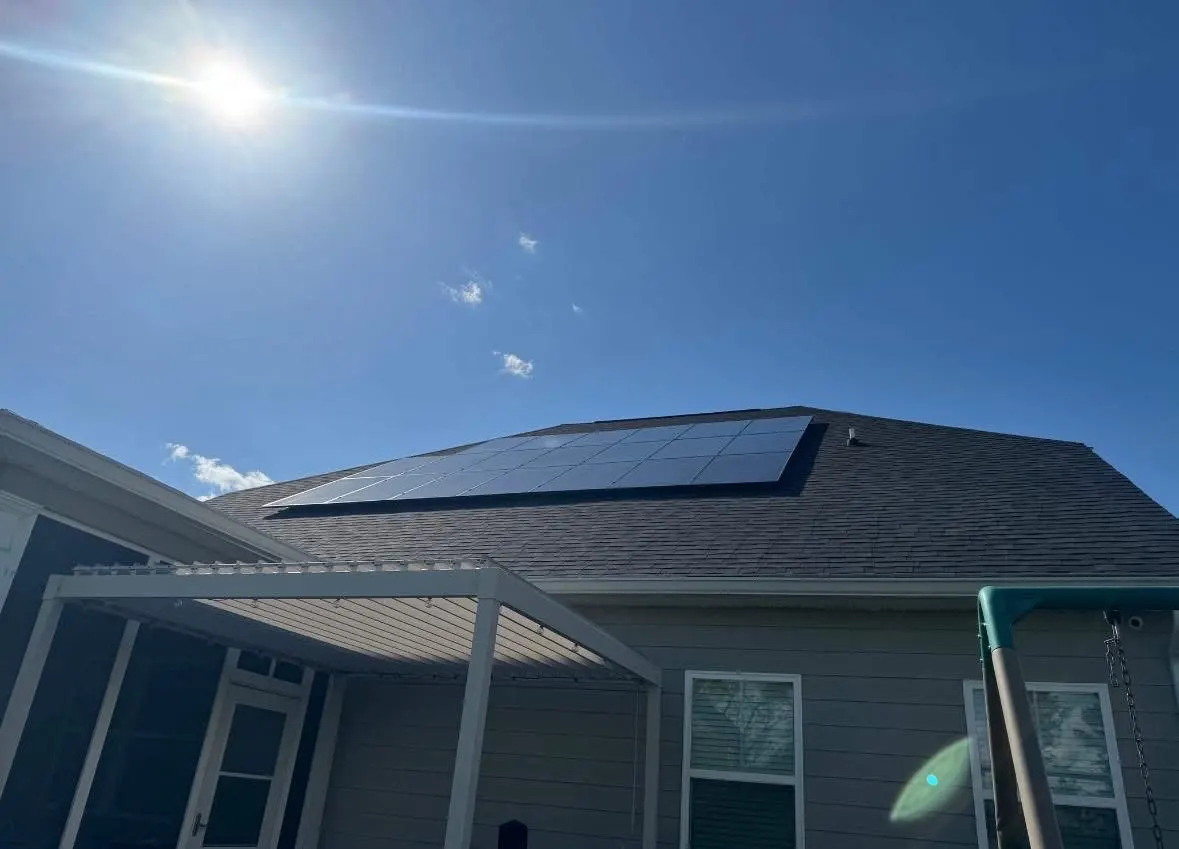
Photo locations are not published.
Free assessment · Leesburg, VA
We read your bill, confirm your Dominion Energy Virginia export terms, and tell you what your roof in Loudoun County will actually carry, and say so if it will not pay.
Prefer to talk? (843) 310-1128
Leesburg commercial solar FAQ
Often yes, for a structural reason. Dominion Energy Virginia credits exported power at credited one-for-one at retail against your own annual usage against the applicable residential retail rate, confirmed against your own bill, so the value is in consuming your own production. A business that operates through daylight hours self-consumes most of what it generates, which is precisely what the current net energy metering under §56-594 structure rewards.
A building permit and an electrical permit, with standard plan review for systems of roughly 10 kW and above, which covers essentially all commercial work. Inland Mid-Atlantic, no salt exposure, snow loading a real input. Older properties near the centre want a structural check before design rather than after. Dominion Energy Virginia interconnection approval is required before energising.
It is sized to the building's daytime load rather than to the roof. Each kW here makes about 1,221 kWh a year unshaded, so a 50 kW array makes roughly 61,100 kWh. Dominion Energy households paid about 14.1¢ per kWh on average in 2024.
Yes. A building permit and a separate electrical permit from the Town of Leesburg inside town limits, or from Loudoun County outside them; An interconnection application to whichever utility serves your meter, Dominion Energy Virginia or NOVEC, on that utility’s own forms. We pull all of it through Loudoun County.
Dominion Energy households paid about 14.1¢ per kWh on average in 2024. A 100 kW array in Leesburg makes roughly 122,000 kWh a year; the share used on site is worth the retail rate, exports earn credited one-for-one at retail against your own annual usage.
Nearby
Free, no-pressure assessment
We will read your interval data and tariff, review your roof structure and service capacity, and give you an honest scope, with no guaranteed-savings math.
Mon–Sat, 10am–6:30pm ET · We typically follow up within the hour.