


Most addresses
Dominion Energy South Carolina
- Average home rate (2024)
- 14.59¢/kWh
- Paid for exported solar
- about 2.8–4.1¢ per kWh
- Net-metered home solar, utility-wide
- 16,090
Commercial solar · North Augusta, SC
Commercial solar in North Augusta is sized to daytime load: a business on Dominion Energy at an average 14.6¢ per kWh uses most of its output on site, which is where the value is.
Why the numbers favour business · as of July 2026
Dominion Energy South Carolina credits exported power at roughly 2.8–4.1¢ per kWh against about 14.4¢ per kWh rate, so the value sits in consuming your own production. A North Augusta business that runs through daylight hours self-consumes most of what it generates, which is exactly what the current Solar Choice structure rewards. That is a structural advantage over a typical home.
Looking for a solar company in North Augusta? See solar companies in North Augusta: our local team, costs and a free assessment.
Free roof and bill assessment
Takes under a minute. No pressure, and no guaranteed-savings math.
Local commercial reality
North Augusta commercial work benefits from something the surrounding county does not have, which is a single municipal authority handling planning, permitting and stormwater in one place. For a commercial roof that usually means a shorter and more predictable pre-construction phase than an equivalent building in the unincorporated county, where the review is split differently.
The building stock along the commercial corridors is largely modern low-slope roof, which is straightforward to design for. The constraint on those projects is normally the electrical service rather than the roof, so we start from the switchgear and the interval data rather than from a roof area calculation.
The utility question carries more weight commercially than residentially because the volumes are larger. A building on Aiken Electric Cooperative and one on Dominion Energy South Carolina should be modelled against different export terms and often different interconnection paths, and a business that peaks after dark converts its own production very differently from one that peaks at midday.
Written for North Augusta specifically.
How we work
We start from interval data and the Dominion Energy tariff, then check roof structure and service capacity before quoting a size.
How we scope a building
Your Dominion Energy South Carolina interval data and tariff, read before anything is sized.
Low-slope membrane, standing-seam metal or ballasted, plus service capacity and switchgear. Inland river bluff, so salt exposure is not a factor and wind loading is well below the coast. South Carolina structural requirements apply and are reviewed by the city rather than by a county.
Building and electrical permits with plan review, structural sign-off, and Dominion Energy South Carolina interconnection.
Sequenced around your operations, then Aiken County (city limits extend into Edgefield County) inspection and monitoring handover.
Commercial systems carry our lifetime full-system and roof-penetration warranty alongside manufacturer coverage, so one contractor stands behind the roof and the array.
North Augusta specifics
The constraints that actually shape a North Augusta commercial design.
Inland river bluff, so salt exposure is not a factor and wind loading is well below the coast. South Carolina structural requirements apply and are reviewed by the city rather than by a county.
Dominion Energy South Carolina approval precedes energising, and the queue rather than the install usually sets your date.
North Augusta runs its own planning and permitting from the Municipal Center on Georgia Avenue, separate from both Aiken County and Edgefield County. Many of the newer subdivisions carry HOA architectural guidelines, and we prepare that packet as part of the install.
Tax
We build and document a North Augusta system for your CPA; South Carolina commercial tax treatment depends on your entity, so it is theirs to call.
Permits and approvals
6 approvals for a North Augusta system. We file every one.
Standing monthly charge:about $14 a month, included in our payback figures.
Local factors
The older streets near the river carry mature canopy. The newer subdivisions further from the centre are largely open, and that difference decides more about production here than roof pitch does.
North Augusta runs its own planning and permitting from the Municipal Center on Georgia Avenue, separate from both Aiken County and Edgefield County. Many of the newer subdivisions carry HOA architectural guidelines, and we prepare that packet as part of the install.
CSRA summers run hot and long, so cooling load peaks in the same hours a roof produces hardest. Summer thunderstorm outages do occur.
Your utility decides payback
Dominion Energy South Carolina and Aiken Electric Cooperative split North Augusta street by street. We read yours off your bill first.
Most addresses
Some addresses
For comparison: South Carolina average 14.23¢ · U.S. average 16.48¢. South Carolina had 40,055 net-metered home solar systems at the end of 2024.
Rates: US EIA Form EIA-861, 2024 averages incl. fixed charges, not tariffs. Export terms as of July 2026.
North Augusta sun, month by month
About 13,780 kWh a year from a south-facing roof with no shade. May is the strongest month at about 1,315 kWh and December the weakest at about 866 kWh.
Your roof will differ. The older streets near the river carry mature canopy.
Estimate: NASA POWER sun data for North Augusta, PVWatts model, south-facing, no shade.
Our work
Our own job photos, not stock or renders. Inland river bluff, so salt exposure is not a factor and wind loading is well below the coast.
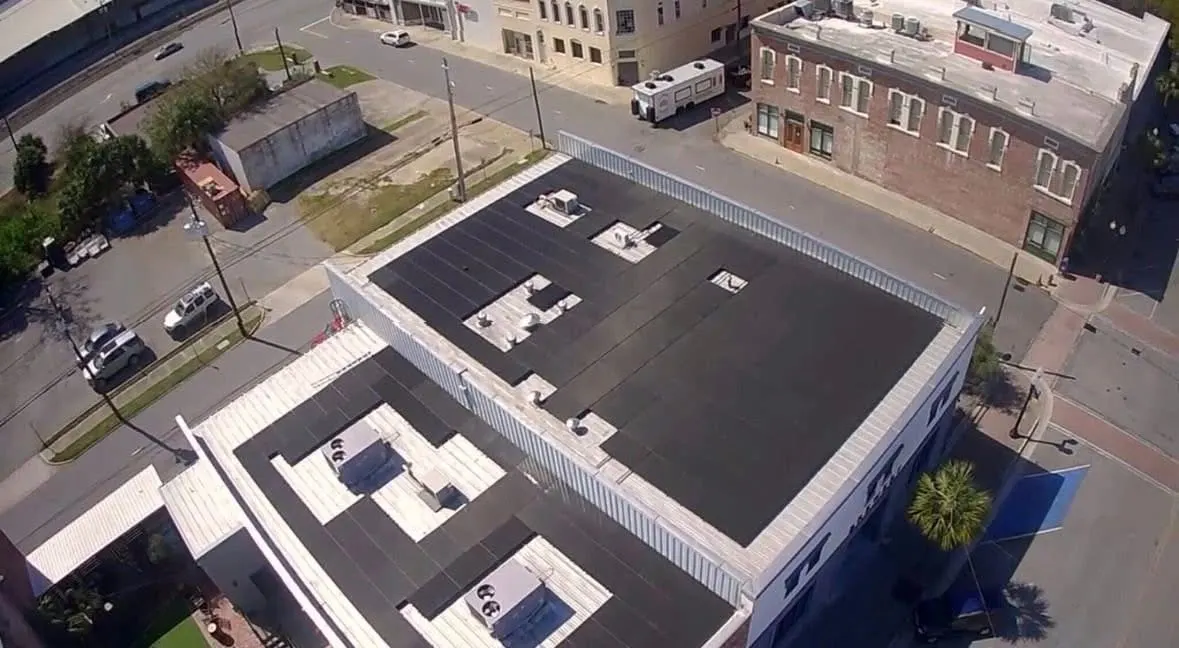
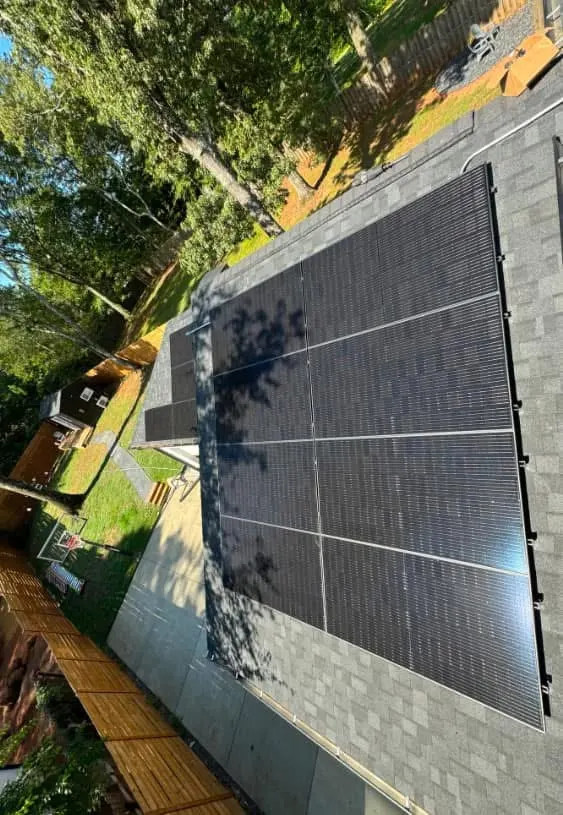
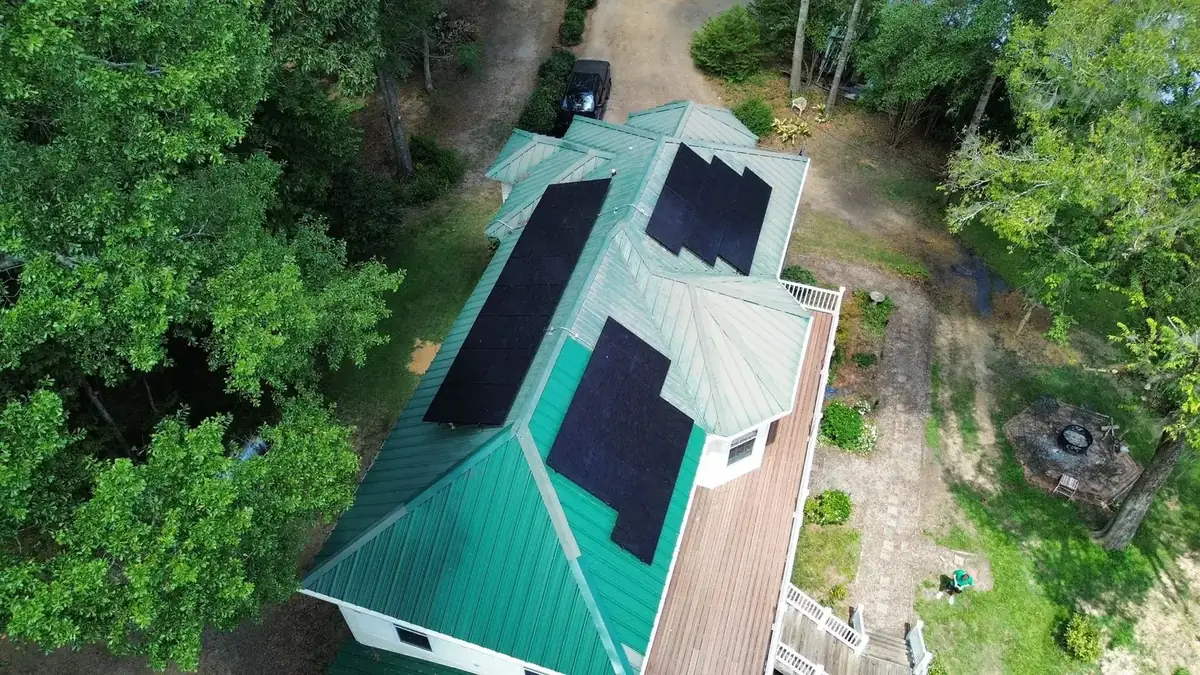
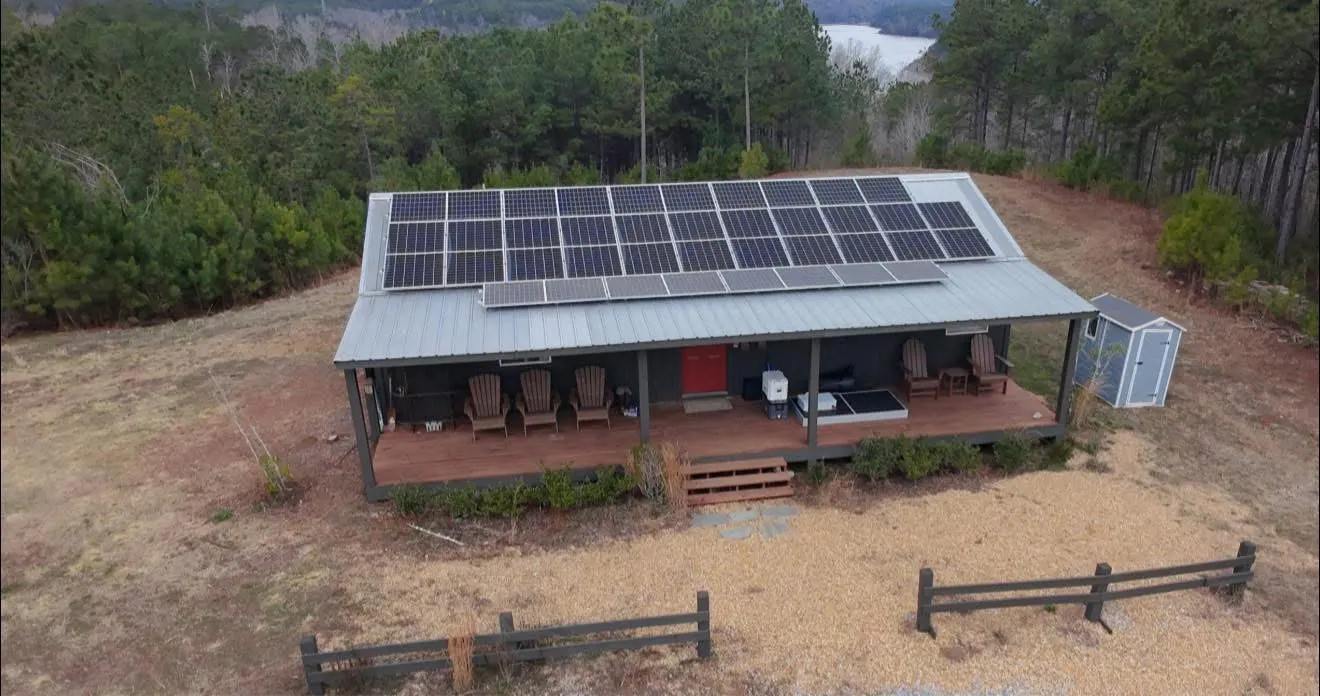
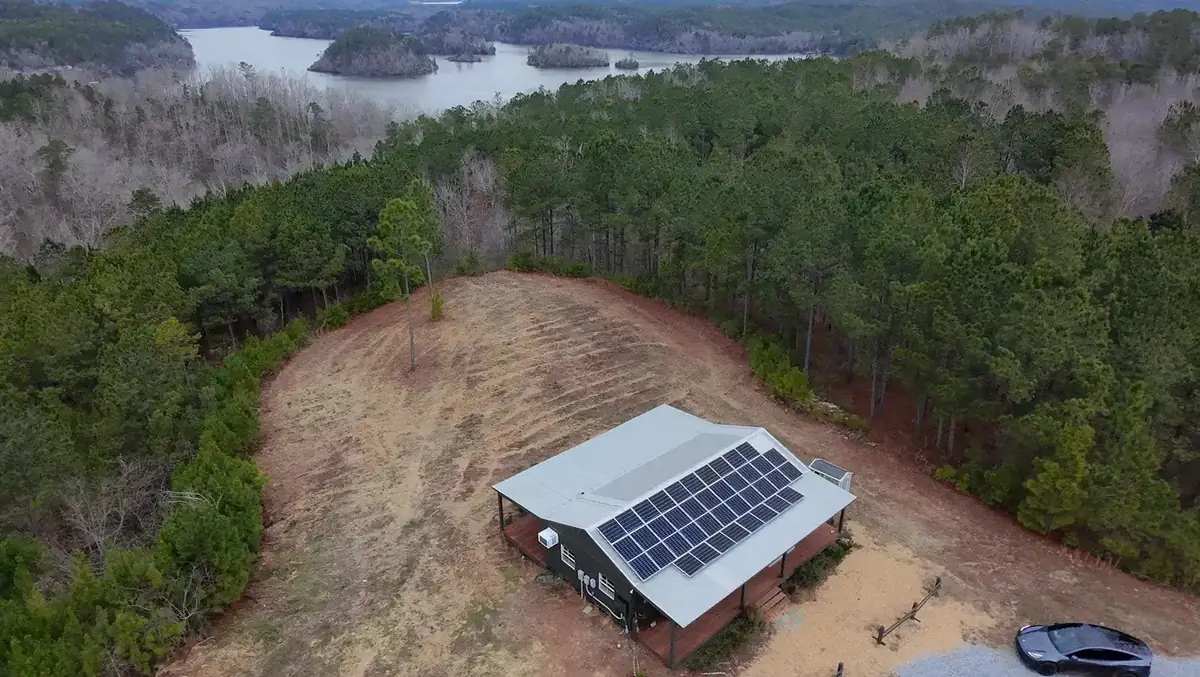
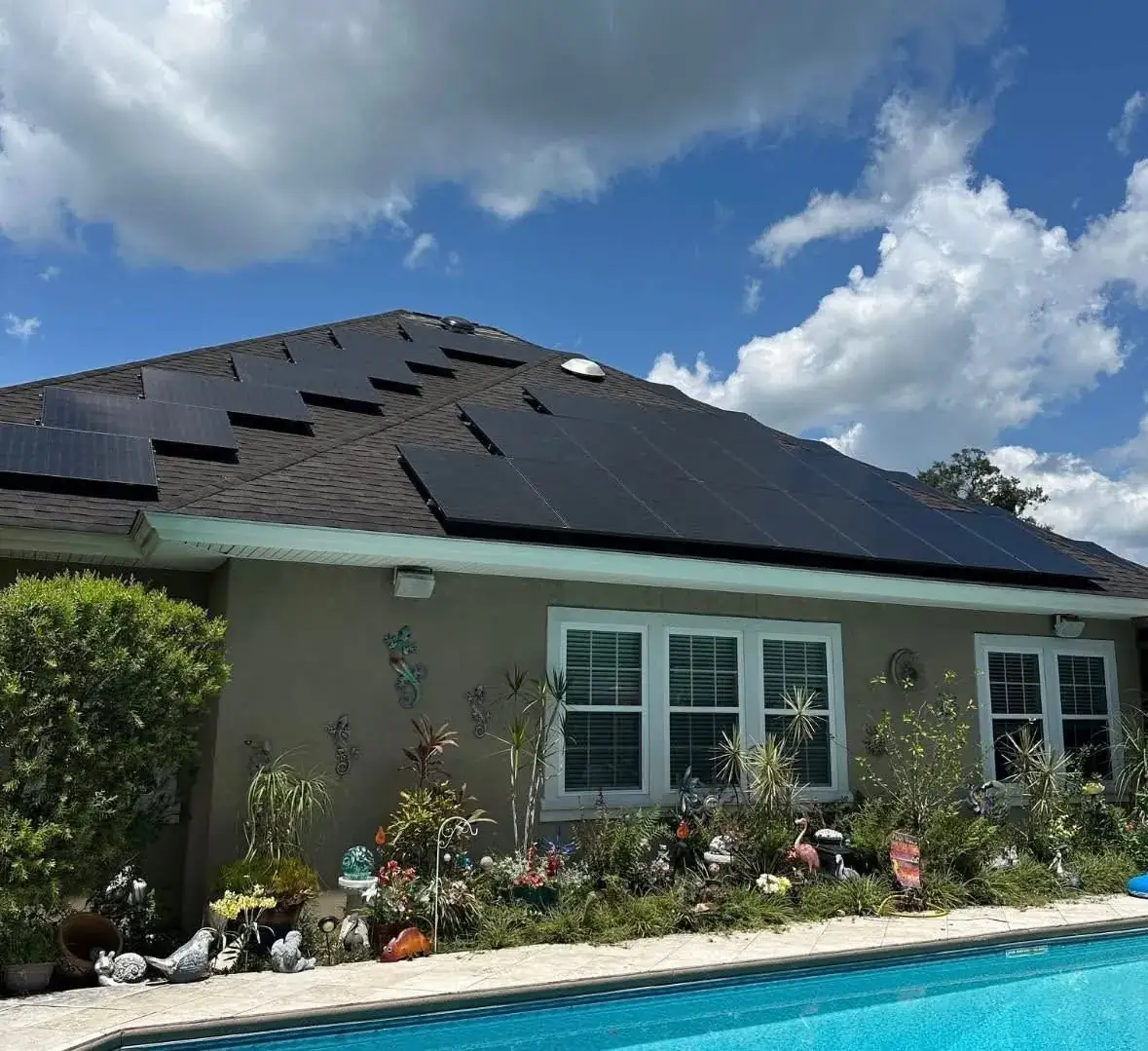
Photo locations are not published.
Free assessment · North Augusta, SC
We read your bill, confirm your Dominion Energy South Carolina export terms, and tell you what your roof in Aiken County (city limits extend into Edgefield County) will actually carry, and say so if it will not pay.
Prefer to talk? (843) 310-1128
North Augusta commercial solar FAQ
Often yes, for a structural reason. Dominion Energy South Carolina credits exported power at roughly 2.8–4.1¢ per kWh against about 14.4¢ per kWh, so the value is in consuming your own production. A business that operates through daylight hours self-consumes most of what it generates, which is precisely what the current Solar Choice structure rewards.
A building permit and an electrical permit, with standard plan review for systems of roughly 10 kW and above, which covers essentially all commercial work. Inland river bluff, so salt exposure is not a factor and wind loading is well below the coast. South Carolina structural requirements apply and are reviewed by the city rather than by a county. Dominion Energy South Carolina interconnection approval is required before energising.
It is sized to the building's daytime load rather than to the roof. Each kW here makes about 1,451 kWh a year unshaded, so a 50 kW array makes roughly 72,500 kWh. Dominion Energy households paid about 14.6¢ per kWh on average in 2024.
Yes. A building permit and a separate electrical permit for a rooftop system; Permits issued by the City of North Augusta itself, not by Aiken County or Edgefield County, for any address inside city limits. We pull all of it through Aiken County (city limits extend into Edgefield County).
Dominion Energy households paid about 14.6¢ per kWh on average in 2024. A 100 kW array in North Augusta makes roughly 145,000 kWh a year; the share used on site is worth the retail rate, exports earn about 2.8–4.1¢ per kWh.
Nearby
Keep reading
Build a commercial solar feasibility study that verifies site, load, utility, design, and approval evidence before your South Carolina project goes to bid.
23 min readCompare commercial solar proposals on one scope: parties, design, production, price, utility work, contract risk, warranties, and acceptance evidence.
21 min readAudit commercial solar ROI in South Carolina using interval loads, tariffs, production, lifecycle costs, tax timing, NPV, IRR, and sensitivity.
30 min readVerify commercial solar turnover with controlled as-builts, inspections, PTO, test records, monitoring, training, warranties, spares, and punch lists.
20 min readCompare commercial PV-only, storage-ready, and solar-plus-storage quotes using load, tariff, resilience, code, utility, and lifecycle evidence.
19 min readTrack South Carolina commercial solar from utility identification and application through studies, design changes, inspection, metering, and written PTO.
19 min readFree, no-pressure assessment
We will read your interval data and tariff, review your roof structure and service capacity, and give you an honest scope, with no guaranteed-savings math.
Mon–Sat, 10am–6:30pm ET · We typically follow up within the hour.