
2026 incentives · Sumter, SC
Solar incentives in Sumter, SC
Two things changed for Sumter in 2026: the 30% federal credit ended on December 31, 2025, and Duke Energy Progress moved new solar customers onto Duke's current residential solar rate structure. Here is what is actually left, and what it is worth on a real roof.
The short answer · as of July 2026
Sumter homeowners can claim South Carolina’s 25% state tax credit (Form TC-38), capped at $3,500 per tax year with a 10-year carry-forward, plus property-tax exemption on qualifying systems of 20 kW or less and sales-tax exemption on equipment. Duke Energy Progress credits exported power at roughly 2.6–4¢ per kWh under Duke's current residential solar rate structure. The 30% federal credit is no longer available.


Local incentive reality
The incentive picture in Sumter
In Sumter, Black River Electric Cooperative serves a significant number of addresses alongside Duke Energy Progress, and the cooperative sets its own terms. Confirm which serves your meter from the bill before comparing any savings figures. There is no local rebate we would build a projection on, and a quote that assumes one should be asked to name the programme and its current status.
The state incentives are the reliable ones and they do not vary by address: 25% of installed cost on Form TC-38 capped at $3,500 per tax year with carry-forward, property-tax exemption on qualifying systems of 20 kW and under, and sales-tax exemption on equipment. Sumter County administers the property-tax exemption. That stability is why the utility question, not the incentive question, is where your attention belongs.
One practical point for the many Sumter properties that are let rather than owner-occupied: the state income tax credit is only useful against a South Carolina tax liability, and the rules around a qualifying residence are not the same for a rental as for a home you live in. That is a question for an accountant before design rather than at filing, and it can change whether the project makes sense at all.
Written for Sumter specifically. Your own roof, bill and meter still decide the answer, which is what the free assessment settles.
Start here, it matters most
What Duke Energy Progress pays you for solar in Sumter
People search for incentives and mean tax credits. In Sumter the bigger lever is what your utility credits you for the power you send back, because that applies every month for 25 years rather than once at tax time.
| Item | Current position (July 2026) |
|---|---|
| Programme | Duke's current residential solar rate structure, which replaced one-for-one net metering for new residential systems from January 1, 2026 |
| Retail rate you avoid | your full retail rate for power you use as you generate it |
| Export credit | roughly 2.6–4¢ per kWh for power you send back, on a time-of-use basis |
| Monthly rider | None specific to this programme, though standard service charges still apply. |
| Annual true-up | Leftover credits settle each November at an avoided-cost rate |
| Upfront utility rebate | Duke's PowerPair solar-and-battery incentive closed to new applications in Progress territory in late 2025. Cooperatives set their own programmes, and some run none at all. We confirm what actually applies to your meter instead of listing programmes you may not qualify for. |
| Who confirms your territory | We do, at the assessment. In and around Sumter, Black River Electric Cooperative serves a significant number of addresses here, and terms differ. |
The practical consequence: a kilowatt-hour you use yourself is worth roughly three to five times a kilowatt-hour you export. That is why we size to your consumption rather than to your roof area, and why load shifting or storage now matters more in Sumter than it did two years ago.
Rebates
Why Sumter has no utility rebate, and who does
Duke's PowerPair solar-and-battery incentive closed to new applications in Progress territory in late 2025. Cooperatives set their own programmes, and some run none at all. We confirm what actually applies to your meter instead of listing programmes you may not qualify for.
Statewide rules
The parts that are the same everywhere in SC
Three incentives apply identically across South Carolina, so we explain them once rather than eighteen times. In short: a 25% state income tax credit on Form TC-38 capped at $3,500 per tax year with a 10-year carry-forward, property-tax exemption on qualifying systems of 20 kW or less, and sales-tax exemption on equipment. The 30% federal credit expired for systems placed in service on or after 1 January 2026.
The cap is the part that catches people out. Because you can only claim $3,500 a year, a system whose 25% credit is $6,000 arrives across two tax returns rather than as one payment, and low state tax liability stretches it further still.
Full mechanics, worked examples and the utility-by-utility comparison →
Eligibility depends on your circumstances and none of this is tax advice, so confirm with a tax professional. Property-tax treatment is administered locally, see Sumter County below.
Sumter County
What the exemption is worth in Sumter County
An eligible rooftop system of 20 kW or less should not increase your assessed value in Sumter County, so you are not paying annually for an improvement that is reducing your power bill.
The exemption's cash value scales with local millage, so it is worth more in higher-millage jurisdictions. We do not publish a millage figure for Sumter County without an auditor-current schedule on file, because a wrong number here is worse than no number. Your assessment walks through how the exemption works for your parcel instead.
The 20 kW threshold matters if you are considering a large system in Sumter. Sizing past it can cost you the exemption entirely, which is another reason right-sizing beats maximising, and another reason Duke Energy Progress's export rate of roughly 2.6–4¢ per kWh should shape the design.
Adding it up
What a Sumter homeowner actually nets in 2026
An illustrative stack on a 9.5 kW system at the local benchmark. An example to show the shape of it, not a quote and not a promise.
| Line | Amount |
|---|---|
| 9.5 kW system at $2.59 per watt | $24,605 |
| State sales tax | Exempt |
| Federal credit | $0, expired for 2026 installs |
| Duke Energy Progress rebate | See above |
| SC 25% credit (TC-38) | −$6,033, claimed across 2 tax years |
| Net cost | about $18,454 |
| Annual property tax added | $0 on qualifying systems ≤20 kW |
For what that net figure means as a payback period, and why the answer depends far more on when you use power than on which panels you buy, see solar panel cost in Sumter.
Businesses
Incentives for Sumter businesses
Commercial solar is treated differently from residential. Federal commercial provisions and depreciation treatment may still apply where the residential credit does not, and the structuring genuinely matters.
We are installers, not tax advisers, so we will not model your commercial position for you. What we will do is scope and build the system, document it properly for your accountant, and route the tax questions to your CPA rather than guess at them.
Commercial solar in Sumter · how we approach commercial projects
Permits and approvals
What approval takes in Sumter
This is the part most quotes leave vague, and it is the part that decides how long a job takes. Below is what a system at a Sumter address actually has to clear. We handle all of it, and you file none of it yourself, but you should know what you are agreeing to a timeline for.
- 01A building permit and a separate electrical permit for a rooftop system
- 02Standard plan review for systems of roughly 10 kW and above
- 03A zoning review as well for any ground-mounted array
- 04An additional electrical permit where battery storage is included
- 05Structural review under Sumter County requirements
- 06Interconnection approval from whichever utility serves your meter
Requirements are read from the authority that reviews your address, not assumed from the county. In SC that distinction is routinely the difference between a permit issued and a permit returned.
Our work
Real systems our crews have installed
Genuine job photos, not stock images and not renders. Every system here was designed, permitted and installed by our own crews, and the same crews cover Sumter.Well inland, so no salt exposure and moderate wind loading.
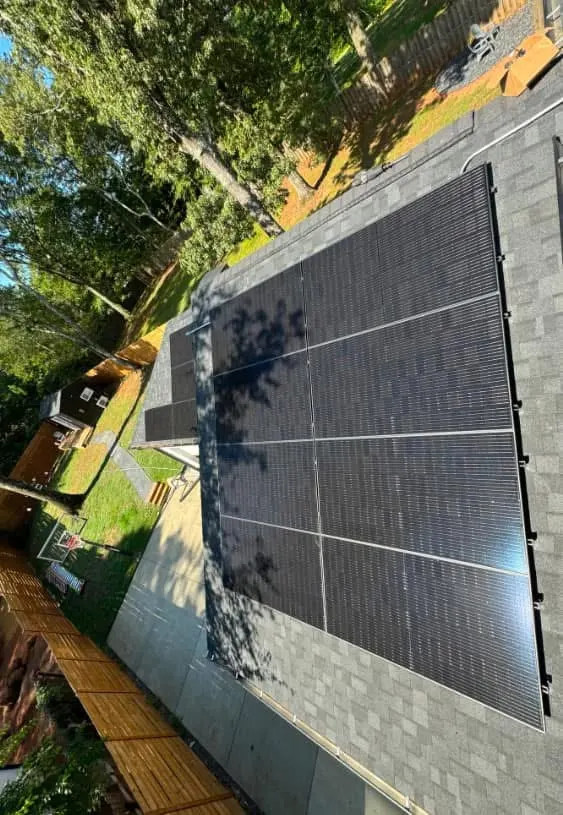 ResidentialClean rooftop layoutBlack-framed panels
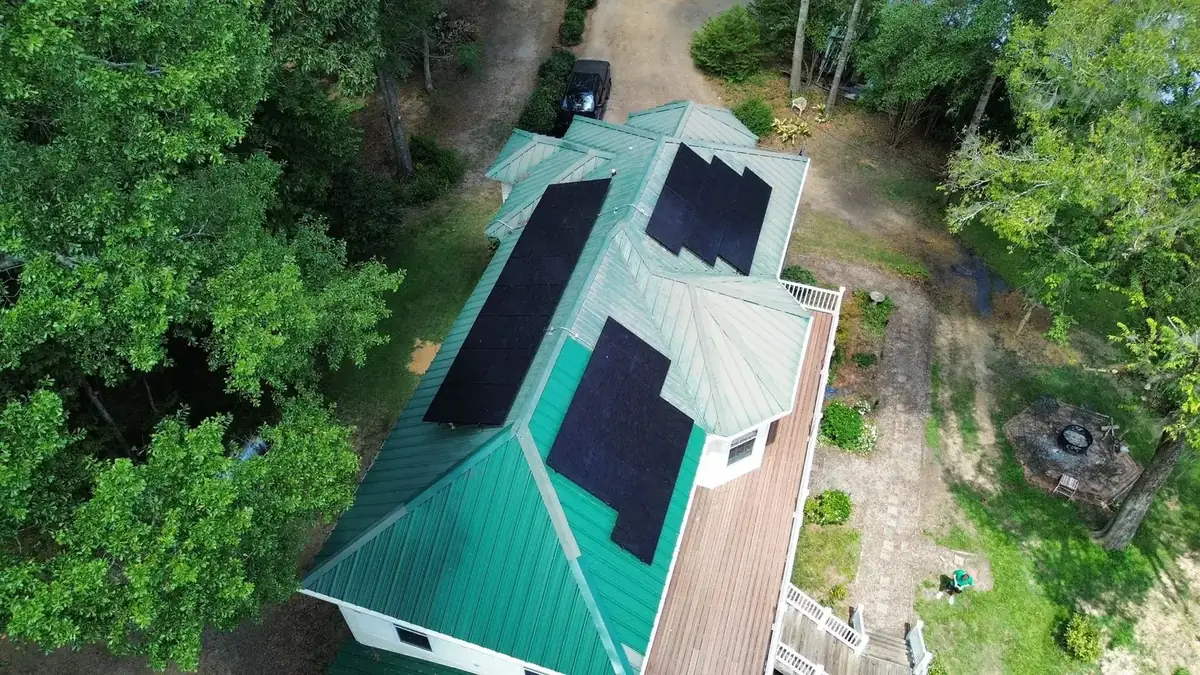 ResidentialMulti-facet metal roofWooded aerial view
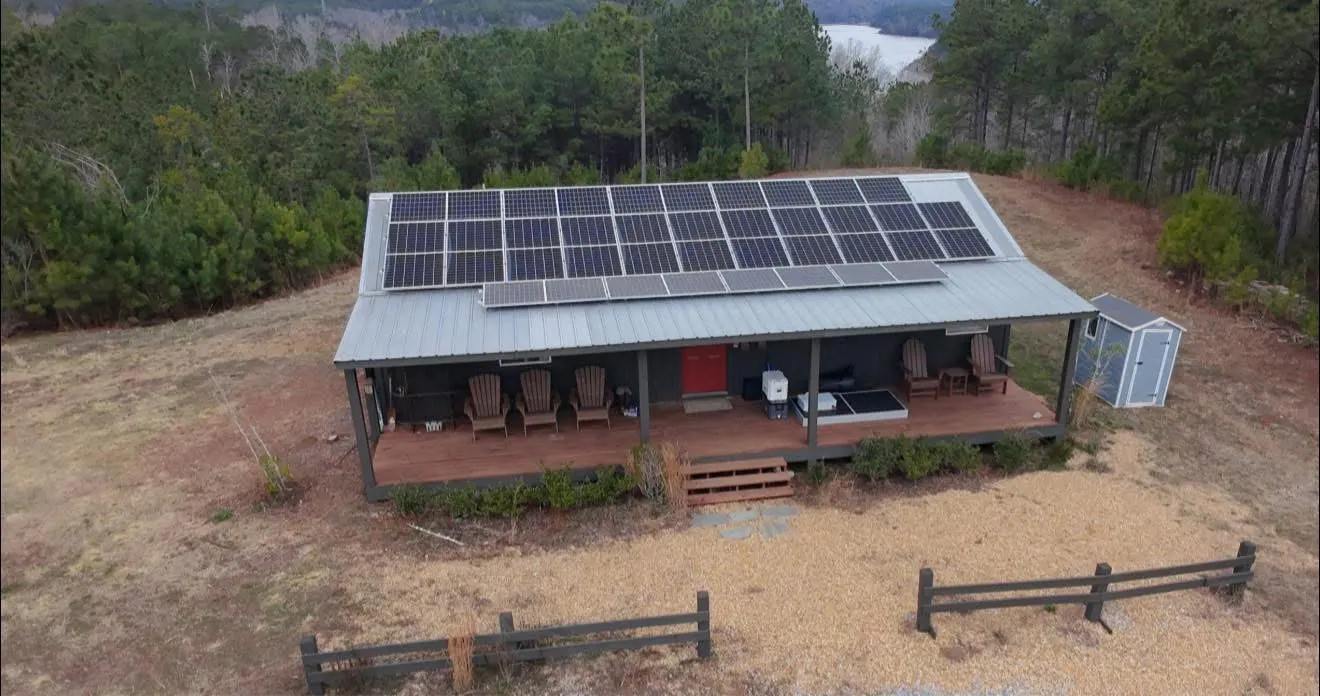 Off-GridCabin porch viewFull-slope roof array
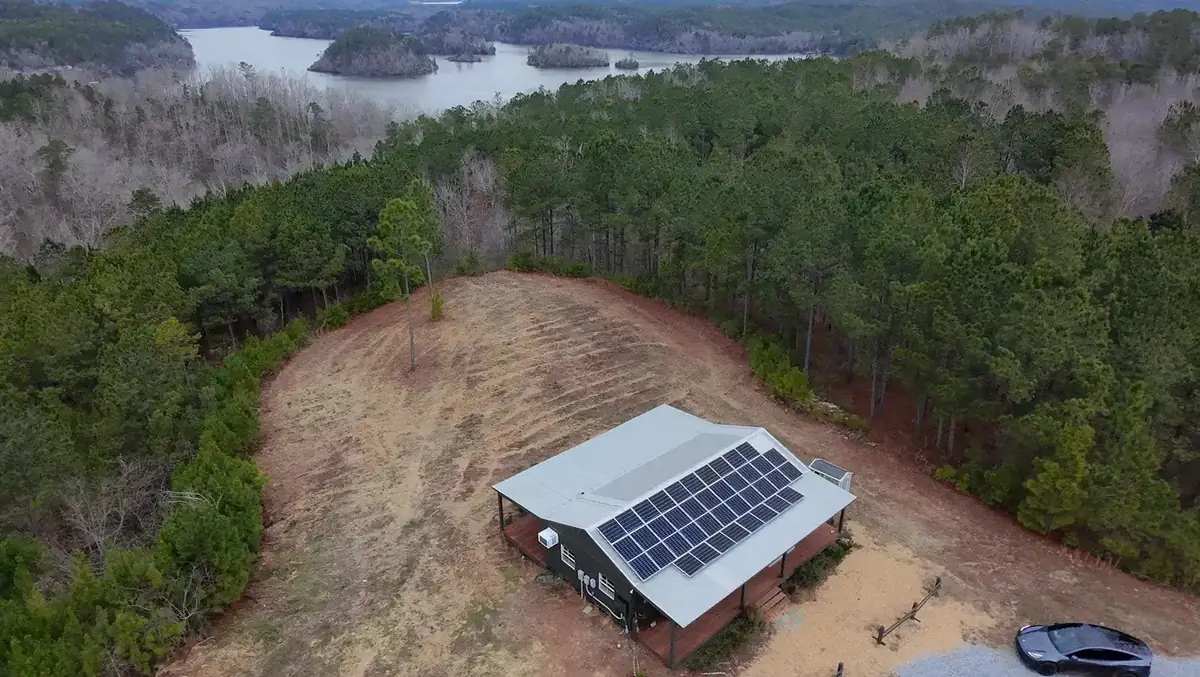 Off-GridOff-grid lake cabinGround-tilt metal roof array
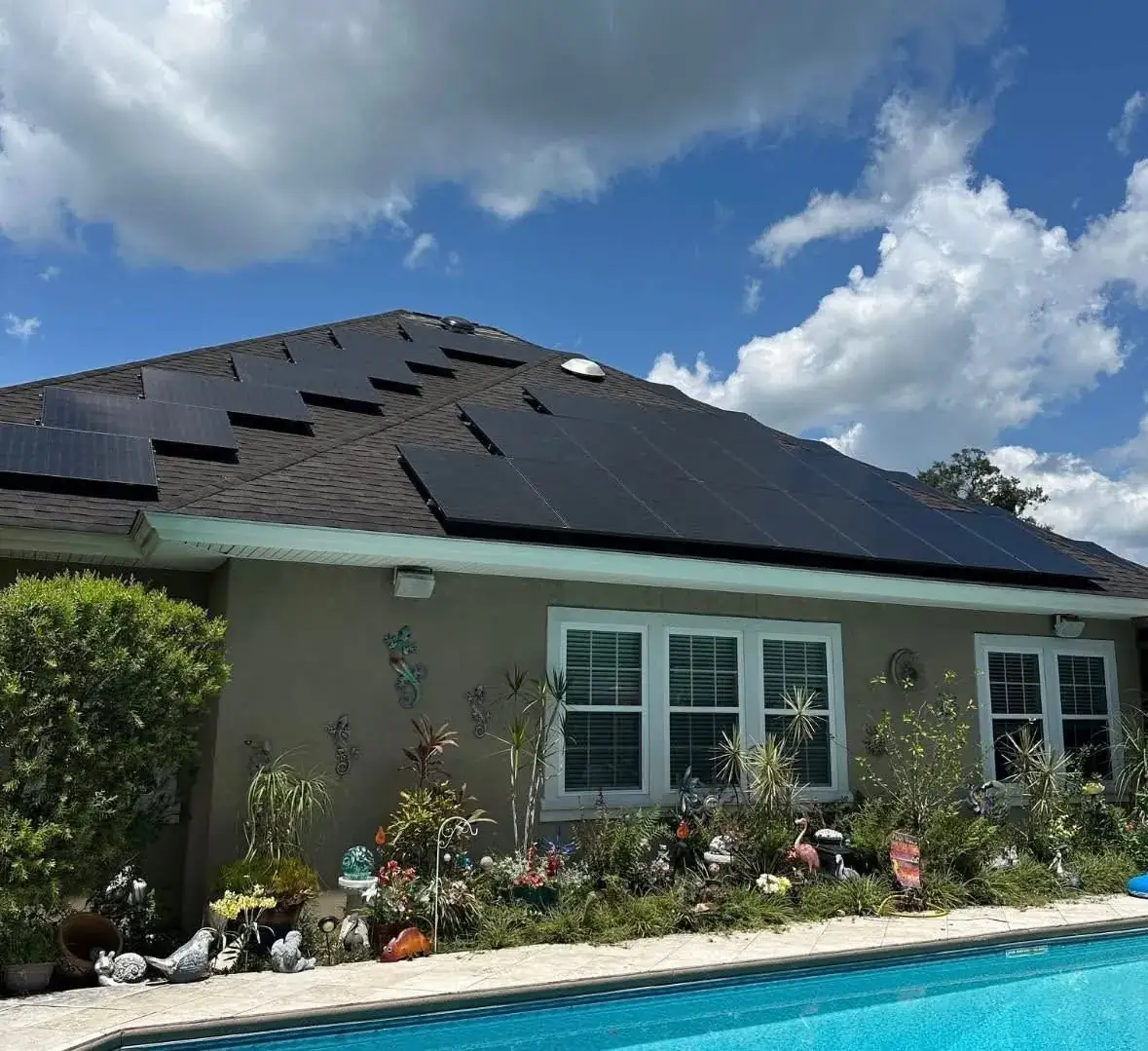 ResidentialFull black-on-blackPoolside single-story home
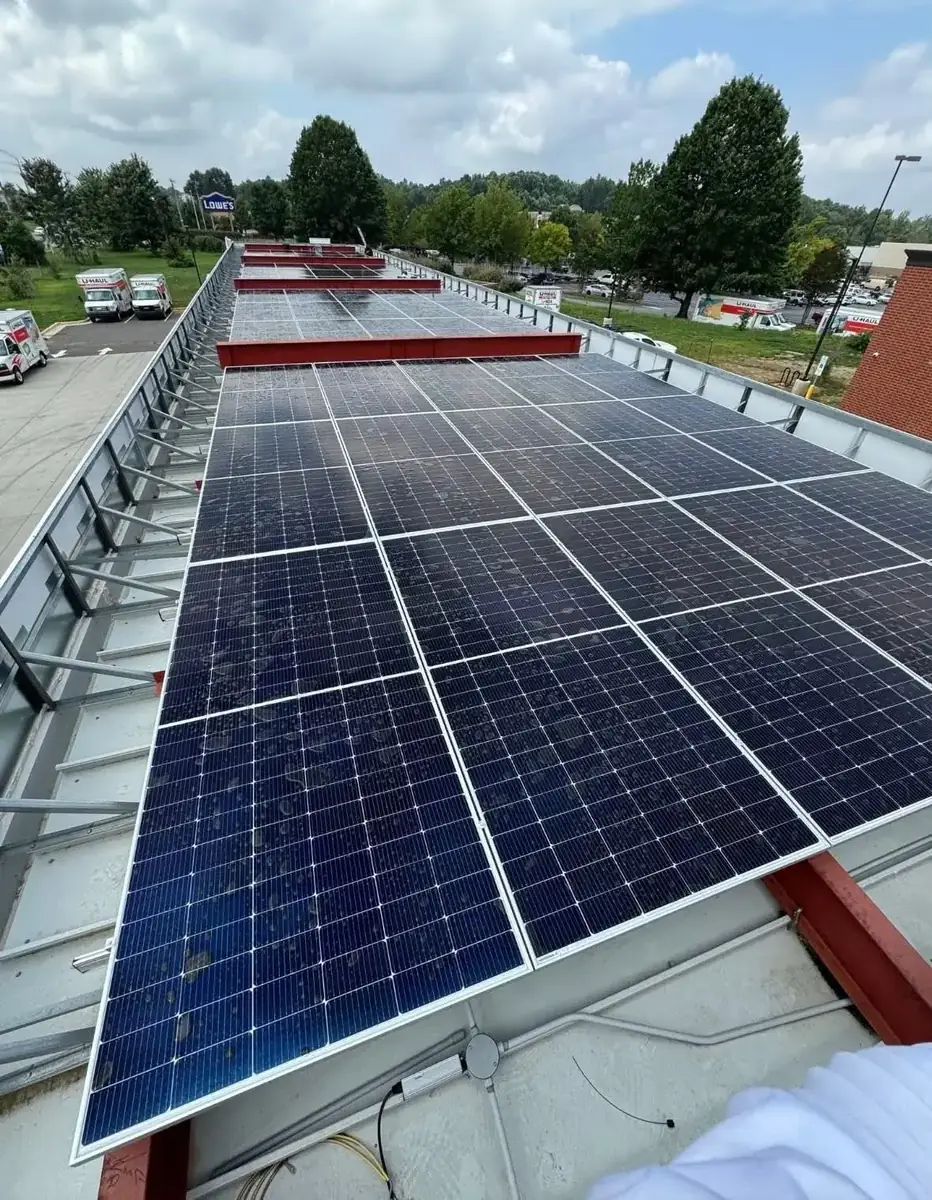 CommercialCommercial rooftopTilt-mounted rooftop system
Photo locations are not published at customer level. Where a customer has agreed to it, we name the job and the market on the completed-job records above.
Free assessment · Sumter, SC
Get a straight answer for your Sumter roof
We read your bill, confirm your Duke Energy Progress export terms, and tell you what your roof in Sumter County will actually carry. If solar does not make sense at your address, we will say so, and that answer is free too.
- We confirm whether Duke Energy Progress or Black River Electric Cooperative serves a significant number of addresses here serves your meter before we quote anything
- Permitting runs through A building permit and a separate electrical permit for a rooftop system, and we handle it
- Relatively few architectural-review constraints compared with the coastal markets.
Prefer to talk? (843) 310-1128
Sumter incentives FAQ
Common questions about solar incentives in Sumter
What solar incentives can I get in Sumter, SC in 2026?
South Carolina offers a 25% state income tax credit on Form TC-38, capped at $3,500 in any one tax year and at 50% of your annual state liability, with a ten-year carry-forward. Qualifying residential systems of 20 kW or less are exempt from South Carolina property tax. Solar equipment is exempt from South Carolina state sales tax. The 30% federal credit expired for systems placed in service on or after January 1, 2026.
Does Sumter still have net metering?
Not in the original form. One-for-one net metering closed to new applicants in South Carolina before the current programme took over, and new customers are enrolled in Duke's current residential solar rate structure instead. Under that programme exported power is credited at roughly 2.6–4¢ per kWh rather than at the your full retail rate retail rate, and settled against your usage over the year.
How do I claim South Carolina’s 25% state tax credit?
You claim it on South Carolina Form TC-38 with your state income tax return for the year the system is placed in service. Because the credit is capped at $3,500 per year and at 50% of your state tax liability, most systems are claimed across two or three returns using the 10-year carry-forward. Keep your final invoice and commissioning documentation. Confirm your own eligibility with a tax professional.
Is there a Duke Energy Progress rebate for solar in Sumter?
Duke's PowerPair solar-and-battery incentive closed to new applications in Progress territory in late 2025. Cooperatives set their own programmes, and some run none at all. We confirm what actually applies to your meter instead of listing programmes you may not qualify for.
Will solar panels increase my property taxes in Sumter?
Qualifying residential systems of 20 kW or less are exempt from South Carolina property tax. Confirm your own position with Sumter County and a tax professional, since eligibility depends on your circumstances.
Are there solar incentives for Sumter businesses?
Commercial solar is treated differently from residential and federal commercial provisions such as 48E and depreciation may still apply. We do not give tax advice on commercial structuring, and we will route those questions to your CPA rather than guess. See our commercial solar page for how we scope the work itself.
Keep reading
Incentive and financing guides
- Financing & Ownership
Solar Loan Recast in Georgia: Check the Later Payment
Review a Georgia solar loan recast or tax-dependent payment schedule, compare lump-sum options, and budget the full obligation before committing.
16 min read - Financing & Ownership
Selling a Georgia Home With a Solar Loan: Transfer or Payoff?
Prepare to sell a Georgia home with a solar loan by checking lender approval, payoff terms, security records, and equipment handover before listing.
16 min read - Financing & Ownership
Roof and Solar Financing in Georgia: Compare Your Options
Compare separate and combined roof-and-solar financing in Georgia using cash prices, payment schedules, disbursement conditions and home-sale obligations.
16 min read - Financing & Ownership
Solar Cash vs Loan in Georgia: Price, Payments and Cash Reserve
Compare paying cash with using a solar loan in Georgia by total payments, liquidity, loan fees, tax timing, and your ownership horizon.
19 min read - Financing & Ownership
What Determines a Monthly Solar Payment?
Learn what determines a monthly solar payment in South Carolina, when it may change, and how to compare the payment schedule with total cost.
23 min read - Financing & Ownership
Solar Lease Escalator: How It Changes Total Cost
Learn how a solar lease escalator compounds, calculate total scheduled payments, and review South Carolina transfer, buyout, service, and exit terms.
27 min read
Free, no-pressure assessment
See which incentives you actually qualify for in Sumter
We will confirm your utility and territory, size a system to your real usage, and show you what the state credit is worth in your tax position, with no guaranteed-savings math.
Mon–Sat, 10am–6:30pm ET · We typically follow up within the hour.