
An honest answer · Sumter, SC
Is solar worth it in Sumter, SC?
The honest answer · as of July 2026
For some Sumter homes yes, for others genuinely no, and anyone who answers without seeing your roof and your bill is selling rather than advising. It turns on four things: what your utility credits exports at, how much production you can use on site, your roof's condition and shading, and how long you will stay. Solar in Sumter became a harder case in 2026, and we would rather explain why than talk around it.


Local verdict
The honest read on Sumter
Sumter's case rests on the same self-consumption logic as the rest of Duke Energy Progress territory: exports credit at roughly 2.6 to 4 cents against your full retail rate, so the value lies in using what you generate. Central-Midlands summers deliver heavy afternoon cooling load in the same hours the array produces hardest, which is genuinely favourable, provided the system is sized to that load rather than to the roof.
The physical picture helps. Lots here are typically generous, with pines and hardwoods around the property rather than crowding the roof, so partial shading is more common than total and there are relatively few architectural-review constraints compared with the coastal markets. That combination means a Sumter roof can usually be used the way it should be used, facing the sun.
Two things temper it. Black River Electric Cooperative serves a significant number of addresses here on its own terms rather than Duke's, so confirm the meter before accepting anyone's numbers. And Sumter has a large rental and military-linked population, where the tenure assumption behind payback often does not hold and the state credit's dependence on your own South Carolina tax liability needs checking with an accountant first.
Written for Sumter specifically. Your own roof, bill and meter still decide the answer, which is what the free assessment settles.
Start with what changed
What changed, and what it does to payback
The federal 30% credit expired for systems placed in service on or after January 1, 2026. South Carolina’s 25% state tax credit survives, but it is capped and does not fill the hole. Our guide to the 2026 credit position sets out the national picture.
One-for-one net metering closed to new applicants on 1 June 2021, and new Duke Energy Progress systems are credited under Duke's current residential solar rate structure instead, at roughly 2.6–4¢ per kWh for exports. Exported power is worth a fraction of power you use, so how much you consume on site now drives the return.
Payback in Sumter is longer than the figures still sitting on national comparison sites, many of which were calculated with the federal credit. For how this plays out utility by utility across the state, see are solar panels worth it in South Carolina?
None of that means solar stopped working here. It means the margin for error narrowed, and right-sizing and self-consumption now matter far more than they did. A well-designed system for the right home still makes sense. An oversized one sold on old assumptions does not.
The decision framework
Four variables decide it. Panel brand is not one of them.
- 01
What your utility credits exports at
The variable most people never consider, and the one that moved most. Duke Energy Progress credits exported power at roughly 2.6–4¢ per kWh under Duke's current residential solar rate structure, against your full retail rate. Every kilowatt-hour you export instead of using is worth roughly a quarter as much. This single fact reshapes the answer for Sumter.
- 02
How much production you can actually use
Follows directly from the first. A household home during the day, running air conditioning, a pool pump or a home office, self-consumes most of what it generates. A household out from eight until six exports most of it. Same roof, same system, materially different return.
- 03
Your roof: condition, orientation, shade
Roof age sets whether you should do this now or after a replacement. Orientation and pitch set how much you generate. Shade sets the ceiling: central Midlands lots are typically generous, with pines and hardwoods around the property rather than crowding the roof. Partial shading is more common than full.
- 04
How long you will stay
Payback in this market runs well over a decade, so a five-year horizon almost never reaches it. An owned system may support resale value, which softens the maths, but if you are likely to move soon that is a real argument against.
Notice what is absent: panel brand, inverter brand, and the size of the system. Those follow from the four above rather than driving the decision.
Two lists
Who solar suits in Sumter, and who it doesn't
Most installers publish the first list. We publish both, because the second one is what you actually need if you are trying to decide.
Solar usually makes sense for your Sumter home if
- Your power bill runs above roughly $150 a month, so there is real spend to offset.
- Your roof is sound with 10+ years left, or you are replacing it anyway and can do both as one project.
- You have unshaded south, west or east-facing roof area with reasonable pitch.
- A meaningful share of your usage is during daylight: someone home in the day, a pool pump, a home office, an EV on the drive.
- You plan to stay 10 years or more.
- You have South Carolina tax liability to absorb the 25% credit, since it is non-refundable and capped annually.
Solar is probably not right for you if
- Export credits here are a few cents per kilowatt-hour, so a household that uses almost all its power after dark will see far less bill movement than expected without load shifting or storage.
- Your roof needs replacing within about five years.
- Your power bill is under roughly $90 a month.
- Your best roof planes are shaded and you have no open ground for a ground-mount alternative.
- You are likely to move within five years.
- You have little or no South Carolina tax liability, so the 25% state credit cannot be fully used. It is non-refundable and capped annually.
- You are being sold on a 30% federal credit. That quote is wrong, and it is a reason to walk away from that company rather than from solar.
If two or more of these describe your situation, we will tell you so at the assessment and we will not design a system to argue you past them.
Getting to a real answer
What a free assessment actually settles
The four variables are answerable for your specific address. That is the whole job.
- Your actual utility and rateAround Sumter, Black River Electric Cooperative serves a significant number of addresses here, and the terms differ. This is not guesswork we can do from a map.
- Your real usage shapeFrom your usage history, not a square-footage estimate, so we can see what you would self-consume.
- Roof condition and remaining lifeIncluding the awkward answer if the roof should come first.
- Shade, measuredNot judged from a satellite photo in February.
- A right-sized designOur combined experience averages about 9.5 kW, against the 14.48 kW national calculators assume for this market.
- An honest recommendation, including noThere is no obligation and no pressure. If we say wait, we mean wait.
Resale
Does it add to your home's value?
Research, most often Lawrence Berkeley National Laboratory's, has generally found that homes with owned solar sell for more than comparable homes without it. The effect depends on your market and your system, so nobody can give you a figure for your address, and leased systems behave differently. Selling a home with solar covers the transfer mechanics.
Treat resale as a reasonable secondary benefit rather than a primary reason to buy. If the four variables above do not work, a possible resale premium will not rescue the decision.
Permits and approvals
What approval takes in Sumter
This is the part most quotes leave vague, and it is the part that decides how long a job takes. Below is what a system at a Sumter address actually has to clear. We handle all of it, and you file none of it yourself, but you should know what you are agreeing to a timeline for.
- 01A building permit and a separate electrical permit for a rooftop system
- 02Standard plan review for systems of roughly 10 kW and above
- 03A zoning review as well for any ground-mounted array
- 04An additional electrical permit where battery storage is included
- 05Structural review under Sumter County requirements
- 06Interconnection approval from whichever utility serves your meter
Rebate:Duke's PowerPair solar-and-battery incentive closed to new applications in Progress territory in late 2025. Cooperatives set their own programmes, and some run none at all. We confirm what actually applies to your meter instead of listing programmes you may not qualify for.
Requirements are read from the authority that reviews your address, not assumed from the county. In SC that distinction is routinely the difference between a permit issued and a permit returned.
Our work
Real systems our crews have installed
Genuine job photos, not stock images and not renders. Every system here was designed, permitted and installed by our own crews, and the same crews cover Sumter.Well inland, so no salt exposure and moderate wind loading.
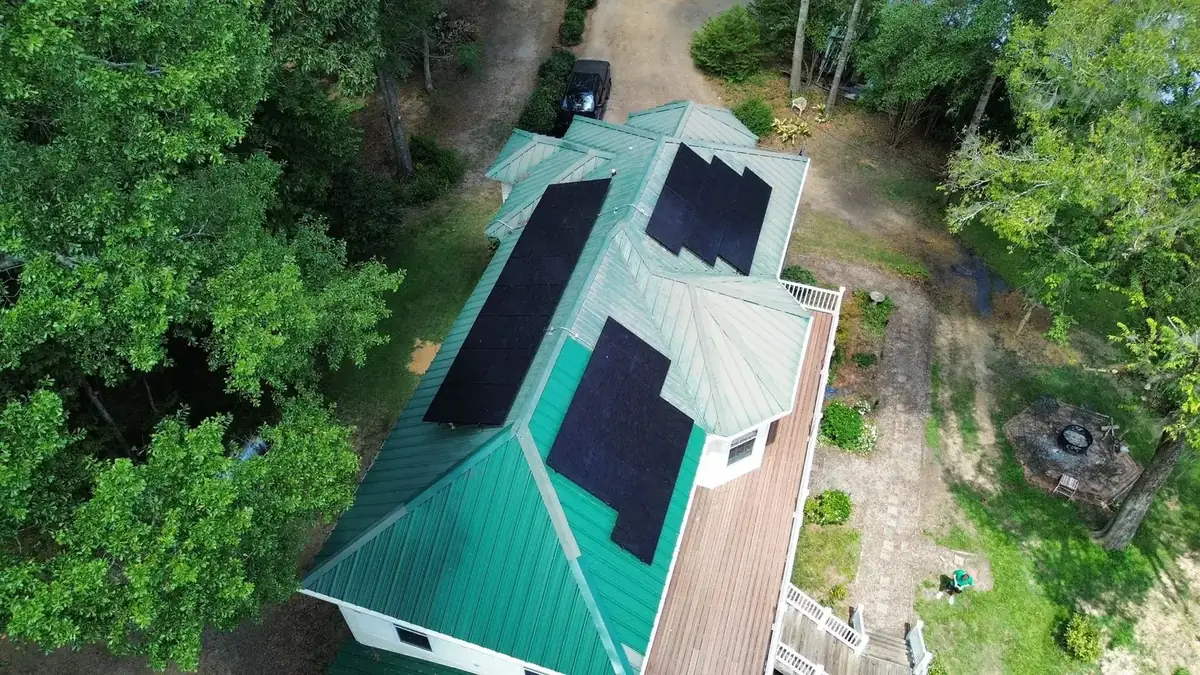 ResidentialMulti-facet metal roofWooded aerial view
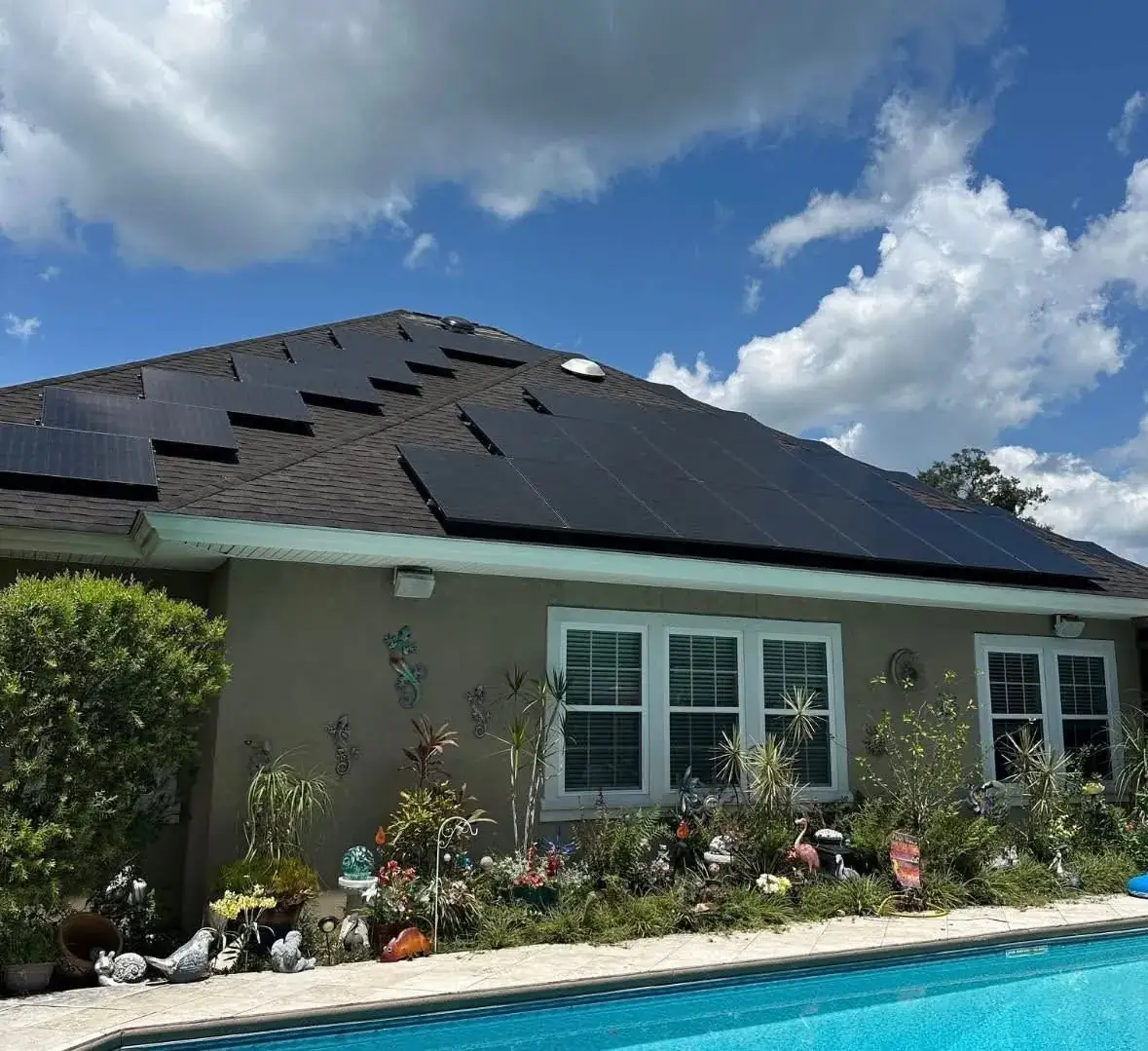 ResidentialFull black-on-blackPoolside single-story home
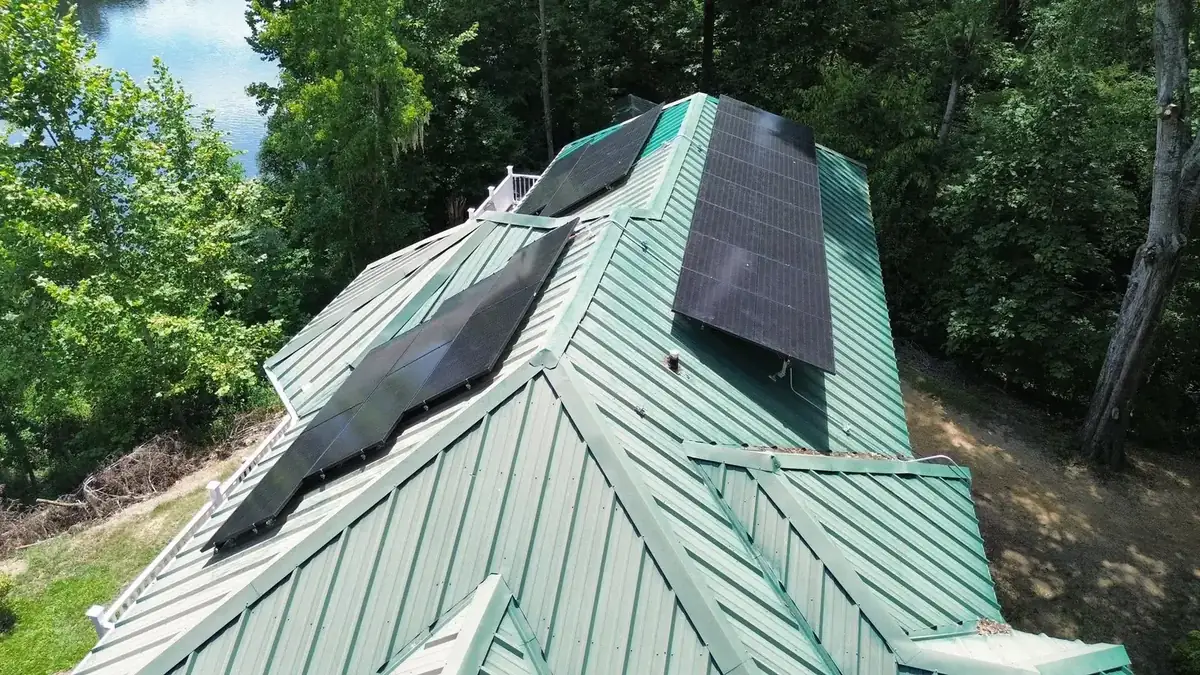 ResidentialStanding-seam metal roofLakeside multi-facet install
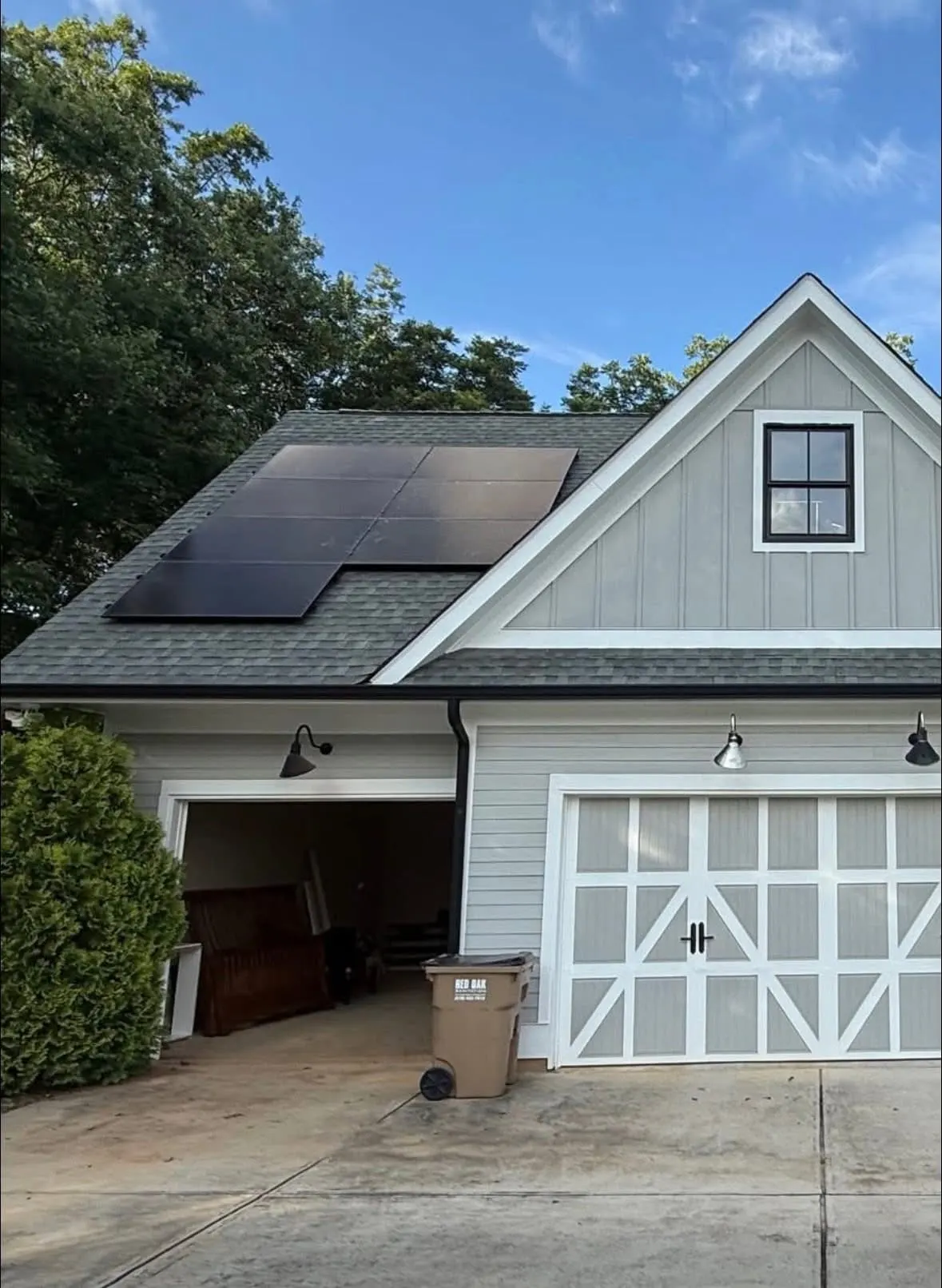 ResidentialDetached garage arrayFarmhouse-style home
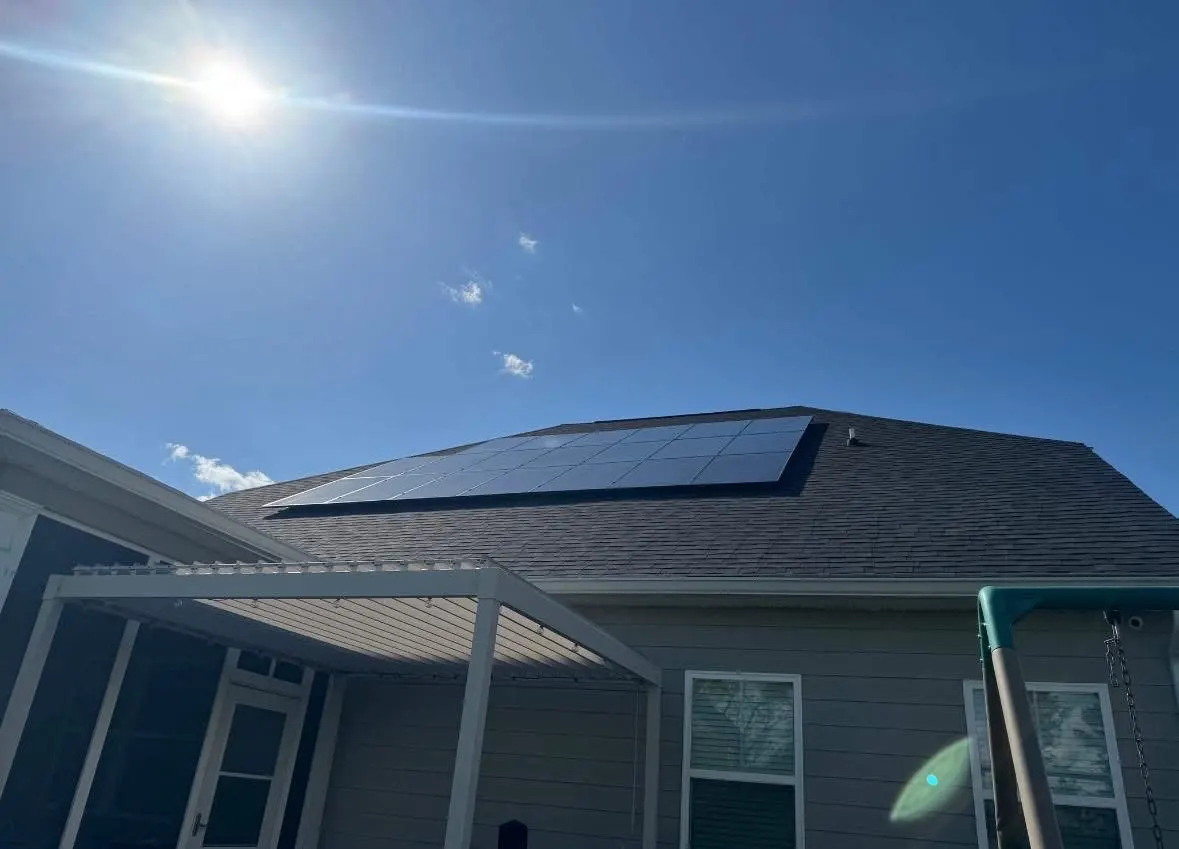 ResidentialShingle rooftop arrayBackyard-facing slope
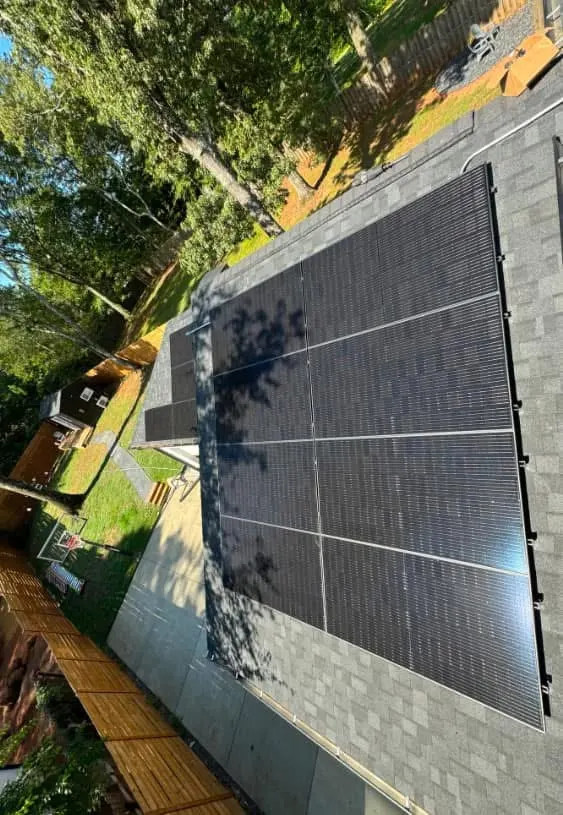 ResidentialClean rooftop layoutBlack-framed panels
Photo locations are not published at customer level. Where a customer has agreed to it, we name the job and the market on the completed-job records above.
Free assessment · Sumter, SC
Get a straight answer for your Sumter roof
We read your bill, confirm your Duke Energy Progress export terms, and tell you what your roof in Sumter County will actually carry. If solar does not make sense at your address, we will say so, and that answer is free too.
- We confirm whether Duke Energy Progress or Black River Electric Cooperative serves a significant number of addresses here serves your meter before we quote anything
- Permitting runs through A building permit and a separate electrical permit for a rooftop system, and we handle it
- Relatively few architectural-review constraints compared with the coastal markets.
Prefer to talk? (843) 310-1128
Sumter worth-it FAQ
The questions people actually ask us
Is solar worth it in Sumter, SC in 2026?
For some homes here, yes. For others, honestly no. It comes down to four things: what your utility credits exported power at, how much of your production you can use on site, your roof's condition and shading, and how long you plan to stay. Sumter homes with a sound unshaded roof, a bill above roughly $150 a month and significant daytime usage tend to make sense. Homes with heavy shade, a low bill, an ageing roof or a likely move within five years usually do not.
Did solar get worse in Sumter after 2025?
Yes, and pretending otherwise would be dishonest. The 30% federal credit expired for systems placed in service on or after January 1, 2026. One-for-one net metering closed to new applicants on 1 June 2021, and new Duke Energy Progress systems are credited under Duke's current residential solar rate structure instead, at roughly 2.6–4¢ per kWh for exports. Payback periods here are meaningfully longer than the figures still published on aggregator sites, many of which assume the federal credit or one-for-one crediting.
Does solar increase home value in Sumter?
Research has generally found that homes with owned solar sell for more than comparable homes without it, though the effect depends on your market and your system, and leased systems behave differently from owned ones. We are not going to put a percentage on your house. It is a reasonable secondary consideration, not a reason to buy on its own.
What electricity bill makes solar worth considering in Sumter?
As a rough screen, a bill under about $90 a month rarely justifies a system, because there is not enough spend to offset. Above roughly $150 a month with meaningful daytime usage, it is usually worth running the numbers properly. Between those, it depends heavily on your roof and your usage pattern.
Is solar worth it if I am not home during the day?
It is a weaker case than it used to be. Under Duke's current residential solar rate structure, exports credit at roughly 2.6–4¢ per kWh against your full retail rate, so production you cannot use is worth a fraction of production you can. Shifting flexible loads into daylight, or adding storage, closes that gap. Without either, expect your bill to move less than you hoped.
Will you tell me if solar is not right for my home?
Yes. That is the point of a free, no-pressure assessment, and it is why we publish the poor-fit list on this page rather than hiding it. We would rather lose a sale than install a system that does not serve you, because the second kind of customer tells everyone.
Keep reading
Guides behind the “is it worth it” maths
- Financing & Ownership
Solar Lease Escalator: How It Changes Total Cost
Learn how a solar lease escalator compounds, calculate total scheduled payments, and review South Carolina transfer, buyout, service, and exit terms.
27 min read - Financing & Ownership
Solar Loan Dealer Fees Explained for Buyers
Learn how to detect possible solar loan dealer fees by reconciling the cash price, financed amount, APR, itemization, and South Carolina disclosures.
22 min read - Financing & Ownership
Solar Loan vs Lease vs PPA: Georgia and South Carolina
Compare solar loans, leases and PPAs in Georgia and South Carolina by ownership, total cost, utility bills, escalators, tax rules and home-sale terms.
24 min read - Residential Solar
Solar Payback in Georgia: Imports, Exports and Cash Flow
Calculate a Georgia solar payback period from your quote, utility tariff, production model, tax timing, financing, and ownership horizon.
21 min read - Residential Solar
Is Your Roof Too Shaded for Solar? A Quote-Stage Decision Guide
Learn how to audit measured roof shade, production-model inputs, tree assumptions, layout alternatives, inverter architecture, and the pause decision.
18 min read - Residential Solar
What a Solar Site Survey Should Check Before Your Final Quote
Use this South Carolina solar site survey checklist to turn roof, shade, electrical, route, land, utility, permit, and HOA findings into a final scope.
20 min read
Free, no-pressure assessment
Get a straight answer for your Sumter home
We will confirm your utility, read your real usage, measure your shade and check your roof, then tell you honestly whether solar is worth it at your address. Including if the answer is no.
Mon–Sat, 10am–6:30pm ET · We typically follow up within the hour.