
Honest numbers · Fort Mill, SC
How much do solar panels cost in Fort Mill, SC?
The short answer · as of July 2026
Solar in the Fort Mill area costs about $2.59 per watt installed before incentives as of July 2026. A system near our ~9.5 kW average runs roughly $24,605 gross and about $18,454 once $South Carolina’s 25% state tax credit is fully claimed. Payback depends on your Duke Energy Carolinas rate and on how much production you use on site, so we model it from your own bill rather than publishing a market average.


Local pricing reality
What drives price in Fort Mill
Fort Mill is among the cheapest markets in the state to install in, for straightforward reasons: the newer subdivisions have young roofs with simple planes, limited canopy, modern electrical service and documented construction. Design time is short, surprises are rare, and the crew spends its day installing rather than problem-solving. That shows up as a competitive per-watt figure without anything being left out.
The cost that does exist here is administrative. HOA density is high with real rules on street visibility, so the architectural-review packet is a genuine piece of work, and where a committee pushes the array off its best plane you pay in modules rather than in fees. Ask for the productive layout and the compliant layout priced separately so that trade-off is visible.
Sizing is set by the export rate, and Duke Energy Carolinas credits exports at roughly 2.6 to 4 cents against your full retail rate, with York Electric Cooperative serving many addresses on its own terms. Because commuter households are often out during the day, self-consumption here can be lower than the roof suggests, which argues for a smaller array or for storage rather than for filling the available space.
Written for Fort Mill specifically. Your own roof, bill and meter still decide the answer, which is what the free assessment settles.
The numbers
What a system costs in Fort Mill, by size
Priced at the local $2.59 per watt benchmark (July 2026) and shown before and after $South Carolina’s 25% state tax credit. These are worked examples to set expectations, not a quote, and not a promise of savings.
| System size | Cost before incentives | SC 25% credit (TC-38) | Net after credit |
|---|---|---|---|
| 6 kW | $15,540 | $3,885 over 2 tax years | $11,655 |
| 9.5 kW Closest to our ~9.5 kW average system | $24,605 | $6,151 over 2 tax years | $18,454 |
| 12 kW | $31,080 | $7,770 over 3 tax years | $23,310 |
| 15 kW | $38,850 | $9,713 over 3 tax years | $29,138 |
Note the third column carefully. The credit is 25% of system cost but capped at $3,500 per tax year, so a larger system is claimed across several returns rather than all at once. Most pages quoting "25% off" skip this, and it is the most common reason homeowners feel misled later. See exactly how the credit is claimed.
Sizing
Why the calculators overstate your system and your savings
National cost calculators model a 14.48 kW system for the Fort Mill market. Across our combined install experience, the average is about 9.5 kW. That gap is not a rounding difference. It is roughly a third of the system, and it distorts every downstream figure those calculators show you.
An oversized system costs more up front, and because Duke Energy Carolinas credits exported power at roughly 2.6–4¢ per kWh rather than at retail, the extra production it generates is worth far less than the panels cost. Sizing past your own consumption is the fastest way to make a payback period worse.
So we size to your actual bill, not to our margin. That usually means a smaller system than you were quoted elsewhere, a lower price, and a shorter payback. It also means the savings estimate we give you is one we can defend line by line.
Every system carries our lifetime full-system and roof-penetration warranty, on top of the 25-year manufacturer warranty and 10-year workmanship coverage.
Bill-to-size
Work out your system size from your power bill
Enter up to three recent bills. We average them, convert to kilowatt-hours at your own rate, and show the size band that covers your usage. Nothing is sent anywhere until you choose to send it.
Your size band will appear here.
Add one bill and your rate to start.
- Yearly usage
- —
- System size
- —
- Likely production
- —
- Installed price band
- —
- South Carolina credit
- —
Your figures travel with the form, so you do not retype them.
An estimate for planning, not a quote. Real sizing depends on the roof planes, shade and the panel we can actually get, and we confirm it on site. The price band uses $2.59 per watt, a statewide figure. Tax treatment depends on your own liability. We are not tax advisers.
The part competitors leave out
Your utility sets your payback more than your panels do
Most Fort Mill homes are served by Duke Energy Carolinas , though York Electric Cooperative serves many addresses here. One-for-one net metering closed to new applicants on 1 June 2021, and new Duke Energy Carolinas systems are credited under Duke's current residential solar rate structure instead, at roughly 2.6–4¢ per kWh for exports. That gap between what you pay for power and what an export earns changes the economics of a rooftop system, and it is why a single national payback figure for Fort Mill is meaningless.
About these rates in Fort Mill
We have not published a retail-rate table for this page because we will not print a Duke rate we have not verified against your own tariff. Duke credits exported power at roughly 2.6–4¢ per kWh, well below retail, so the self-consumption logic below still holds. At the assessment we read your actual bill and model payback against your real rate rather than a market average.
The mechanic is simple. Power you consume the moment you generate it offsets electricity you would have bought at your full retail rate. Power you export earns only roughly 2.6–4¢ per kWh, and So a home that runs its air conditioning, pool pump and laundry during daylight gets a materially better return than an identical home that uses most of its power after dark.
2026 incentives
What reduces this price this year
The net column above already applies $South Carolina’s 25% state tax credit. Two things worth knowing about it: the $3,500 annual cap means larger systems are claimed across more than one tax return, and the credit is non-refundable, so it is limited by your state tax liability.
The 30% federal credit expired for systems placed in service on or after 1 January 2026. If a quote you are comparing still applies it, that quote is wrong by thousands.
Duke's PowerPair solar-and-battery incentive has been at or near capacity in Carolinas territory, so it should not be assumed available. Duke's battery bill-credit programme has remained open and pays monthly rather than up front. We check live status for your address before it forms part of any number we give you.
Incentives specific to Fort Mill · statewide mechanics and worked examples · financing
Line items
The eight things that move a Fort Mill quote
Two houses on the same street can differ by several thousand dollars for reasons that have nothing to do with panel brand. These are the drivers, in roughly the order they matter here.
- 01
Roof condition and remaining life
The single biggest swing factor in Fort Mill. Panels last decades, so putting them on a roof with five years left means paying to remove and reset them later. If a replacement makes sense first, we say so and can coordinate it as one project.
- 02
Roof material and pitch
Asphalt shingle is the straightforward case. Standing-seam metal is often cheaper to mount because it clamps rather than penetrates. Tile, slate and very low-slope membrane roofs cost more in labour and flashing detail.
- 03
Shading
Fort Mill has grown fast, and the newer subdivisions have young roofs with simple planes and limited canopy, which is about as favourable as South Carolina gets. Older lots carry more hardwood shading. Heavy shade may push you toward microinverters or optimisers, which adds cost but recovers production.
- 04
Electrical panel and meter
An older or fully-loaded service panel may need an upgrade before a system can be interconnected. This is a real line item and one of the most common surprises on cheap quotes that skipped a site visit.
- 05
Mounting and structural review
Well inland in the Charlotte metro orbit, so no salt exposure and moderate wind loading. York County structural review and South Carolina code apply. That work is what our lifetime roof-penetration warranty stands behind.
- 06
Architectural review and HOA rules
Heavy HOA density in the newer subdivisions, with active architectural review and real rules on street visibility. The processes are well documented, and we prepare the packet. Where visibility is restricted, the compliant layout is sometimes not the cheapest one. We design for approval first, then optimise production within those limits.
- 07
Ground mount instead of roof
If the roof genuinely will not work, a ground-mounted array needs trenching, racking and a zoning review, so it typically costs more per watt than a straightforward roof install.
- 08
Battery storage
Optional, and it changes the maths rather than just adding to it. Under Duke's current residential solar rate structure export credits, storing power to use later is worth more than exporting it.
Roof age is the one we raise most often, and the one homeowners least want to hear. See how we handle roof-first projects.
Paying for it
Cash, loan, and the South Carolina trap
Cash gives the shortest payback and clean ownership. A loan spreads the cost and can sit near your current Fort Mill bill, but ask for the cash price and the financed price side by side: a low advertised rate is often bought with a dealer fee of several thousand dollars folded into the system price.
The South Carolina-specific trap: because the state credit is capped at $3,500 a year, it arrives across several tax years. A loan structured around one large first-year credit payment will not behave as presented.
The honest part
When solar is not worth it in Fort Mill
We would rather tell you now than after you have paid for a design
- Duke credits exported power at only a few cents, so if you are out all day and use power mainly in the evening, expect materially less bill movement without load shifting or storage.
- Your roof needs replacing within about five years.
- Your power bill is under roughly $90 a month.
- Your architectural-review committee restricts panels to a roof plane that faces the wrong way.
- You are likely to move within five years, which is worth weighing in a market with this much turnover.
If two or more of these describe your home, we will say so during the assessment and we will not design a system to talk you past them. That is the whole point of a free, no-pressure assessment. If circumstances change, we will still be here.
Real systems
What we have actually built
Our team brings 30+ years of combined experience and roughly 450 combined experienced solar PV installs, averaging about 9.5 kW. You can see real photographs of those systems on the homepage gallery.
We are not going to publish a banded price against a specific job and imply it is your price, because the drivers above make that misleading. What we will do at the assessment is walk you through comparable systems we have installed, with the actual figures.
Install photos on this site are real job photography without invented city captions or fabricated price bands. Named reviews appear only when customers give permission, see our reviews page for how we handle proof.
Permits and approvals
What approval takes in Fort Mill
This is the part most quotes leave vague, and it is the part that decides how long a job takes. Below is what a system at a Fort Mill address actually has to clear. We handle all of it, and you file none of it yourself, but you should know what you are agreeing to a timeline for.
- 01A building permit and a separate electrical permit for a rooftop system
- 02Standard plan review for systems of roughly 10 kW and above
- 03A zoning review as well for any ground-mounted array
- 04An additional electrical permit where battery storage is included
- 05Structural review under York County requirements
- 06HOA architectural-review approval, which is common here and which we prepare
- 07Duke interconnection approval before the system is allowed to energise
Requirements are read from the authority that reviews your address, not assumed from the county. In SC that distinction is routinely the difference between a permit issued and a permit returned.
Our work
Real systems our crews have installed
Genuine job photos, not stock images and not renders. Every system here was designed, permitted and installed by our own crews, and the same crews cover Fort Mill.Well inland in the Charlotte metro orbit, so no salt exposure and moderate wind loading.
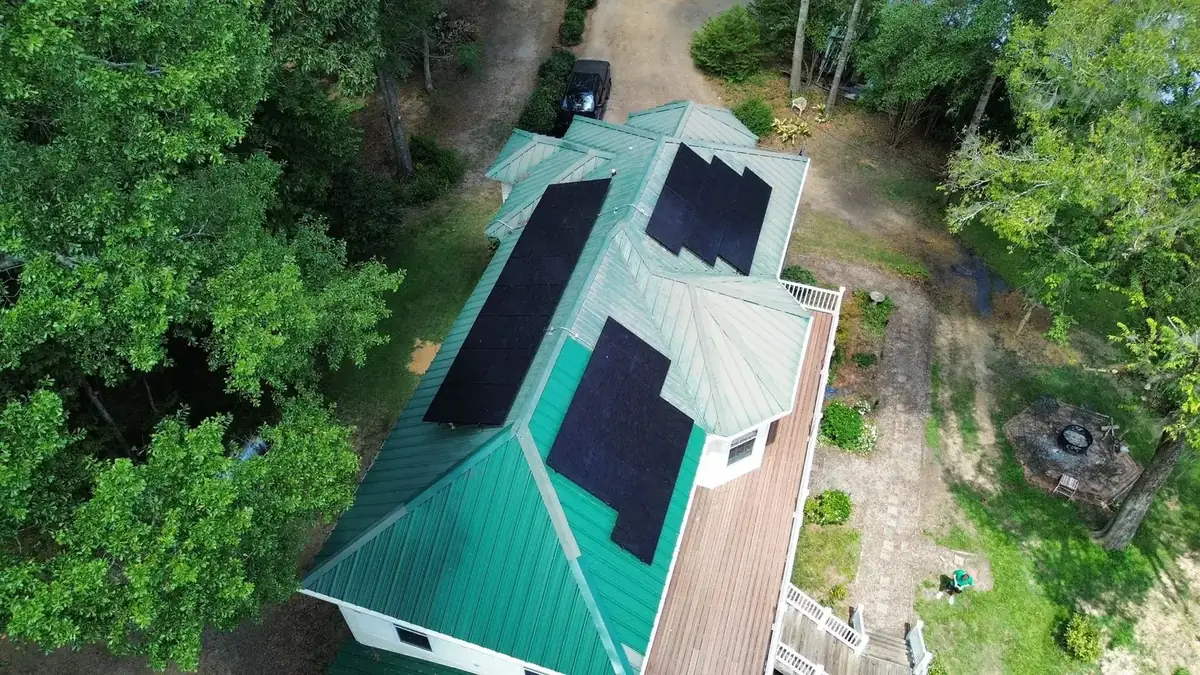 ResidentialMulti-facet metal roofWooded aerial view
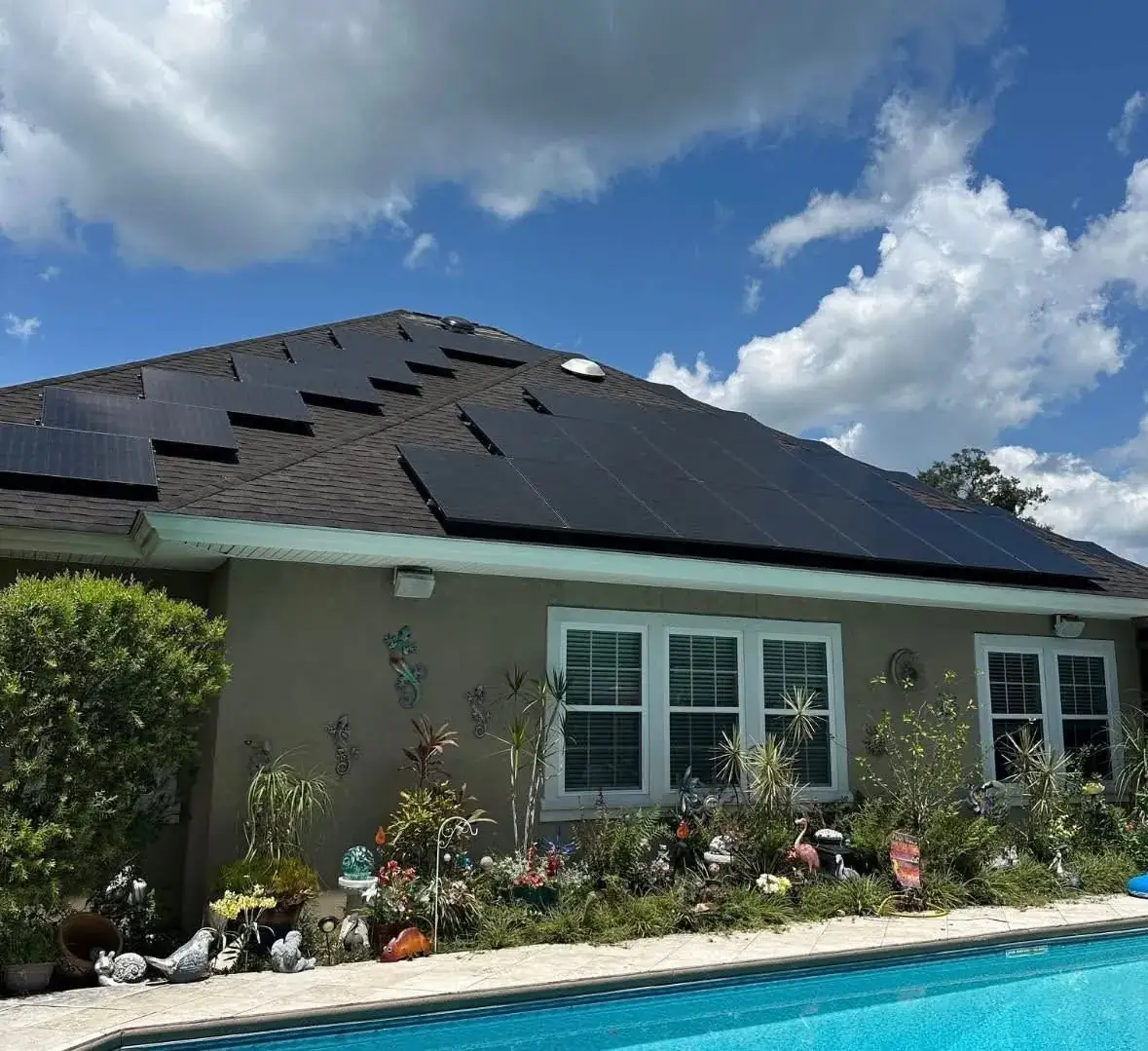 ResidentialFull black-on-blackPoolside single-story home
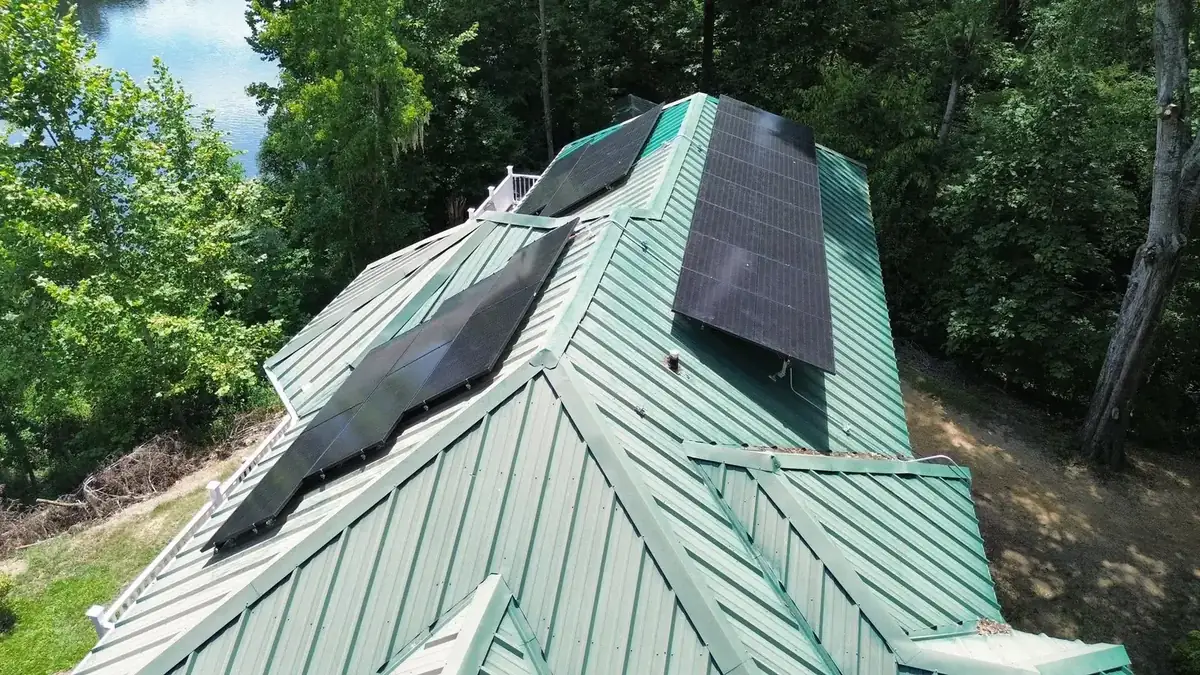 ResidentialStanding-seam metal roofLakeside multi-facet install
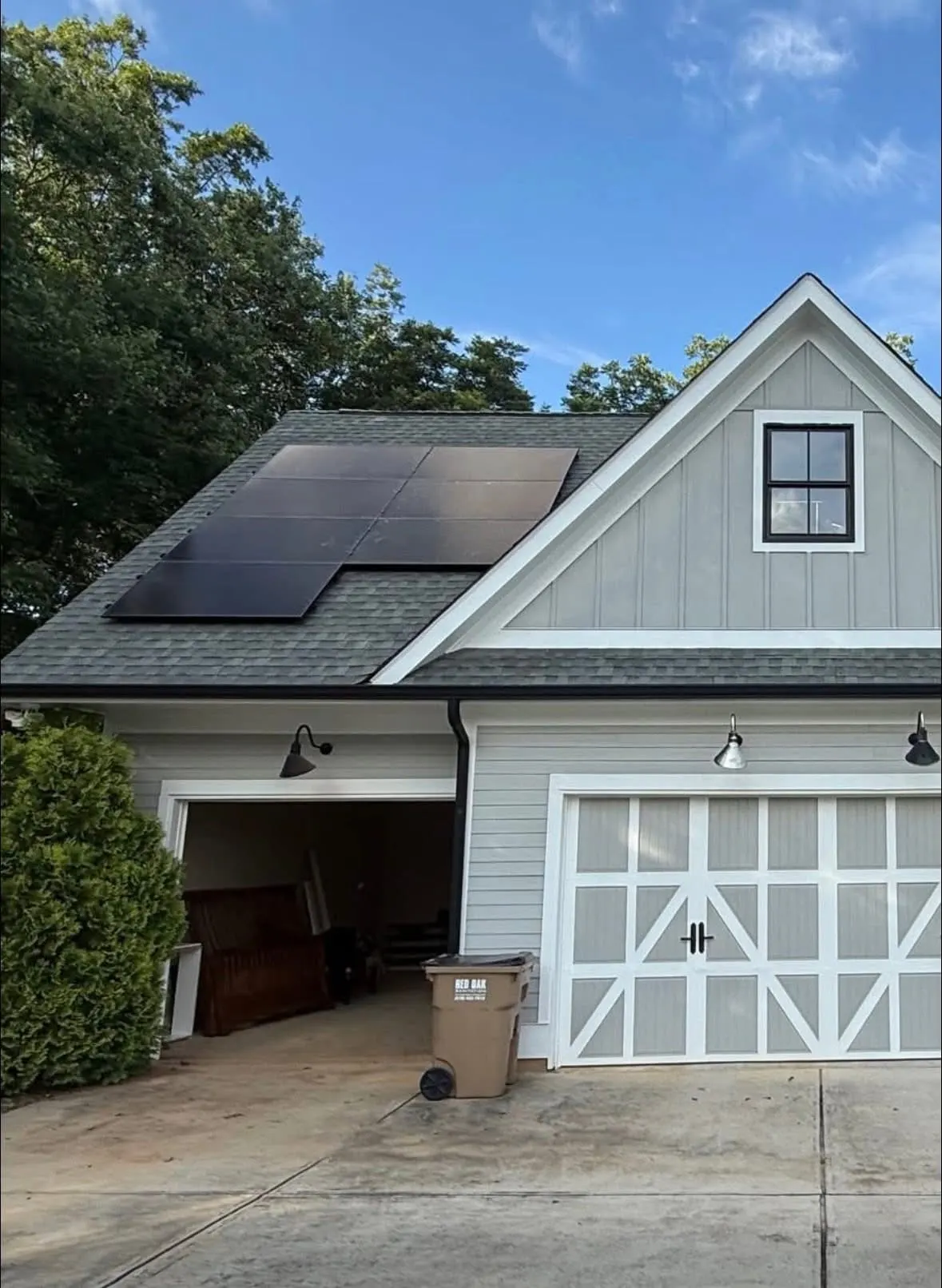 ResidentialDetached garage arrayFarmhouse-style home
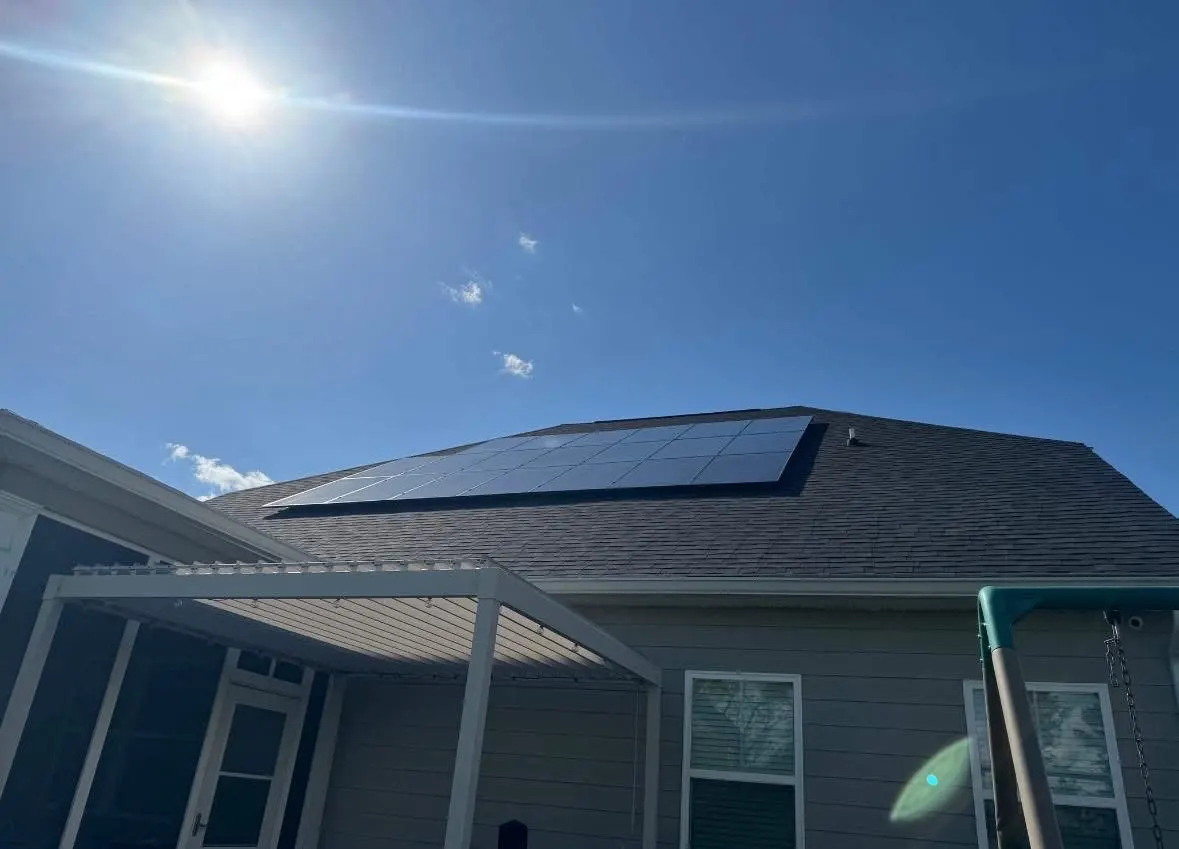 ResidentialShingle rooftop arrayBackyard-facing slope
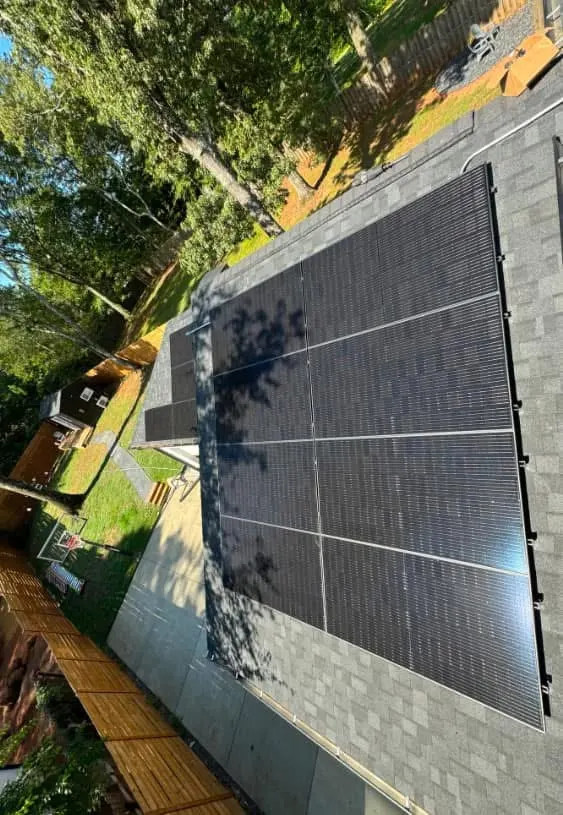 ResidentialClean rooftop layoutBlack-framed panels
Photo locations are not published at customer level. Where a customer has agreed to it, we name the job and the market on the completed-job records above.
Free assessment · Fort Mill, SC
Get a straight answer for your Fort Mill roof
We read your bill, confirm your Duke Energy Carolinas export terms, and tell you what your roof in York County will actually carry. If solar does not make sense at your address, we will say so, and that answer is free too.
- We confirm whether Duke Energy Carolinas or York Electric Cooperative serves many addresses here serves your meter before we quote anything
- Permitting runs through A building permit and a separate electrical permit for a rooftop system, and we handle it
- Heavy HOA density in the newer subdivisions, with active architectural review and real rules on street visibility.
Prefer to talk? (843) 310-1128
Fort Mill solar cost FAQ
Straight answers on what solar costs in Fort Mill
How much do solar panels cost in Fort Mill, SC?
As of July 2026, solar in the Fort Mill area runs about $2.59 per watt installed before incentives. A system close to our ~9.5 kW average works out to roughly $24,605 gross, or about $18,454 once South Carolina’s 25% state tax credit is fully claimed. Your own number depends on your roof, your usage and your utility.
Is there still a 30% federal tax credit for solar in Fort Mill?
No. The federal residential clean energy credit (Section 25D) expired for systems placed in service on or after January 1, 2026. Many pages online still advertise it. South Carolina’s 25% state tax credit did not expire and is now the main incentive for homeowners here. The strongest remaining lever here is the 25% state credit on Form TC-38.
What is the payback period on solar in Fort Mill?
We will not publish a payback figure for Fort Mill that we cannot stand behind, because Duke Energy Carolinas's residential rate needs confirming against your own bill. What is certain is that exported power credits at roughly 2.6–4¢ per kWh, well below retail, so the share of production you use on site drives your payback more than any equipment choice. At the assessment we model it against your actual rate.
Why is your average system smaller than the 14.48 kW the calculators show?
Because we size to your bill rather than to a sales quota. National cost calculators model 14.48 kW for this market, which inflates both the price and the projected savings for a typical home. Our combined install experience averages about 9.5 kW. A smaller correctly-sized system usually pays back faster than a larger one you were upsold.
Do you charge for a quote or a site assessment in Fort Mill?
No. The assessment is free and there is no obligation. We look at your roof, your actual usage history and your utility rate, then give you real figures for your address. If solar is a poor fit for your home, we will tell you that instead of designing a system anyway.
Does a solar system add to my property taxes in Fort Mill?
Qualifying residential systems of 20 kW or less are exempt from South Carolina property tax. Confirm your own situation with York County and a tax professional, since eligibility depends on your circumstances.
Nearby
What solar costs near Fort Mill
Keep reading
Guides on solar pricing and payment
- Home Ownership
Selling a Solar Home: South Carolina and Georgia Record Checks
Prepare a solar home for sale with ownership, financing and condition records, plus South Carolina and Grovetown, Georgia transaction-document checks.
34 min read - Home Electrical
Do You Need an Electrical Panel or Service Upgrade for Solar?
Learn when solar may need panel, service, meter, feeder, or connection work, and what a South Carolina proposal should document before signing.
19 min read - Home Ownership
Solar Panels and Homeowners Insurance in Georgia and SC
Review solar insurance in Georgia and South Carolina: ownership, policy limits, storm deductibles, batteries, roof claims, lender terms, and repairs.
26 min read - Financing & Ownership
Solar Lease Escalator: How It Changes Total Cost
Learn how a solar lease escalator compounds, calculate total scheduled payments, and review South Carolina transfer, buyout, service, and exit terms.
27 min read - Financing & Ownership
Solar Loan Dealer Fees Explained for Buyers
Learn how to detect possible solar loan dealer fees by reconciling the cash price, financed amount, APR, itemization, and South Carolina disclosures.
22 min read - Financing & Ownership
Solar Loan vs Lease vs PPA: Georgia and South Carolina
Compare solar loans, leases and PPAs in Georgia and South Carolina by ownership, total cost, utility bills, escalators, tax rules and home-sale terms.
24 min read
Free, no-pressure assessment
Get real numbers for your Fort Mill roof
We will confirm your utility, measure your roof, read your actual usage history, and give you honest figures, with no guaranteed-savings math and no pressure.
Mon–Sat, 10am–6:30pm ET · We typically follow up within the hour.