
EV charging · Blythewood, SC
EV charger installation in Blythewood, SC
The solar angle worth knowing · as of July 2026
Level 2 home and workplace charging in Blythewood, permitted and code-compliant. If you have solar, an EV is the best load-shifting tool you own: charging from your own midday production converts power that would export at roughly 2.8–4.1¢ per kWh into power you avoid buying at about 14.4¢ per kWh. Cost is driven by your panel capacity and the cable route, not the charger.


Local charging reality
Charging reality in Blythewood
Blythewood properties tend to sit on larger suburban and semi-rural lots, which frequently means a detached garage or a parking position some distance from the main panel. That run, and any trenching it requires, is usually the largest single item in the quote. Get it priced explicitly with the ground reinstatement included, because it is the line most often estimated optimistically from a distance.
The compensating advantage is space and capacity: larger properties here often have more electrical headroom than a comparable suburban house, and sometimes an existing outbuilding supply closer to the parking than the main panel. Finding that is a site-visit exercise rather than a phone-call one, and it can meaningfully reduce the cost of the run.
Check the HOA position for your specific street, since the newer subdivisions here have active architectural review while the semi-rural lots often have none. And confirm the utility if solar is in scope, because Fairfield Electric Cooperative serves many Blythewood addresses. Exported power is credited well below retail on both, so the practical goal is charging while the array is producing rather than exporting cheaply and buying back dear.
Written for Blythewood specifically. Your own roof, bill and meter still decide the answer, which is what the free assessment settles.
Why the pairing matters more now
An EV is the best load-shifting tool a solar home has
When Dominion Energy South Carolina moved new solar customers onto Solar Choice at the start of 2026, the value of exporting surplus power fell sharply. Exports now credit at roughly 2.8–4.1¢ per kWh while you buy power at about 14.4¢ per kWh. The whole game became using your own production rather than sending it away.
An electric car is the largest flexible load most households have. A typical EV draws far more than a refrigerator or a television, and you can choose when it draws. Shifting that charging into daylight hours soaks up surplus production that would otherwise export for a few cents.
For a household where someone works from home, or a car that sits on the drive during the day, this is the single most effective change available, and it costs nothing beyond setting a schedule. For a car that is out all day, a battery does the same job with hardware instead.
We are not going to put a savings figure on that, because it depends on your driving pattern, your system size and your rate. But the direction is not in doubt, and it is worth setting up deliberately rather than by accident.
The Blythewood rate detail · storage as the alternative · how self-consumption drives payback
How we do it
Permitted, code-compliant, and tidy
- 01
Panel and route assessment
We run a load calculation on your service panel and look at the physical route to where the car actually parks. These two things set the price far more than the charger model does.
- 02
Permit and code compliance
Richland County requires an electrical permit and inspection for hard-wired charging equipment. We pull it and meet it, because unpermitted electrical work is a problem you inherit at resale.
- 03
Clean installation
Dedicated circuit, tidy conduit, correct breaker and disconnect. Done so it looks like it belongs on the house rather than bolted on.
- 04
Solar pairing and scheduling
If you have solar, we set charging up to favour your own production instead of exporting at roughly 2.8–4.1¢ per kWh. If you do not yet, we wire it so adding solar later is straightforward.
Honest numbers
What drives the price in Blythewood
The charger is the predictable part. Everything else depends on your house.
Distance and route
Panel in the garage next to the car is the cheap case. A detached garage needing a trench is the expensive one.
Panel capacity
A dedicated 40 to 60 amp circuit needs room. Where there is not, load management sometimes avoids a full upgrade.
Hardware choice
Hard-wired versus plug-in, indoor versus outdoor rating. On the coast, outdoor units want proper weather and corrosion rating.
Blythewood specifics
What to expect here
Local constraints that come up on Blythewood charger installs.
- 01
Permit and inspection required
Richland County treats hard-wired charging as electrical work. Anyone offering to skip it is creating a problem for your insurance and your resale.
- 02
Service panel capacity
A dedicated 40 to 60 amp circuit needs room. Load management sometimes avoids a full upgrade at lower cost.
- 03
Enclosure rating
Heat and driving rain still rule out under-specified outdoor enclosures, even without salt exposure.
- 04
Visibility and approval
Newer subdivisions have active HOAs with architectural review; the semi-rural lots often have none at all. We check which before designing.
- 05
The route to the car
Panel beside the parking spot is the cheap case. A detached garage needing a trench is the expensive one. This drives price more than the charger does.
- 06
Workplace charging
For businesses, load sharing and who pays for the power matter more than hardware. See commercial.
- 07
What you pay to charge here
Dominion Energy South Carolina bills at about 14.4¢ per kWh retail and credits exported solar at roughly 2.8–4.1¢ per kWh (July 2026); Fairfield Electric Cooperative serves many addresses here, so confirm the account. That gap is the whole argument for charging during generating hours rather than overnight.
- 08
Charging through an outage
Midlands summer heat drives heavy afternoon cooling load, which lines up well with peak production, and rural-edge feeders can be slower to restore after storms.
Permits and approvals
What approval takes in Blythewood
This is the part most quotes leave vague, and it is the part that decides how long a job takes. Below is what a system at a Blythewood address actually has to clear. We handle all of it, and you file none of it yourself, but you should know what you are agreeing to a timeline for.
- 01A building permit and a separate electrical permit for a rooftop system
- 02Standard plan review for systems of roughly 10 kW and above
- 03A zoning review as well for any ground-mounted array, which is viable on many lots here
- 04An additional electrical permit where battery storage is included
- 05Structural review under Richland County requirements
- 06Interconnection approval from whichever utility serves your meter
Standing monthly charge:about $14 a month. A fixed monthly cost changes payback more than most equipment decisions, so we model it rather than leave it out.
Requirements are read from the authority that reviews your address, not assumed from the county. In SC that distinction is routinely the difference between a permit issued and a permit returned.
Our work
Real systems our crews have installed
Genuine job photos, not stock images and not renders. Every system here was designed, permitted and installed by our own crews, and the same crews cover Blythewood.Inland Midlands, so no salt exposure and moderate wind loading.
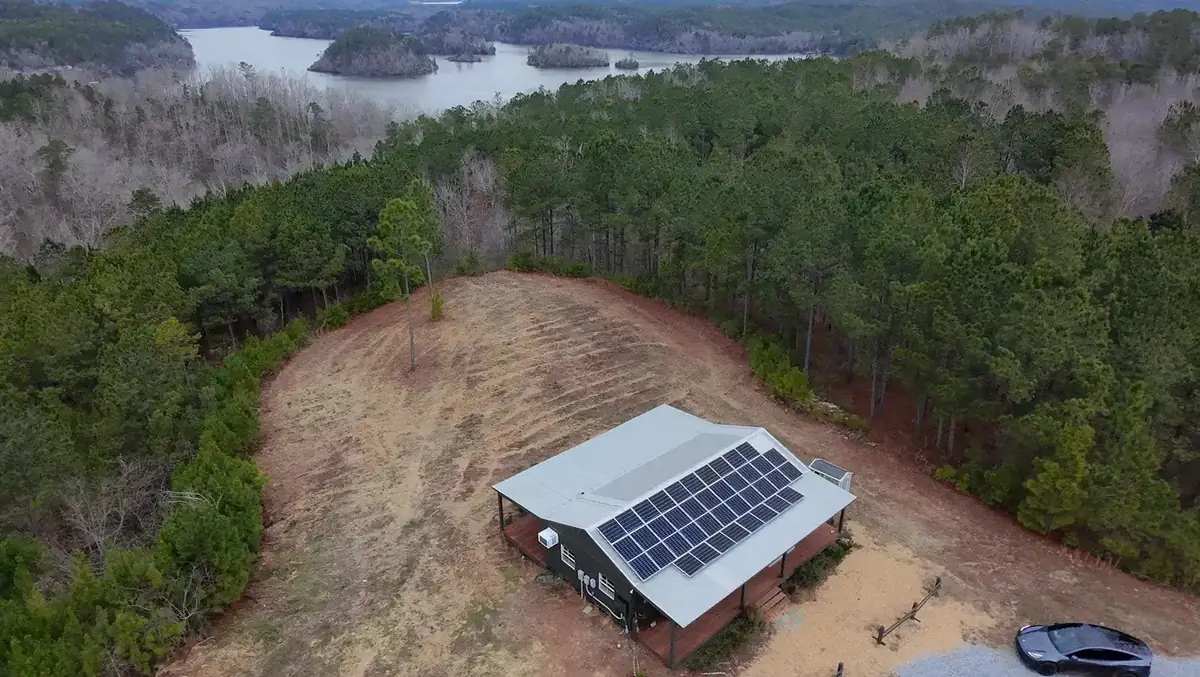 Off-GridOff-grid lake cabinGround-tilt metal roof array
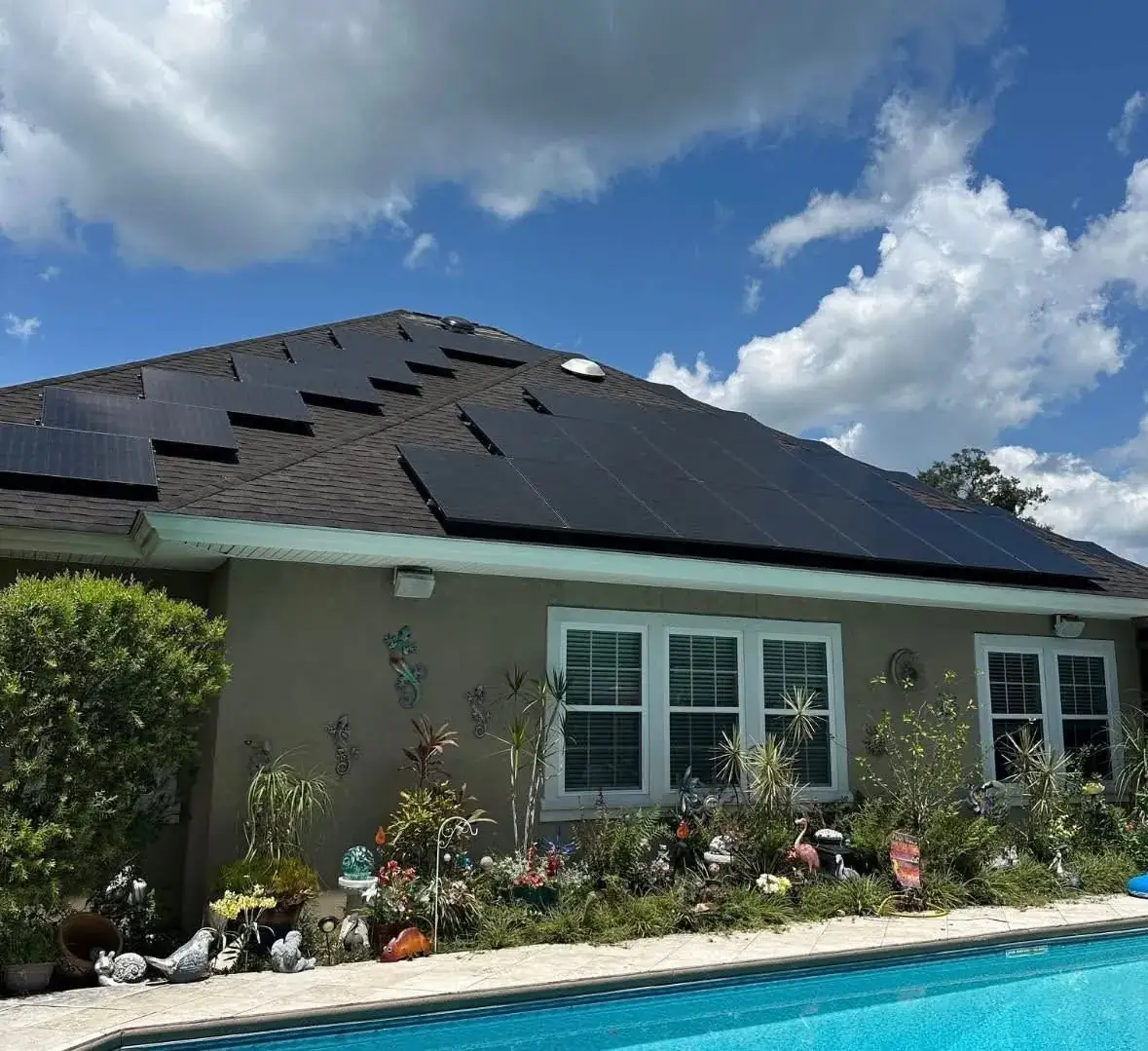 ResidentialFull black-on-blackPoolside single-story home
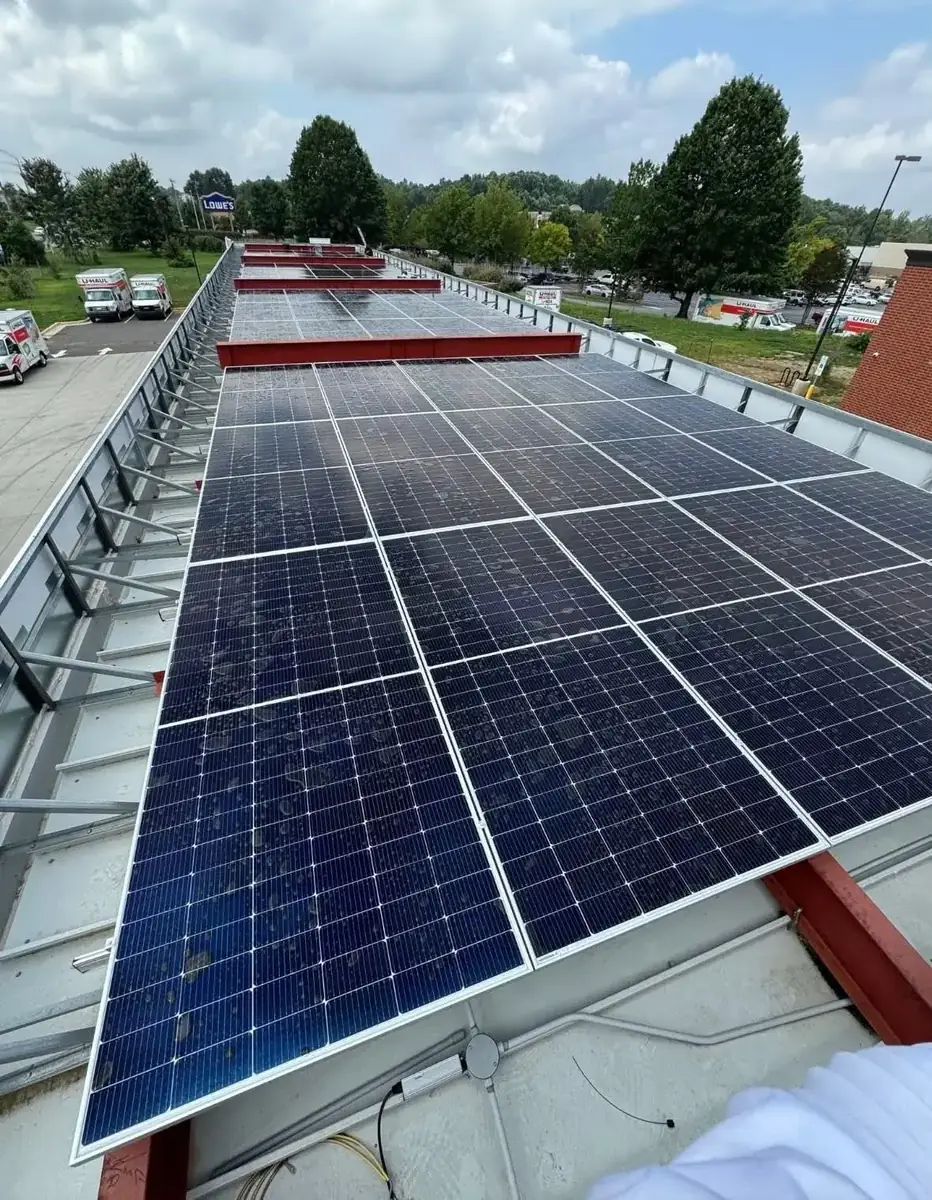 CommercialCommercial rooftopTilt-mounted rooftop system
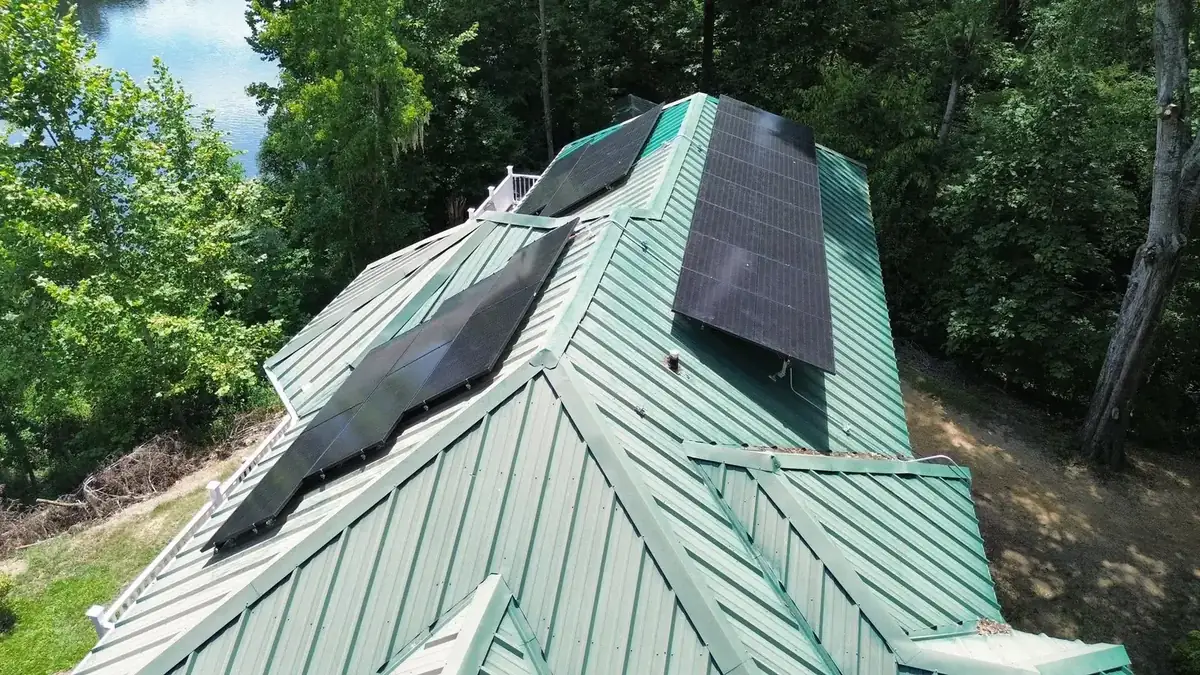 ResidentialStanding-seam metal roofLakeside multi-facet install
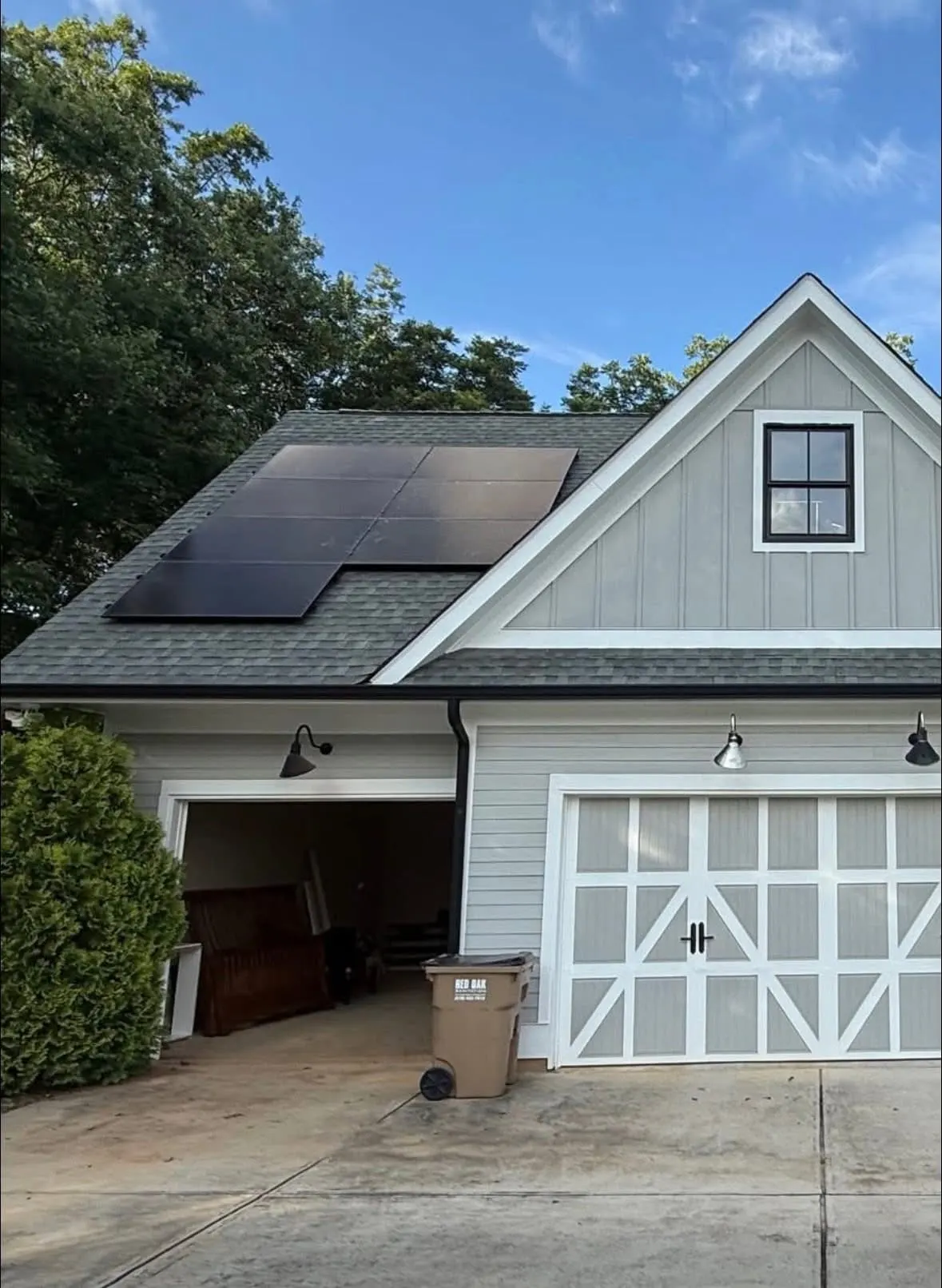 ResidentialDetached garage arrayFarmhouse-style home
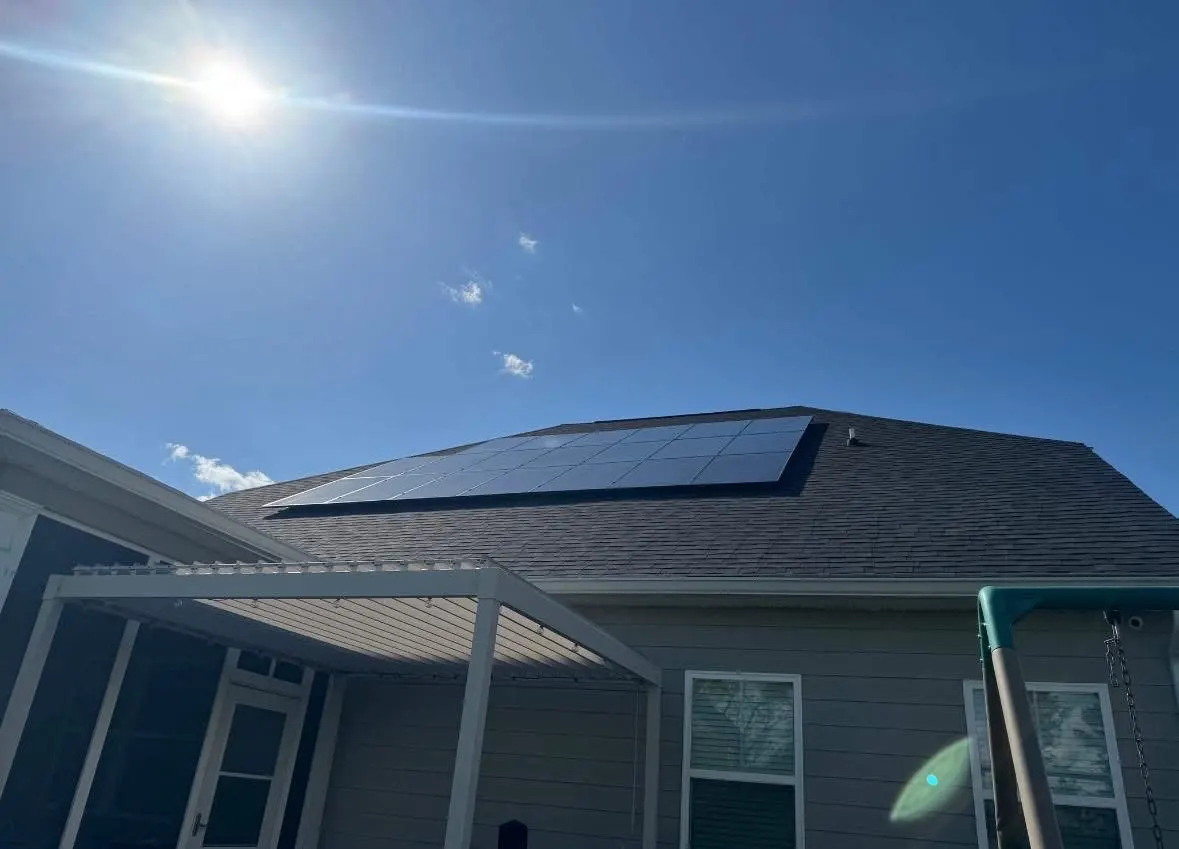 ResidentialShingle rooftop arrayBackyard-facing slope
Photo locations are not published at customer level. Where a customer has agreed to it, we name the job and the market on the completed-job records above.
Free assessment · Blythewood, SC
Get a straight answer for your Blythewood roof
We read your bill, confirm your Dominion Energy South Carolina export terms, and tell you what your roof in Richland County will actually carry. If solar does not make sense at your address, we will say so, and that answer is free too.
- We confirm whether Dominion Energy South Carolina or Fairfield Electric Cooperative serves many addresses here serves your meter before we quote anything
- Permitting runs through A building permit and a separate electrical permit for a rooftop system, and we handle it
- Newer subdivisions have active HOAs with architectural review; the semi-rural lots often have none at all.
Prefer to talk? (843) 310-1128
Blythewood EV charging FAQ
EV charger questions from Blythewood drivers
Should I charge my EV during the day or overnight in Blythewood?
If you have solar, daytime charging is usually better under current rates. Dominion Energy South Carolina credits exported power at roughly 2.8–4.1¢ per kWh while you buy power at about 14.4¢ per kWh, so charging from your own midday production converts low-value export into high-value self-consumption. Without solar, the answer depends on whether you are on a time-of-use rate, which we will check.
How much does EV charger installation cost in Blythewood?
The charger itself is the smaller part. Cost is driven by the run from your panel to where the car parks, whether your service panel has capacity for a 40 to 60 amp circuit, and whether the route is straightforward or needs trenching to a detached garage. We quote after seeing the panel and the route rather than over the phone.
Do I need an electrical panel upgrade for a Level 2 charger?
Sometimes. A Level 2 charger typically wants a dedicated 40 to 60 amp circuit, and older or fully-loaded panels may not have room. Load calculations decide it, and in some cases a load-management device avoids a full upgrade at lower cost. We check this first because it is the most common surprise.
Can you install an EV charger if I do not have solar?
Yes. Charger installation is standalone work and plenty of our customers are not solar customers. We will wire it so that adding solar later is straightforward rather than a rework, since that costs nothing to plan for now.
Do I need a permit for an EV charger in Richland County?
Yes, hard-wired EV charging equipment is electrical work requiring a permit and inspection in Richland County, and it must meet the National Electrical Code as adopted in South Carolina. We pull the permit and handle the inspection. Be wary of anyone offering to skip this, since unpermitted electrical work can affect insurance and resale.
Can you install chargers for a Blythewood business or multifamily property?
Yes. Workplace and multifamily charging brings extra considerations: how many spaces, load sharing across units, metering and who pays for the power. We work through the metering question before design, because it usually determines what is worth building.
Nearby
EV charger installation near Blythewood
Keep reading
EV charging guides
- EV Charging
Level 2 EV Charger Installation in South Carolina
Plan a Level 2 EV charger installation by vehicle limits, panel capacity, hardwire or plug connection, permits, quote scope, and acceptance tests.
27 min read - EV Charging
Solar and EV Charger Installation: Design and Rate-Plan Choices
Plan solar and EV charger installation around driving, parking, electrical capacity, load controls and Georgia or South Carolina utility economics.
33 min read - EV Charging
How Many Solar Panels Do You Need to Charge an EV?
Calculate solar panels for EV charging from miles, vehicle efficiency, home charging, PVWatts yield, module wattage, roof fit, and utility rules.
24 min read - EV Charging
How to Install Home Charging for Two EVs
Choose a two-EV home charging design using both vehicles, parking windows, shared or independent EVSE, aggregate controls, capacity, and testing.
25 min read - EV Charging
Installing an EV Charger in a Detached Garage
Plan a detached-garage EV charger using feeder or branch options, grounding, trench routes, capacity controls, parking, permits, and commissioning.
24 min read - EV Charging
Panel Upgrade or EV Load Management: Which Does Your Home Need?
EV load management vs panel upgrade: compare lower charging output, managed charging, panel, service and utility work using a documented load calculation.
24 min read
Free, no-pressure assessment
Get charging sorted at your Blythewood address
We will run the load calculation, look at the route, tell you honestly whether you need a panel upgrade, and set charging up to work with your solar rather than against it.
Mon–Sat, 10am–6:30pm ET · We typically follow up within the hour.