


Most South Carolina homeowners pay between $400 and $2,500 for the cost to install EV charger at home equipment and labor, with the final number depending mostly on whether your electrical panel can handle a new 240-volt circuit. A straightforward Level 2 install with an open panel slot runs closer to $1,200, while a home needing a full panel upgrade can climb past $4,000 once permits and labor are added.
Key Takeaways
- Level 2 charger installs typically cost $1,200-$2,500 installed: that includes hardware, a dedicated 240V circuit, and licensed electrician labor.
- Panel upgrades are the biggest wildcard: moving from 100-amp to 200-amp service adds $1,500-$4,000 depending on your home’s age and wiring.
- South Carolina permits usually run $75-$300: most municipalities require an electrical permit and inspection for any new 240V circuit.
- Charger location matters more than brand: every extra foot of wire between your panel and garage adds labor cost.
- Pairing with solar can cut your fuel cost to near zero: charging from rooftop production changes the long-term math even when the install cost stays the same.
At a Glance: EV Charger Installation Costs
| Cost Component | Typical Range | Notes |
|---|---|---|
| Level 1 charger (120V) | $0-$300 | Often included with the vehicle; no new circuit needed |
| Level 2 charger hardware | $400-$900 | Wall-mounted or portable unit, 240V |
| Level 2 installation labor | $500-$1,600 | Depends on wire run length and panel access |
| Electrical panel upgrade | $1,500-$4,000 | Needed if panel lacks capacity or open breaker slots |
| Permit and inspection | $75-$300 | Varies by South Carolina municipality |
| Trenching for detached garage | $500-$2,000 | Only applies if charger is far from main panel |
| Total typical range | $1,200-$4,500 | Before any utility rebates |
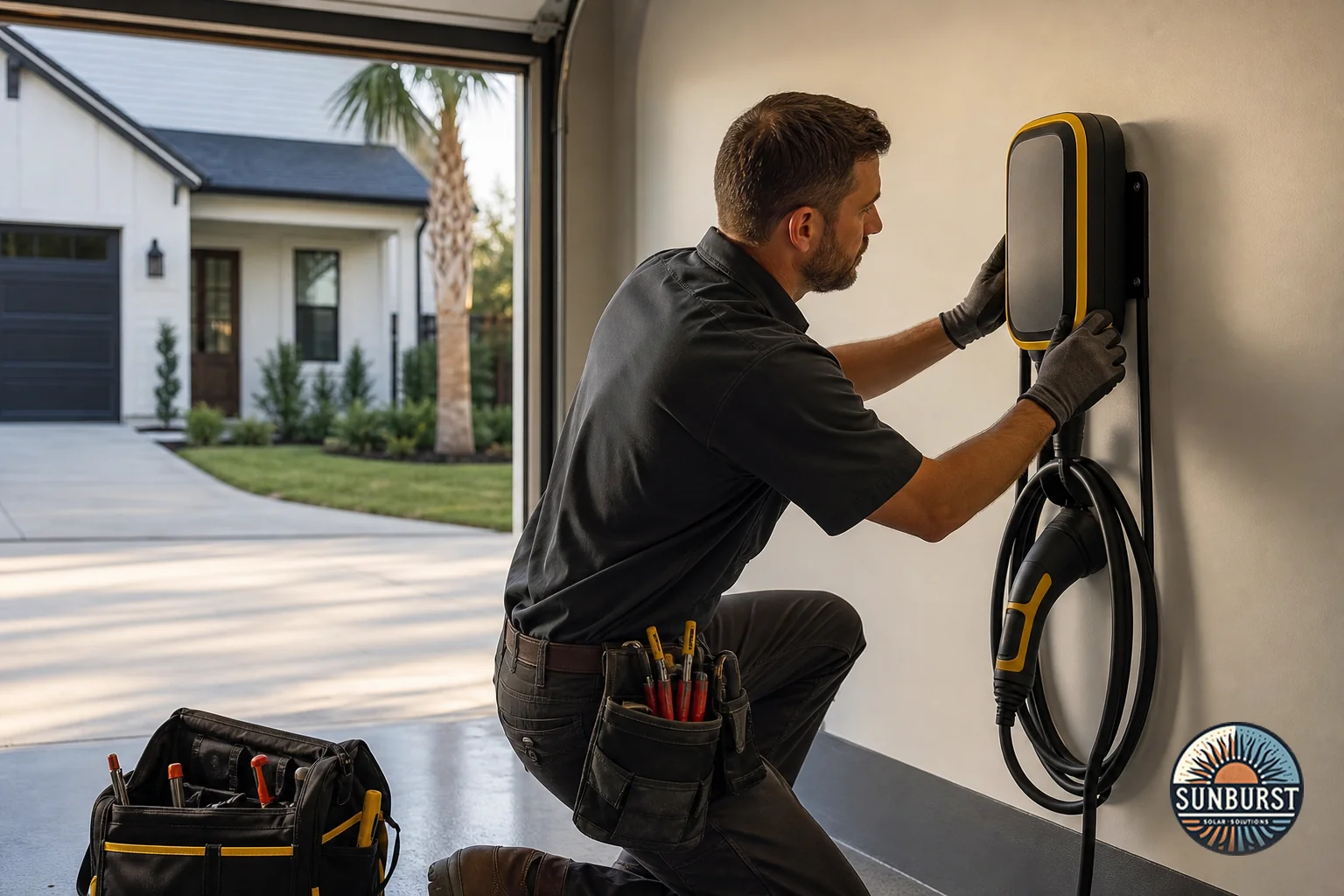
Level 1 vs Level 2 Home Chargers: Cost and Speed Compared
The two charger types work very differently, and the gap between them explains most of the price confusion homeowners run into when they start shopping. A Level 1 charger plugs into a standard 120-volt household outlet, the same kind that powers a lamp or toaster. It needs no new wiring in most cases, which keeps the cost near zero if your vehicle came with one.
A Level 2 charger runs on a 240-volt circuit, the same voltage used by an electric dryer or oven. It charges four to ten times faster and is what most EV owners end up installing once they realize how slow Level 1 charging actually is.
| Feature | Level 1 | Level 2 |
|---|---|---|
| Voltage | 120V | 240V |
| Charging speed | 3-5 miles of range per hour | 20-40 miles of range per hour |
| Full charge time | 24-48 hours | 4-8 hours |
| New circuit needed | Usually no | Yes, dedicated 240V circuit |
| Typical installed cost | $0-$300 | $1,200-$2,500 |
| Best for | Occasional or backup charging | Daily drivers, larger vehicles |
Anyone who drives more than 30 miles a day will find Level 1 too slow for daily use. It works fine as a backup, but it rarely replaces a real home charging setup once the novelty of owning an EV wears off.
What Drives the Total Cost to Install an EV Charger at Home
Ask five installers for a quote and you’ll likely get five different numbers. The spread comes down to a handful of factors that installers weigh differently, and knowing them ahead of time helps you spot a fair price from an inflated one.
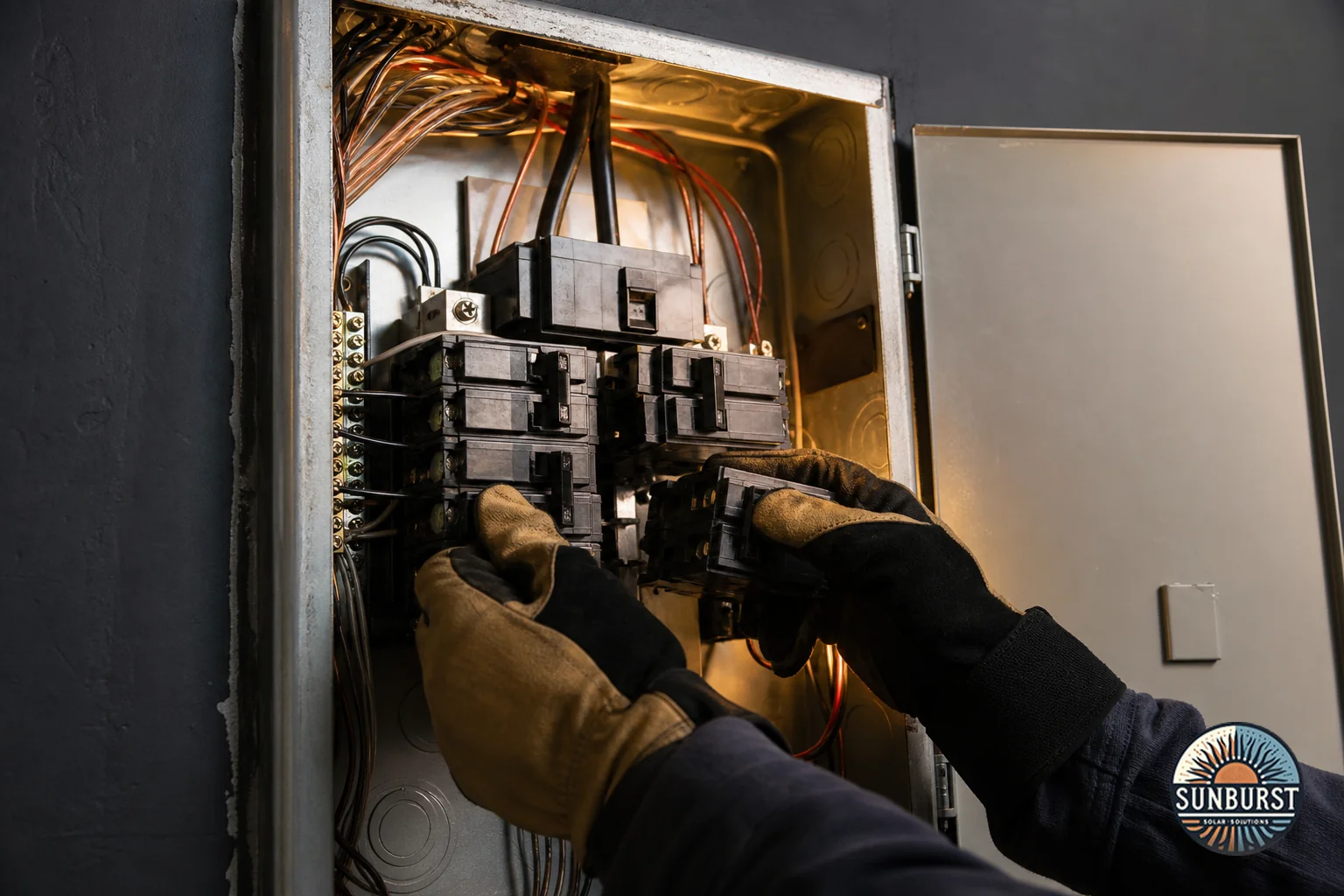
- Electrical panel capacity: a panel with an open 40 or 50-amp breaker slot keeps costs low. A full panel or outdated fuse box adds significant labor.
- Distance from panel to charger: every extra foot of conduit and wire, especially through finished walls or concrete, raises the labor bill.
- Permit fees: South Carolina municipalities charge for electrical permits, and fees differ between Charleston, Myrtle Beach, and inland counties.
- Charger hardware choice: smart chargers with app connectivity and scheduling cost more than basic hardwired units, though the price gap has narrowed in recent years.
- Labor rates and installer experience: a licensed electrician familiar with EV installs works faster and avoids costly rework compared to a general contractor learning on the job.
If you’re weighing quotes from a national installer against a local electrician, the same questions that apply to choosing a solar installer apply here too: ask for a written scope, a firm price, and a timeline before you sign anything.
When You’ll Need an Electrical Panel Upgrade
Homes built before the 1990s often have 100-amp electrical service, which was fine for the appliance load of that era but leaves little room for a 240V EV circuit alongside central air, an electric water heater, and a kitchen range. If your panel is already near capacity, adding a charger without an upgrade risks tripped breakers or a failed inspection.
Signs you may need a panel upgrade include a panel with no open breaker slots, a home older than 25 years that hasn’t been rewired, or a service rated below 150 amps. Upgrading from 100-amp to 200-amp service typically costs $1,500 to $4,000 in South Carolina, depending on whether the utility needs to upgrade the service line as well.
This is also the point where many homeowners start thinking about future electrical load, not just the charger. If a battery storage system or additional solar capacity is on your radar, it’s worth planning the panel work once rather than paying an electrician twice. Our guide on home battery storage cost covers how panel capacity affects that project too.
Permitting and Inspection in South Carolina
Most municipalities across the state, including Charleston, Myrtle Beach, and Columbia, require an electrical permit for any new 240V circuit, and that includes EV chargers. The permit process typically adds one to three weeks to your timeline and costs $75 to $300 depending on the jurisdiction.
Skipping the permit might feel like a shortcut, but it creates real problems later. Unpermitted electrical work can complicate a home sale, void your homeowner’s insurance claim if a fire starts near the circuit, and leave you without proof the work meets code. A licensed electrician pulls the permit as part of the job and schedules the inspection, so this shouldn’t add stress on your end if you hire the right contractor.
If your EV charger install is happening alongside solar panel work, the permitting timeline runs in parallel with your Santee Cooper interconnection approval in many cases, since both involve the same local building department.
Ways to Lower Your EV Charger Installation Cost
A few practical choices can shave hundreds of dollars off your final bill without cutting corners on safety.
- Mount the charger close to your panel. Garages with a panel on the same wall as the parking spot need the shortest wire run and the lowest labor cost.
- Bundle the work with other electrical projects. If you’re already having an electrician on site for a panel upgrade or solar installation, adding the charger circuit at the same time saves a second service call.
- Ask your utility about EV charging rebates or off-peak rate plans. Some South Carolina utilities offer incentives for installing Level 2 chargers or shifting charging to overnight hours.
- Get at least two or three quotes. Pricing for identical scopes of work can vary by a thousand dollars or more between contractors, and the questions worth asking mirror what to ask before signing a solar contract: what’s included, what’s excluded, and who pulls the permit.
- Choose a hardwired unit over a plug-in unit if code allows. Hardwired installs sometimes cost less overall since they skip the need for a dedicated outlet box.
Pairing Your EV Charger With Solar and Battery Storage
Installing a charger solves the speed problem, but it doesn’t touch your electric bill. Charging an EV from grid power adds a meaningful amount to a monthly bill, often $40 to $100 depending on how many miles you drive. Pairing your charger with a solar system shifts a chunk of that cost to sunlight you’re already generating, which is why many Sunburst Solar Solutions customers in South Carolina add a charger circuit during their solar installation rather than as a separate project later.
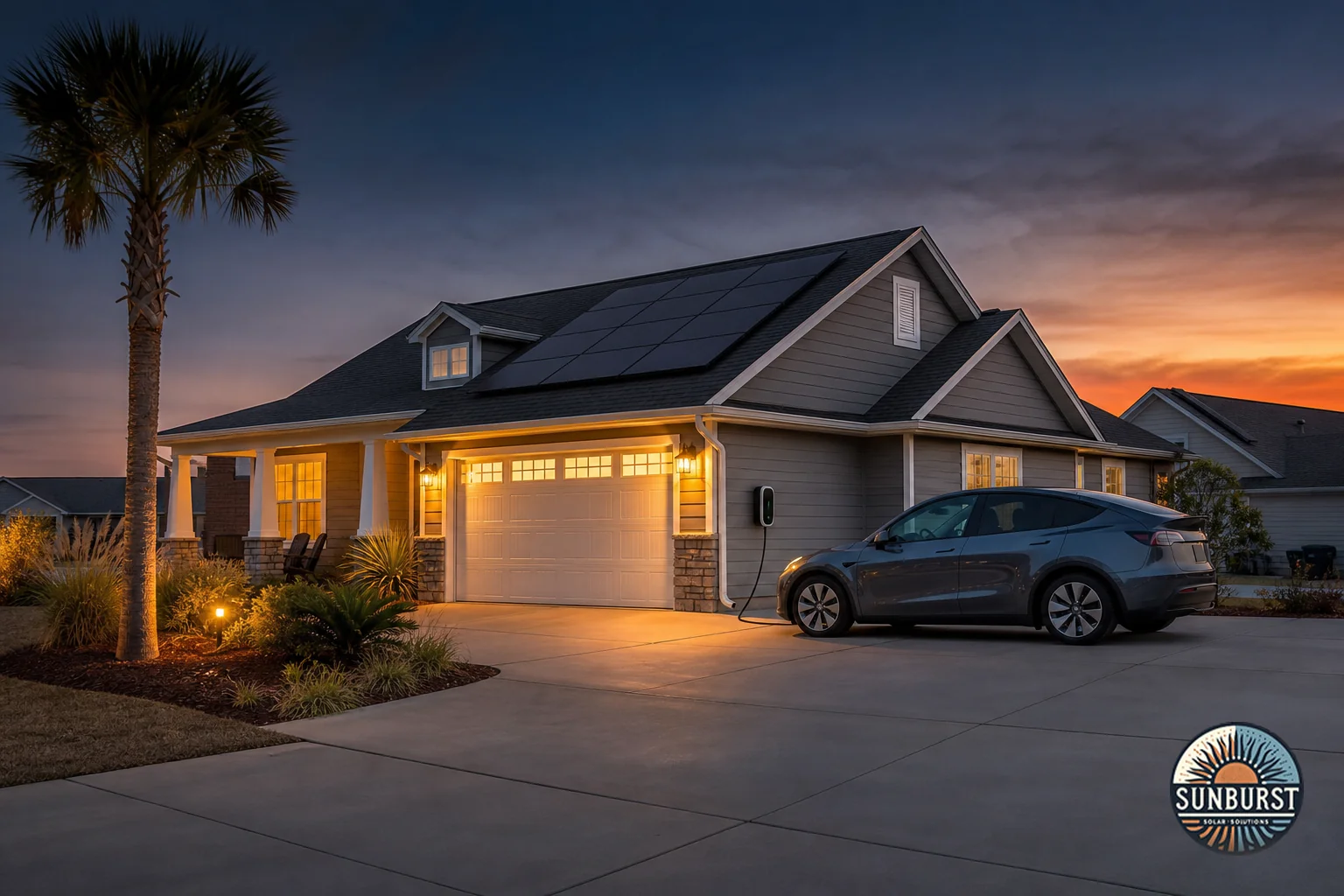
A home battery adds another layer of value here. If the power goes out, a charger tied only to the grid stops working, same as everything else in the house. A battery-backed system keeps critical circuits running, including your charger in some configurations, which matters more during hurricane season along the coast. Our post on solar battery vs generator options breaks down which backup approach fits different budgets and outage risks.
If your home already has solar or you’re planning an installation, it’s worth discussing EV charging needs during the same site visit. Sizing the system to cover both your household load and vehicle charging avoids a scenario where you’re back on the grid for a big chunk of your energy use.
Frequently Asked Questions
How long does a home EV charger installation take?
A straightforward Level 2 install with an available panel slot usually takes half a day. Add a panel upgrade and the project can stretch to one or two full days, plus the time needed to schedule the permit inspection.
Can I install a Level 2 charger myself?
South Carolina code requires a licensed electrician for new 240V circuits tied into your home’s panel. Attempting the wiring yourself risks a failed inspection, a voided manufacturer warranty on the charger, and a real safety hazard.
Does my home insurance need to know about an EV charger?
Many insurers ask about major electrical additions during a policy review, so it’s worth mentioning the install, especially if a panel upgrade was part of the project. Check with your provider directly rather than assuming it’s automatically covered.
Will an EV charger increase my electric bill significantly?
Expect somewhere between $40 and $100 a month in added electricity cost depending on how many miles you drive and your local utility rate. Charging overnight on a time-of-use plan, or from solar production during the day, both reduce that number.
Whether you’re planning a charger install on its own or want to fold it into a new solar and battery system, getting the electrical side right from the start avoids costly rework later. Get a free assessment from Sunburst Solar Solutions to find out what your home’s panel can handle, what a charger install would actually cost, and whether pairing it with solar makes sense for your electric bill and your driving habits.