


New 2026 homeowner solar or battery installations do not qualify for the expired federal Residential Clean Energy Credit. South Carolina incentives are a separate calculation with their own eligibility, annual limits and tax-liability requirements. Confirm the actual project with a qualified tax professional; do not assume combined federal/state credits cut a new purchase price in half. See current IRS Section 25D guidance.
Key Takeaways
New 2026 homeowner solar or battery installations do not qualify for the expired federal Residential Clean Energy Credit. Request a cash price and financing schedule that do not depend on a federal-credit prepayment. Any state benefit must be calculated for the owner’s actual eligibility and timing. See current IRS Section 25D guidance.
At a Glance: Solar Lease vs Buying in Charleston, SC
| Factor | Solar Lease / PPA | Buying (Cash or Loan) |
|---|---|---|
| Upfront cost | $0 to low upfront | Full cost upfront, or $0 down with a solar loan |
| Federal tax treatment | No new homeowner Section 25D credit for 2026 installations | No new homeowner Section 25D credit for 2026 installations |
| SC state tax credit (25%) | Not eligible | Eligible |
| Typical contract length | 20-25 years | None (cash) or 10-25 year loan term |
| Monthly payment | Fixed lease fee or per-kWh PPA rate, often with an escalator | Loan payment until paid off, then $0 |
| Home resale impact | Requires lease transfer or buyout; can slow closings | Owned equity can support asking price |
| Maintenance responsibility | Leasing company handles repairs | Homeowner, though covered under workmanship warranty |
| Break-even timeline | Rarely breaks even for the homeowner; savings go to leasing company | Roughly 6-9 years in the Charleston area |
How a Solar Lease and a PPA Actually Work
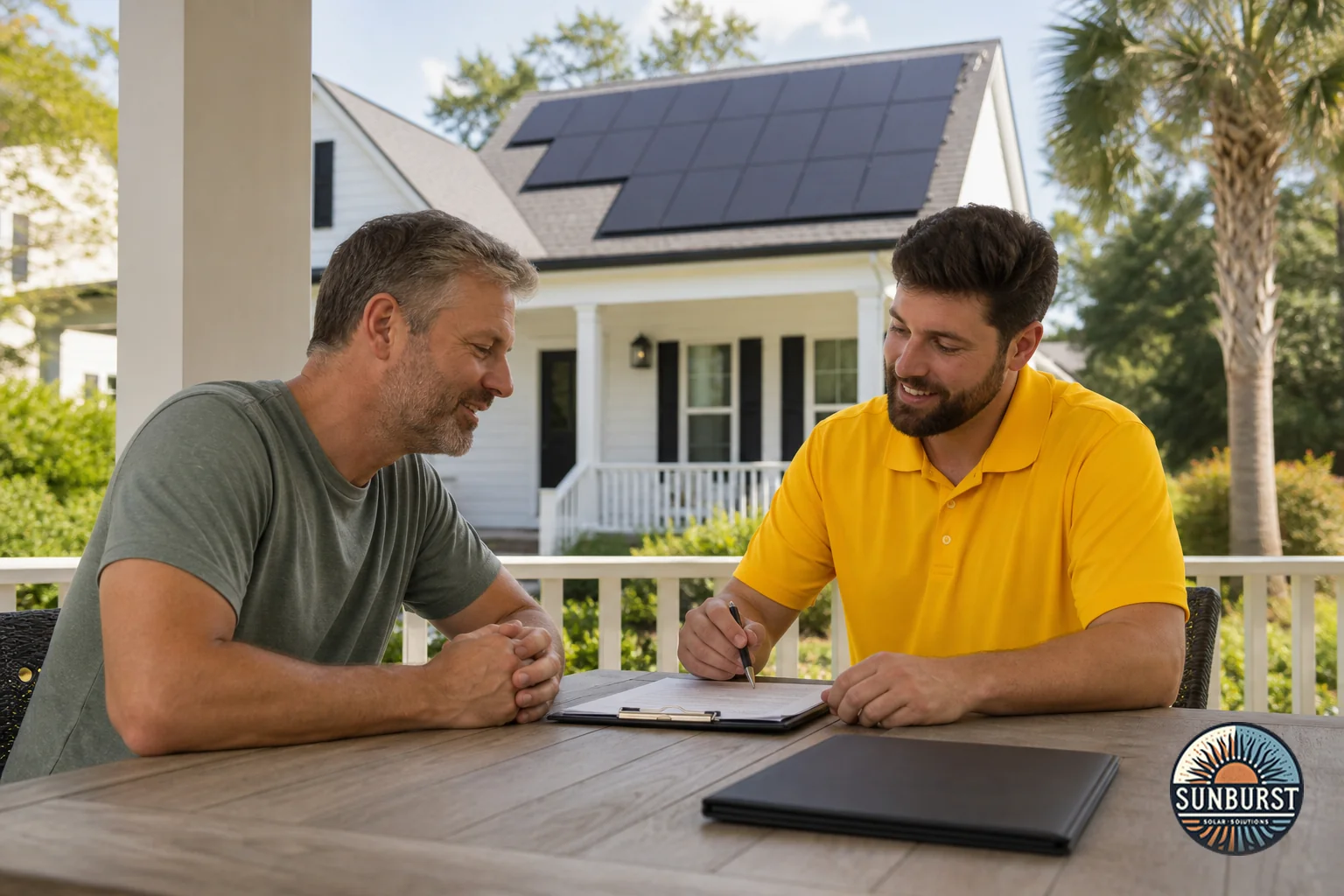
A solar lease charges a fixed monthly fee for the use of equipment a third-party company owns and maintains on your roof. A power purchase agreement, or PPA, works a little differently. Instead of a flat fee, you pay per kilowatt-hour the system actually produces, usually at a rate lower than what your utility charges.
New 2026 homeowner solar or battery installations do not qualify for the expired federal Residential Clean Energy Credit. A valid credit from an eligible earlier installation and an unused carryforward are different from a credit for a new purchase. Ask a tax professional which tax year and documents control the specific claim. See current IRS Section 25D guidance.
Maintenance is the one clear upside. If a panel underperforms or an inverter fails, the leasing company handles the repair at no cost to you, since it’s their asset. That trade-off, no upfront cost and no repair bills against giving up tax credits and equity, is the whole decision in miniature.
How Buying Solar Panels Works in Charleston, SC
Buying means you own the system from the day it’s installed, whether you pay cash or finance the purchase with a solar loan. With a loan, you still own the equipment immediately; the lender just holds a lien until it’s paid off, similar to a car loan or mortgage.
New 2026 homeowner solar or battery installations do not qualify for the expired federal Residential Clean Energy Credit. Savings and payback should use the full installed scope, utility imports and export compensation, financing obligations and realistic replacement costs. A generic payback estimate based on the former federal homeowner credit is not a current property-specific forecast. See current IRS Section 25D guidance.
Ownership also means any excess production credited back by your utility, whether that’s Dominion Energy or Santee Cooper, belongs to you. If you’re on the Santee Cooper side of the grid, it helps to understand how Santee Cooper’s interconnection process handles metering and credits before you finalize your system size.
Solar Lease vs Buying Solar Panels Charleston SC: Cost and Savings Breakdown
Charleston-area residential systems generally run in the range covered in our solar installation cost breakdown, and buying that same system outright means the sticker price hits you all at once, or gets spread across loan payments. A lease or PPA sidesteps that sticker price, replacing it with a monthly bill that’s often lower than your current utility bill from day one.
Here’s where the math flips over the long run. Once a cash or loan purchase reaches its break-even point, usually somewhere between six and nine years for a typical Charleston home, every kilowatt-hour the system produces after that is savings with no further payment attached. A 25-year system life gives owners 15 to 19 years of largely payment-free production.
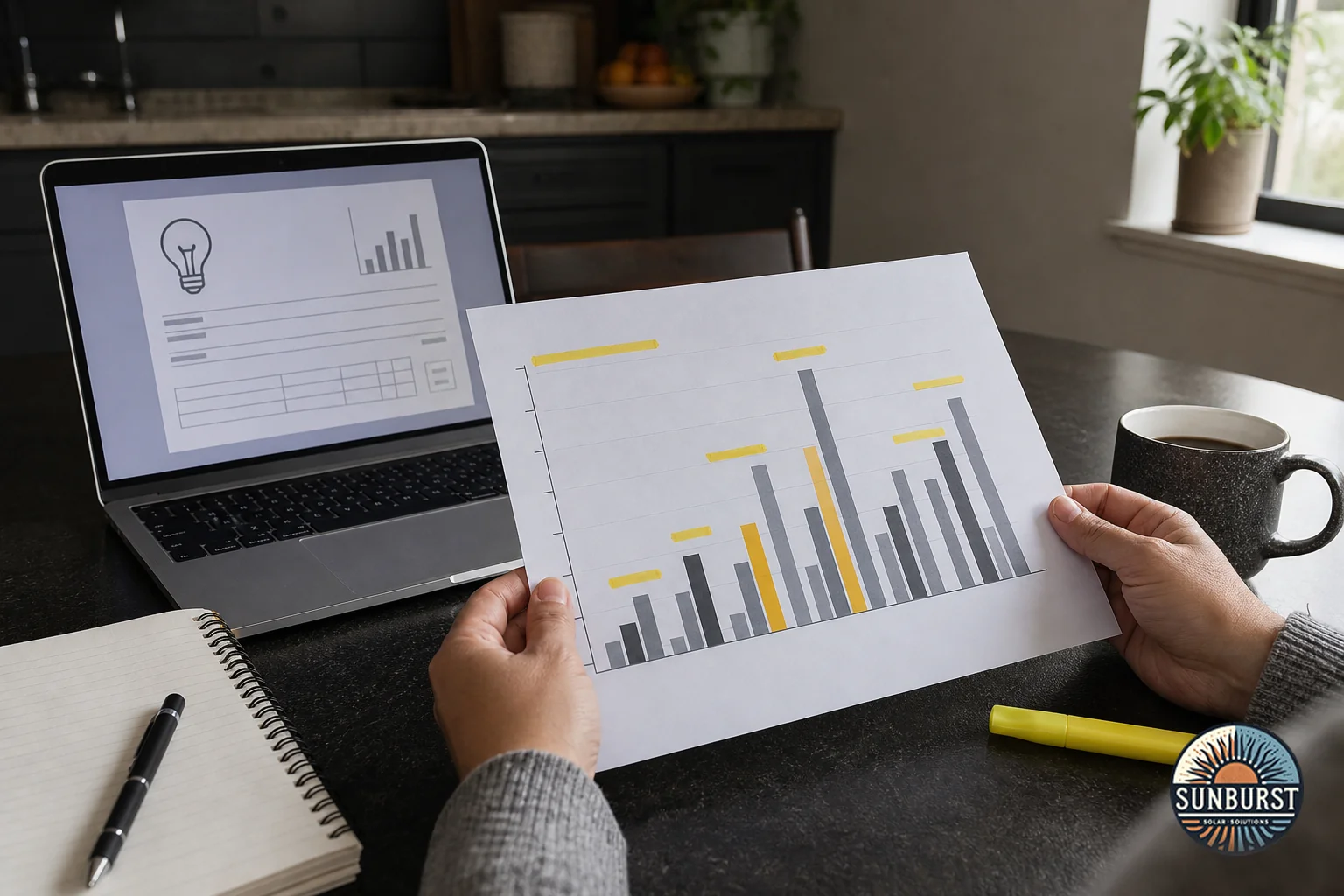
Leases and PPAs don’t offer that same cliff. Many contracts include an annual rate escalator, often 2% to 3%, meaning your “locked-in” monthly payment actually climbs every year for two decades. It’s still usually lower than what the utility would charge for the same usage, but the gap narrows over time, and you never reach a point where the payment drops to zero.
South Carolina’s coastal humidity and hurricane exposure also play into long-term costs. Owned systems covered by a solid workmanship warranty give homeowners clear recourse if storm damage or equipment failure occurs; our warranty comparison guide breaks down what’s actually covered versus what sounds covered.
Tax Credit Eligibility: Why Ownership Matters
New 2026 homeowner solar or battery installations do not qualify for the expired federal Residential Clean Energy Credit. South Carolina incentives are a separate calculation with their own eligibility, annual limits and tax-liability requirements. Confirm the actual project with a qualified tax professional; do not assume combined federal/state credits cut a new purchase price in half. See current IRS Section 25D guidance.
South Carolina layers on its own 25% state credit, capped per year but carried forward if you can’t use it all at once. Combined, these two credits can offset roughly half the cost of a purchased system over time. Leasing companies structure their pricing around claiming these credits themselves, which is exactly why lease and PPA monthly rates are set where they are: the company, not you, is banking that tax benefit.
If you’re still deciding between financing paths, our detailed breakdown of what qualifies for solar tax credits in 2026 walks through the IRS forms and South Carolina filing requirements step by step.
Home Resale Impact in the Charleston Market
Charleston’s real estate market moves fast, and solar can be an asset or a snag depending on how you got your panels. An owned, paid-off solar system is treated much like any other home improvement. Appraisers can factor in the equity, and buyers generally see it as a bonus that lowers their future utility bills without any strings attached.
A leased system changes that conversation. When you sell, the buyer has to either qualify to take over the lease payments, similar to applying for financing, or you have to buy out the remaining contract balance before closing. Some buyers walk away from a deal entirely rather than deal with a lease transfer, and title companies sometimes flag active leases as liens that need resolving before the sale can close.
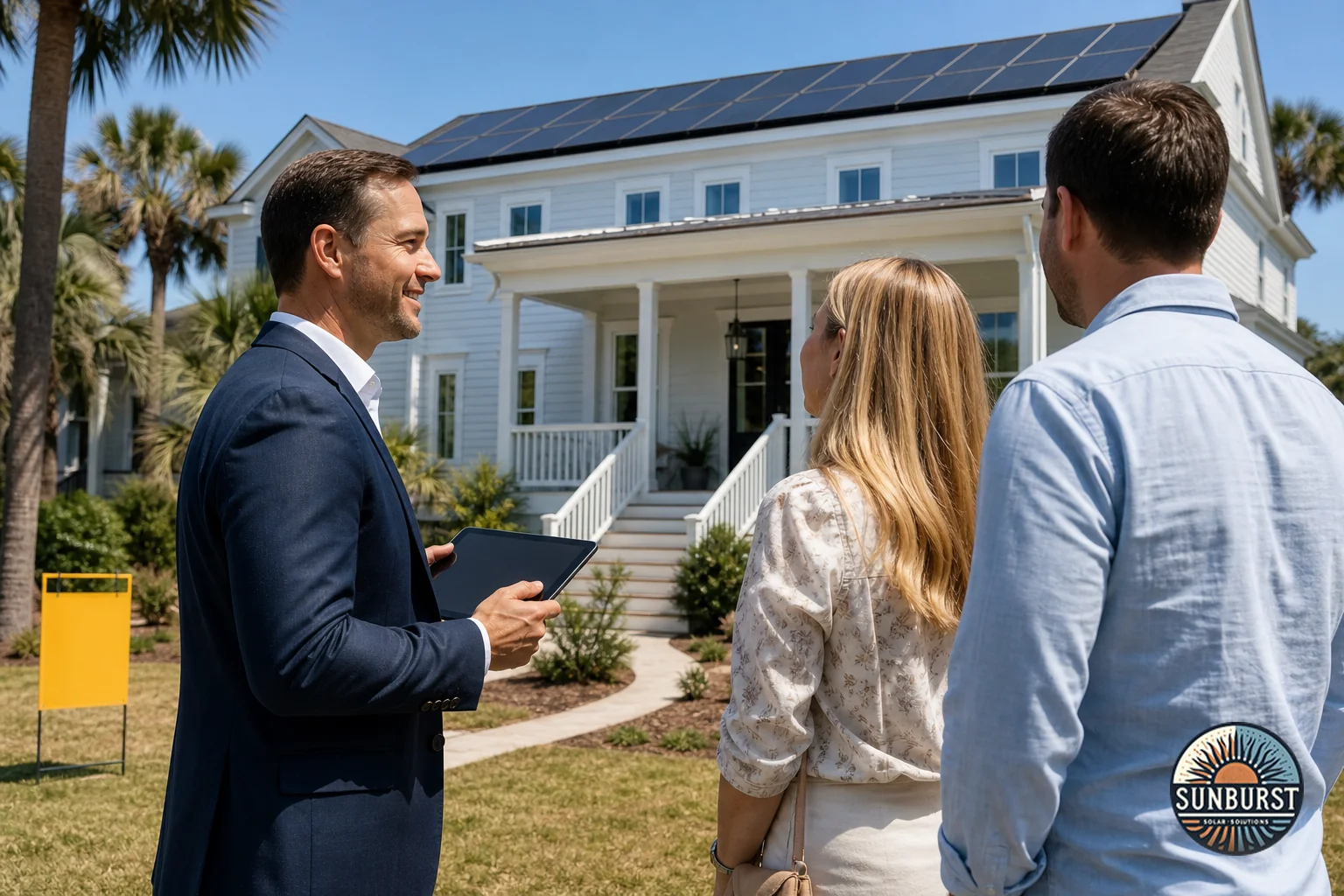
If you’re weighing a roof replacement alongside your solar decision, since roof age can affect both financing and resale readiness, our guide on whether your roof needs replacing before solar panels is worth a look before you commit to either ownership path.
Questions to Ask Any Charleston Solar Installer Before You Sign
Whether you’re leaning toward a lease or a purchase, the contract details determine whether you’re happy with the decision five years from now. Ask each installer:
- Who legally owns the system, and who claims the federal and state tax credits?
- If this is a lease or PPA, what happens to my payments and the contract if I sell my home?
- Does the monthly rate include an annual escalator, and what’s the total increase by year 20?
- What’s covered under the manufacturer warranty versus your company’s workmanship warranty?
- How does Santee Cooper or Dominion treat interconnection and net metering differently for owned versus leased systems?
Our full checklist in what to ask before signing a solar contract goes deeper on contract red flags, and how to choose a solar installer covers warning signs that apply to both financing paths. If your project also involves roofing or battery storage, solar, roofing, and battery: do you need multiple contractors? explains how those pieces fit together.
Which Option Wins for Charleston Homeowners?
Buying wins for most homeowners planning to stay put for more than five to seven years. You keep the tax credits, build real equity, and eventually stop paying for electricity altogether once the system is paid off. The upfront cost is the tradeoff, though financing through a solar loan closes most of that gap by spreading payments out while you still capture both tax credits.
A lease or PPA can still make sense for homeowners who plan to move soon, want zero maintenance responsibility, or simply can’t finance a purchase right now. Just go in knowing you’re trading long-term savings and resale flexibility for short-term convenience.
Sunburst Solar Solutions built its consultation process around this exact decision. Instead of pushing one financing path, the team walks Charleston homeowners through real numbers on both a lease and a purchase for their specific roof, usage, and utility before anything gets signed. That education-first approach is also why Sunburst positions itself differently from national installers that often default customers into whichever financing product the sales script favors that month.
FAQ: Solar Lease vs Buying in Charleston, SC
Can I switch from a lease to owning my system later?
Some lease and PPA contracts include a buyout option, usually at set intervals, that lets you purchase the remaining system at a depreciated price. It’s not automatic, so this needs to be spelled out in the original contract, not assumed after the fact.
Does Santee Cooper treat leased and owned systems differently for interconnection?
The interconnection application and inspection process is largely the same either way, since it’s about the equipment and the electrical connection, not who owns it. Where it differs is in who receives net metering credits and who’s listed on the account for billing purposes.
How does solar panel maintenance near me differ for owned vs. leased systems?
With a leased system, the leasing company is contractually responsible for repairs and performance monitoring. With an owned system, that responsibility falls to your installer’s warranty terms, which is why checking workmanship coverage before you buy matters as much as checking the panel specs.
If you’re still weighing a solar lease against buying solar panels for your Charleston home, the clearest next step is getting real numbers for your specific roof and electric bill instead of relying on general averages. Get a Free Assessment from Sunburst Solar Solutions and walk through the ownership tradeoffs, tax credit math, and resale considerations with someone who’ll answer the hard questions before you sign anything.