
For most Columbia, SC homeowners, a traditional roof replacement paired with standard solar panels costs less upfront and finishes faster than a full solar roofing system, but solar roofing wins on curb appeal and long-term simplicity for homes with strict HOA rules. The right call depends on your roof’s age, your budget, and how much you care about hiding the hardware.
Key Takeaways
New 2026 homeowner solar or battery installations do not qualify for the expired federal Residential Clean Energy Credit. Do not treat an ordinary roof replacement or structural roof work as a solar tax-credit expense. Older eligible projects and solar-generating equipment have distinct tax rules; verify them independently rather than financing roof work around an assumed federal refund. See current IRS Section 25D guidance.
At a Glance: Solar Roofing vs Traditional Roof Plus Panels
| Factor | Solar Roofing | Traditional Roof + Panels |
|---|---|---|
| Typical cost premium | 1.5x-2.5x a standard roof+panel install | Lower baseline, budget-friendly |
| Installation timeline | 8-12 weeks | 4-8 weeks |
| Best for | New roofs, strict HOAs, high curb-appeal priority | Sound existing roofs, faster payback, most budgets |
| Federal tax treatment | No new homeowner Section 25D credit for 2026 installations | No new homeowner Section 25D credit for 2026 installations |
| Repair complexity | Specialty crew usually required | Standard roofer or solar tech can service either part |
| Contractor count | Often one specialty installer | Can be one coordinated team or two separate crews |
| Battery storage compatible | Yes | Yes |
| Availability in Columbia, SC | Limited installers, longer lead times | Widely available, faster scheduling |
What Is Solar Roofing, Really?
Solar roofing means the solar cells are built into the roofing material itself, not bolted on top of it. Instead of shingles topped with separate panels, you get tiles or shingles that generate electricity while also shedding rain like a normal roof. From the street, a well-installed solar roof can look almost indistinguishable from a standard dark asphalt or slate roof.
This matters for a specific type of homeowner: someone in a Columbia neighborhood with a picky architectural review board, or someone who’s already committed to replacing their entire roof and wants one seamless surface instead of visible rectangles perched on top. It’s a smaller category of buyer than most people assume, and that’s part of why solar roofing vs traditional roof plus panels is worth thinking through carefully before you commit.
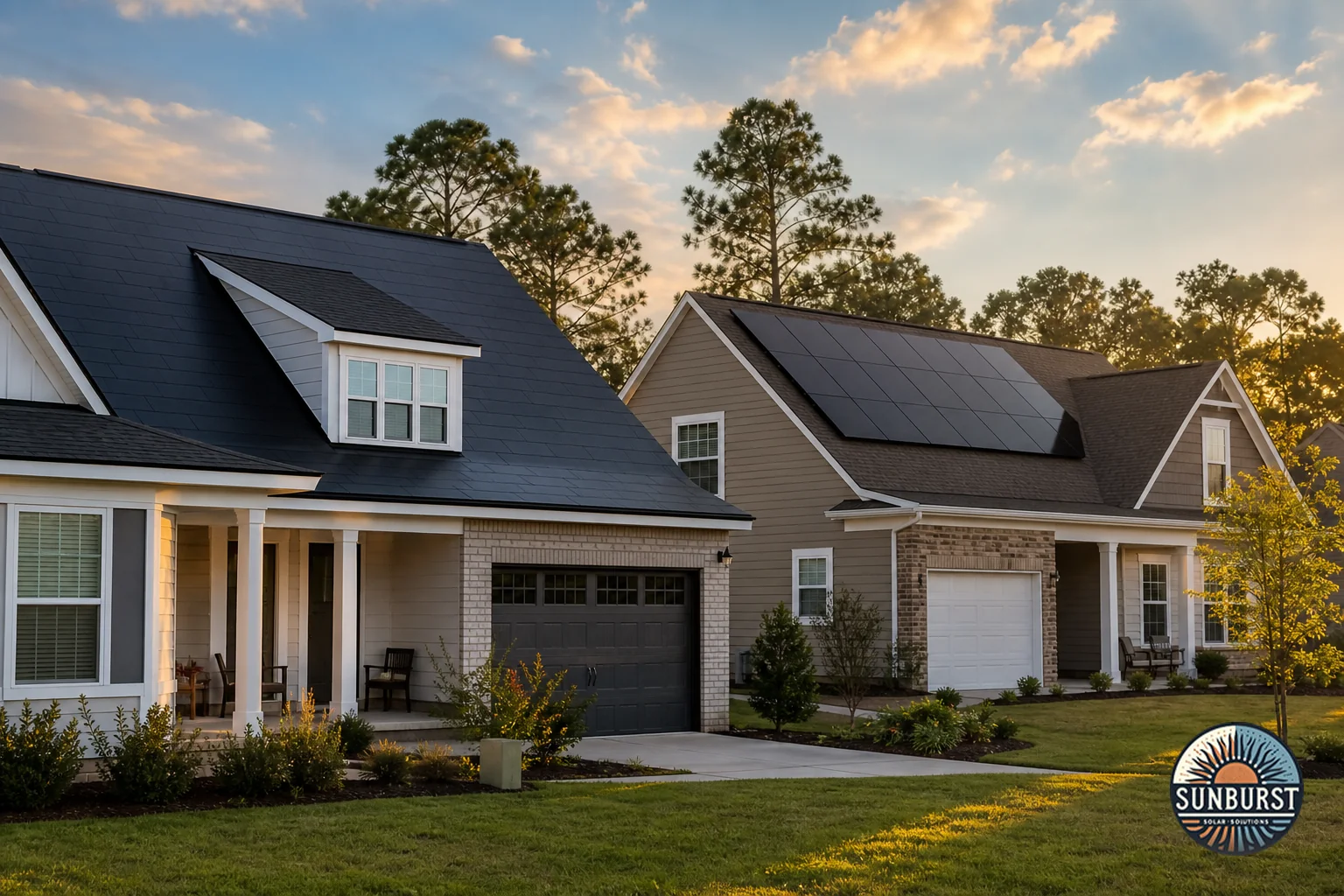
Availability is the other practical wrinkle. Solar roofing products come from a smaller pool of manufacturers, and not every installer in the Midlands region carries them. That narrower supply chain is a big reason lead times run longer than a standard panel install.
What Counts as “Traditional Roof Plus Panels”?
This is the path most Columbia homeowners actually take. A roofer replaces the roof surface, usually with architectural shingles or standing-seam metal, and then a solar crew mounts panels on racking bolted through the new roof deck. The two systems stay physically and functionally separate: one sheds water, the other makes electricity.
If your roof already has 10 or more years of life left, you may not need a replacement at all, in which case this comparison narrows to “add panels to my existing roof” versus “go solar roofing,” which almost always favors the standard panel route on cost alone. If your roof is aging out, though, pairing the replacement with a solar install in a single project avoids paying labor twice for scaffolding, tear-off, and inspections. Our guide on whether your roof needs replacing before solar panels walks through how to judge your roof’s remaining lifespan.
Cost Comparison for Columbia, SC Homes
Money is usually what settles this decision. Solar roofing products cost more per square foot to manufacture, and installation requires specialty-trained crews rather than a standard roofing team plus a standard solar team. For a typical 2,000 to 2,500 square foot Columbia roof, that premium adds up fast compared to a new architectural shingle roof paired with a correctly sized panel system.
Traditional roof plus panels usually wins on straightforward payback math too. Because more installers compete for that work, pricing stays more predictable, and equipment options range from budget to premium. If you want a detailed breakdown of what standard solar installation costs in South Carolina right now, see how much solar panel installation costs in 2026.
New 2026 homeowner solar or battery installations do not qualify for the expired federal Residential Clean Energy Credit. Do not treat an ordinary roof replacement or structural roof work as a solar tax-credit expense. Older eligible projects and solar-generating equipment have distinct tax rules; verify them independently rather than financing roof work around an assumed federal refund. See current IRS Section 25D guidance.
Financing terms differ too. Ask any installer, including Sunburst, how they structure financing for a combined roof-and-solar project versus two separate loans. You can check your own numbers and estimated savings with a free solar potential check before comparing quotes.
Installation Timeline: How Long Each Approach Takes
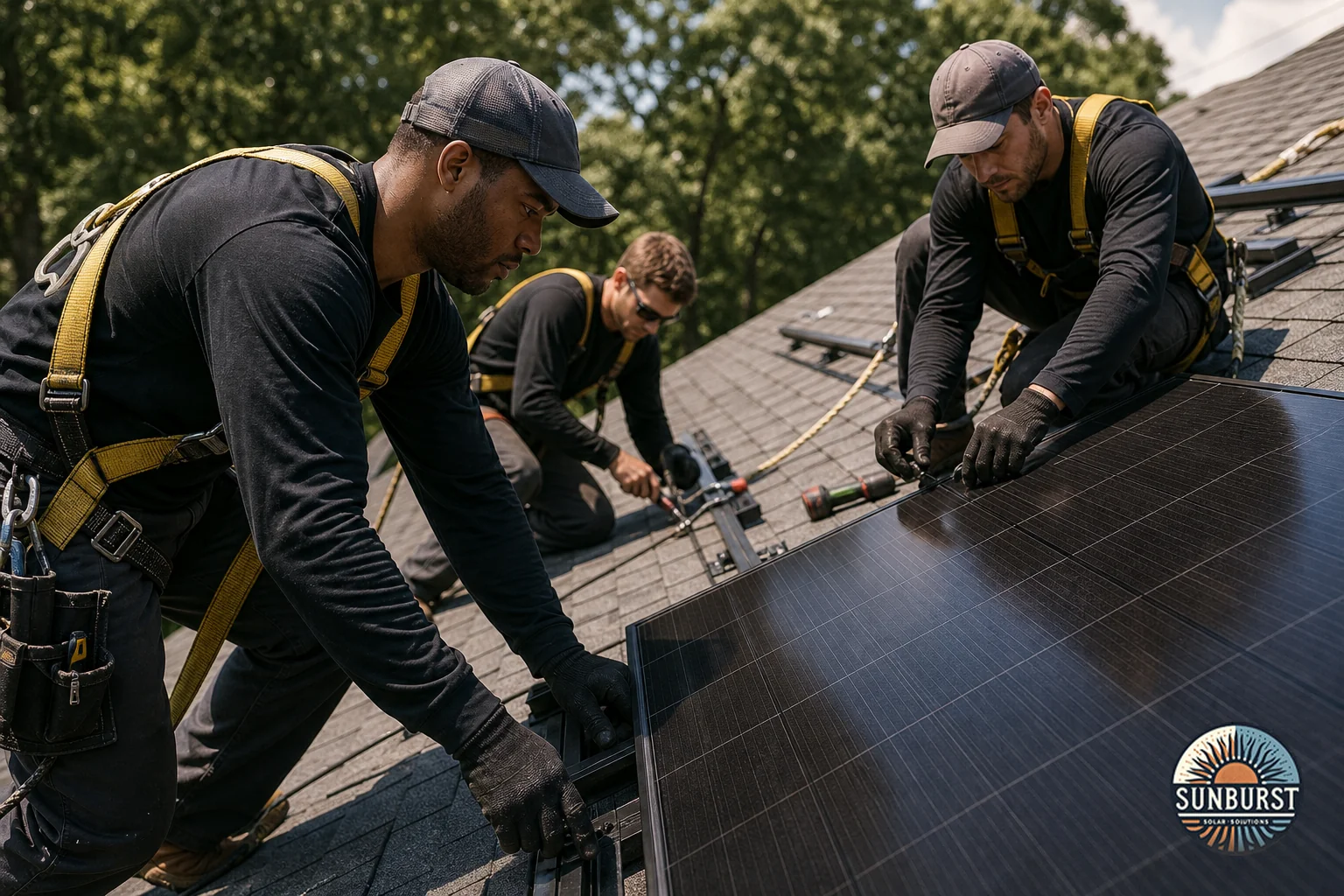
Traditional roof plus panels moves faster in most cases. A roof tear-off and reshingle typically takes two to five days once permits clear. Panel installation adds another one to three days, and the two crews can often overlap their scheduling if the same company manages both. All told, a coordinated Columbia project usually finishes in four to eight weeks from contract signing to final utility approval, largely driven by Richland County or City of Columbia permitting review and utility interconnection sign-off.
Solar roofing stretches that timeline. Specialty materials often ship on longer lead times, and fewer local crews are certified to install them, which can mean waiting for a traveling installation team. Expect eight to twelve weeks in many cases, sometimes longer if custom tile colors or shapes are involved. If your project also needs battery storage, add extra time for electrical permitting; our post on sizing a battery storage system correctly, if available, or a conversation with your installer, can help you plan that piece before the roofing crew ever shows up.
Aesthetics and Curb Appeal
This is where solar roofing earns its premium. Because the solar surface replaces the roof rather than sitting on top of it, there’s no visible frame, no rack lines, and no gap between the roofline and the panel edge. For a home in a historic Columbia neighborhood or a subdivision with strict architectural guidelines, that seamless look can matter more than the extra cost.
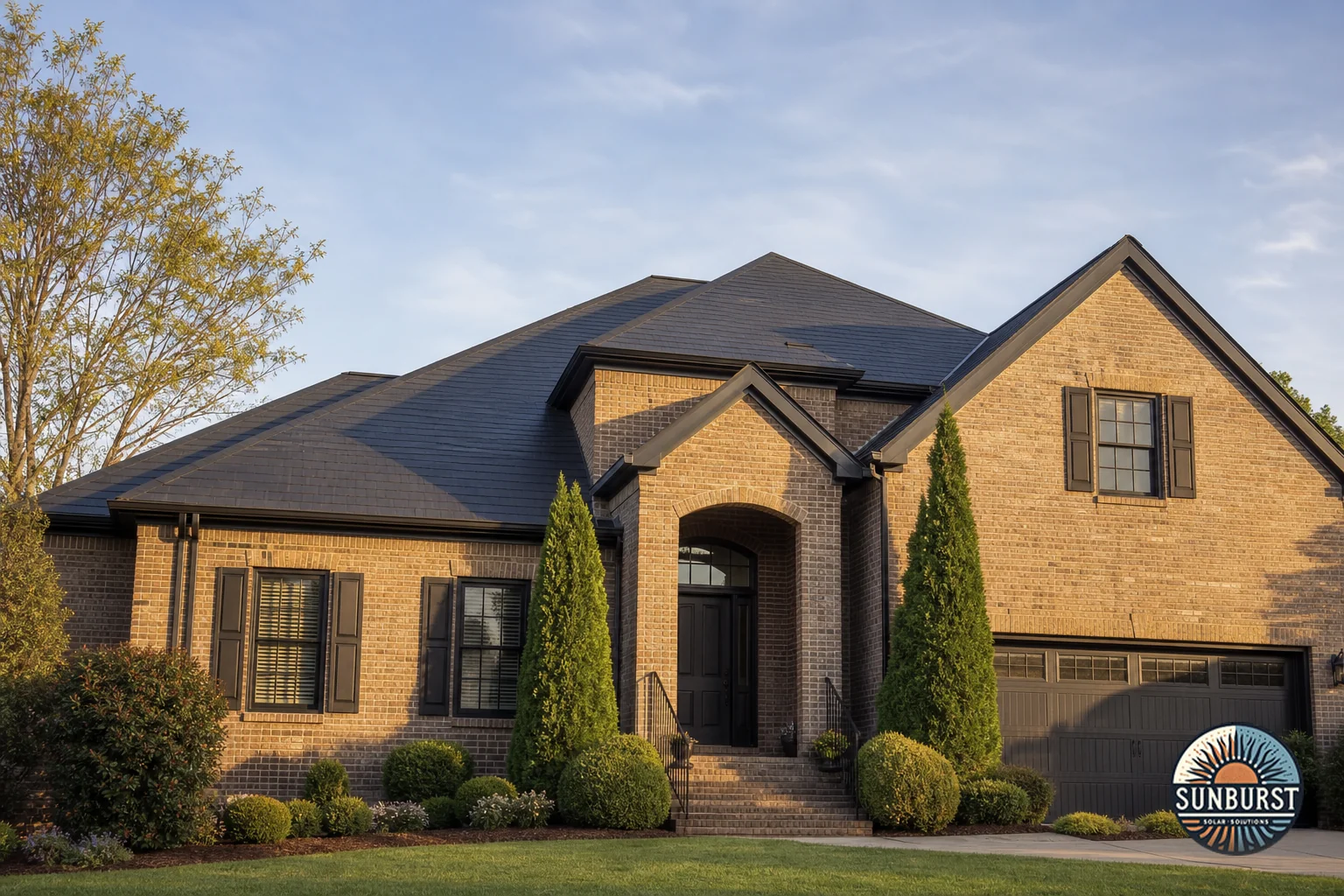
That said, traditional panels have closed most of the visual gap over the past several years. Modern black-on-black panels with black frames and low-profile racking sit much flatter and darker than the silver-framed panels from a decade ago. Many HOAs that once pushed back on solar now approve black-on-black systems without much friction, especially since South Carolina’s solar access law limits how far an HOA can go in blocking installations. Our guide to HOA solar approval in Columbia, SC covers exactly what your association can and can’t restrict.
Durability, Warranties, and Long-Term Performance
Warranty structures differ enough to matter. A traditional roof and a traditional panel system usually carry separate warranties: one from the roofing manufacturer, one from the panel manufacturer, plus a workmanship warranty from your installer. Solar roofing products often bundle roofing and solar warranties into a single document, which simplifies things on paper but can complicate repairs if only one section of the roof needs service, since specialty crews may be required even for a minor fix.
Repair complexity is worth weighing seriously. If a standard panel fails, a technician swaps it out in an afternoon without touching the roof underneath. If a section of a solar roof is damaged, say by a fallen limb during a Midlands thunderstorm, the repair may require a specialist to match the shingle profile and reintegrate the electrical connections correctly. Before signing with any installer for either approach, review our checklist on what to ask before signing a solar contract, and compare coverage details using our guide on how to choose a solar installer and avoid red flags.
How Many Contractors Do You Need?
This is where many Columbia homeowners get burned, regardless of which roofing approach they pick. A roofer replaces the roof, then a separate solar company shows up weeks later to install panels, and if either company misses a detail, like flashing placement or roof penetration points, the other one points fingers when a leak shows up. That back-and-forth costs time and creates real risk to your roof warranty.
Sunburst Solar Solutions handles roofing and solar as one coordinated process instead of two disconnected jobs. One team designs the system, manages permitting, schedules the roofing and solar crews in sequence, and stands behind both the roof work and the solar performance under a single point of contact. That means no juggling phone calls between a roofer and an installer trying to figure out who’s responsible for a specific issue. For a deeper look at when you genuinely need multiple contractors versus one coordinated team, read Solar, Roofing & Battery: Do You Need Multiple Contractors?
Which Option Fits Your Columbia, SC Home?
Start with your roof’s actual condition. If it’s under 10 years old and in good shape, standard panels on your existing roof are almost always the right call, no roof replacement debate needed. If your roof needs replacing anyway within the next few years, that’s when the solar roofing vs traditional roof plus panels question really applies.
- Choose traditional roof plus panels if: you want the fastest payback period, your HOA already allows black-on-black panels, or your roof needs replacing but budget is a primary concern.
- Choose solar roofing if: your neighborhood has unusually strict architectural rules, you’re building new or doing a full aesthetic renovation, and the added cost fits comfortably in your budget.
- Either way: confirm your installer coordinates roofing and solar under one contract to avoid warranty gaps and scheduling conflicts.
If you’re still comparing local installers against national brands for either approach, our post on local vs national solar installers outlines what to expect from each type of company.
Frequently Asked Questions
What is Sunburst Solar Solutions, and does it handle both roofing and solar?
Sunburst Solar Solutions is a South Carolina-based residential solar installer that designs, permits, and installs solar systems, including projects that require a roof replacement first. Rather than referring you to a separate roofing company, Sunburst coordinates the roofing and solar work as one process with a single warranty contact.
Does solar roofing qualify for the same tax credits as standard panels?
New 2026 homeowner solar or battery installations do not qualify for the expired federal Residential Clean Energy Credit. Do not treat an ordinary roof replacement or structural roof work as a solar tax-credit expense. Older eligible projects and solar-generating equipment have distinct tax rules; verify them independently rather than financing roof work around an assumed federal refund. See current IRS Section 25D guidance.
Can I add battery storage to either type of roof?
Yes. Battery storage installs separately from the roof surface, whether you choose solar roofing or a traditional roof with panels. The battery ties into your electrical panel and inverter, not the roofing material itself, so this decision doesn’t limit your backup power options.
How long do solar roofing shingles last compared to traditional roofs?
Most solar roofing products carry warranties in the 25 to 30 year range, similar to premium architectural shingles, though real-world data is still limited since the technology is newer than standard solar panels. Standard panels typically carry 25-year performance warranties, and a well-installed architectural shingle roof can last 20 to 30 years on its own, according to guidance from the National Roofing Contractors Association.
Whichever path fits your Columbia home, the biggest risk isn’t the roofing product you choose, it’s ending up with two contractors who don’t communicate. Book an appointment with Sunburst Solar Solutions to walk through your roof’s condition, compare solar roofing against a traditional roof-plus-panels plan side by side, and get a straightforward timeline for your specific home. You can book an appointment to start that conversation, run your numbers first with our free solar potential estimator, or join us to stay updated on financing options and incentive changes throughout 2026.