
How to buy well · Mount Pleasant, SC
Buying solar panels in Mount Pleasant, SC
The short version
Pull twelve months of usage from your utility, check your roof's remaining life, confirm which utility actually serves your address, then get three quotes structured identically: price per watt, system size in kW DC, exact equipment models, production estimate with methodology, and cash price shown separately from financed price. Verify licensing. Read all three warranties. Your installer handles permits and interconnection.


Local buying reality
What buying here involves in Mount Pleasant
The Mount Pleasant question to put to every installer is simple and revealing: have you taken a system through my community's architectural review, and will you prepare the submission? This is one of the most HOA-dense markets in the Lowcountry. A company that treats approval as the homeowner's problem will hand you a design, watch it get rejected, and blame the committee. Ask who writes the packet, who attends if the board has questions, and whether any of that is billed separately.
Then ask for two layouts priced separately: the one that produces best, and the one your committee will actually approve. In Mount Pleasant those are frequently not the same roof plane, because rules on street visibility push arrays away from the productive orientation. Seeing both prices tells you what approval is costing you in kilowatt-hours and in equipment, since recovering a compromised plane usually means more modules or module-level electronics. A quote showing only one layout is hiding that trade-off rather than solving it.
Finally, insist the shade study is measured rather than assumed. Mount Pleasant splits sharply: the established neighbourhoods carry heavy live-oak canopy, while newer subdivisions are close to unshaded. Which side your street falls on changes the design fundamentally, and it is not reliably visible in the satellite imagery most remote quoting tools rely on. Anyone confident about your production without having stood on the roof is confident about the wrong thing.
Written for Mount Pleasant specifically. Your own roof, bill and meter still decide the answer, which is what the free assessment settles.
Before you talk to anyone
We would rather you were a hard customer
This page gives you the questions that make a solar salesperson uncomfortable, including questions that are awkward for us. Ask us the same things you ask everyone else. If we come second on a like-for-like comparison, that is a fair outcome.
It matters more in 2026 than it did. The federal credit expired at the end of 2025 and Dominion Energy South Carolina changed how exported power is credited. Both changes reward careful buying, and there are companies still quoting on the old assumptions. The statewide guide to comparing solar quotes and how to vet a South Carolina installer cover the parts of this that are the same everywhere. Below is what is specific to buying in Mount Pleasant.
Local to Mount Pleasant
Five things to settle before you take a quote seriously
None of these are answerable from a satellite image or a postcode, and all five change the number at the bottom of a quote. Settle them first and the quotes become comparable.
- 01
Your meter: Dominion Energy South Carolina, probably
Berkeley Electric Cooperative serves some addresses, so this is worth confirming from the bill rather than the postcode. Exports currently credit at roughly 2.8–4.1¢ per kWh against about 14.4¢ per kWh retail (July 2026).
- 02
Local benchmark: $2.54 per watt
A Mount Pleasant-area figure, installed, before incentives, as of July 2026. Quotes above it need a stated reason; quotes below it usually have something missing from the scope.
- 03
What the roof imposes here
Charleston County is a high-wind coastal zone, so structural review and roof-penetration detailing matter, and salt exposure rules out under-specified hardware.
- 04
What shades the design here
Established neighbourhoods carry heavy live-oak canopy, while newer subdivisions are often close to unshaded. Which side of that your street falls on changes the design substantially.
- 05
Who has to approve it
Mount Pleasant is one of the most HOA-dense markets in the Lowcountry, with active architectural-review committees that have real rules on panel placement and street visibility.
- 06
Permits in Charleston County
A building permit and a separate electrical permit for a rooftop system. Structural review and coastal wind-load detailing. All of it is chargeable work, so a quote that omits it is incomplete rather than cheap.
The process
Eight steps, in order
- 01
Pull twelve months of usage
Before you speak to anyone. Any installer sizing a system without a year of consumption data is guessing.
- 02
Check your roof honestly
Age, material and remaining life. Under five years left and the sequence is roof first, or both together.
- 03
Confirm who your utility actually is
Mount Pleasant is not uniform. Berkeley Electric Cooperative serves some addresses, and the export terms differ between them. Your utility sets your economics, so establish it before comparing anything.
- 04
Get three quotes, structured the same way
Price per watt, kW DC, exact equipment models, production method, and cash price separate from financed price.
- 05
Verify licensing and certification
Ask for the licence number and check it. Ask about NABCEP certification.
- 06
Read the warranty stack carefully
Panel, inverter and workmanship are three separate warranties. The third varies most and is worth nothing if the company closes.
- 07
Sign, then let them handle the paperwork
Permits with Charleston County, the Dominion Energy South Carolina interconnection application, and the HOA or architectural-review packet where required. A competent installer does all of it. If they ask you to pull your own permit, that tells you something.
- 08
Install, inspect, interconnect, commission
Installation is the quick part. Inspection and interconnection approval set the real timeline.
Comparing quotes
The six numbers that make quotes comparable
Most quotes are deliberately hard to compare. Ask for these six and they become easy.
| Ask for | Why it matters |
|---|---|
| Price per watt | The only figure that compares systems of different sizes. Locally the benchmark is around $2.54 per watt (July 2026). |
| System size in kW DC | Fix the unit, or you are comparing different things. |
| Exact panel and inverter models | Model numbers let you check the warranty and datasheet yourself. |
| Production estimate and its method | Ask whether it accounts for the shade described above. |
| Cash price and financed price, separately | This is where the dealer fee hides. |
| Workmanship warranty term and scope | Where quotes genuinely diverge, and worthless if the company closes. |
Each of those is unpacked at length in our guide to comparing solar quotes and the one on dealer fees.
One South Carolina-specific check: because the state credit is capped at $3,500 per tax year, ask how any financing is structured against it. Loans built around a single large first-year credit payment do not match how this credit actually arrives. See the credit mechanics.
Walk away
Red flags in the Mount Pleasant market
Any one of these is enough to end the conversation
- The quote applies a 30% federal tax credit. It expired for systems placed in service on or after January 1, 2026. Either they have not updated their tooling or they are hoping you have not noticed. Both are disqualifying.
- Same-day signing pressure, or a discount that expires when the salesperson leaves. Nothing about a 25-year asset needs deciding tonight.
- A price without your usage data or a look at your roof. They are sizing to a sales target, not your bill.
- Refusal to separate cash price from financed price. This is where the dealer fee hides.
- A production estimate with no methodology, or one that ignores shade you can see with your own eyes.
- "Free solar" or "the government pays for it". Neither is true in South Carolina.
- Guaranteed savings in dollars. Nobody can guarantee your future usage or your utility's future rates.
- No mention of a single drawback. Every roof has a constraint. An installer who found none did not look.
We publish our own poor-fit list on is solar worth it in Mount Pleasant. Ask any other installer for theirs.
Cash, loan or lease
Why we point people toward owning
Where Dominion Energy South Carolina credits exports at roughly 2.8–4.1¢ per kWh, the value of a system turns on how much you consume on site, and lease structures make that hard to see. Cash is the shortest payback; a loan is reasonable if you interrogate the dealer fee and check it against the $3,500 annual credit cap rather than a lump sum.
Loan versus lease, compared in full Cash versus a loan How dealer fees hide in a financed price
Buying from us
What is included, plainly
A site assessment and design built from your actual usage history, not a square-footage estimate. Permits pulled with Charleston County and the inspection sequence managed. The Dominion Energy South Carolina interconnection application filed. Where an HOA or architectural-review board is involved, we prepare the packet and coordinate approval.
Installation by our own experienced crews, with 30+ years of combined team experience and roughly 450 combined experienced installs behind them, averaging about 9.5 kW. Commissioning, monitoring handover, and a team that is still reachable afterwards.
On warranty you get our lifetime full-system and roof-penetration warranty, on top of the 25-year manufacturer warranty and 10-year workmanship coverage. The roof-penetration part matters on the coast, and it is the piece most quotes are quiet about.
What we do not do: guarantee a dollar saving, quote a price before seeing your roof and your usage, or tell you solar suits your home when it does not.
Our work
Real systems our crews have installed
Genuine job photos, not stock images and not renders. Every system here was designed, permitted and installed by our own crews, and the same crews cover Mount Pleasant.Charleston County is a high-wind coastal zone, so structural review and roof-penetration detailing matter, and salt exposure rules out under-specified hardware.
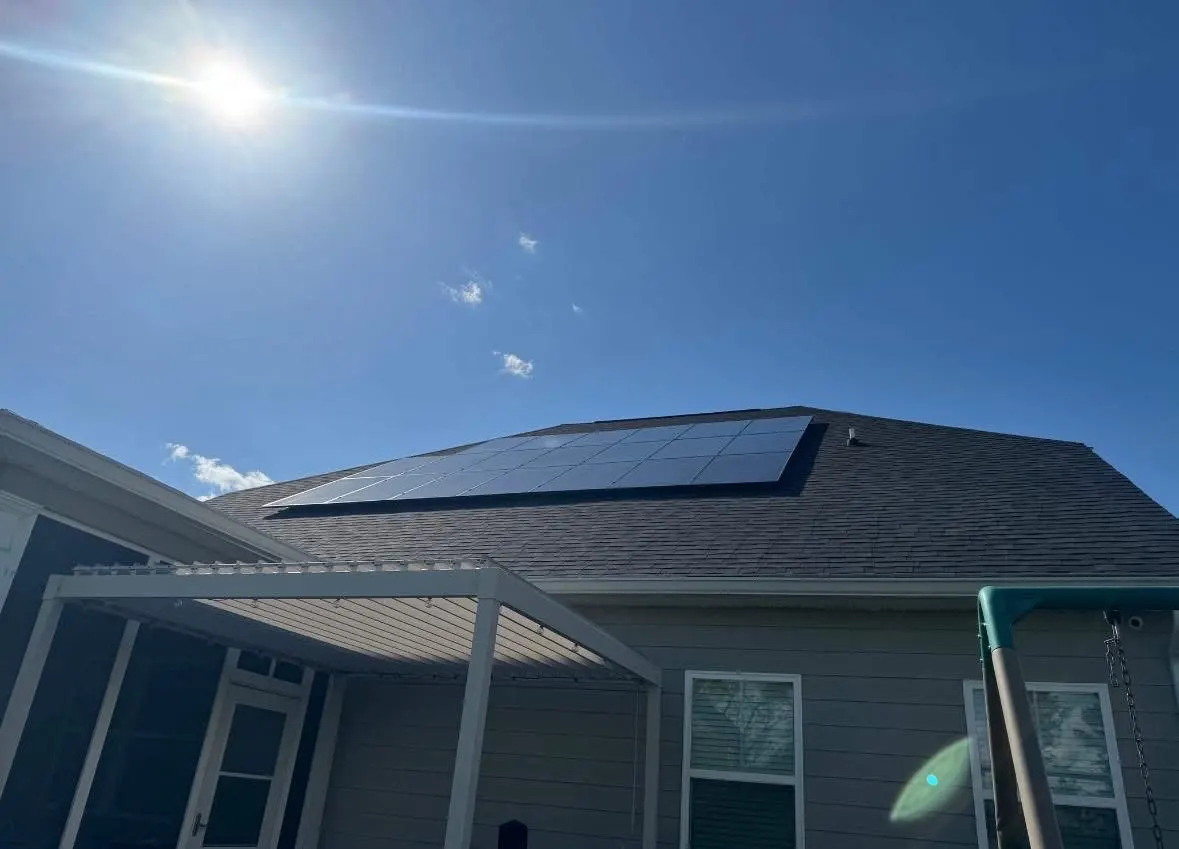 ResidentialShingle rooftop arrayBackyard-facing slope
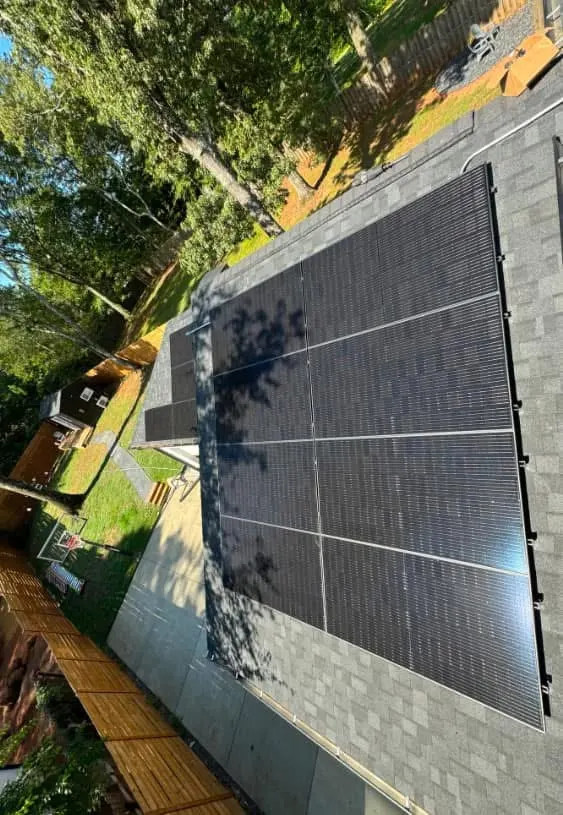 ResidentialClean rooftop layoutBlack-framed panels
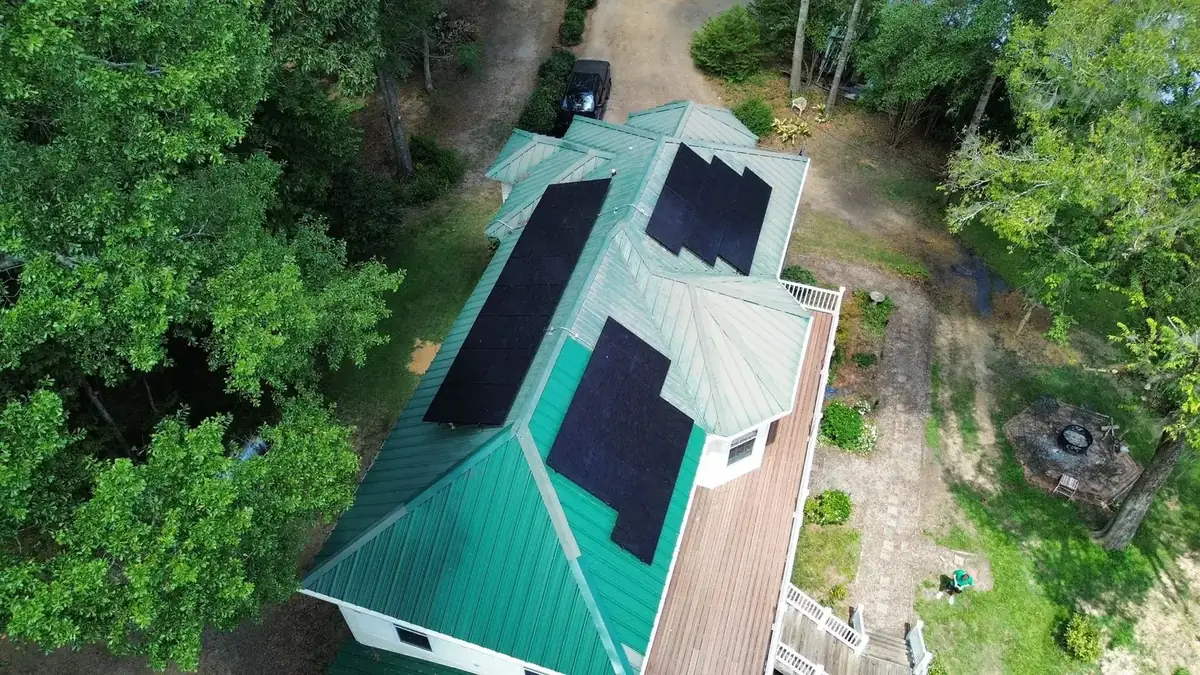 ResidentialMulti-facet metal roofWooded aerial view
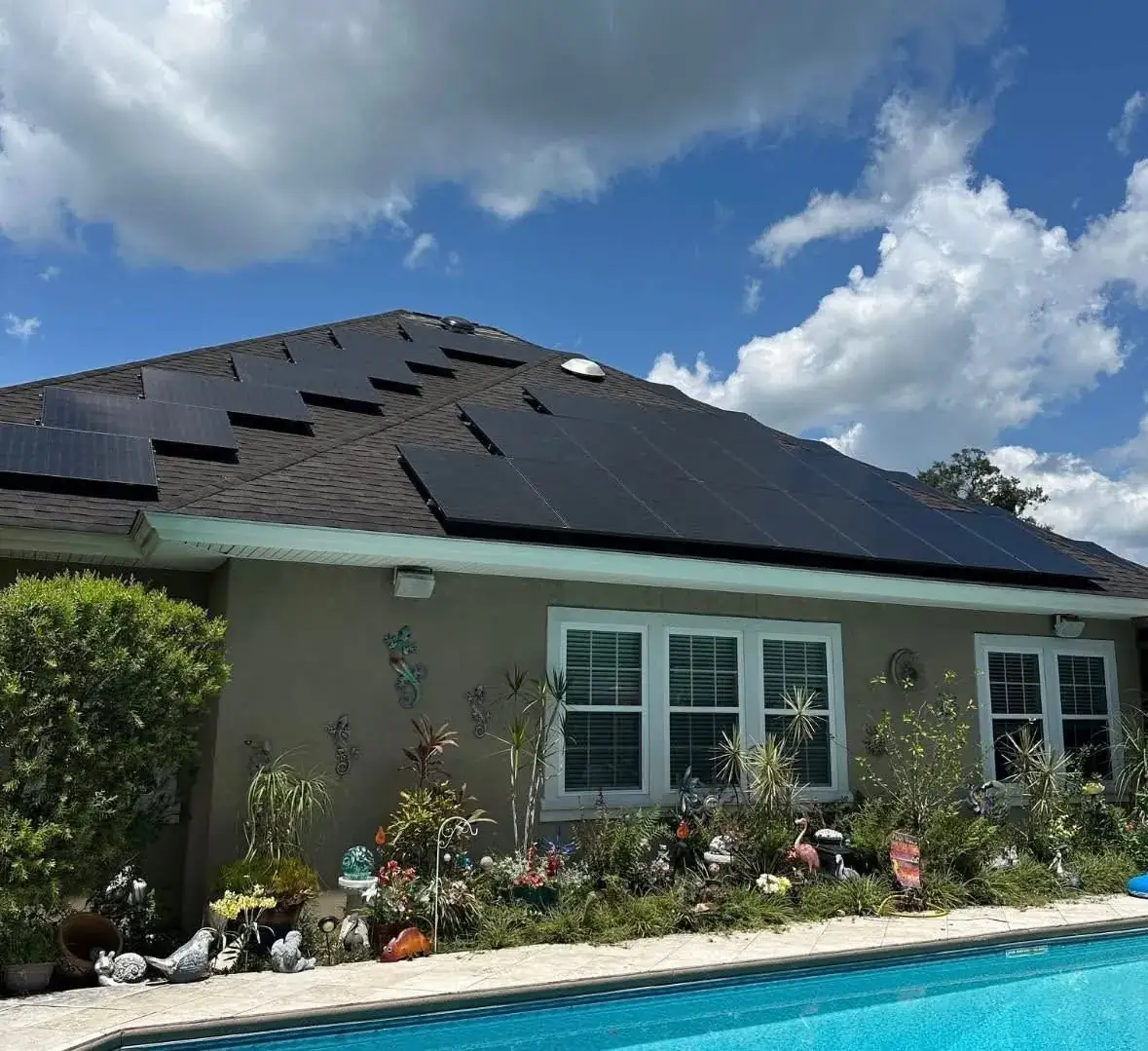 ResidentialFull black-on-blackPoolside single-story home
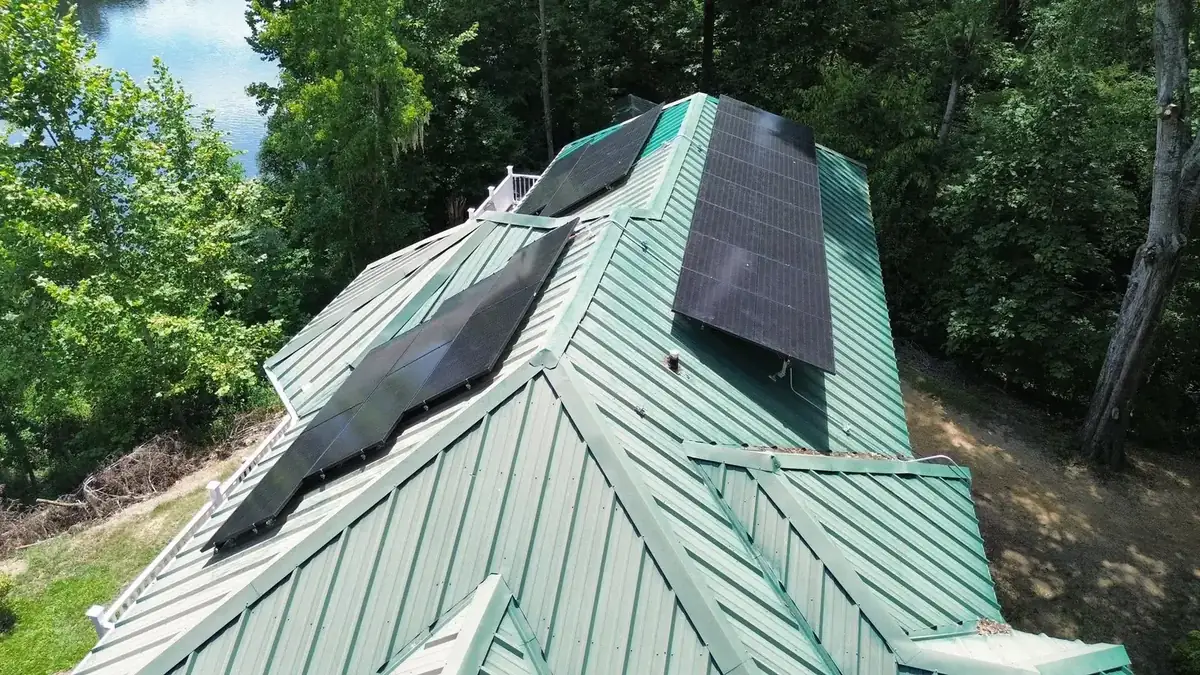 ResidentialStanding-seam metal roofLakeside multi-facet install
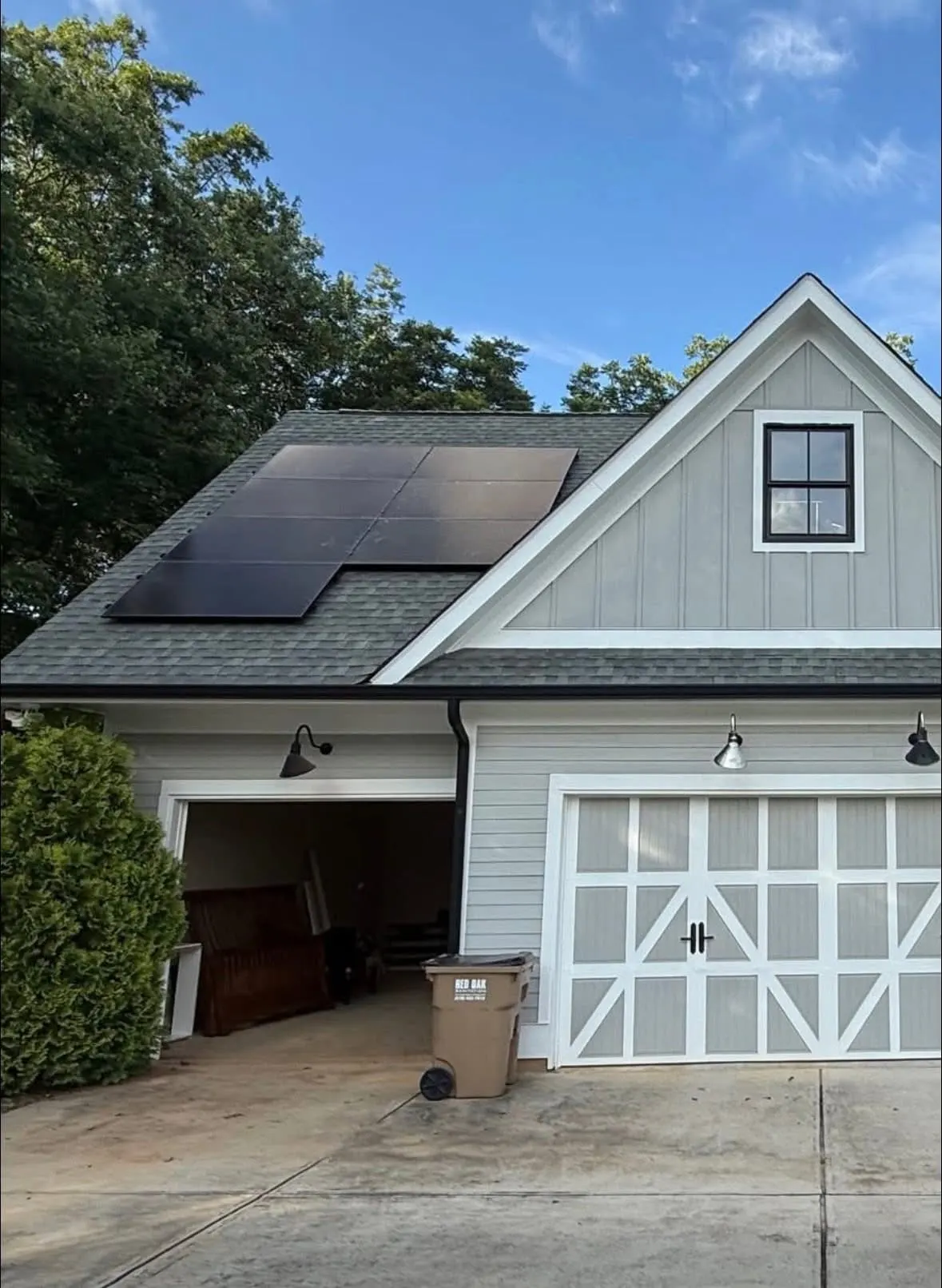 ResidentialDetached garage arrayFarmhouse-style home
Photo locations are not published at customer level. Where a customer has agreed to it, we name the job and the market on the completed-job records above.
Free assessment · Mount Pleasant, SC
Get a straight answer for your Mount Pleasant roof
We read your bill, confirm your Dominion Energy South Carolina export terms, and tell you what your roof in Charleston County will actually carry. If solar does not make sense at your address, we will say so, and that answer is free too.
- We confirm whether Dominion Energy South Carolina or Berkeley Electric Cooperative serves some addresses serves your meter before we quote anything
- Permitting runs through A building permit and a separate electrical permit for a rooftop system, and we handle it
- Mount Pleasant is one of the most HOA-dense markets in the Lowcountry, with active architectural-review committees that have real rules on panel placement and street visibility.
Prefer to talk? (843) 310-1128
Buying solar in Mount Pleasant
Questions worth asking before you sign
How do I buy solar panels in Mount Pleasant, SC?
Start by pulling twelve months of usage data from your utility and checking your roof's remaining life. Then get three quotes structured identically: price per watt, system size in kW DC, specific equipment models, production estimate with methodology, and cash price shown separately from financed price. Verify licensing and read all three warranties. Your installer should handle permits, interconnection and HOA approval.
Should I buy, finance or lease solar in Mount Pleasant?
Buying outright gives the shortest payback and clean ownership, which is also the arrangement research associates with a resale benefit. A loan is reasonable if you scrutinise the dealer fee. We do not push leases, because in a market where the export rate is roughly 2.8–4.1¢ per kWh the value depends on self-consumption, and lease structures often obscure whether you are actually ahead.
What questions should I ask a Mount Pleasant solar installer?
What is your price per watt? What size system in kW DC, and how did you arrive at it from my usage? Which panel and inverter models exactly? How did you calculate the production estimate? What is the cash price versus the financed price, and what is the dealer fee? What does your workmanship warranty cover and for how long? Who pulls the permits? And: is there any reason solar might not suit my home?
What are the red flags when buying solar in Mount Pleasant?
A quote applying the 30% federal credit, which expired for systems placed in service on or after January 1, 2026. Pressure to sign same-day. A price quoted without seeing your usage data or your roof. Refusal to separate cash price from financed price. A production estimate with no stated methodology. Free solar claims. And an installer who never mentions a single drawback.
How long does buying and installing solar take in Mount Pleasant?
Installation itself is usually days. The overall timeline is set by permitting with Charleston County and the Dominion Energy South Carolina interconnection queue, neither of which any installer fully controls. We will give you a realistic sequence rather than a best-case number, and tell you which steps are outside our hands.
Do I have to buy the biggest system I can fit?
No, and you usually should not. Because Dominion Energy South Carolina credits exports at roughly 2.8–4.1¢ per kWh against about 14.4¢ per kWh, production beyond your own consumption is worth a fraction of what the panels cost. Systems over 20 kW can also lose the state property-tax exemption. We size to your bill rather than your roof area.
Keep reading
Guides for buying solar without guesswork
- Georgia solar
GreyStone Power Solar: Approval, EV Rates and Quote Checks
Review GreyStone Power solar approval, EV rate eligibility and export assumptions. Compare rooftop solar and backup options before requesting an assessment.
16 min read - Georgia solar
Jackson EMC Solar: Export Credits, Fees and Approval
Compare Jackson EMC solar with the current export credit, recurring service cost and approval steps. Build a utility-specific quote before an assessment.
16 min read - Solar Planning
Pooler Solar HOA Approval: Build the Right Submission
Prepare Pooler solar HOA documents, design alternatives and separate city permit checks before committing to installation. Confirm your property’s actual rules.
16 min read - Financing & Ownership
Roof and Solar Financing in Georgia: Compare Your Options
Compare separate and combined roof-and-solar financing in Georgia using cash prices, payment schedules, disbursement conditions and home-sale obligations.
16 min read - Solar Planning
Savannah Historic District Solar: Review the Property First
Plan Savannah historic district solar with property status, visibility documents, a current COA route and separate permit checks before you commit.
16 min read - Georgia solar
Sawnee EMC Solar: Netting, Batteries and Approval Timing
Compare Sawnee EMC solar using current netting rules, battery capacity and approval timing. Build an account-specific design before requesting a quote.
16 min read
Free, no-pressure assessment
Ask us the hard questions about your Mount Pleasant project
Bring the list from this page. We will give you price per watt, exact equipment, our production methodology, and the cash price separately from the financed price, in writing.
Mon–Sat, 10am–6:30pm ET · We typically follow up within the hour.