
A 25-kilowatt rooftop system on a Mount Pleasant retail strip and a 400-kilowatt array on a North Charleston warehouse can land at very different commercial solar installation cost per watt figures, even though they’re built from similar panels and inverters. In South Carolina, most commercial projects run between $1.80 and $3.20 per watt before incentives, with size, roof type, equipment tier, and permitting complexity doing most of the work to move that number up or down.
Key Takeaways
Commercial solar tax benefits require a project-specific review. Eligibility, placed-in-service and construction timing, ownership, applicable credit multipliers, labor requirements and other restrictions determine whether an incentive can be claimed. Neither a universal 30% credit nor depreciation benefits should be promised from a generic quote. Review the IRS Form 3468 instructions with the business’s tax adviser and compare the commercial solar tax guide before subtracting a benefit from the price.
At a Glance: Commercial Solar Cost Factors
| Factor | Lower Cost Scenario | Higher Cost Scenario |
|---|---|---|
| System size | 250kW+ (~$1.80-$2.20/watt) | Under 30kW (~$2.80-$3.20/watt) |
| Roof type | New flat TPO/EPDM, ballasted mount | Older built-up or shingle roof needing reinforcement |
| Equipment tier | Standard Tier 1 panels, string inverters | Premium panels with power optimizers per panel |
| Battery storage | Skipped entirely | Added: +$0.80-$1.50/watt of storage |
| Permitting path | Straightforward county + Santee Cooper review | Complex engineering stamp, utility upgrades needed |
| Financing | Cash purchase, full ITC eligibility | Lease/PPA, lower net owner benefit |
| Timeline | 8-12 weeks contract to Permission to Operate | 4-6 months with utility upgrade delays |
What Drives Commercial Solar Installation Cost Per Watt
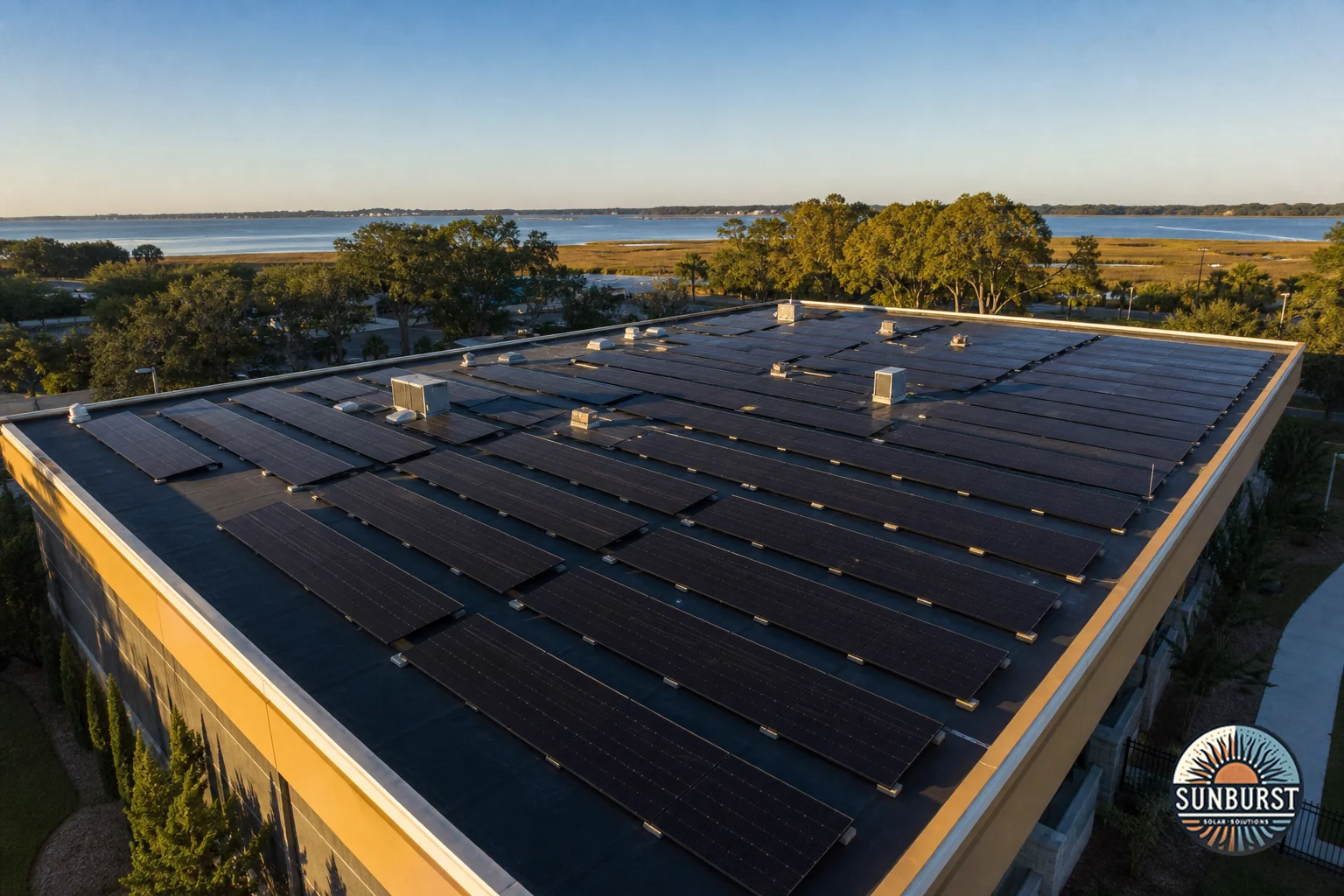
Commercial solar pricing isn’t one number. It’s a stack of decisions: how big the array is, what kind of roof it sits on, which equipment tier you choose, and how much electrical work the building needs before panels go up. Each of those layers moves your final commercial solar installation cost per watt independently, which is why two businesses with similar electric bills can get quotes thousands of dollars apart.
Labor and permitting also behave differently at commercial scale than they do for a house. A three-phase electrical service, a structural engineer’s roof review, and a utility interconnection study are all normal parts of a business install, and they show up in the price whether your roof is 5,000 square feet or 50,000.
System Size: Why Bigger Roofs Often Cost Less Per Watt
Fixed costs, like design, permitting fees, and mobilizing a crew, stay roughly flat whether you’re installing 25kW or 250kW. Spread across more panels, those costs shrink on a per-watt basis. A small office building putting in a 25kW system might see $2.80 to $3.20 per watt, while a distribution center installing 300kW could land closer to $1.80 to $2.10 per watt for the same general equipment quality.
That doesn’t mean bigger is automatically better for your business. The right system size should match your actual load and roof capacity, not chase a lower per-watt number. Oversizing a system to hit a price break usually costs more in total dollars, even if the per-watt figure looks better on paper.
Roof Type and Structural Factors
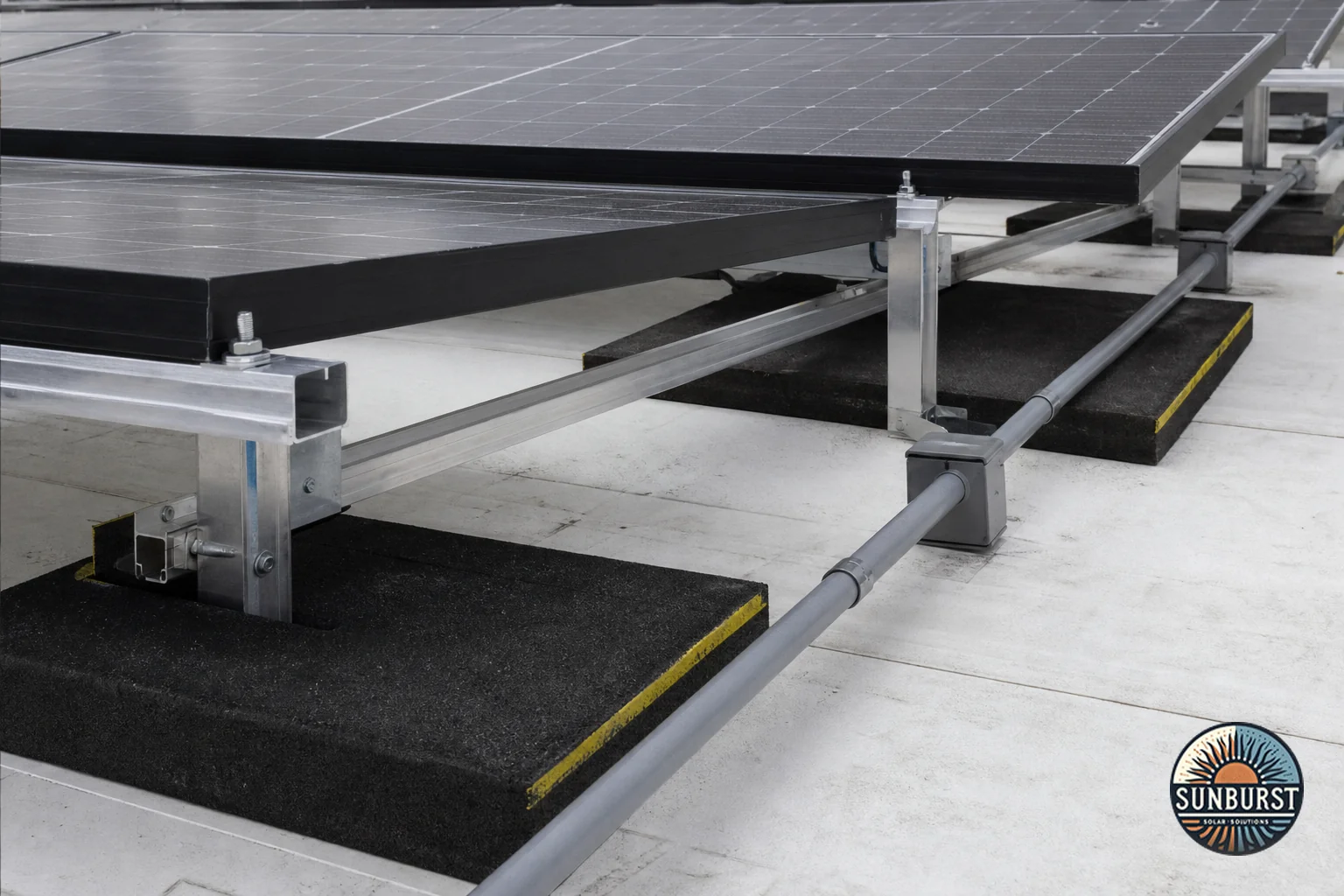
Roof type changes both the mounting method and the labor hours involved. Flat commercial roofs covered in TPO or EPDM membrane usually take ballasted racking, which uses weighted blocks instead of roof penetrations. That approach is faster to install and easier on an existing membrane’s warranty.
Metal standing-seam roofs often use clamp-based mounts that never puncture the roof at all, which can actually lower labor cost. Built-up or aging membrane roofs are the trickiest and most expensive case, because they may need structural reinforcement or a partial reroof before an installer will put weight on them. If your roof is already 12 or more years old, it’s smart to have that conversation early. Our related guide on whether your roof needs replacing before solar panels walks through how to make that call.
Businesses juggling both a roof project and a solar install sometimes wonder whether they need separate crews for each. Our post on solar, roofing, and battery contractors breaks down when one company can handle it all and when you genuinely need more than one trade involved.
Equipment Tier: Panels, Inverters, and Racking
Panel and inverter choice is the second-biggest lever after system size. Tier 1 panels, the classification used for manufacturers with strong bankability and long track records, sit at the middle of the commercial cost spectrum and are what most South Carolina businesses install. Premium panels with higher efficiency ratings or panel-level power optimizers push cost per watt up, but they can make sense on shaded or oddly-shaped roofs where every square foot of output matters.
Inverter choice matters too. String inverters are the standard, cost-effective choice for large open commercial roofs with uniform sun exposure. Microinverters or power optimizers cost more per watt but pay off when part of the roof gets partial shade from HVAC units, parapet walls, or neighboring structures, since they let each panel produce independently instead of dragging the whole string down.
If you’re weighing battery storage alongside solar, keep in mind that it’s priced and installed separately from the panel system. Commercial battery capacity typically runs $0.80 to $1.50 per watt of paired output, and sizing it correctly means knowing your actual critical loads, not guessing from your utility bill. Our guide on battery storage cost factors covers the same math that applies at commercial scale, just multiplied up.
Permitting, Interconnection, and Soft Costs in South Carolina
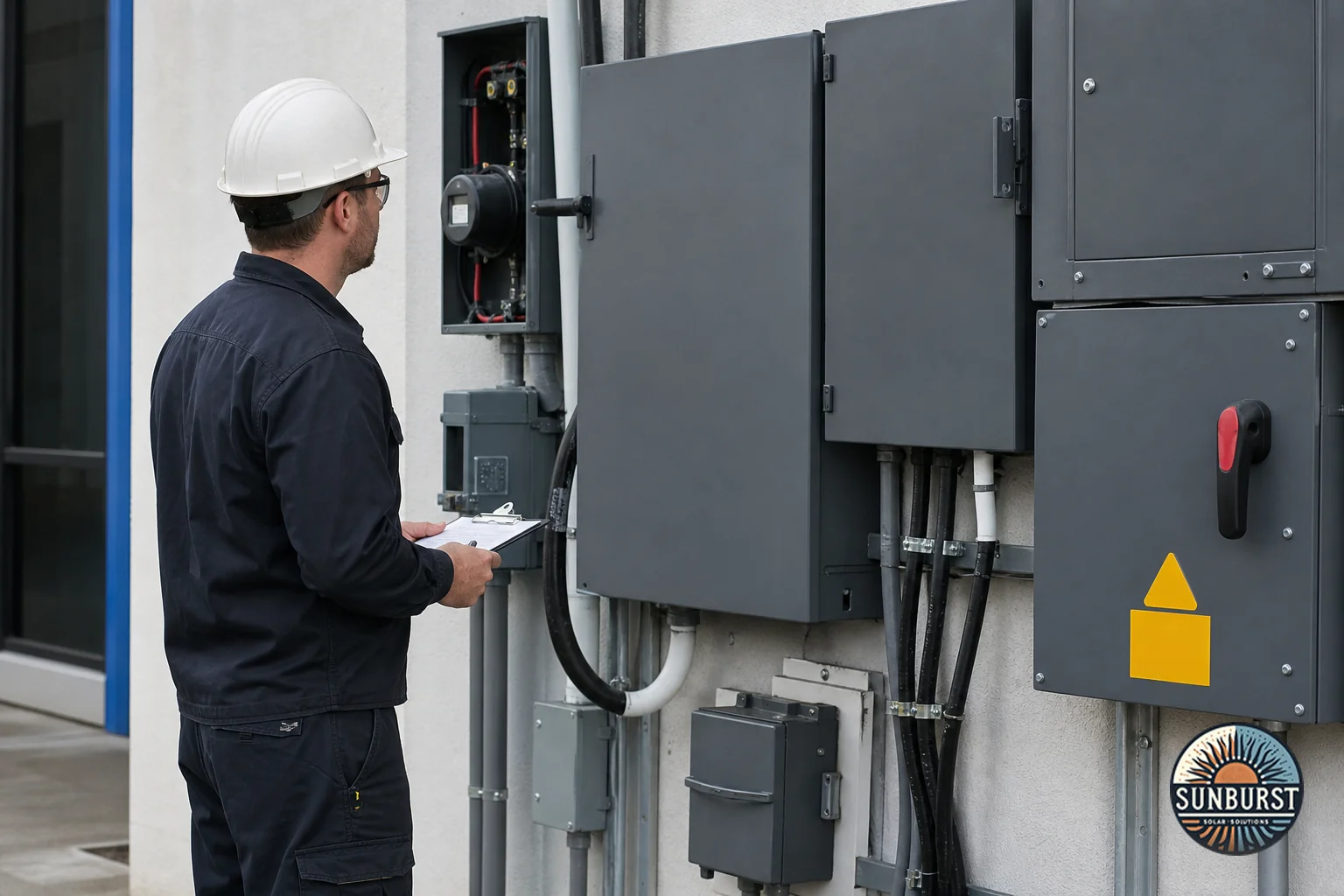
Permitting is where a lot of commercial budgets get surprised. County building permits, a structural engineer’s stamp for the roof-mounted array, and utility interconnection review all run on separate timelines, and none of them are optional for a business-scale system. If your utility is Santee Cooper, the interconnection study adds a formal review of your system’s impact on the local grid before you get Permission to Operate.
For a typical commercial project in South Carolina, expect the combined permitting and interconnection process to take somewhere between two and five months, longer than most residential jobs. Our detailed breakdown on how long solar permitting approval takes applies the same logic at residential scale and explains what causes delays on either side. For interconnection specifics with your utility, see our guide to the Santee Cooper interconnection process.
These soft costs, permitting fees, engineering stamps, and utility application charges, don’t scale down for smaller systems the way equipment costs do. That’s part of why a small commercial array often lands at the higher end of the per-watt range even with modest equipment.
Financing Paths That Change Your Effective Cost Per Watt
Commercial solar tax benefits require a project-specific review. Eligibility, placed-in-service and construction timing, ownership, applicable credit multipliers, labor requirements and other restrictions determine whether an incentive can be claimed. Neither a universal 30% credit nor depreciation benefits should be promised from a generic quote. Review the IRS Form 3468 instructions with the business’s tax adviser and compare the commercial solar tax guide before subtracting a benefit from the price.
How you pay changes the math further. A cash purchase captures the full tax benefit directly. A solar loan spreads the cost while you still own the system and claim the credits. A lease or power purchase agreement shifts ownership, and the tax benefits, to a third party, usually in exchange for a lower or no upfront cost and a fixed rate per kilowatt-hour instead of a per-watt purchase price. Our comparison on solar lease vs. buying covers the tradeoffs in more depth, and the same logic applies to commercial decisions, just at higher dollar amounts. Details on what currently qualifies are in our 2026 solar tax credit guide.
How Many Contractors Should a Commercial Project Involve
A straightforward roof-mount install on a healthy roof can often be handled by one solar contractor from design through interconnection. The number of trades involved climbs when your roof needs work first, when you’re adding battery storage through a separate vendor, or when your electrical service needs an upgrade before it can handle the new system. Each additional contractor adds coordination time and, often, cost, since nobody owns the whole timeline. Our post on how many contractors a solar install actually needs lays out when a single accountable installer makes more financial sense than juggling separate roofing, electrical, and battery crews.
Local vs National Installers: Cost and Service Tradeoffs in SC
National solar companies advertise fixed online pricing, which can look appealing for budgeting purposes. But commercial projects rarely fit a standardized template, and a national call center handling your permitting paperwork may not know Charleston County’s specific submission quirks or how Santee Cooper’s interconnection review actually runs in practice. A regional installer familiar with South Carolina permitting offices and utility timelines often moves projects through approval faster, even if the sticker price per watt looks similar on paper. The difference tends to show up in fewer delays, not necessarily a lower quote.
Budgeting Checklist for Small and Mid-Size Business Owners
Before you sign anything, get every quote broken down by the same categories: equipment tier, labor, permitting fees, and any electrical or roof work. A quote that just shows a single lump sum per watt makes it hard to compare bids apples-to-apples.
- Ask each installer to itemize equipment brand, tier, and warranty terms separately from labor and permitting costs.
- Confirm whether the quoted price per watt includes battery storage or only the solar array.
- Get a written estimate of your permitting and interconnection timeline, not just an installation date.
- Check whether your roof’s age and condition were factored into the mounting method and price.
- Ask what happens to your warranty if roof work is needed after panels are already installed.
If a quote seems unusually cheap or an installer pressures you to sign the same day, that’s worth pausing on. Our post on red flags when choosing a solar installer and our guide on what to ask before signing a solar contract both cover questions worth raising before you commit budget to a project this size.
Frequently Asked Questions
What is a typical commercial solar cost per watt in South Carolina?
Most commercial systems in South Carolina price between $1.80 and $3.20 per watt before incentives, with larger systems on newer flat roofs landing at the lower end and small systems with structural work needed landing higher.
Does battery storage change the cost per watt?
Yes. Battery storage is priced separately from the solar array itself, typically adding $0.80 to $1.50 per watt of paired storage capacity, depending on how much backup runtime your business needs.
How long does commercial solar permitting take in South Carolina?
Commercial permitting and utility interconnection combined usually take two to five months, longer than a typical residential timeline, because of the added engineering review and interconnection study required for larger systems.
Do I need to replace my roof before installing commercial solar?
Only if your existing roof has less remaining life than the solar system’s expected lifespan, generally under 10 to 12 years remaining. An installer should assess roof condition as part of your initial site evaluation.
Getting an accurate commercial solar installation cost per watt figure for your specific building means putting real numbers against your roof type, electrical service, and energy usage rather than relying on a general range. Sunburst Solar Solutions can walk your property, size a system against your actual load, and give you an itemized quote that separates equipment, labor, and permitting so you know exactly what you’re paying for. Get a free assessment to see what a right-sized commercial system would actually cost for your business before you commit to any quote.